For many people, COVID-19 ends in a week or two. For others, recovery is slower and stranger: energy returns unevenly, headaches linger, and vision feels less reliable than it used to. In Long COVID, eye symptoms like blurry vision, eye pain, and light sensitivity (photophobia) can show up on their own or alongside fatigue, brain fog, dizziness, and sleep disruption. These symptoms are often real and measurable—even when an eye looks “normal” in the mirror.
The encouraging part is that many drivers are treatable: dry eye, unstable tear film, screen-related strain, migraine pathways, and post-viral inflammation. With a structured plan, many people see steady improvement over weeks to months. This article explains why Long COVID can affect the eyes, how to tell common patterns from higher-risk warning signs, what you can safely do at home, and when an eye exam is the fastest path to relief.
Key Takeaways
- Many Long COVID eye symptoms come from dry eye, visual strain, and headache pathways, and they often improve with consistent supportive care.
- Blurry vision that fluctuates with screens, fatigue, or blinking is commonly surface-related, not permanent damage.
- Eye pain with deep ache, marked redness, or vision loss is not typical and should be evaluated promptly.
- A two-week “reset” plan—tear support, screen pacing, and light management—helps you identify what is driving symptoms.
Table of Contents
- What counts as long COVID eye symptoms
- Blurry vision after COVID common causes
- Eye pain and pressure what it usually means
- Photophobia and light triggered discomfort
- What helps at home and what to avoid
- When to seek care and what testing looks like
What counts as long COVID eye symptoms
Long COVID (also called post-COVID condition) is commonly described as symptoms that begin during or after COVID-19 and persist beyond the expected recovery window, often around the three-month mark, with a pattern that cannot be explained by another diagnosis. Eye symptoms can be part of that picture. Some are “eye-first” symptoms; others are eye complaints that are actually driven by the nervous system, sleep disruption, or whole-body inflammation.
Common eye-related complaints people report
Long COVID eye symptoms typically fall into a few clusters:
- Blurry or fluctuating vision: especially after screens, reading, driving, or late in the day
- Dryness and irritation: burning, grittiness, stinging, or a “sand in the eye” feeling
- Watery eyes: often paradoxical, because dry eye can trigger reflex tearing
- Eye pain or pressure: ranging from mild ache to sharp discomfort
- Photophobia: light feels harsh, uncomfortable, or painful
- Visual fatigue: eyes feel tired quickly; focusing feels like work
- Headache-linked visual sensitivity: light sensitivity, motion sensitivity, or nausea with visual tasks
Many people also notice “near vision feels worse” or “my eyes take longer to refocus.” That can be part of tear-film instability, changes in visual stamina, or migraine-like pathways.
Why symptoms can be real even when the eye looks normal
A mirror can show redness and swelling, but it cannot show tear-film breakup, subtle corneal staining, focusing fatigue, eye-tracking strain, or light-processing sensitivity. Long COVID symptoms often live at that interface between the eye surface and the nervous system. This matters because reassurance without a plan can feel dismissive. A better approach is: identify the likely driver, apply a structured intervention, and track change over time.
Patterns that are usually reassuring
These patterns often point to treatable, lower-risk causes:
- Symptoms in both eyes
- Blurring that improves with blinking or lubricating drops
- Symptoms that worsen with screens and improve with rest
- Mild light sensitivity without deep pain
- A slow, uneven improvement over weeks rather than a sudden crash
Patterns that deserve more caution
Long COVID does not prevent other eye problems from occurring. It is safer to escalate care sooner when symptoms are:
- One-sided and intense (one eye much worse than the other)
- Associated with true vision loss (not just fluctuations)
- Paired with deep pain, marked redness, or halos around lights
- New floaters, flashes, or a curtain-like shadow in vision
The rest of this guide focuses on the three symptoms people most often search for—blurry vision, eye pain, and photophobia—and the practical steps that help clarify what is going on.
Blurry vision after COVID common causes
Blurry vision in Long COVID is often described as intermittent: “Some mornings I’m fine, and by afternoon I can’t focus,” or “My vision gets worse when I’m tired.” That fluctuation is a clue. Permanent structural problems can happen, but the most common drivers are functional and often reversible.
Tear-film instability and dry eye
The most common reason vision fluctuates is the tear film—the thin optical layer coating the cornea. If it breaks up quickly, the surface becomes irregular, and vision can blur until you blink or add lubrication. Long COVID can contribute through:
- Dehydration and reduced intake
- More screen time and less blinking
- Mouth breathing from lingering congestion
- Changes in sleep and stress hormones
- Meibomian gland dysfunction (oil layer issues), which increases evaporation
A simple self-check: if blurring improves noticeably after a few deliberate blinks, warm shower steam, or lubricating drops, the surface is likely involved.
Post-viral focusing fatigue and “near blur”
Some people notice near tasks are harder: reading, sewing, spreadsheets. The focusing system (accommodation) can become less resilient after illness, especially with disrupted sleep and prolonged screen time. Signs include:
- Words drifting out of focus after 10 to 20 minutes
- Needing brighter light to read, but then getting more light-sensitive
- Eye ache around the brows during close work
- Improvement after breaks, but rapid recurrence
This is not “all in your head.” It is a common pattern when the visual system is deconditioned.
Screen-related visual strain and posture effects
Long COVID often changes routines: more time in bed, more phone use, and less outdoor focus. Small changes add up:
- Closer viewing distances increase focusing demand
- Upward gaze at a monitor can increase dryness
- Poor posture can trigger neck tension and headache that spills into “eye pressure” and blur
If blur appears with screens and is paired with neck tightness or headache, treat the visual and posture triggers together.
Migraine and neuro-visual sensitivity
Migraine pathways do not always produce a classic throbbing headache. Some people mainly feel visual discomfort: blurred vision, light sensitivity, motion sensitivity, and nausea. Long COVID can be a trigger for these patterns, especially when sleep is inconsistent.
Clues include:
- Blurring that worsens with bright light or busy environments
- Symptoms that come in “waves”
- Relief after rest in a calm setting
- Sensitivity to sound or smells during episodes
When blurring suggests something more than strain
It is safer to get an eye exam promptly if you have:
- Persistent blur that does not improve with blinking or rest
- A noticeable difference between eyes
- New distortion (straight lines look bent)
- A dark area, curtain, or missing spot in vision
- Blurring with significant redness, deep pain, or marked light sensitivity
Most Long COVID blur is manageable, but the goal is to catch the exceptions early while focusing on the highest-yield causes first: tear-film support and visual pacing.
Eye pain and pressure what it usually means
“Eye pain” is a broad phrase. In Long COVID, it can mean surface burning, brow ache, a deep orbital pressure, or pain that seems to come from behind the eye. Sorting the type of pain is one of the fastest ways to choose the right next step.
Surface pain: burning, stinging, and grittiness
Surface pain is often described as scratchy, dry, or irritated. It may come with watering, mild redness, or a feeling of a foreign body. Common drivers include dry eye, eyelid inflammation, and tear evaporation.
Clues you are in the surface category:
- Pain improves with blinking, lubrication, or a cool compress
- Discomfort is worse in wind, air conditioning, or after screens
- Eyelids feel sticky or lashes crust lightly on waking
- Both eyes are affected similarly
This category is uncomfortable but usually not dangerous, and it responds to consistent surface care.
Brow and sinus overlap: pressure that mimics eye pain
Congestion, sinus inflammation, and facial muscle tension can create pressure around the eyes. People often point to the brow bone or inner corners and say the eye hurts. You may notice:
- Tenderness over the brow or cheeks
- Pressure worse when bending forward
- Headache and eye discomfort rising together
- Vision that is mostly intact, with “strain blur” rather than true loss
This pattern often improves as congestion clears and neck posture improves.
Neurologic pain: migraine-like and nerve sensitivity
Long COVID can heighten pain sensitivity. Some people develop facial nerve sensitivity or migraine-like pain without a classic migraine history. Clues include:
- Pain triggered by light, motion, or sensory overload
- Nausea or “brain fog” during episodes
- Relief with rest, hydration, and reduced sensory input
- Eye appearance that stays normal
In these cases, the eye is not the only target. Managing sleep, hydration, and headache triggers can reduce eye symptoms more than adding additional eye drops.
Red flags: pain that needs urgent evaluation
A smaller subset of eye pain is a sign of a condition that can threaten vision if untreated. Seek prompt evaluation if pain is paired with:
- Reduced or blurry vision that does not clear with blinking
- Strong light sensitivity with deep ache
- Significant redness, especially concentrated around the iris
- A new white spot, haze, or “film” on the clear front surface of the eye
- Halos around lights with nausea or severe headache
- Recent eye injury or chemical exposure
Contact lens users need a lower threshold
If you wear contact lenses, treat eye pain as higher risk. Remove lenses immediately with any pain, redness, discharge, or photophobia. Do not “push through” or restart lenses because the eye looks a little better. Corneal problems can escalate quickly, and early evaluation is often the safest shortcut.
Eye pain in Long COVID is often treatable, but it should never be normalized when it is severe, one-sided, or paired with vision changes.
Photophobia and light triggered discomfort
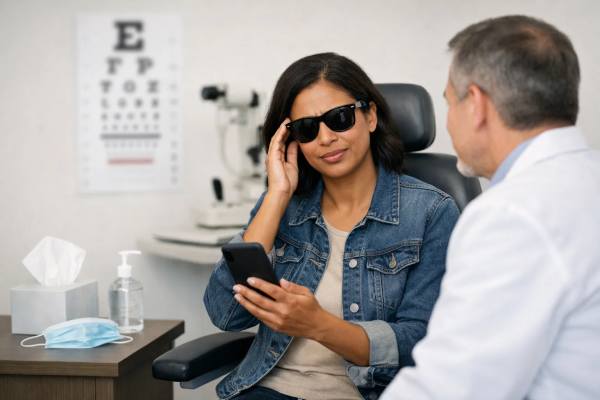
Photophobia is not just annoyance at brightness. It is a sensitivity in which light feels uncomfortable, painful, or draining. In Long COVID, photophobia often reflects a combination of ocular-surface irritation and nervous system sensitivity—two systems that can amplify each other.
Why light sensitivity happens
Several pathways can make light feel “too strong”:
- Dry eye and corneal exposure: when the tear film breaks up, the cornea becomes more reactive and light can sting.
- Conjunctival inflammation: irritation of the eye surface can increase tearing and discomfort in bright conditions.
- Migraine pathways: light processing in the brain becomes hypersensitive, often with nausea or sound sensitivity.
- Sleep disruption: poor sleep increases pain sensitivity and lowers tolerance for sensory input.
- Autonomic stress responses: rapid heart rate, anxiety spikes, and dizziness can make bright environments feel overwhelming.
You may notice photophobia is worse in supermarkets, offices with bright overhead lighting, or outdoors on reflective surfaces. That pattern often points to sensory processing and migraine-like pathways rather than a purely “eye-only” problem.
Photophobia patterns that are usually lower risk
These are often manageable with structured home care:
- Both eyes feel similarly light-sensitive
- The eye is not deeply painful
- Vision is stable, even if it fluctuates mildly with fatigue
- Symptoms improve in softer indoor light and worsen after screens
- Photophobia improves when dryness is treated consistently
Photophobia patterns that are higher risk
Seek prompt evaluation when photophobia is paired with:
- Deep eye pain or the inability to keep the eye open
- New blurred vision that does not clear with blinking
- Marked redness, especially one-sided
- A visible corneal change (spot, haze, or cloudy area)
- New floaters or flashes of light
- Severe headache with nausea and a very red eye
A practical way to reduce light sensitivity without “living in darkness”
It is natural to hide from light when it hurts. Short-term dimming is reasonable, but extreme darkness all day can increase sensitivity over time. A balanced plan often works better:
- Use comfortable, indirect indoor lighting
- Reduce glare and reflections rather than eliminating all light
- Increase light exposure gradually as symptoms allow
- Use sunglasses outdoors if needed, but choose the lightest tint that still feels comfortable
- Build screen tolerance slowly with timed breaks and larger text
How long does it last
Photophobia can fade as the eye surface stabilizes and headaches calm, but improvement is often nonlinear. A useful metric is functional: “Can I tolerate normal indoor light and short screen tasks without escalating symptoms?” If the answer is improving week by week, you are likely on the right track.
Photophobia in Long COVID is common, real, and often treatable—while still requiring caution when paired with pain or vision loss.
What helps at home and what to avoid
When Long COVID affects vision, people often try random fixes: new glasses, harsher lighting, darker rooms, or multiple drops without a plan. A structured two-week approach is more effective because it clarifies what is driving symptoms.
The two-week reset plan
Use a consistent routine for 14 days and track what changes.
- Tear support:
- Use lubricating drops regularly, not only when symptoms spike.
- If you need drops more than 4 times a day, preservative-free options are often gentler.
- Add a cool compress for 5 to 10 minutes once or twice daily if eyes feel inflamed.
- Screen pacing:
- Follow a 20-minute cycle: look away for 20 seconds and blink deliberately.
- Increase text size and reduce glare.
- Keep screens slightly below eye level to reduce surface drying.
- Light management:
- Use indirect lighting indoors.
- Reduce reflections (window glare, glossy screens).
- Avoid total darkness all day; aim for “comfortable light,” not “no light.”
- Whole-body supports:
- Hydrate steadily, especially if appetite is reduced.
- Keep sleep timing as consistent as possible.
- Limit alcohol and smoke exposure, which can worsen dryness and headaches.
A simple daily note helps: morning symptoms, late-day symptoms, screen tolerance, and the “one thing that worsened it most.”
Warm compresses and eyelid care for evaporative dry eye
If your eyes feel dry and lids feel oily, gritty, or tender, the oil glands may be involved. Many people benefit from:
- A warm compress for 5 to 10 minutes
- Gentle eyelid hygiene with a clean cloth or lid wipes
- Consistency for several weeks rather than a single try
Warm compresses are not for everyone. If heat worsens symptoms, switch to cool compresses and focus on lubrication.
Do not overlook simple optical issues
Long COVID can unmask mild refractive errors. If you are squinting or holding screens closer, a basic vision check may help. Even a small change in prescription can reduce strain and photophobia indirectly by lowering the visual effort needed to see clearly.
What to avoid
Some common choices can prolong symptoms:
- Redness-relief drops: these can cause rebound redness and do not treat the underlying driver.
- Leftover prescription drops: old antibiotics or steroid drops can irritate the eye or worsen certain infections.
- Aggressive eye rubbing: rubbing increases inflammation and can worsen corneal irritation.
- All-day darkness: it may provide short relief but can increase sensitivity over time.
When home care is working
Look for trend improvements rather than perfection:
- Less burning and fewer “bad spikes”
- Better tolerance of normal indoor light
- Vision that stabilizes faster after blinking
- Longer periods of comfortable screen use
If you see no improvement after two weeks of consistent care—or if you worsen—an eye exam is usually the next best step.
When to seek care and what testing looks like
Because Long COVID can make symptoms feel vague and shifting, people sometimes delay care longer than they would otherwise. A clearer threshold helps you get evaluated when it is most useful—either to protect vision or to stop the cycle of uncertainty.
Seek urgent evaluation the same day if
These symptoms can signal corneal involvement, internal eye inflammation, or other urgent conditions:
- Moderate to severe eye pain
- Photophobia that makes it hard to keep the eye open
- New blurred vision that does not clear with blinking
- A very red eye, especially if one-sided
- A visible white spot, corneal haze, or cloudy patch
- New flashes, many new floaters, or a curtain-like shadow
If you wear contact lenses and have pain or photophobia, treat it as urgent.
Schedule prompt care within 24 to 72 hours if
These issues are less emergent but still benefit from timely assessment:
- Persistent blur or light sensitivity beyond 2 to 3 weeks
- Symptoms that worsen after initial improvement
- One eye consistently worse than the other
- Recurrent red-eye episodes
- Significant interference with work, driving, or reading despite home measures
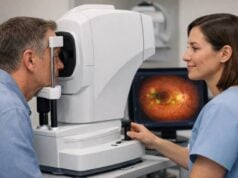
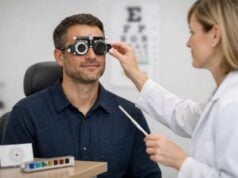
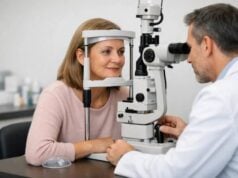
What an eye clinician may check
A thorough evaluation often includes:
- Visual acuity in each eye: sometimes under different lighting
- Refraction: to see whether a prescription change would reduce strain
- Slit-lamp exam: to check the tear film, cornea, and conjunctiva
- Dry eye testing: tear breakup time, staining patterns, eyelid gland assessment
- Pupil and eye movement exam: to look for neuro-ophthalmic clues
- Eye pressure measurement: when symptoms suggest it could matter
If the clinician suspects inflammation inside the eye or retinal issues, they may add dilated examination and imaging tests. The aim is not to “prove Long COVID,” but to identify treatable causes and rule out urgent ones.
What to bring to the appointment
A short, specific history helps:
- When symptoms began relative to COVID infection
- Whether symptoms are constant or fluctuate
- One eye or both
- What worsens symptoms (screens, bright light, driving, fatigue)
- What helps (blinking, drops, rest, darkness)
- Any contact lens use, autoimmune history, or prior eye disease
If you tracked two weeks of home care, bring the pattern. Clinicians can often spot the likely driver quickly when the timeline is clear.
What you can reasonably expect next
Many people receive a focused plan: dry eye treatment, visual ergonomics, updated prescription, headache pathway management, or a referral when neuro-visual issues are suspected. Even when the exam is normal, that information is valuable—it narrows the field and helps you stop guessing.
The safest framing is simple: Long COVID can involve the eyes, but vision deserves a careful approach. Early evaluation is protective when red flags are present and efficient when symptoms persist despite good self-care.
References
- Ocular manifestations of COVID-19: A systematic review of current evidence 2024 (Systematic Review)
- Ocular surface disturbance in patients after acute COVID‐19 2022
- A clinical case definition of post COVID-19 condition by a Delphi consensus, 6 October 2021 2021 (Guideline)
- A clinical case definition of post-COVID-19 condition by a Delphi consensus 2022
- A review of neuro-ophthalmic sequelae following COVID-19 infection and vaccination 2024 (Review)
Disclaimer
This article is for educational purposes and does not replace medical advice, diagnosis, or treatment. Long COVID can involve eye symptoms, but blurry vision, eye pain, and photophobia can also signal eye conditions that require urgent evaluation to protect vision. Seek prompt care if you have significant eye pain, a very red eye, marked light sensitivity, blurred vision that does not clear with blinking, a visible corneal spot or haze, new flashes or many new floaters, a curtain-like shadow, recent eye injury or chemical exposure, or a red and painful eye while wearing contact lenses.
If you found this article helpful, please consider sharing it on Facebook, X (formerly Twitter), or any platform you prefer.