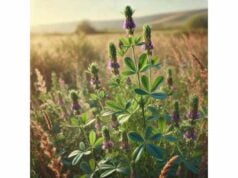
Lyreleaf sage is a North American native wildflower that sits at an interesting crossroads between ornamental beauty, folk medicine, and edible herb use. You may know it for its low purple-green rosettes and pale lavender flowers, but historically it has also been brewed as tea, eaten in small amounts, and used in simple home remedies. Unlike common culinary sage, however, lyreleaf sage has only a modest modern evidence base. Its potential value comes mostly from traditional use, early phytochemical work, and limited laboratory studies rather than strong human clinical trials.
That makes it a herb worth understanding with both curiosity and restraint. It appears to contain aromatic and phenolic compounds that may help explain mild antioxidant, soothing, and antimicrobial effects. Traditional uses have included sore throats, coughs, digestive discomfort, and minor skin complaints. At the same time, it is not a proven cancer remedy despite the old nickname “cancerweed.” This guide looks closely at what lyreleaf sage is, what its compounds may do, how it has been used, what a cautious dosage looks like, and when it is smarter to choose a better-studied herb instead.
Quick Summary
- Lyreleaf sage may offer mild digestive and throat-soothing support in traditional tea use.
- Its most plausible modern strengths are antioxidant activity and gentle household herbal use, not proven disease treatment.
- A cautious infusion range is about 1 to 2 g dried aerial parts per 240 mL hot water, once or twice daily.
- Avoid medicinal use during pregnancy or breastfeeding, and do not rely on it for warts, tumors, or any suspected cancer.
Table of Contents
- Lyreleaf Sage overview and traditional identity
- Key ingredients and medicinal properties
- Potential health benefits and what the evidence suggests
- How Lyreleaf Sage is used in food, tea, and folk preparations
- Dosage, timing, and practical preparation guidelines
- Safety, side effects, and who should avoid it
- When Lyreleaf Sage makes sense and when to choose something else
Lyreleaf Sage overview and traditional identity
Lyreleaf sage, Salvia lyrata, is a perennial herb in the mint family, Lamiaceae. It is native to much of the eastern and central United States and is often seen in open woods, roadsides, meadows, lawns, and disturbed ground. Gardeners value it for the same traits that help it survive in the wild: it tolerates variable moisture, handles some mowing, spreads readily by seed, and offers early-season color when many other perennials are still quiet. The rosette leaves, often marked with burgundy or purple tones, are shaped a bit like a lyre, which explains the common name.
Medicinally, the plant has a stronger folklore than modern clinical record. Indigenous and regional folk traditions used the roots, leaves, and aboveground parts in several ways. Historical reports describe root salves for sores, infusions for coughs and colds, leaf-and-honey syrups for asthma-like complaints, and simple tea-style use for sore throats and general discomfort. Older herbal traditions also gave the plant another name, “cancerweed,” because it was applied to warts, skin lesions, and other growths. That name is historically important, but it is also the first place where modern readers need caution. It reflects folk belief, not proof that the herb treats cancer.
This distinction matters because lyreleaf sage is often confused with better-studied sage species. It is not the same thing as common culinary sage, and it has not been studied nearly as deeply. That means many broad claims about “sage benefits” cannot automatically be transferred to this plant without qualification. At the same time, it would be wrong to dismiss it completely. A plant does not need extensive clinical data to deserve attention. Traditional use, ethnobotanical records, and early laboratory findings can still make it worth understanding.
Lyreleaf sage also has a small but real edible tradition. Young leaves, flowers, and stems have been described as minty and suitable in modest culinary amounts. This food-like history is helpful because it places the herb closer to the category of gentle household botanicals than to aggressive stimulant or purge herbs. Still, food use and medicinal use are not identical. A leaf in salad is not the same as repeated strong infusions or concentrated extracts.
So the best starting point is balance. Lyreleaf sage is a real traditional herb with meaningful cultural history and some promising early data. But it is not a miracle plant, and it is not well served by exaggerated claims. Understanding both sides of that story is the most helpful way to approach it.
Key ingredients and medicinal properties
Like many members of the Salvia genus, lyreleaf sage appears to owe its activity to a combination of aromatic compounds and polyphenolic constituents rather than to one dominant “magic” ingredient. That is often how useful herbs work in practice. Their effects come from a pattern of compounds acting together, sometimes gently, sometimes synergistically.
One of the most interesting modern findings comes from recent aqueous-extract research on Salvia lyrata. In that work, major compounds identified in sage extract included borneol, 1,8-cineole, and melezitose. Borneol and 1,8-cineole are especially notable because they are associated in broader plant research with aromatic, antimicrobial, and respiratory-supportive properties. Neither proves that lyreleaf sage works the same way in people, but both help explain why this plant has long been used for sore throats, coughs, and general upper-respiratory discomfort.
Beyond those compounds, lyreleaf sage likely shares part of the broader salvia phytochemical pattern: phenolic acids, flavonoids, and aromatic terpenes. This is where compounds such as rosmarinic acid become relevant as reference points. Even when a species has not been fully mapped, salvia plants often contain phenolic constituents linked with antioxidant and anti-inflammatory activity. That makes it reasonable to describe lyreleaf sage as potentially antioxidant-rich, especially in simple water-based preparations.
What these compounds may mean in practice
The medicinal properties most commonly associated with lyreleaf sage are:
- Mild antioxidant potential
- Gentle antimicrobial or antiviral potential in laboratory settings
- Traditional soothing use for the throat and upper respiratory tract
- Mild digestive support in folk medicine
- Possible mild calming or settling effects when used as a warm infusion
These are modest properties, but modest is not the same as unimportant. A lightly aromatic herb with polyphenols can still be useful in everyday wellness routines. The key is to avoid overstating the jump from lab chemistry to human outcome. For example, if a leaf extract shows antiviral activity in vitro, that does not mean home tea is a treatment for viral illness. It means the plant contains compounds worth studying further.
Another point worth noting is that whole-herb preparations and isolated compounds behave differently. A cup of lyreleaf sage tea is not the same as a purified borneol preparation or a concentrated essential oil. In fact, one of the safest ways to approach herbs like this is to respect the difference between food-style use and highly concentrated forms.
So while the chemistry of lyreleaf sage is still being explored, the emerging picture is coherent. It is an aromatic, phenolic-rich salvia with plausible antioxidant, soothing, and mild antimicrobial properties. That fits both its traditional use and the cautious tone modern readers should keep in mind. The herb may indeed do something. It just does not justify grand claims.
Potential health benefits and what the evidence suggests
The most responsible way to talk about lyreleaf sage benefits is to separate traditional use, plausible mechanisms, and actual evidence. When those are mixed together carelessly, herbs start sounding far more proven than they really are. With Salvia lyrata, the evidence is promising in places, but still light overall.
The first likely benefit is gentle throat and respiratory support. Traditional records describe infusions for colds, coughs, sore throats, and even leaf-and-honey preparations for asthma-like symptoms. Recent laboratory work adds a modern angle: aqueous extracts of Salvia lyrata showed significant inhibition of human respiratory syncytial virus in vitro. That is an interesting finding, especially because the plant was historically used for respiratory complaints. Still, the jump from cell culture to clinical use is large. At this stage, the safest interpretation is that lyreleaf sage has plausible respiratory relevance, not proven therapeutic status.
A second possible benefit is digestive comfort. Folk use includes mild laxative, antacid, and carminative-style applications. These claims fit what many aromatic herbs do, especially when taken as warm infusions. Compared with better-studied herbs such as peppermint for digestive and respiratory comfort, lyreleaf sage is far less established. But as a traditional tea herb, it makes sense that some people may have found it settling after meals or during mild digestive upset.
A third benefit is antioxidant support. This is where salvia-family chemistry matters. Phenolic compounds and terpenes commonly contribute to free-radical scavenging and anti-inflammatory effects across the genus. Lyreleaf sage has not been studied as extensively as culinary sage, but the available data fit the idea that it contains compounds capable of meaningful antioxidant activity.
A fourth possible area is topical support for minor skin complaints. Folk traditions used the plant on sores, warts, wounds, and other lesions. This is historically important, but also the easiest place for folklore to outrun evidence. A plant used on the skin for generations is not automatically safe, effective, or appropriate for every lesion. In particular, the old cancerweed reputation should never be turned into a modern cancer claim.
So what can be said with confidence? Lyreleaf sage appears to be a mild traditional herb with plausible antioxidant, throat-soothing, and respiratory-supportive potential. What cannot be said with confidence is that it treats cancer, replaces standard care, or has proven clinical effectiveness for chronic digestive or respiratory disease.
That still leaves the herb with a respectable role. Not every useful plant needs to be a pharmaceutical contender. Some herbs matter because they are accessible, gentle, and culturally meaningful. Lyreleaf sage may fit that model well, as long as expectations remain realistic and safety stays part of the conversation.
How Lyreleaf Sage is used in food, tea, and folk preparations
Lyreleaf sage has traditionally been used in ways that are simple, low-tech, and close to the plant itself. That matters because a herb with a modest evidence base is often best kept in modest forms. Rather than thinking in terms of capsules and aggressive extracts, it makes more sense to think in terms of leaves, infusions, syrups, and fresh seasonal use.
The gentlest approach is culinary. Young leaves, stems, and flowers have been described as edible and mildly minty. In small amounts, they can be used in salads, added to soft herb mixes, or brewed as a light herbal tea. The flavor is not as bold as common sage, and it does not behave like a kitchen spice in the same way. It is better suited to fresh, leafy use than to heavy cooking. This food-like tradition is one reason many people approach lyreleaf sage as a mild household herb rather than as an intense medicinal plant.
Tea is the next most natural form. A simple warm infusion of the dried or fresh aerial parts is the format most often associated with sore throat use, seasonal discomfort, and general mild support. Its flavor can be softened by blending it with gentler, familiar herbs. In practice, it pairs nicely with lemon balm in calming tea blends, especially when the goal is a pleasant, easy evening infusion rather than a strong medicinal brew.
Traditional or household-style uses
- Leaf tea or infusion
Used for sore throats, coughs, and mild digestive unease. - Simple syrup-style preparation
Older traditions mention leaves with honey for respiratory complaints. - Fresh plant food use
Young leaves and flowers used sparingly in salads or as a mild herb. - Topical folk applications
Historically used on sores and skin complaints, though modern home use should be much more cautious.
The topical history deserves special care. Folk medicine often used crushed plant material or poultices on the skin, but modern readers should not imitate every historical preparation. Skin conditions vary widely, and warts, sores, and suspicious lesions are exactly the kinds of problems that can be misunderstood at home. A recorded use is not a blanket endorsement.
For most people, the safest practical use is still tea or limited food use. Those forms match the plant’s traditional household role, keep doses moderate, and make it easier to judge personal tolerance. They also preserve what is most appealing about lyreleaf sage: it is a small native plant that can bridge the garden, the tea cup, and herbal history without needing to be turned into a high-potency product.
Dosage, timing, and practical preparation guidelines
There is no well-established modern clinical dose for lyreleaf sage. That is the first and most important point. The herb has traditional uses and intriguing preclinical data, but it has not been standardized the way many modern herbal products have. So any dosage guidance should be conservative, food-like, and clearly framed as practical rather than definitive.
A cautious infusion range is about 1 to 2 g of dried aerial parts per 240 mL of hot water, steeped for 5 to 10 minutes. If using fresh material, roughly 2 to 4 teaspoons chopped herb per cup is a reasonable place to start. One cup once or twice daily is enough for most people who are trying the herb in a traditional tea format. Stronger or more frequent use does not have a clear evidence base and is unlikely to improve results simply by force of quantity.
Timing depends on the reason for use. If the goal is throat comfort, sipping the tea warm between meals is often the most sensible pattern. If the goal is mild digestive support, taking it after meals makes more sense. For general seasonal wellness, once daily during short periods is a more prudent approach than continuous long-term use.
Simple preparation guide
- Use 1 to 2 g dried herb, or a small handful of fresh aerial parts, per cup.
- Pour hot water over the herb and cover while steeping.
- Strain after 5 to 10 minutes.
- Sip slowly rather than drinking it quickly.
- Stop if it causes irritation, nausea, or any unexpected reaction.
This is also a good herb to start low with. Because formal dosing data are limited, the most reasonable approach is to test a mild infusion first and notice how the body responds. A pleasant, slightly minty cup that feels easy to tolerate is a better sign than a very strong tea that tastes medicinal but offers no clearer benefit.
More concentrated forms deserve more skepticism. There is little reason for most people to use lyreleaf sage as a concentrated tincture, powder, or essential-oil-style product. These formats can amplify uncertainty without clearly improving usefulness. When the evidence base is modest, simplicity is usually the better guide.
If you enjoy blending herbs, lyreleaf sage can be combined sparingly with other classic household botanicals. A little with ginger in a warming throat or digestion blend can work well, especially in cool weather. The key word is sparingly. Lyreleaf sage is interesting partly because it is subtle.
Finally, duration matters. A few days to a couple of weeks of occasional tea use is one thing. Months of steady medicinal use without a clear reason is another. If a symptom is persistent enough to push someone toward constant herbal treatment, it deserves a closer look rather than simply more tea.
Safety, side effects, and who should avoid it
Lyreleaf sage is generally thought of as a mild herb when used in food-like amounts, but “mild” should not be confused with “fully studied.” The modern safety literature on Salvia lyrata is limited, and that alone is a reason for moderation. When safety data are thin, the safest habit is to keep doses small, uses short, and claims restrained.
The most likely side effects are the ordinary ones seen with many leafy herbs: stomach upset, mouth irritation, mild nausea, or an allergic response in sensitive people. Because it belongs to the mint family, anyone who reacts strongly to other aromatic labiates should be cautious the first time they try it. If the herb causes throat irritation instead of relief, that is a clear sign to stop.
Pregnancy and breastfeeding deserve a stricter line. There is not enough reliable safety information to recommend medicinal use during either period. The same applies to small children. In those situations, the absence of strong evidence should be treated as a reason for caution, not as a green light.
Another important point is the old cancerweed reputation. Folk use against warts, sores, or tumors is part of the plant’s history, but it should never be treated as evidence that the herb is appropriate for suspicious lesions or self-treatment of skin growths. Any persistent sore, changing mole, wart-like lesion, or unexplained lump should be examined properly rather than treated repeatedly with home herbs.
Formal herb-drug interaction data are sparse. That means it is hard to list proven interactions with confidence. The safer statement is that people taking multiple medications, especially for chronic conditions, should avoid casual medicinal use of under-studied plants unless a qualified clinician is involved.
People who should avoid medicinal use
- Pregnant people
- Breastfeeding people
- Young children
- Anyone with a known allergy to mint-family herbs
- Anyone using it in place of medical care for suspicious skin lesions, persistent cough, or severe digestive symptoms
Topical use is another area where caution matters. While historical poultice use exists, modern home application to broken skin, warts, or unknown lesions is difficult to justify when better-characterized herbs are available. If a person wants a gentle topical herb, options like calendula for minor skin support usually make more practical sense.
The overall safety picture is therefore mixed but manageable. In small culinary or tea amounts, lyreleaf sage is likely low risk for many healthy adults. In medicinal amounts, during vulnerable life stages, or when used as a substitute for proper care, the uncertainty rises quickly. Respecting that difference is one of the smartest ways to use the herb well.
When Lyreleaf Sage makes sense and when to choose something else
A useful herb guide should not only explain what a plant can do, but also when it is probably not the best choice. Lyreleaf sage is a good example. It is attractive, edible, traditionally meaningful, and scientifically interesting. But in many practical situations, a more established herb may be easier to justify.
Lyreleaf sage makes sense when the goal is gentle, local, food-style herbalism. If you grow native plants, enjoy mild garden teas, or want to explore a traditional herb with some cultural and seasonal resonance, it is a satisfying choice. It also makes sense when you want a light tea for occasional throat or digestive support and you already know you tolerate mint-family herbs well.
It makes less sense when the goal is a heavily evidence-backed remedy. For digestive discomfort, for example, better-studied herbs often provide a clearer path. For skin soothing, a known demulcent or vulnerary is usually more practical. For liver health, immune support, or cancer-related concerns, lyreleaf sage should not be near the front of the line at all.
This is where alternatives become helpful rather than dismissive. If someone wants a more evidence-oriented herb for mild skin support, plantain for everyday topical and soothing use is usually easier to justify. If someone wants stronger digestive tradition with a gentler reputation, there are other herbs with deeper safety familiarity and broader use.
That does not reduce lyreleaf sage to irrelevance. In fact, it clarifies its real strengths. The plant is especially valuable as:
- A native edible and tea herb
- A bridge between ornamental gardening and folk herbalism
- A small-scale household herb for mild, occasional use
- A reminder that traditional use and modern proof are not the same thing
It is less valuable as:
- A first-choice remedy for chronic symptoms
- A substitute for better-studied sage species
- A topical solution for suspicious lesions
- A serious respiratory or cancer treatment
For many readers, that clarity is more useful than a longer list of supposed benefits. Herbs become more trustworthy when their limits are named openly. Lyreleaf sage is a plant worth appreciating, trying gently, and keeping in proportion. It can absolutely belong in the garden and the tea jar. It just should not be asked to carry more than the evidence allows.
In the end, lyreleaf sage is best treated as a modest native herb with character rather than a powerhouse remedy. That is still a worthwhile role. In a landscape full of exaggerated claims, an honest herb is often more valuable than a hyped one.
References
- Ethnobotanical diversity of the genus Salvia L. (Lamiaceae): From medicinal and culinary applications to cultural importance of sage species across the globe 2025 (Review)
- Evaluation of the Therapeutic Potential of Traditionally-Used Natural Plant Extracts to Inhibit Proliferation of a HeLa Cell Cancer Line and Replication of Human Respiratory Syncytial Virus (hRSV) 2024 (Open-Access Study)
- Natural Compounds of Salvia L. Genus and Molecular Mechanism of Their Biological Activity 2023 (Review)
- Weekly “What is it?”: Lyreleaf Sage 2021 (Official Extension Article)
Disclaimer
This article is for educational purposes only and is not medical advice, diagnosis, or treatment. Lyreleaf sage has a meaningful history of traditional use, but it does not have strong human clinical evidence for most claimed benefits. Do not use it as a replacement for medical care for cancer, persistent cough, asthma, suspicious skin lesions, or chronic digestive symptoms. Pregnant or breastfeeding people, children, and anyone with significant medical conditions or multiple medications should seek qualified guidance before using this herb medicinally.
If you found this article helpful, please share it on Facebook, X, or any platform you prefer.