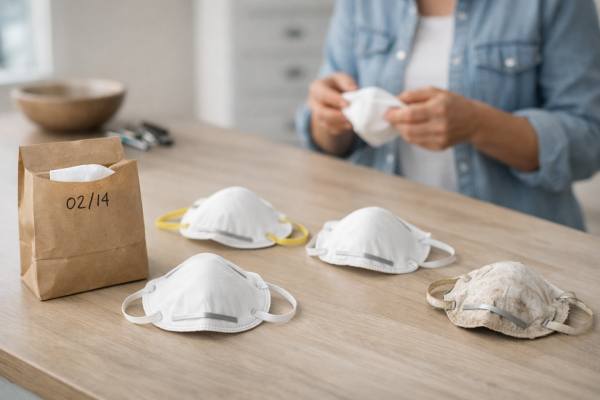
Mask reuse sits in a gray zone: it can be perfectly sensible in some everyday situations, and genuinely risky in others. The difference usually comes down to three things—fit, cleanliness, and moisture. A mask that still seals well and stays dry can continue to perform, while a damp, misshapen, or visibly dirty one becomes uncomfortable at best and unreliable at worst. Rotation adds a practical middle path: instead of stretching one mask too far, you alternate between several, giving each time to fully dry between wears. This can reduce odor, skin irritation, and the temptation to handle the mask constantly. The goal is not to make “reuse” sound effortless—it is to make it deliberate. With a few clear rules, you can tell when reuse is reasonable, when it is merely unpleasant, and when it is time to throw it away without debate.
Quick Overview for Cleaner Mask Reuse
- Rotation can make reuse more comfortable by letting masks fully dry between wears and reducing odor and skin irritation.
- Reuse is most reasonable for brief, low-exposure errands when the mask stays dry, clean, and maintains its shape and seal.
- A mask that is damp, soiled, smelly, or no longer fits snugly should be discarded, even if it “looks fine.”
- If you reuse a respirator, keep a small rotation (3–5 masks), store each in a breathable container, and limit repeated on-and-off cycles.
Table of Contents
- The three rules: fit, dryness, and cleanliness
- Reuse by mask type: what holds up and what does not
- Rotation that actually works at home and at work
- How to tell when it is gross and when it is risky
- Handling and storage to avoid self-contamination
- Cleaning and decontamination: what to avoid and what is realistic
- High-risk situations where fresh is non-negotiable
The three rules: fit, dryness, and cleanliness
If you remember only three principles for mask reuse, make them these: fit, dryness, and cleanliness. They sound simple, but they explain nearly every “Is this okay?” scenario.
Fit is the performance engine
A mask can have excellent filter material and still fail you if air leaks around the edges. Reuse tends to harm fit before it harms filtration. Straps stretch, nose wires fatigue, and the mask’s shape can collapse after being stuffed into a pocket or bag.
A quick fit check takes seconds:
- The mask should sit snugly on the bridge of your nose and under your chin without sliding.
- Straps should feel secure, not “barely there.”
- When you inhale, the mask should pull slightly inward (especially with respirators).
- If you can feel strong airflow at the cheeks or nose, your seal is likely compromised.
Dryness is not a comfort detail, it is a safety detail
Moisture changes everything. A damp mask feels clammy because it is. It is also more likely to:
- Increase breathing resistance.
- Encourage people to tug it off and on.
- Collect and hold grime (makeup, skin oils, droplets) more easily.
“Dry” means truly dry—not “mostly dry,” not “it will dry once I put it on.” If it is damp from breath, rain, or sweat, it is time to switch.
Cleanliness is about more than visible dirt
People often treat “clean” as “no stains.” But cleanliness also includes what you cannot see: skin oils, saliva droplets, and environmental dust. You do not need to panic about invisible microbes in normal daily life, but you do need to respect obvious contamination.
A practical rule:
- If it has visible soil, makeup buildup, food residue, bodily fluids, or a persistent odor, discard it.
The best reuse habits are not heroic—they are conservative and boring. If you have to argue yourself into reusing a mask, you already have your answer.
Reuse by mask type: what holds up and what does not
Not all masks are designed to survive reuse. “Mask” is an umbrella term, but the reuse logic depends on structure, materials, and how much sealing you need.
Cloth masks: reusable, but only if you actually wash them
Cloth masks are built for reuse, which means their safety depends on routine laundering. The fabric holds onto oils and moisture, and it can develop odor quickly. For most people, the cleanest habit is:
- Wash after each day of wear, or sooner if damp or soiled.
- Fully dry before the next use.
Cloth masks are also the most sensitive to fit drift. Elastic ear loops stretch, and the mask can sag. If it does not sit snugly, it becomes a “face cover” more than a protective tool.
Disposable procedure-style masks: limited reuse is usually a downgrade
These masks are lightweight and prone to deforming. Once bent, creased, or crushed, they rarely return to a consistent shape. Even if the filter still blocks some particles, gaps around the sides undermine performance.
If you reuse one briefly because you wore it for a short errand and it stayed clean and dry, you are not committing a moral crime. But it is usually not a great rotation candidate. The best replacement signal is simple: if it looks tired, it is tired.
Respirators (N95, FFP2, KN95): reuse is mostly about fit and handling
Respirators are designed to seal more tightly, which is why reuse hinges on whether they still hold their shape and seal. Filtration media can remain effective, but straps and nosepieces can degrade with repeated donning and doffing. Another concern is habit: respirators invite more touching because people adjust them.
If reuse happens, keep it conservative:
- Reuse only if the respirator remains structurally intact.
- Avoid repeated on-and-off cycles; each cycle stresses straps and seal points.
Elastomeric respirators: the most reusable option
If you want a genuinely reusable system, elastomeric respirators with replaceable filters are designed for it. The facepiece can be cleaned, and filtration comes from replaceable cartridges or filters. They are not for every setting because they are bulkier and can affect communication, but they are the clearest “reuse by design” tool.
Bottom line: the more a mask relies on a tight seal, the more reuse becomes a fit management problem rather than a “can I stretch this one more day?” problem.
Rotation that actually works at home and at work
Rotation is a strategy, not a loophole. Done well, it reduces moisture, improves comfort, and prevents the classic mistake: reusing the same mask repeatedly because it is convenient.
The simplest rotation: 3 to 5 masks
A practical rotation uses a small set of masks rather than a huge pile. For many people:
- 3 masks works if you wear them infrequently.
- 5 masks works well for daily wear, especially with respirators.
Label them by day (Mon–Fri) or number them (1–5). The idea is to give each mask substantial time off-duty to dry completely.
Breathable storage is the point
Rotation fails when people store masks in airtight containers while they are still moist. A sealed plastic bag can trap humidity and odor. Instead, choose breathable storage:
- A paper bag.
- A clean, dry container that allows airflow.
- A designated shelf space where the mask can sit undisturbed.
If your mask is damp, let it air-dry before it goes into any container.
A realistic daily routine
Here is a rotation that fits into real life:
- Put on a clean mask at the start of the day.
- If you remove it briefly (for eating or a quick break), handle it by the straps and store it in a breathable container.
- If it becomes damp, swap to a fresh mask from your rotation.
- At day’s end, place the used mask in its storage spot and move to the next mask the next day.
This method can reduce the urge to “stretch” one mask far beyond its best performance window.
What rotation does and does not solve
Rotation helps with:
- Moisture management.
- Odor and comfort.
- Reducing repeated wear of one mask.
Rotation does not solve:
- A mask that no longer fits.
- Visible soil or contamination.
- High-risk exposures.
If you treat rotation like a system with rules, it can be both reasonable and hygienic. If you treat it like permission to keep a mask indefinitely, it becomes the exact scenario you are trying to avoid.
How to tell when it is gross and when it is risky
“Gross” and “risky” overlap, but they are not identical. A mask can be gross (stained, smelly) without being an immediate danger, and a mask can be risky without looking dramatic (slightly stretched straps that create leaks). The goal is to spot both.
The gross category: discard for hygiene and comfort
If you notice any of these, you are past the point of “maybe”:
- Persistent odor that returns quickly after airing out.
- Makeup buildup around the edges.
- Skin oil shine, discoloration, or a sticky feel.
- A mask that feels clammy even after “drying.”
Gross masks increase face-touching, skin irritation, and the temptation to wear it incorrectly. Even if the filtration material is not destroyed, your behavior around a gross mask often becomes the real problem.
The risky category: discard because performance is compromised
These are the non-negotiables:
- Damp or wet from breath, sweat, rain, or a humid environment.
- Damaged structure (torn material, separated layers, bent nosepiece that will not hold shape).
- Loss of seal (gaps, sliding, straps that feel loose, mask collapsing when you speak).
- Breathing resistance that is noticeably higher than when the mask was new.
Risky can also mean “context risky.” A mask that might be fine for a five-minute run into a quiet shop is not the mask you want for prolonged close contact or crowded indoor events.
A quick decision tool
When you are unsure, use this short checklist:
- Does it still fit snugly without constant adjustment?
- Is it completely dry?
- Is it free of visible soil and strong odor?
- Has it been stored in a way that kept its shape?
- Was it worn in a low-risk setting (short duration, no heavy coughing nearby, no exposure to splashes)?
If you answer “no” to any of the first three, discard it. If you answer “no” to the last two, you should strongly consider discarding it unless you have a clear rotation plan and a reason to reuse.
Gross is unpleasant. Risky is unreliable. Your job is to avoid both.
Handling and storage to avoid self-contamination
Most mask reuse problems are not about filtration—they are about handling. The more you touch the front of a used mask, the more you risk transferring whatever is on it to your hands, phone, steering wheel, or face.
The “front is dirty” rule
Treat the outside front panel as dirty, even if it looks clean. That mindset makes your habits cleaner automatically.
When putting on or taking off:
- Touch only the straps or ear loops.
- Avoid sliding the mask up and down your face.
- Do not park it under your chin (it becomes a droplet collector and a face-toucher).
Safe temporary removal
If you need to remove a mask briefly, do not stuff it into a pocket or toss it on a table. Use a simple, repeatable method:
- Remove by the straps.
- Fold it in a way that keeps the inner surface protected (if the design allows), or keep it flat without crushing.
- Place it in a breathable container (paper bag is a common choice).
- Clean your hands before eating, touching your face, or handling contact lenses.
Storage that preserves shape
A reused respirator that has been crushed is often a respirator that will not seal. Storage should protect the mask from:
- Strap deformation.
- Facepiece collapse.
- Dust and debris.
Practical options include:
- A paper bag labeled with your name and mask number/day.
- A rigid container that does not compress the mask (used only after the mask is fully dry).
- A dedicated shelf space where it will not be bumped or bent.
How to reduce “adjustment touching”
If you constantly adjust your mask, you are signaling a fit problem. Fix the cause:
- Choose a size and model that matches your face.
- Use a proper nosepiece pinch once, not repeatedly.
- Consider a headband style if ear loops loosen easily.
Good handling is what makes reuse feel reasonable instead of grimy. If you cannot handle a reused mask without touching the front repeatedly, reuse is probably not a good choice for you.
Cleaning and decontamination: what to avoid and what is realistic
People often ask for a “safe way to disinfect a mask at home.” The honest answer depends on the mask type. Some masks can be washed. Many respirators should not be.
Cloth masks: wash is the default
Cloth masks can be laundered because they are made for it. Use a method that:
- Removes oils and residue.
- Fully dries the mask.
If the cloth becomes thin, stretched, or misshapen, replace it. A washable mask that no longer fits snugly is not serving you well.
Disposable masks and respirators: washing is usually a bad idea
For disposable procedure-style masks, washing tends to deform the structure and reduce usability. For tight-sealing respirators, washing can be worse: it can damage the filter media or change how the mask seals. Water, soap, alcohol sprays, and many household disinfectants can alter performance in ways you cannot easily see.
A useful mental model:
- If it is built like paper and melt-blown layers, treat it like it is not meant to be laundered.
Home “decontamination hacks” to avoid
These methods are popular because they feel proactive, not because they are reliably safe:
- Spraying with alcohol or bleach solutions.
- Baking in an oven without verified temperature control.
- Microwaving (fire risk, metal nosepieces, uneven heating).
- Using strong UV devices without validated dose coverage.
If you do not have a way to confirm that the method disinfects without damaging fit and filtration, it is easy to end up with a mask that feels “clean” but performs worse.
What is realistic for most people
For many non-cloth masks, the most realistic approach is not “cleaning,” it is drying and rotating, plus timely replacement. Rotation can reduce moisture and odor without exposing the mask to chemicals or water.
If your goal is a truly cleanable system, consider a reusable respirator design with a cleanable facepiece and replaceable filters. That shifts “reuse” from improvisation to intended use.
Cleaning is not a virtue if it destroys the thing you are trying to rely on.
High-risk situations where fresh is non-negotiable
There are situations where reuse is simply the wrong tool—either because exposure risk is high or because the consequences of failure are serious. In these contexts, “fresh” means a clean, dry, structurally intact mask that you trust.
When you should not reuse
Strong reasons to avoid reuse include:
- Close contact with someone who is actively ill and coughing, especially for prolonged indoor time.
- Settings where splashes, sprays, or heavy contamination are possible.
- Situations where you will sweat heavily (a damp mask becomes a fast failure).
- Any time you are immunocompromised or caring for someone at very high risk.
- After a mask has been worn during a high-density indoor event where people are packed closely for a long period.
Even in everyday life, context matters. A quiet, uncrowded errand is not the same as a crowded indoor gathering.
If you are sick, your mask routine should tighten
When you have cold or flu symptoms, you may be using a mask to reduce spread to others. In that case:
- Use a fresh mask for each outing or interaction window when possible.
- Discard masks that become damp from coughing or heavy breathing.
- Prioritize comfort and breathability so you do not constantly adjust it.
If you are masking to protect others, reuse tends to become unpleasant quickly because symptom-related moisture loads the mask.
Travel and long days: plan for swaps
Long travel days are a classic setting where people over-reuse because they did not pack spares. If you anticipate extended wear:
- Bring at least one spare mask for each half-day of travel.
- Pack a breathable storage option for temporary removal.
- Assume you will need a swap if the mask becomes damp.
Waste versus safety: a balanced view
It is reasonable to care about waste. It is also reasonable to prioritize reliable protection when stakes are high. A helpful compromise is to reserve reuse and rotation for low-risk errands and keep a “fresh-only” rule for high-risk days.
If a situation makes you feel tense enough to ask, “Is this gross?” treat that as a prompt to upgrade your plan—fresh mask, better fit, or a reusable system that is meant to be cleaned.
References
- Filtering Facepiece Respirators | Personal Protective Equipment | CDC 2025 (Guidance)
- Strategies for Conserving the Supply of N95® Filtering Facepiece Respirators | Healthcare Workers | CDC 2024 (Guidance)
- N95 Respirators, Surgical Masks, Face Masks, and Barrier Face Coverings | FDA 2024 (Guidance)
- Review of the Effect of Continuous Use and Limited Reuse of N95 Respirators on Respirator Fit – PubMed 2022 (Review)
- N95 Filtering Facepiece Respirator Reuse, Extended Use, and Filtration Efficiency – PMC 2024 (Cohort Study)
Disclaimer
This article is for general educational purposes and does not provide medical advice, diagnosis, or treatment. Mask selection and reuse decisions depend on your health status, exposure risk, and the specific product’s design and instructions. If you are immunocompromised, have significant heart or lung disease, care for someone medically vulnerable, or develop severe or worsening symptoms (such as shortness of breath, chest pain, confusion, dehydration, or persistent high fever), seek medical guidance promptly. In occupational settings, follow your workplace safety and respiratory protection requirements, which may differ from everyday community use.
If you found this guide helpful, please consider sharing it on Facebook, X (formerly Twitter), or any platform you prefer.