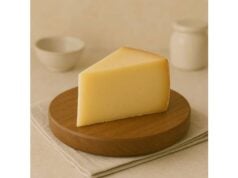
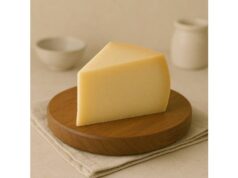
Monterey Jack is the friendly, go-anywhere cheese that melts beautifully, slices cleanly, and brings mellow, buttery flavor to everything from grilled sandwiches to enchiladas. Born in California’s missions and popularized by early dairyman David Jack, this semi-soft cow’s milk cheese now appears in many styles—classic Monterey Jack, Dry Jack (aged and firm), and spiced variations like Pepper Jack. Nutritionally, Monterey Jack offers high-quality protein, abundant calcium, and vitamin B12 with very little carbohydrate, making it compatible with many eating patterns. The main trade-offs are saturated fat and sodium, which vary by brand and style. If you choose pasteurized products, store them well, and enjoy moderate portions, Monterey Jack can fit comfortably into a balanced, heart-smart diet—and deliver that satisfying melt you’re after.
Fast Facts
- Provides about 24–25 g protein and ~55–60% DV calcium per 100 g; very low in carbohydrate.
- Typical serving: 28 g (1 oz) once daily or a few times weekly fits most balanced diets.
- Choose pasteurized varieties; avoid raw-milk cheeses if pregnant or immunocompromised.
- People with milk allergy should avoid; those with lactose intolerance often tolerate hard or aged Jack but should test their own tolerance.
Table of Contents
- Monterey Jack: Origin, Types, Uses
- Monterey Jack Nutrition Profile
- Evidence-Based Health Benefits of Monterey Jack
- Risks, Allergies, and Interactions
- Selecting Monterey Jack: Quality, Sustainability, Storage
- Preparation, Cooking, and Nutrient Retention
- Portions, Comparisons, and FAQs
Monterey Jack: Origin, Types, Uses
Monterey Jack began as a fresh, semi-soft cow’s milk cheese made in California’s coastal missions. In the late 1800s, a Monterey businessman named David Jack sold locally made wheels widely—his name stuck, and “Monterey Jack” entered the American pantry. Today’s versions range from mild and sliceable to robust and aged, and this variability explains why Monterey Jack feels at home in tacos, cheeseburgers, casseroles, and cheese boards alike.
Core styles you’ll encounter
- Classic Monterey Jack: Semi-soft, ivory to pale yellow, with a clean, buttery flavor and excellent meltability. Ideal for quesadillas, grilled cheese, and au gratin dishes.
- Dry Jack (Aged): Firm and aged for months; flavors deepen into nutty, caramel notes with a hard grating texture—think of it as a West Coast cousin to aged Italian cheeses for shaving over salads or pasta.
- Pepper Jack: Classic Jack studded with jalapeños or other chiles; great for punchy burgers, Tex-Mex bakes, and stuffed chicken.
- Lower-fat Jack: Made with reduced-fat milk; melts reasonably well but can be a bit drier and saltier to compensate for flavor and texture.
Why cooks love Monterey Jack
- Consistent melt: The balanced moisture and fat help it melt smoothly without the oiling-off you see with some aged cheeses. It’s dependable for creamy sauces, nachos, and casseroles.
- Flavor bridge: Mild, buttery notes pair with roasted vegetables, tomatoes, chiles, smoked meats, and herbs without overpowering them.
- Versatile texture: Slices cleanly for sandwiches, shreds neatly for toppings, and grates well when semi-aged.
Smart pairings and substitutions
- Pair with tart apples, roasted poblanos, or tomato salsas to add brightness.
- Use Dry Jack where you might use Parmesan or aged Gouda; use classic Jack in place of young Gouda, Havarti, or mild Cheddar when you want extra melt.
- For a lighter plate, combine Jack with high-flavor accents (pickled jalapeños, caramelized onions) so small amounts go further.
Who it suits
Monterey Jack fits protein-forward and lower-carb patterns, and its calcium density supports bone-friendly eating at any age. Because it’s naturally low in lactose after fermentation and draining, many people with lactose intolerance tolerate modest portions, though individuals vary. Those managing blood pressure or LDL cholesterol should keep an eye on sodium and saturated fat, which differ by brand and style.
Monterey Jack Nutrition Profile
Below are representative values per 100 g for classic full-fat Monterey Jack. Actual numbers vary by producer, moisture level, and aging. Check your package label for the most accurate data.
Macros & Electrolytes (per 100 g)
| Nutrient | Amount | %DV* |
|---|---|---|
| Energy | 373 kcal | — |
| Protein | 24.5 g | 49% |
| Total Fat | 30.3 g | 39% |
| Saturated Fat | 19.1 g | 96% |
| Monounsaturated Fat | 8.8 g | — |
| Polyunsaturated Fat | 0.9 g | — |
| Carbohydrate (total) | 0.7 g | 0% |
| Total Sugars | 0.5 g | — |
| Dietary Fiber | 0 g | 0% |
| Sodium | 536 mg | 23% |
| Potassium | 81 mg | 2% |
| Cholesterol | 89 mg | — |
| Water | ~44 g | — |
*%DV based on U.S. Daily Values for a 2,000-calorie diet where applicable.
Protein & Amino Acids
- High-quality complete protein supporting muscle repair and maintenance.
- ~24–25 g protein per 100 g delivers about half the Daily Value in a modest portion.
Vitamins (per 100 g)
| Vitamin | Amount | %DV |
|---|---|---|
| Vitamin A (RAE) | ~198 µg | 22% |
| Vitamin B12 (Cobalamin) | ~1.0 µg | 42% |
| Riboflavin (B2) | ~0.4 mg | 31% |
| Vitamin D | Trace–0.5 µg | 2% |
Minerals (per 100 g)
| Mineral | Amount | %DV |
|---|---|---|
| Calcium | ~700–750 mg | 54–58% |
| Phosphorus | ~480–520 mg | 38–42% |
| Zinc | ~3.0 mg | 27% |
| Selenium | ~16 µg | 29% |
| Iodine | Variable (milk feed/processing) | — |
Fats & Fatty Acids
- Mostly saturated and monounsaturated fats.
- Contains milk fat globule membrane (MFGM) components and small amounts of conjugated linoleic acid (CLA), which vary with season, animal diet, and processing.
Carbohydrates
- Very low carb (~0.7 g/100 g); residual lactose is typically minimal after fermentation and whey drainage.
Allergens & Intolerance Markers
- Contains milk proteins (casein, whey) and lactose (usually low).
- Some aged lots may contain modest levels of biogenic amines (histamine/tyramine), especially in long-aged Dry Jack.
Additives & Fortification
- Common additives (varies by brand): cellulose powder to prevent caking in shredded cheese; natamycin as a surface mold inhibitor; annatto (color) in marbled styles like Colby-Jack.
- Fortification is uncommon in natural cheeses.
Contaminants/Residues
- Food safety hinges on pasteurization and sanitation; soft and fresh cheeses made from raw milk carry higher Listeria risk. Monterey Jack made from pasteurized milk and handled properly is generally low-risk.
Glycemic & Acid–Base
- Negligible glycemic impact due to minimal carbohydrate.
- Acid-forming food in PRAL scoring; balance with vegetables and fruits if you monitor acid–base load.
Notes: values reflect typical full-fat Monterey Jack cheeses; reduced-fat versions have less fat and sometimes higher sodium. Sodium, fat, and micronutrients can shift with moisture and brand.
Evidence-Based Health Benefits of Monterey Jack
1) Protein quality and satiety
Monterey Jack supplies complete protein with all essential amino acids. A 28 g (1 oz) serving provides roughly 7 g protein—helpful for meal satiety and muscle maintenance. Pairing modest amounts of cheese with fiber-rich sides (beans, whole grains, vegetables) can improve fullness while keeping calories in check.
2) Bone-supporting minerals
Calcium and phosphorus are abundant in Jack. Per 100 g, you typically get more than half the daily calcium need and roughly 40% of daily phosphorus. Together with protein, these minerals contribute to bone modeling and remodeling across the lifespan. For children and older adults, using small amounts of cheese in nutrient-dense meals can help improve calcium intake when milk or yogurt is less appealing.
3) Cardiometabolic neutrality in context
Despite its saturated fat, cheese often behaves differently from isolated dairy fat. Research exploring the “dairy matrix” shows that the structure of cheese (calcium content, protein, fermentation) can lessen the LDL-cholesterol-raising impact compared with the same fat eaten as butter. In trials and reviews of randomized studies, replacing butter with cheese tends to result in lower LDL or neutral effects on blood lipids. That does not mean unlimited portions are prudent; rather, it suggests cheese can fit into heart-conscious patterns when portions are moderate and the overall diet emphasizes unsaturated fats, vegetables, legumes, fruits, and whole grains.
4) Dental enamel protection
Cheese stimulates saliva and provides calcium and phosphate that can help buffer acids after meals. Finishing a meal with a small piece of cheese is a time-tested strategy to reduce acid exposure to teeth. While Monterey Jack is milder than aged Cheddar, it still provides the mineral mix and salivary stimulation that support enamel maintenance.
5) Practical advantages that support healthier cooking
- Better melt, more flavor per gram: Because Jack melts evenly, small amounts distribute widely through a dish, providing creaminess and flavor with less cheese than crumbling or chunking would require.
- Pairs with produce and lean proteins: It enhances vegetables (roasted peppers, tomatoes, squash), legumes, and lean meats or seafood, encouraging balanced meals.
- Low carbohydrate, often tolerated by those with lactose intolerance: The fermentation and drainage steps reduce lactose substantially in many Jack cheeses, making small servings tolerable for many individuals who do not tolerate milk.
How to capture the benefits
- Use 28 g (1 oz) per serving as a default.
- Swap butter-heavy sauces for Jack-based sauces thickened with a little starch and broth or milk.
- In burgers or burritos, halve the cheese and boost flavor with pickled chiles or fresh salsa; you’ll keep melt and satisfaction with fewer calories.
Risks, Allergies, and Interactions
Saturated fat and sodium
Monterey Jack’s main nutritional downsides are saturated fat and sodium. Many brands deliver ~5–6 g saturated fat and ~150–190 mg sodium per 28 g. People managing LDL cholesterol or hypertension should budget cheese within daily limits and consider lower-sodium or reduced-fat options when appropriate. Using smaller amounts strategically (e.g., a thin slice plus bold toppings) can help you stay within targets.
Milk allergy vs. lactose intolerance
- Milk allergy: An immune reaction to milk proteins (casein/whey). Anyone with confirmed milk allergy should avoid Monterey Jack and all dairy unless cleared by an allergist.
- Lactose intolerance: Due to low lactase enzyme. Because Monterey Jack is fermented and whey (where most lactose resides) is drained, lactose is generally low; many people tolerate small servings, especially with meals. Individual tolerance differs—test cautiously.
Food safety and pregnancy
Cheeses made from raw (unpasteurized) milk carry a higher risk of Listeria and other pathogens. People who are pregnant, older adults, and those with weakened immunity should choose cheeses made from pasteurized milk and ensure proper refrigeration. While Monterey Jack is typically made from pasteurized milk in commercial settings, always check the label. Avoid cheeses sliced at the deli if you are at higher risk, unless reheated until steaming.
Biogenic amines and medications
Aged cheeses can contain tyramine and histamine. Dry Jack and long-aged wheels may have higher levels than mild Jack. People taking monoamine oxidase inhibitors (MAOIs) or who are sensitive to biogenic amines should use aged cheeses cautiously and consult their clinician.
Other considerations
- Rennet source: Some Monterey Jack uses animal rennet; others use microbial/vegetarian rennet. This matters for vegetarian eaters—check labels or ask the cheesemaker.
- Additives: Shredded Jack may include cellulose (anti-caking) and natamycin (surface mold inhibitor). These are approved for use; if you prefer fewer additives, buy block cheese and shred at home.
Who should limit or avoid
- Anyone with milk allergy.
- People on low-sodium or low-saturated-fat medical diets should keep portions small and choose lighter styles.
- Pregnant or immunocompromised individuals should choose pasteurized products and follow strict cold-chain handling.
Selecting Monterey Jack: Quality, Sustainability, Storage
How to choose quality Monterey Jack
- Look for pasteurized milk on the label, especially for pregnant people and other higher-risk groups.
- Check freshness: Vacuum-sealed blocks should be cold, with no splitting seams or trapped moisture. Avoid packages with bulging, excess whey separation, or off-odors.
- Style matters:
- Classic Jack for melting and mild flavor.
- Dry Jack for grating and bold, nutty notes.
- Pepper Jack when you want heat in tacos, burgers, or eggs.
- Grading cues: U.S. grade standards describe AA, A, and B criteria for flavor, texture, and appearance in Monterey Jack. While many retail packages don’t print the grade, reputable producers adhere to these benchmarks.
- Sodium and fat: Compare Nutrition Facts. Some reduced-fat versions raise sodium to balance flavor; if you are sodium-conscious, a smaller portion of full-fat Jack may be the smarter choice.
Sustainability and animal welfare
- Buy local or regional cheeses to reduce transport emissions and support smaller dairies.
- Certifications and practices: Animal welfare certifications, pasture access, and feed transparency (e.g., non-GMO feed) may signal higher-welfare practices, though definitions vary.
- Packaging: Larger blocks create less plastic per serving than multiple small packs; rewrap thoughtfully to extend life and reduce waste.
- Food waste reduction: Plan “use-it-up” recipes (quesadillas, frittatas, stuffed peppers) the week a block is opened. Freeze shredded Jack in small bags if you won’t finish within 2–3 weeks; texture of thawed slices can be crumbly, but shreds are excellent for cooking.
Smart storage
- Refrigeration: 1–4 °C (34–39 °F). Keep cheese in the coldest zone, not the door.
- Wrapping: After opening, wrap first in parchment or wax paper to let cheese breathe, then place in a loose zip bag or reusable box. This reduces drying and mold while avoiding condensation.
- Shelf life: Unopened blocks can last weeks past the “best by” date if kept cold; opened classic Jack keeps 2–3 weeks. Dry Jack keeps longer.
- Mold management: If hard or semi-hard Jack develops a small spot of surface mold, trim at least 2.5 cm (1 inch) around and below the spot; rewrap. If the cheese is pre-shredded or very wet/crumbly with mold throughout, discard.
Preparation, Cooking, and Nutrient Retention
Maximize melt and minimize grease
- Grate cold: Chill the block for 15 minutes, then grate. Fine, even shreds melt faster at lower heat.
- Gentle heat: High heat makes proteins tighten and fat separate. For sauces, bring the base (e.g., milk or broth with a little starch) just to steaming, then off heat whisk in small handfuls of cheese until smooth.
- Starch helps: A teaspoon of cornstarch or flour per cup of shredded cheese stabilizes emulsions for velvety queso or mac and cheese without excess butter.
- Acid and liquid: A splash of evaporated milk, evaporated skim, or unsalted stock plus a little acid (tomato, roasted chile, salsa verde) can brighten flavor so you use less cheese.
Flavor-forward, portion-smart ideas
- Tortilla bake: Layer beans, roasted zucchini, salsa, and a light sprinkle of Jack; bake until bubbling.
- Veggie-loaded quesadillas: Combine mushrooms, onions, and peppers with half the usual cheese—you’ll still get great stretch.
- Dry Jack finishing: Micro-plane onto soups or roasted vegetables—high impact for very little cheese.
Nutrient retention and cooking
- Minerals (calcium, phosphorus, zinc): Heat-stable; losses are minimal with typical cooking.
- Vitamin B12: Reasonably stable in quick melts; prolonged high heat can reduce levels. Add cheese near the end of cooking.
- Fat considerations: Browning or frying can raise calorie density through added fats. Prefer baking, broiling, or stovetop melts with minimal oil.
- Sodium: When building dishes, salt later—taste after cheese melts; it often adds enough salinity.
Food safety in the kitchen
- Keep cheese refrigerated until use; don’t leave shreds at room temperature on a buffet.
- Use separate knives/boards for raw meats and cheese.
- Reheat casseroles to 165 °F (74 °C).
- For pregnancy or immunocompromised status, choose pasteurized cheeses and avoid deli-sliced cheeses unless heated until steaming.
Portions, Comparisons, and FAQs
Suggested portions and frequency
- Standard serving: 28 g (1 oz) slice or small handful of shreds.
- Everyday use: One serving daily can fit many balanced diets when saturated fat and sodium are budgeted elsewhere.
- Performance tip: Pair cheese with vegetables, whole grains, or legumes; you’ll gain fiber and volume with the same or fewer calories.
How Monterey Jack compares to similar cheeses (per 28 g, typical values)
- Monterey Jack: ~110 kcal, ~7 g protein, ~9 g fat (5 g saturated), ~170 mg sodium, minimal carbs.
- Mozzarella (part-skim): ~85 kcal, ~7 g protein, ~6 g fat (3.5 g saturated), ~180 mg sodium, minimal carbs.
- Cheddar (mild): ~115 kcal, ~7 g protein, ~9 g fat (6 g saturated), ~180 mg sodium.
- Dry Jack (aged): Similar calories to Cheddar, slightly firmer texture and bolder flavor—use less for the same impact.
FAQs
Is Monterey Jack low in lactose?
Yes, it’s typically low because most lactose is removed with whey and further consumed by starter cultures. Many people with lactose intolerance tolerate small portions, especially with meals, but tolerance is individual.
Is Monterey Jack gluten-free?
Plain natural cheeses, including Jack, are naturally gluten-free. Shredded cheese may contain anti-caking agents (e.g., cellulose) that are gluten-free. Always check labels for flavored products.
Vegetarian-friendly?
Some brands use microbial or vegetable rennet, while others use animal rennet. If this matters to you, look for “vegetarian rennet” on the label or contact the producer.
What about Pepper Jack?
Nutritionally similar to classic Jack; sodium can be slightly higher. Flavor additions (jalapeños, spices) don’t materially change macros.
Can I freeze it?
Freeze shredded Jack in small portions for up to 2–3 months. Thawed slices can be crumbly; best used melted.
How should I cut back on sodium or saturated fat without giving up cheese?
Use smaller portions of Jack but amplify flavor with pickled peppers, roasted garlic, herbs, or citrus. Mix Jack with a sharper aged cheese so you can use less overall.
References
- Impact of low-fat and full-fat dairy foods on fasting lipid profile and cardiovascular risk factors: a systematic review and meta-analysis of randomized controlled trials 2021 (Systematic Review)
- Harnessing the Magic of the Dairy Matrix for Next-Level Nutrition: A Scoping Review 2023 (Review)
- Preventing Listeria Infection 2025 (Guidance)
- Monterey (Monterey Jack) Cheese Grades and Standards (Guideline)
- Dietary Guidelines for Americans, 2020–2025 2020 (Guideline)
Disclaimer
This article is for general education and is not a substitute for personalized medical advice, diagnosis, or treatment. Nutrition needs and tolerances vary, especially for people with food allergies, lactose intolerance, high blood pressure, high cholesterol, pregnancy, or chronic conditions. Always consult a qualified healthcare professional or registered dietitian for guidance tailored to your health, medications, and goals.
If you found this guide useful, please consider sharing it on Facebook, X (formerly Twitter), or your favorite platform to support our ongoing work. Thank you for reading.