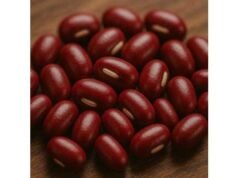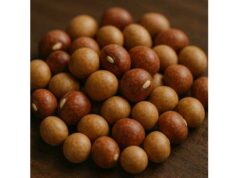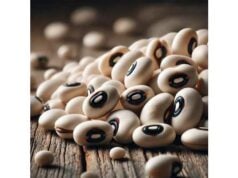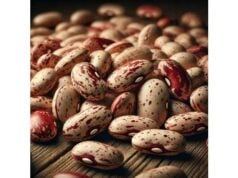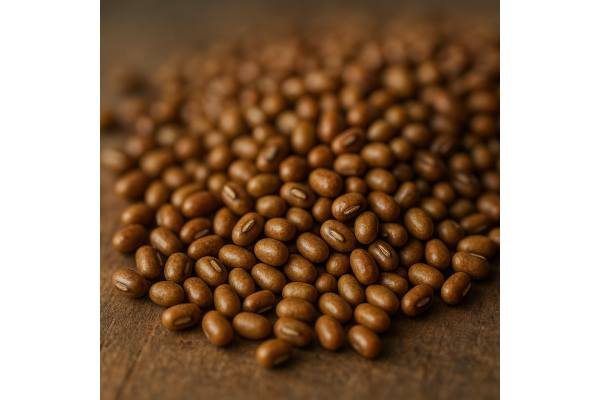
Moth bean (Vigna aconitifolia) is a small, drought-tolerant pulse that punches far above its size. Native to the Indian subcontinent and adapted to harsh, arid soils, it offers concentrated protein, slow-release carbohydrates, potassium, magnesium, folate, and valuable plant compounds. In home kitchens it shows up as whole beans, split dal, sprouted “matki,” and roasted snacks; its earthy, nutty flavor fits rich curries, quick salads, and grain bowls alike. Because the crop thrives with minimal water and fixes nitrogen, it supports resilient farming while delivering affordable nutrition. Below, you will find a clear guide—what moth bean is, how it nourishes you, the science behind potential benefits, practical buying and cooking tips, and who should be cautious. If you already enjoy chickpeas, lentils, or mung beans, moth bean is a natural addition with a slightly firmer bite and impressive micronutrient density.
Top Highlights
- Protein-dense pulse with notable iron (≈60% DV/100 g dry), magnesium, potassium, and folate.
- May help improve lipid and glucose markers when eaten regularly as part of a balanced diet.
- Typical serving: ¾–1 cup cooked (130–175 g), eaten 3–4 times weekly within a fiber-rich eating pattern.
- Watchouts: gas/bloating for sensitive guts; high potassium for advanced kidney disease; possible legume cross-reactivity in those with peanut/soy/chickpea allergies.
- Soaking, sprouting, pressure-cooking, or fermenting reduces anti-nutrients and improves mineral bioavailability.
Table of Contents
- Moth bean: detailed overview
- Moth bean nutrition profile (per 100 g)
- Evidence-based health benefits of moth bean
- Risks, allergies and interactions
- Selecting, quality, sustainability and storage
- Preparation, cooking and nutrient retention
- Portions, comparisons and FAQs
Moth bean: detailed overview
Moth bean (Vigna aconitifolia)—also called matki, mat bean, dew bean, or Turkish gram—is a creeping annual in the Vigna genus, the same botanical neighborhood as mung bean and black gram. The plants make low, spreading vines that hug the ground and bear small pods with rectangular seeds in hues from yellow-brown to mottled. They tolerate searing daytime heat, sparse rainfall, and sandy or marginal soils, maturing in roughly 75–90 days. Farmers value moth bean not only for the edible seeds and sprouts but also as a nitrogen-fixing cover crop and drought insurance in arid rotations.
Culinarily, moth bean is versatile. Whole beans keep their shape in soups and hearty dals; split and skinned “dal moth” cooks faster and yields a smoother texture. Sprouted moth beans—popular in Maharashtra’s “matki usal” and “misal pav”—add crispness and a pleasant, bean-sweet flavor to salads and street-food classics. Dry-roasted moth bean dal shows up in snack mixes (dalmoth, bhujia), and the flour can enrich crackers and savory fritters. Compared with chickpeas or kidney beans, cooked moth bean is slightly smaller and firmer; compared with mung bean, it is earthier and less sweet.
From a nutrition point of view, moth bean stands out for concentrated protein (around 23 g/100 g dry), high potassium and magnesium, moderate iron and zinc, and meaningful folate and B-vitamins. Like other pulses, moth bean supplies slowly digestible starch and resistant starch that support steadier blood sugar responses than refined grains. As with many legumes, it contains phytate and enzyme inhibitors that modestly limit mineral absorption when eaten raw or under-processed; kitchen techniques such as soaking, sprouting, fermenting, and pressure-cooking reduce these compounds substantially, improving digestibility.
Sustainability is part of moth bean’s story. The crop’s low water demand and heat tolerance make it a practical choice for farmers facing climate variability. Its ground-covering growth helps reduce erosion and suppress weeds, and its ability to fix atmospheric nitrogen reduces fertilizer needs. For consumers, this translates into a protein-rich food with a comparatively small environmental footprint.
In short, moth bean is an under-appreciated pulse worth knowing: sturdy in the field, flexible in the kitchen, dense in nutrients, and aligned with climate-smart eating. The sections below translate those advantages into specifics you can use—shopping cues, cooking times, nutrition tables per 100 g, and evidence-based benefits and cautions to personalize your intake.
Moth bean nutrition profile (per 100 g)
Reference form: unless otherwise noted, values below refer to dry, mature seeds (raw), per 100 g. Where official Daily Values (DV) exist for adults, %DV are included. Cooked values are influenced by water uptake; a typical cooked serving (≈150–175 g) provides fewer calories per 100 g but a similar micronutrient pattern per serving.
Macros and electrolytes (per 100 g, dry seeds)
| Nutrient | Amount | %DV* |
|---|---|---|
| Energy | 343 kcal | — |
| Protein | 22.9 g | 46% |
| Total fat | 1.61 g | 2% |
| Saturated fat | 0.36 g | 2% |
| Carbohydrate | 61.5 g | 22% |
| Dietary fiber | — | — |
| Sodium | 30 mg | 1% |
| Potassium | 1,191 mg | 25% |
| Water | 10.6 g | — |
*%DV based on adult Daily Values: protein 50 g; fat 78 g; saturated fat 20 g; carbohydrate 275 g; sodium 2,300 mg; potassium 4,700 mg.
Note on fiber: Fiber values for moth bean vary by dataset and variety; some tables omit the value in raw SR entries. In practice, dry pulses typically provide ≈12–17 g fiber/100 g dry; soaking and cooking alter measurable fiber fractions. Choose whole-bean preparations to maximize fiber intake.
Minerals (per 100 g, dry seeds)
| Mineral | Amount | %DV |
|---|---|---|
| Calcium | 150 mg | 12% |
| Iron | 10.85 mg | 60% |
| Magnesium | 381 mg | 91% |
| Phosphorus | 489 mg | 70% |
| Zinc | 1.92 mg | 17% |
| Copper | 0.69 mg | 77% |
| Manganese | 1.82 mg | 79% |
Vitamins (per 100 g, dry seeds)
| Vitamin | Amount | %DV |
|---|---|---|
| Folate (DFE) | 649 µg | 162% |
| Thiamin (B1) | 0.56 mg | 47% |
| Riboflavin (B2) | 0.09 mg | 7% |
| Niacin (B3) | 2.8 mg | 18% |
| Vitamin B6 | 0.37 mg | 22% |
| Vitamin C | 4 mg | 4% |
Fats and fatty acids (per 100 g, dry seeds)
| Lipid | Amount |
|---|---|
| Monounsaturated fatty acids | 0.13 g |
| Polyunsaturated fatty acids | 0.75 g |
| Linoleic acid (omega-6) | 0.48 g |
| Alpha-linolenic acid (omega-3) | 0.26 g |
| Cholesterol | 0 g |
Protein quality (selected essential amino acids per 100 g, dry seeds)
| Amino acid | Amount |
|---|---|
| Leucine | 1.54 g |
| Lysine | 1.25 g |
| Valine | 1.05 g |
| Isoleucine | 0.97 g |
| Threonine | 0.79 g |
| Phenylalanine | 1.06 g |
| Methionine + Cysteine | 0.41 g |
| Tryptophan | 0.20 g |
Amino acid balance: Like most pulses, moth bean is relatively lysine-rich but sulfur amino acid-limited (methionine/cysteine). Pair with cereals (rice, wheat, millet) or nuts/seeds across the day for a complementary amino acid pattern.
Carbohydrate detail (per 100 g, dry seeds)
| Component | Amount |
|---|---|
| Total carbohydrate | 61.5 g |
| Sugars | — |
| Starch | — |
| Resistant starch/α-galactosides | Present (variable with processing) |
Anti-nutrients and bioactives (qualitative)
- Phytate (phytic acid): present; reduced by soaking, sprouting, fermenting, pressure-cooking.
- Enzyme inhibitors (trypsin/chymotrypsin, α-amylase): heat-labile; largely inactivated by cooking.
- Tannins and phenolics: decrease with dehulling and cooking; some phenolics have antioxidant roles.
- Lectins: inactivated by proper boiling/pressure-cooking.
Glycemic and acid–base metrics
- Glycemic tendency: like other pulses, moth bean cooked without added sugars generally has a low glycemic index and supports steadier post-meal glucose, especially when intact or sprouted.
- Acid–base load: overall alkali-forming once metabolized due to mineral content (not a clinical metric but relevant for diet patterning).
Cooked reference: 100 g cooked, boiled moth bean provides ≈117 kcal, ≈7–8 g protein, ≈20–21 g carbohydrate, and modest fat; minerals remain meaningful per serving because of the relatively large cooked portion size.
Data sources aggregated from established nutrient databases of raw mature seeds; cooked values vary by water uptake and preparation. DVs reflect U.S. labeling standards.
Evidence-based health benefits of moth bean
1) Cardiometabolic support when eaten routinely. Diets that regularly include pulses are associated with improvements in several risk markers for cardiovascular disease and type 2 diabetes. Controlled trials pooling beans, lentils, peas, and soy consistently show modest reductions in LDL-cholesterol and fasting glucose and small improvements in insulin resistance over weeks to months when pulses displace higher-glycemic or refined foods. Moth bean, with its slow-digesting starch, negligible saturated fat, and substantive soluble/insoluble fiber (when cooked whole), fits the same physiological profile. Practical implication: work moth bean into meals 3–4 times per week in place of refined starches or processed meats to nudge lipids and glycemia in a favorable direction over time.
2) Iron, folate, and magnesium density. A 100 g dry reference of moth bean is rich in iron (~60% DV) and folate (>100% DV), two nutrients often inadequate in low-meat or pregnancy diets. Iron from legumes is non-heme and less bioavailable than heme iron; however, sprouting, soaking/throwing away soak water, pressure-cooking, and eating with vitamin C-rich foods (tomato, lemon, bell pepper) improve absorption. Magnesium (≈90% DV/100 g dry) supports energy metabolism, muscle and nerve function, and glucose homeostasis; cooked serving sizes still deliver meaningful amounts.
3) Gut function and satiety. Moth bean provides resistant starch and α-galactosides that, once cooked properly, feed beneficial gut microbes, producing short-chain fatty acids (SCFAs) like butyrate that help maintain the intestinal barrier and support metabolic health. The intact structure of whole beans slows gastric emptying and promotes fullness—a practical way to manage appetite without sacrificing nutrients. If you’re sensitive to gas, consider soaking overnight, sprouting 24–48 hours, or pressure-cooking, all of which reduce fermentable oligosaccharides substantially.
4) Plant-forward protein with complementary pairing. Pulses supply lysine-rich protein while cereals supply more methionine; together they form a more complete amino acid pattern across the day. In traditional cuisine, moth bean appears with millets, rice, or wheat flatbreads, a pattern that modern dietitians still recommend. For athletes or active adults, pairing moth bean with grains and a source of vitamin C offers protein quality plus better iron uptake.
5) Sustainability co-benefits. Choosing moth bean supports climate-resilient agriculture: low water requirements, nitrogen fixation that reduces fertilizer inputs, ground cover that limits erosion, and adaptability to heat and poor soils. While “planetary health” is not a nutrient, it’s a real co-benefit of swapping animal protein or refined grains for pulses several times a week.
How much is “enough” to see benefits? In pulse trials, intakes around ½–1 cup cooked per day (90–175 g) within a balanced diet often produce modest but meaningful improvements in cholesterol and glycemic markers over 4–12 weeks. You don’t need daily moth bean; rotating varieties (moth, chickpea, lentil, kidney bean) provides diversity in fibers and phytochemicals.
Who benefits most?
- People aiming to improve LDL-cholesterol and glycemic control through dietary swaps.
- Those on plant-forward diets needing iron, folate, and magnesium.
- Individuals seeking budget-friendly protein with pantry stability.
What benefits are unlikely? Moth bean is not a cure-all; effects on long-term disease incidence depend on the overall diet and lifestyle, not on a single ingredient. Think of it as a high-impact swap, not a supplement.
Risks, allergies and interactions
1) Gas, bloating, and FODMAP sensitivity. Like other beans, moth bean contains α-galactosides that can ferment and cause gas. Most people tolerate moth bean when it’s soaked, rinsed, and cooked thoroughly; sprouting or pressure-cooking lowers fermentable carbs further. Individuals with active IBS may tolerate small portions or sprouted forms better; if symptoms persist, consider a tailored plan with a clinician.
2) Mineral absorption and anti-nutrients. Phytate, tannins, and enzyme inhibitors in raw pulses bind minerals (iron, zinc) and reduce protein digestibility. Fortunately, home processing—overnight soaking and discarding soak water, sprouting 24–48 hours, fermentation, boiling, or pressure-cooking—can reduce these compounds substantially (often by 20–70%, depending on the method and variety). Pair moth bean with vitamin C-rich foods to boost non-heme iron absorption.
3) Allergic considerations and cross-reactivity. Primary allergy to moth bean itself is uncommon, but cross-reactivity among legumes is documented. Individuals with peanut, soy, chickpea, pea, lupin, or mung bean allergies may react to other legumes due to similar storage proteins (vicilins/legumins) even if true clinical allergy is less frequent than positive tests suggest. There are also reports of birch-pollen–related cross-reactions to mung bean sprouts; although moth bean is a different species, similar proteins exist across Vigna species. If you’ve had IgE-mediated reactions to legumes, consult an allergist before adding moth bean.
4) Kidney and potassium. Cooked beans are typically potassium-rich. People with advanced chronic kidney disease or those on potassium-restricted diets should discuss appropriate portions and preparation with their renal dietitian. Techniques such as boiling in excess water and draining can modestly lower potassium, though they also reduce some water-soluble vitamins.
5) Drug interactions. There are no well-documented direct drug interactions unique to moth bean. General guidance applies: high-fiber meals can slow the absorption of certain medications; separate critical meds (e.g., thyroid hormone) from high-fiber meals by a few hours when advised by your clinician. Those on iron supplements may wish to avoid taking them alongside high-phytate foods or include vitamin C at the same meal.
6) Food safety. Undercooked or improperly sprouted legumes can cause gastrointestinal upset. Always rinse sprouts thoroughly, grow them hygienically, and cook if you are pregnant, older, immunocompromised, or serving young children. Dried beans are shelf-stable; keep them cool, dry, and sealed to avoid bruchid (bean weevil) infestation.
Selecting, quality, sustainability and storage
How to buy
- Whole dried beans: Look for uniform size and color with minimal broken or shriveled seeds. Older stock takes longer to cook. If possible, choose packages with a recent packing date.
- Split dal (moth dal): Cooks faster; ideal for smooth dals and khichdi-style dishes. Choose clean splits without excess husk powder.
- Sprouting grade: Buy unpolished, untreated seeds labeled suitable for sprouting.
- Canned/ready-to-eat: Moth bean is rarely canned globally; if available, check sodium on the label and rinse before use.
- Flour/snacks: For bhujia/dalmoth, scan labels for added refined oils and salt; use these as occasional snacks, not your main moth bean source.
Sustainability cues
- Underutilized crop with low water needs—a smart choice in arid regions.
- Works in intercropping with millets or oilseeds and improves soil by fixing nitrogen.
- Buying from regional producers supports climate-resilient rotations and agro-biodiversity.
Storage
- Dried beans: Keep in airtight containers away from heat and light. Ideal shelf life is up to 12 months; beyond that, cooking time increases and texture may suffer.
- For long storage in warm climates, consider vacuum-sealing or freezer storage (beans must be dry) to deter insects.
- Sprouts: Store refrigerated and use within 2–3 days. Rinse daily; cook if serving vulnerable groups.
- Cooked moth bean: Refrigerate in a covered container for 3–4 days; freeze for up to 3 months in meal-size portions with some cooking liquid to protect texture.
Quality troubleshooting
- Beans won’t soften: Possible hard-to-cook defect from age or calcium-rich water. Try soaking longer, adding a pinch of baking soda to the cooking water, or pressure-cook.
- Gassy outcomes: Increase soaking time, rinse thoroughly, discard soaking water, and start with small portions or sprouted beans.
- Flavor is flat: Bloom spices (cumin, mustard seed), use aromatics (onion, garlic, ginger), add acid (tomato, lemon), and finish with fresh cilantro or kasuri methi.
Preparation, cooking and nutrient retention
Goal: maximize digestibility and iron/zinc availability while keeping texture and flavor.
1) Soak (baseline, easiest)
- Pick through and rinse 1 cup (≈180–200 g) dried moth beans.
- Cover with 3–4× water; soak 8–12 hours.
- Drain and rinse (discard soak water to remove dissolved oligosaccharides and some phytate).
- Cook (see methods below).
2) Sprout (bigger impact on bioavailability)
- After soaking, drain and place beans in a jar or sprouter; keep damp but not submerged.
- Rinse and drain every 8–12 hours.
- 24–48 hours at room temperature yields short sprouts.
- Cook sprouted beans until tender (they cook faster) to inactivate residual inhibitors; or use lightly steamed in salads if you tolerate raw sprouts.
3) Ferment (flavor plus function)
- Combine soaked beans with a small portion of previously fermented batter (e.g., dosa/idāli), or inoculate with a starter; ferment 8–12 hours warm. This lowers pH and reduces phytate, improving mineral bioaccessibility.
4) Cooking methods and times
- Stovetop simmer: Soaked beans, 1:3 beans:water, simmer 45–60 minutes until tender. Skim foam.
- Pressure cooker (stovetop): Soaked beans with fresh water, 12–18 minutes at pressure; natural release.
- Electric pressure cooker: Soaked beans 8–12 minutes High Pressure; sprouted beans 6–8 minutes; adjust for desired firmness.
- Open-pot finishing: Cook with aromatics and spices after beans are tender to avoid tough skins.
5) Salt, acids, and texture
- Add salt after initial softening (or at start if using pressure-cooking; modern tests show salt does not prevent softening with adequate water).
- Acidic ingredients (tomato, tamarind, lemon) may slow softening if added very early; fold in once beans are almost tender.
6) Nutrient retention tips
- Use minimal necessary water and avoid over-boiling to preserve water-soluble B-vitamins and vitamin C (present in sprouts and fresh garnishes).
- Retain some cooking liquid—it contains minerals, oligosaccharides, and flavor.
- Sprouting 24–48 hours followed by cooking can reduce phytate and enzyme inhibitors, improving the absorption of iron and zinc; pairing with vitamin C further boosts non-heme iron uptake.
7) Flavor blueprints
- Matki usal: Temper mustard seeds, cumin, curry leaves; cook onion-ginger-garlic, add ground chili, turmeric, and coriander; add cooked sprouted moth beans and finish with lemon and cilantro.
- Simple skillet moth bean: Sauté aromatics, add cooked beans and a splash of stock; finish with garam masala and crushed tomatoes.
- Mediterranean bowl: Toss cooked moth beans with olive oil, lemon, parsley, roasted peppers, and toasted nuts; serve over bulgur or millet.
8) Batch, store, reuse
- Cook two or three cups dry at once; portion and freeze with some liquor. Use later for fast curries, salads, or soups.
Portions, comparisons and FAQs
Recommended serving and frequency
- A practical serving is ¾–1 cup cooked (≈130–175 g). Most adults do well eating ⅓–1 cup cooked daily or 3–4 servings per week as part of an overall pattern rich in vegetables, fruit, whole grains, nuts/seeds, and other pulses.
Portion guidance by goal
- Cardiometabolic health: Aim for 1 cup cooked per day of mixed pulses (rotate moth bean, lentils, chickpeas) to replace refined starches or processed meats.
- Iron/folate focus: Combine moth bean with tomato, citrus, or leafy greens; consider sprouted or pressure-cooked forms for better iron absorption.
- Weight management: Use ¾ cup cooked over salads or grains; the fiber/protein combo supports fullness without excess calories.
How does moth bean compare to other pulses (per 100 g cooked)?
- Moth bean vs. chickpea: Similar protein; moth bean is typically lower in fat, higher in magnesium; chickpea often supplies more soluble fiber per cooked cup.
- Moth bean vs. mung bean: Comparable protein; mung bean cooks a bit faster and can be slightly gentler on digestion for some.
- Moth bean vs. lentil: Lentils often cook quickest and have a softer bite; moth bean holds shape better, which many prefer in salads and curries.
- Takeaway: Rotate—each pulse brings a distinct texture and micronutrient emphasis.
FAQs
Q: Is moth bean low-carb?
A: No. Like all pulses, it is carbohydrate-rich but delivers slow-release starch and protein, which blunt glycemic spikes relative to refined grains.
Q: Can I eat moth bean on a low-FODMAP diet?
A: Some people with IBS tolerate small portions (e.g., ¼–½ cup cooked) or sprouted/pressure-cooked forms better. Personal tolerance varies—test cautiously.
Q: Do I need to soak?
A: Soaking isn’t strictly required but reduces cook time and can improve digestibility. For best mineral availability, soaking + discarding soak water or sprouting are helpful steps.
Q: Does adding baking soda ruin nutrition?
A: A pinch can help soften hard water/older beans. Overuse affects flavor and can degrade some B-vitamins—use sparingly and do not rely on it routinely.
Q: Is moth bean safe in pregnancy?
A: Yes when fully cooked; the bean’s folate is beneficial. Avoid raw sprouts due to microbial risk; cook sprouts before eating.
Q: How many dry beans make one cooked cup?
A: Roughly ½ cup dry (≈90 g) yields 1¼–1½ cups cooked, depending on soaking time and variety.
References
- Moth bean (Vigna aconitifolia): a minor legume with major potential to address global agricultural challenges 2023 (Systematic Review)
- Legume consumption in adults and risk of cardiovascular disease and type 2 diabetes: a systematic review and meta-analysis 2023 (Systematic Review and Meta-analysis)
- Effects of sprouting and cooking processes on nutritional and anti-nutritional factors in priority legumes–a review 2019 (Review)
- Legumes and pulses: a scoping review for Nordic Nutrition Recommendations 2023 2024 (Scoping Review)
- Mothbeans, mature seeds, raw – Nutrition Information 2025 (Database Summary)
Disclaimer
This article provides general nutrition and health information for educational purposes. It is not a substitute for personalized medical advice, diagnosis, or treatment. Always consult a qualified healthcare professional or registered dietitian about your specific health conditions, medications, and dietary needs—particularly if you have kidney disease, food allergies, digestive disorders, or are pregnant. If you experience any adverse symptoms after eating moth bean or other legumes, seek medical guidance.
If you found this guide useful, please consider sharing it on Facebook, X (formerly Twitter), or your favorite platform to help others discover reliable, practical nutrition information.