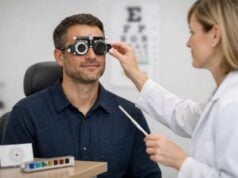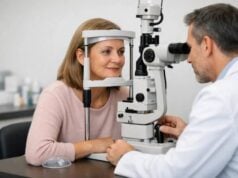
Myopia (nearsightedness) can feel like it appears overnight: a child who used to spot a friend across the playground starts squinting at the whiteboard, sits closer to the TV, or complains that far-away signs look fuzzy. In reality, myopia usually develops gradually as the eye grows a little too long from front to back, shifting the focus point in front of the retina. Because childhood is a period of rapid growth, early-onset myopia often has more time to progress—raising the chance of stronger prescriptions later and, for some kids, higher lifetime risk of eye complications. The good news is that families have meaningful ways to lower risk and slow progression. This guide helps you recognize early signs, understand who is most vulnerable, and build prevention habits that are realistic at home and school—without turning daily life into a constant fight over screens or homework.
Quick Overview
- More outdoor time is one of the most consistent, low-risk ways to reduce the chance of myopia starting in childhood.
- Adjusting near-work habits (breaks, distance, lighting) can support healthier visual routines, especially in high-study years.
- Early detection matters because younger onset often means more years of potential progression.
- Sudden blur, eye pain, strong light sensitivity, or a “curtain” over vision needs urgent evaluation, not home troubleshooting.
- If myopia is progressing, ask about evidence-based myopia control options rather than relying on weaker strategies like under-correcting glasses.
Table of Contents
- What myopia means for kids
- Early signs parents can spot
- Risk factors that raise odds
- Prevention that actually helps
- Screen habits and home setup
- Eye exams and next steps
What myopia means for kids
Myopia is a focusing problem: close objects look clear, but far objects look blurry. In most children, it happens because the eyeball grows slightly longer than average, so light focuses in front of the retina rather than directly on it. Glasses or contact lenses correct the blur by shifting the focus back onto the retina. That part is straightforward. The bigger issue is trajectory: in childhood, the eye can continue growing year to year, and myopia can steadily increase.
A helpful way to think about myopia is as two separate goals:
- Clear vision today. Your child needs to see the board, participate in sports, and feel confident in the classroom.
- Lower risk over time. The aim is to reduce the chance of rapid progression and higher prescriptions later.
Why does progression matter? Higher levels of myopia are associated with a greater lifetime risk of certain eye problems (such as retinal issues) and may increase the likelihood of more complex care as an adult. Not every child with myopia will face these complications, but risk generally rises as the prescription becomes stronger and as the eye becomes longer.
Two common misunderstandings create avoidable stress:
- “My child caused this by using screens.” Visual habits can influence risk, but myopia is usually multifactorial—genes, growth patterns, school demands, and outdoor time all play roles.
- “Once they have glasses, the problem is solved.” Glasses correct blur, but they do not automatically address progression. Some kids progress slowly with basic correction and healthy habits. Others need an additional plan.
Finally, it helps to separate myopia from other reasons kids squint. Blurry distance vision from myopia is common, but so are dry eyes from heavy screen use, allergies, astigmatism, and binocular vision strain. The right plan starts with the right diagnosis—ideally from a comprehensive eye exam rather than a quick vision screening.
Early signs parents can spot
Kids rarely announce, “My distance vision is getting worse.” They adapt: they move closer, avoid far-vision tasks, or assume everyone sees the same blur. That is why patterns matter more than a single complaint. If you notice two or more of the signs below—especially if they persist for a few weeks—it is worth scheduling an eye exam.
Distance-vision clues at home and school
- Squinting, narrowing the eyes, or tilting the head to see the TV or signs.
- Sitting unusually close to screens or choosing the front row without being asked.
- Complaints that the board, projector, or far-away subtitles look fuzzy.
- Holding books extremely close may also occur, but that can reflect habit or attention—not only myopia.
Behavioral and performance changes
- Avoiding sports that require tracking a ball or judging distance.
- Seeming “daydreamy” in class because the child cannot clearly see what the teacher is referencing.
- Increased frustration with homework that involves copying from a board or classroom wall.
- More frequent headaches late in the day, especially when combined with eye rubbing or fatigue.
Eye comfort symptoms that can overlap
Not every itchy or tired eye is myopia, but overlapping symptoms can coexist and still deserve attention:
- Eye rubbing, watery eyes, and blinking more often (sometimes allergies or dryness).
- Complaints of glare at night, halos around lights, or trouble seeing in dim settings.
- One eye “working harder” (covering an eye, closing one eye to see clearly) can suggest alignment or focusing problems that need evaluation.
Red flags that should not wait
These symptoms are less typical of simple myopia and should be assessed promptly:
- Sudden, significant vision loss in one or both eyes.
- Eye pain, severe redness, or light sensitivity.
- New flashes of light, a shower of new floaters, or a dark curtain/shadow over vision.
- Eye injury—especially from sports, sharp objects, or chemicals.
If your child fails a school screening, treat it as a signal to follow up, not a final diagnosis. Screenings are useful, but they can miss astigmatism, binocular vision issues, and early myopia in children who compensate well. A full exam can clarify whether your child truly has myopia, how strong it is, and whether there are signs of rapid change.
Risk factors that raise odds
Myopia risk is best understood as a “stack” rather than a single cause. One child may have strong genetic risk but excellent outdoor habits; another may have no family history but intense near-work demands and limited daylight time. Knowing your child’s risk profile helps you decide how proactive to be.
Family history and early onset
Genetics matter. If one parent is nearsighted, the child’s risk is higher; with two nearsighted parents, it often rises further. Family history does not guarantee myopia, but it should change your threshold for monitoring. Another high-impact risk factor is earlier onset. A child who becomes myopic at a younger age typically has more years in which progression can occur, which is why early detection and early habit changes can be valuable.
Outdoor time and daylight exposure
Across many studies, children who spend more time outdoors tend to have a lower risk of developing myopia. The protective effect is not simply “exercise” or “looking far away”—it appears linked to brighter outdoor light exposure and how it influences eye growth signals. This is one reason outdoor time remains a cornerstone of prevention advice: it is relatively low risk, broadly beneficial for health, and realistic for many families when built into routines.
Near work and visual habits
Near work includes reading, writing, homework, and screens. The relationship between near work and myopia is complex, but certain patterns show up repeatedly in real life:
- Long continuous sessions without breaks.
- Very close working distance (a child who consistently reads with their nose near the page).
- High-pressure academic periods with minimal outdoor time.
It is often not one device or one assignment—it is the cumulative pattern of close focus and limited daylight time across weeks and months.
Urban living, school intensity, and lifestyle constraints
Urban environments can limit safe outdoor play space, and busy school schedules can compress free time into evenings when daylight is limited. Higher educational intensity is also associated with higher myopia rates in many populations. The practical takeaway is not to blame school—it is to counterbalance: protect outdoor time and introduce healthier near-work routines.
Sleep and overall health signals
Sleep is not usually discussed first in myopia conversations, but it matters because growth, circadian rhythms, and screen habits often cluster together. A child who stays up late with screens may also lose outdoor time the next day, creating a feedback loop. In addition, unmanaged allergies and dry eye can increase eye rubbing and visual discomfort, which may mask or worsen perceived vision issues.
If you recognize multiple risk factors—strong family history, early signs of blur, heavy near work, low outdoor time—your best next step is not panic. It is a structured plan: consistent monitoring, family-friendly routines, and early discussion of myopia control options if progression is confirmed.
Prevention that actually helps
When parents hear “prevention,” they often imagine a single rule: “less screen time.” In reality, the most effective prevention strategy tends to look like rebalancing the visual day. The goal is not perfection; it is consistent exposure to protective habits that are easy to repeat.
Make outdoor time a daily default
If you could pick one prevention lever that is both practical and broadly supported, it would be outdoor time. A useful target for many families is about 1 to 2 hours per day, adjusted for season, climate, and safety. If that sounds unrealistic, treat it as a weekly average rather than a daily pass/fail test.
Ways to make it happen without constant negotiation:
- Walk part of the way to school or park farther away.
- Schedule an outdoor “buffer” between school and homework.
- Use weekend mornings for longer outdoor blocks to balance busy weekdays.
- Choose outdoor social time (playground, biking, sports practice) instead of only indoor play dates.
Sun safety still matters—use appropriate sun protection and UV-blocking sunglasses when needed. The goal is safe daylight exposure, not sunburn.
Shape near-work habits instead of banning near work
Reading and homework are not enemies; they are part of childhood. The prevention focus is on how near work is done:
- Breaks: Encourage brief distance breaks during long sessions. Many families use the “look far away” approach every 20 to 30 minutes.
- Distance: Aim for a comfortable working distance rather than “face-to-page” reading. As a simple rule, the book or screen should not feel glued to the nose.
- Posture: Support upright posture at a desk when possible. Lying on the floor with a device inches from the face is a common high-risk pattern.
A practical tip: rather than interrupting constantly, set a timer for breaks, or link breaks to natural transitions (end of a worksheet, between chapters, after finishing a level or lesson).
Keep expectations realistic about what prevention can and cannot do
Prevention habits can reduce risk and may slow progression for some kids, but they do not “guarantee” avoiding glasses. If myopia develops despite strong routines, that does not mean you failed. It means your child’s growth pattern and risk factors outweighed what lifestyle could fully offset.
What prevention can do is improve odds and reduce the pace of change—especially when started early. Think of it like dental health: brushing and flossing do not guarantee zero cavities, but they lower risk and reduce the severity of problems over time.
Be cautious with weak or outdated strategies
Some approaches sound intuitive but do not hold up well:
- Undercorrecting glasses (giving a weaker prescription than needed) is not a reliable prevention method and can create academic and safety issues.
- Overpromised “eye exercises” that claim to reverse myopia should be treated skeptically.
- Single changes without routine (a short-lived “outdoor week”) rarely change long-term trajectory.
A prevention plan works best when it is simple enough to repeat and flexible enough to survive real life.
Screen habits and home setup
Screens are not going away, and for many children they are tied to schoolwork as much as entertainment. The goal is not to demonize devices—it is to reduce the patterns most associated with visual strain and myopia risk while protecting sleep and outdoor time.
Create “distance-friendly” screen rules
A surprisingly useful change is increasing viewing distance. Kids often hold phones and tablets closer than books. Try these practical standards:
- Tablets: place on a stand or table rather than in the lap.
- Phones: avoid long sessions; encourage using a larger screen (tablet or computer) for school tasks when possible.
- Computers: keep the screen roughly an arm’s length away for many children, adjusted for comfort and font size.
If your child keeps leaning forward, enlarge text rather than allowing “chin-on-screen” posture.
Use breaks that actually happen
Break advice only works if it is easy. Two approaches that many families can sustain:
- Timed breaks: a short “look across the room” pause every 20 to 30 minutes.
- Task-based breaks: finish one assignment chunk, then stand up, stretch, and look out a window before starting the next.
The break is less about eye muscles “resetting” and more about reducing continuous close-focus time and giving the visual system variety.
Protect sleep as part of eye health
Late-evening screen use can push bedtime later, reduce sleep quality, and indirectly cut outdoor time the next day. Consider:
- Keeping screens out of the bedroom at night.
- Creating a consistent “screens off” window before bedtime.
- Prioritizing morning daylight exposure when evenings are dark in winter.
Even if you cannot perfect sleep routines, small improvements can reduce the cycle of late-night screens and next-day fatigue.
Optimize lighting and reduce glare
Eye comfort affects how kids use their vision. A good setup reduces fatigue and helps children keep healthier working distance:
- Use even room lighting; avoid reading in a dim room with a bright screen.
- Reduce glare with simple changes: reposition the desk, angle the screen, or close blinds during harsh sunlight.
- For paper reading, a focused desk lamp can help—but avoid shining it directly into the eyes.
Support dry eye and allergy control
Dryness and allergies can cause rubbing, watering, and fluctuating blur—symptoms that can confuse the picture. Basic support includes:
- Encouraging blinking during screen use (kids often “stare”).
- Managing seasonal allergies with clinician-approved plans when needed.
- Using appropriate lubricating drops if recommended by an eye-care professional.
If your child frequently complains that vision “comes and goes,” dryness and focusing strain may be contributing even if myopia is present.
A home setup is successful when it reduces friction. If your plan requires constant policing, it will collapse. Choose two or three changes your family can stick with, and let consistency do the heavy lifting.
Eye exams and next steps
A clear action plan helps parents avoid two extremes: waiting too long because “kids grow out of it,” or spiraling into worry after one blurry-day complaint. The right approach is structured monitoring and, when needed, timely escalation.
When to schedule an eye exam
Consider a comprehensive eye exam if:
- Your child shows persistent distance blur signs (squinting, moving closer, classroom struggles).
- There is a strong family history of myopia.
- A school screening is failed or inconsistent.
- Your child reports headaches, eye strain, or visual fatigue that affects school performance.
Routine schedules vary by age and risk level, but higher-risk children generally benefit from more regular monitoring. If myopia is already diagnosed, annual exams are common, and more frequent visits may be recommended if progression is rapid or if myopia control treatment is started.
What to ask at the appointment
To keep the visit focused, consider asking:
- Is this myopia, astigmatism, or another focusing issue?
- How strong is the prescription, and is it likely to change quickly?
- Is there evidence of progression compared with last year?
- Does my child have eye alignment or focusing strain that needs separate treatment?
- Based on risk factors and age, should we discuss myopia control now?
If your clinician measures axial length (the length of the eye), it can add useful information about growth trends, especially in children on a myopia control plan.
When “prevention tips” are not enough
If a child is clearly progressing—especially at younger ages—families may benefit from discussing evidence-based myopia control options. These can include:
- Low-dose atropine drops (used nightly in many protocols).
- Orthokeratology (night lenses that reshape the cornea temporarily).
- Special soft contact lenses designed for myopia control.
- Special spectacle lens designs available in some regions.
These options have different suitability profiles depending on age, maturity, eye health, lifestyle, and family preference. The right question is not “Which one is best overall?” but “Which one fits this child’s risk and daily life with acceptable trade-offs?”
Practical next steps for parents
If you want a simple plan you can start today:
- Add outdoor time in a way your family can repeat (weekday blocks plus weekend balance).
- Improve near-work habits (breaks, distance, lighting) without turning homework into a power struggle.
- Schedule an exam if signs persist, risk is high, or screening results are concerning.
- If myopia is confirmed and progressing, ask directly about a myopia control plan rather than hoping time alone will slow it.
A child’s vision is not just a prescription—it is confidence in the classroom, comfort during reading, and safety in sports and daily life. Early, steady action is usually more effective than late, urgent fixes.
References
- Editorial: International Myopia Institute White Paper Series 2023 – PMC 2023 (Position Statement)
- Time spent outdoors as an intervention for myopia prevention and control in children: an overview of systematic reviews – PMC 2022 (Systematic Review Overview)
- Time Outdoors in Reducing Myopia: A School-Based Cluster Randomized Trial with Objective Monitoring of Outdoor Time and Light Intensity – PubMed 2022 (RCT)
- Digital Screen Time and Myopia: A Systematic Review and Dose-Response Meta-Analysis – PMC 2025 (Systematic Review)
- MYOPIA AND TREATMENT OF MYOPIA IN CHILDREN – American Association for Pediatric Ophthalmology and Strabismus 2025 (Patient Guidance)
Disclaimer
This article is for educational purposes only and does not provide medical advice, diagnosis, or treatment. Children’s vision needs vary based on age, growth patterns, family history, learning demands, and underlying eye conditions. If your child has sudden vision changes, eye pain, severe redness, light sensitivity, flashes, a new “curtain” in vision, or a recent eye injury, seek urgent medical care. For individualized guidance on myopia risk, exam frequency, and whether myopia control treatments are appropriate, consult a qualified eye-care professional.
If you found this article helpful, please consider sharing it on Facebook, X (formerly Twitter), or any platform you prefer.