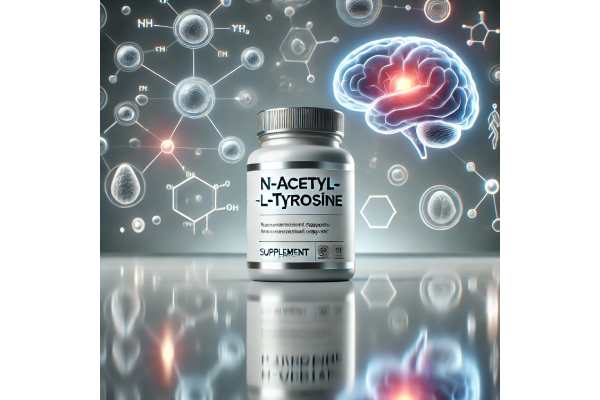
N-acetyl-L-tyrosine, often shortened to NALT, is a modified form of the amino acid L-tyrosine. You will see it in some parenteral nutrition formulas, nootropic blends, and pre-workout supplements, usually marketed as a “more soluble” or “better absorbed” tyrosine. At the same time, research over the last few decades has shown that the body handles N-acetyl-L-tyrosine differently than standard tyrosine, and that a sizeable portion can be excreted unchanged rather than converted.
More recently, scientists have discovered that N-acetyl-L-tyrosine is not just a lab-made ingredient. It also appears in blood as a normal human metabolite, and its levels can rise under stress, where it may help trigger protective “mitohormesis” responses in cells and animals. This makes N-acetyl-L-tyrosine interesting both as a nutrient precursor and as a potential signaling molecule.
This article walks through how N-acetyl-L-tyrosine works, its proposed benefits, real-world evidence, practical dosing ranges, and important safety considerations, so you can discuss it more confidently with your healthcare professional.
Key Insights for N-acetyl-L-tyrosine
- N-acetyl-L-tyrosine is an acetylated form of tyrosine used in parenteral nutrition and some brain and performance supplements.
- It mainly acts as a precursor to L-tyrosine, with additional experimental data suggesting roles in cellular stress resilience and antioxidant responses.
- Common oral supplement ranges are about 300–500 mg once or twice daily (roughly 300–1,000 mg per day) in healthy adults.
- Side effects can include nausea, headache, agitation, or blood pressure changes, especially when combined with stimulants such as caffeine.
- People who are pregnant, breastfeeding, have serious heart, thyroid, psychiatric, or pigment-related cancers, or take drugs that affect dopamine or norepinephrine should avoid N-acetyl-L-tyrosine unless their clinician agrees it is appropriate.
Table of Contents
- What is N-acetyl-L-tyrosine?
- Benefits of N-acetyl-L-tyrosine
- How N-acetyl-L-tyrosine works in the body
- N-acetyl-L-tyrosine dosage and use
- N-acetyl-L-tyrosine safety and side effects
- What science says about N-acetyl-L-tyrosine
What is N-acetyl-L-tyrosine?
N-acetyl-L-tyrosine (NALT) is an amino acid derivative created by attaching an acetyl group to the nitrogen of L-tyrosine. Chemically, it is still based on the same aromatic backbone as tyrosine, but the acetyl “cap” changes its solubility, stability in solution, and how the body processes it.
L-tyrosine itself is a conditionally essential amino acid. The body can make some from phenylalanine, but under growth, illness, or high stress, demand can exceed supply. Tyrosine is a key precursor for:
- Catecholamine neurotransmitters (dopamine, norepinephrine, epinephrine).
- Thyroid hormones (T3 and T4).
- Melanin in skin, hair, and the eyes.
- General protein synthesis and tissue maintenance.
N-acetyl-L-tyrosine was originally developed for medical use, especially in parenteral (intravenous) nutrition. Free tyrosine is poorly soluble and can crystalize or oxidize in concentrated amino acid solutions, which limits how much can be included. Acetylation makes the molecule much more water-soluble and stable, so manufacturers can supply tyrosine equivalents in IV solutions without precipitation problems.
Inside the body, N-acetyl-L-tyrosine behaves partly like a “prodrug” for tyrosine. After administration, enzymes can remove the acetyl group (a process called deacetylation), liberating free L-tyrosine that can be used for neurotransmitter and hormone synthesis or protein building. Human infusion studies indicate that only a portion of infused N-acetyl-L-tyrosine is converted; the rest can be excreted unchanged in the urine, especially at higher doses or faster infusion rates.
More recently, N-acetyl-L-tyrosine has been detected as a normal metabolite in blood and tissues, where levels appear to increase in response to stress. Experimental work suggests that this endogenous N-acetyl-L-tyrosine may act as a signaling molecule in a process known as mitohormesis, in which mild mitochondrial stress triggers stronger cellular defenses.
In the supplement world, N-acetyl-L-tyrosine is marketed mainly in:
- Standalone capsules or bulk powder labeled as NALT.
- Multi-ingredient “nootropic” products for focus and mood.
- Pre-workout formulas that combine NALT with caffeine, beta-alanine, creatine, and other ergogenic nutrients.
It is often promoted as more soluble or more bioavailable than plain L-tyrosine. However, current evidence does not clearly show that typical oral doses of N-acetyl-L-tyrosine produce stronger or more reliable increases in blood tyrosine than equivalent amounts of standard L-tyrosine. In practice, N-acetyl-L-tyrosine should be thought of as an alternative form of tyrosine with some practical advantages in formulas, rather than a dramatically superior compound.
Benefits of N-acetyl-L-tyrosine
When people talk about the “benefits” of N-acetyl-L-tyrosine, they usually mean one of three things:
- Its established role as a tyrosine source in medical nutrition.
- Theoretical or extrapolated benefits tied to tyrosine’s functions.
- Emerging experimental work on stress resistance and mitohormesis.
It is important to separate where evidence is strong from where it is speculative.
Support for tyrosine status in clinical nutrition
In clinical settings, N-acetyl-L-tyrosine has been used as a substitute for free tyrosine in parenteral amino acid solutions. Human and animal studies show that when N-acetyl-L-tyrosine is infused intravenously as part of a balanced amino acid mixture, enough of it is deacetylated to supply tyrosine for protein synthesis and aromatic amino acid needs.
This is most relevant for:
- Premature infants and critically ill patients receiving total parenteral nutrition.
- Situations where standard tyrosine cannot be included at adequate levels because of solubility and stability limits.
In these contexts, the benefit of N-acetyl-L-tyrosine is practical: it allows clinicians to meet tyrosine requirements more safely through IV solutions. This is a medical use, not a self-directed supplement scenario.
Potential cognitive and performance support
By supplying tyrosine, N-acetyl-L-tyrosine may help support the synthesis of dopamine and norepinephrine, especially under conditions where these neurotransmitters are being heavily used, such as:
- Acute psychological stress.
- Sleep deprivation.
- Intense cognitive tasks or demanding physical exercise.
Most of the human data on cognition and stress performance, however, involves free L-tyrosine, not N-acetyl-L-tyrosine. Those studies suggest that tyrosine can help maintain aspects of working memory, vigilance, and mood under intense stress, typically at doses much higher than what is found in common NALT capsules.
For N-acetyl-L-tyrosine specifically, the evidence mainly comes from multi-ingredient pre-workout trials. In these studies, a supplement containing around 300 mg N-acetyl-L-tyrosine plus caffeine and other ingredients improved subjective readiness to perform and some cognitive measures in well-trained adults compared with placebo. Because so many active components were included, it is not possible to say how much of the effect was due to N-acetyl-L-tyrosine versus caffeine or other nutrients. Still, these trials suggest that N-acetyl-L-tyrosine at typical pre-workout doses is tolerated in healthy adults and fits into performance-oriented regimens.
Experimental stress resilience and mitohormesis
The most intriguing new work on N-acetyl-L-tyrosine does not come from gyms or clinics, but from basic biology. Research in insects and mice has shown that N-acetyl-L-tyrosine is present in the circulation of healthy animals and that its levels rise when they are exposed to heat or other stresses. When animals are pretreated with N-acetyl-L-tyrosine, they often survive stressors better.
Mechanistically, N-acetyl-L-tyrosine appears to trigger a mild, transient disturbance in mitochondria. This leads to a controlled increase in reactive oxygen species (ROS), which then switches on antioxidant genes through transcription factors such as FoxO and related pathways. This cellular “training effect” is called mitohormesis: small doses of stress leading to stronger defenses and resilience later.
These findings raise the possibility that N-acetyl-L-tyrosine acts as a natural stress signal in the body. However, the doses, timing, and routes used in these experiments do not map cleanly onto typical human oral supplementation, and no clinical trial has yet shown that taking N-acetyl-L-tyrosine capsules produces similar protective effects in people.
What this means in practice
For a typical healthy person, the most realistic benefits of N-acetyl-L-tyrosine are:
- Acting as an alternative source of tyrosine when taken orally, potentially supporting neurotransmitter synthesis under demanding conditions.
- Providing a practical, soluble tyrosine form in specialized medical nutrition, under clinical supervision.
The more advanced stress-resilience effects seen in animals are promising but should be viewed as early-stage science rather than a proven reason to supplement.
How N-acetyl-L-tyrosine works in the body
Understanding N-acetyl-L-tyrosine starts with two layers: what happens to the molecule itself, and what the resulting tyrosine does.
From N-acetyl-L-tyrosine to L-tyrosine
After administration, N-acetyl-L-tyrosine is handled somewhat differently than plain tyrosine:
- The acetyl group increases water solubility and alters how the molecule interacts with transporters and enzymes.
- Enzymes called deacetylases can remove the acetyl group, generating free L-tyrosine.
- Human infusion studies indicate that this deacetylation happens primarily in the kidneys and to some extent in other tissues.
These studies also show that:
- A substantial fraction of infused N-acetyl-L-tyrosine is converted to tyrosine and incorporated into proteins or metabolized.
- Another significant fraction is excreted unchanged in the urine, especially at higher doses or higher infusion rates.
This means N-acetyl-L-tyrosine functions as a somewhat “lossy” prodrug of tyrosine: it can supply tyrosine, but not every milligram administered ends up as usable tyrosine.
For oral supplements, detailed pharmacokinetic data are limited. It is reasonable to expect:
- Absorption from the small intestine, likely via amino acid or peptide transporters.
- First-pass metabolism and partial deacetylation in the intestine, liver, and kidneys.
Because direct comparisons are scarce, it is not yet clear whether a given dose of N-acetyl-L-tyrosine raises blood tyrosine to the same extent as the same dose of free L-tyrosine. Some analyses suggest that free L-tyrosine may actually be more efficient for boosting plasma tyrosine, particularly when taken orally.
What the liberated tyrosine does
Once N-acetyl-L-tyrosine has been deacetylated, the resulting L-tyrosine enters the same metabolic pathways as dietary tyrosine:
- In neurons, tyrosine is converted by tyrosine hydroxylase into L-DOPA, then into dopamine, and further into norepinephrine and epinephrine. These catecholamines are central to motivation, focus, attention, and the acute stress response.
- In the thyroid, tyrosine residues in thyroglobulin are iodinated and coupled to form T3 and T4 thyroid hormones, which regulate metabolic rate and many aspects of physiology.
- In melanocytes, tyrosine is used to produce melanin.
- Throughout the body, tyrosine is incorporated into proteins to build and repair tissues.
These systems are tightly regulated. The body will not simply produce unlimited neurotransmitters in response to more tyrosine. Instead, tyrosine availability matters most when enzymes and transporters are activated, such as during stress or when existing neurotransmitter stores are being heavily used.
N-acetyl-L-tyrosine as a signaling metabolite
The newer concept is that N-acetyl-L-tyrosine is not just a precursor but also an endogenous signaling molecule. Experimental work has shown that:
- N-acetyl-L-tyrosine is detectable in serum or hemolymph of animals under baseline conditions.
- Its levels increase in response to heat stress and other challenges.
- Adding N-acetyl-L-tyrosine to the diet or directly injecting it before stress can improve survival in insects and mice.
Mechanistically, N-acetyl-L-tyrosine appears to:
- Transiently perturb mitochondrial function.
- Increase low-level mitochondrial reactive oxygen species.
- Activate stress-responsive transcription factors such as FoxO.
- Upregulate antioxidant enzymes and other protective genes.
This is the essence of mitohormesis: a small, controlled mitochondrial stress that leads to a net increase in resilience. As of now, it is not known whether typical oral supplement doses in humans can safely reproduce this effect or whether the same pathways are engaged to a meaningful degree.
Bottom line on mechanism
At practical supplement doses, N-acetyl-L-tyrosine primarily serves as a source of tyrosine, with its acetyl group affecting solubility, distribution, and excretion. Its more specialized role in mitohormesis is well supported in experimental models but remains a hypothesis when it comes to human oral supplementation.
N-acetyl-L-tyrosine dosage and use
There are no official dietary reference intakes or clinical practice guidelines for oral N-acetyl-L-tyrosine as a self-selected supplement. Existing dose information comes from:
- Medical parenteral nutrition protocols.
- Label recommendations on dietary supplements.
- Multi-ingredient pre-workout and nootropic trials.
These uses differ significantly, so it is helpful to consider them separately.
Medical use in parenteral nutrition
In clinical settings, N-acetyl-L-tyrosine is included in intravenous amino acid solutions as a surrogate for tyrosine. Doses are calculated in terms of total protein and amino acid needs, often in the range of several grams per day of combined amino acids, with N-acetyl-L-tyrosine providing a portion of the aromatic amino acid content.
Key points:
- Dosing is individualized based on body weight, metabolic status, and concurrent nutrition.
- Monitoring includes blood amino acids, nitrogen balance, organ function, and newborn screening markers in infants.
- This route of administration and intensity of monitoring is very different from over-the-counter supplement use.
Any IV or enteral use in a medical context should be directed by physicians and clinical dietitians.
Common oral supplement ranges
Most over-the-counter N-acetyl-L-tyrosine products aimed at adults fall into a fairly narrow range:
- Typical capsule strength: 250–500 mg N-acetyl-L-tyrosine per capsule.
- Label directions: often 1–2 capsules once or twice daily.
That translates to approximate daily intakes such as:
- Lower end: 300–500 mg once daily.
- Moderate: 300–500 mg, twice daily (around 600–1,000 mg per day).
- Upper self-directed range: up to about 1,500 mg per day in divided doses, which many manufacturers treat as a maximum without medical oversight.
Some pre-workout trials have used about 300 mg of N-acetyl-L-tyrosine taken 30 minutes before exercise as part of a multi-ingredient formula, in healthy young adults, without reporting serious acute side effects. This gives a reference point for short-term use in apparently healthy people, but it does not establish a definitive safe upper limit, particularly for those with underlying conditions.
Practical dosing guidelines for healthy adults
For a healthy adult considering N-acetyl-L-tyrosine as a supplement, a cautious pattern might look like:
- Start low: 150–300 mg once daily to assess tolerance.
- Timing:
- For focus or cognitive support: 30–60 minutes before demanding work, ideally not late in the evening.
- For exercise: 30–45 minutes before training, often as part of a pre-workout stack.
- Increment slowly: Only if tolerated, increase to 300–500 mg once or twice daily, staying within about 600–1,000 mg total per day unless a clinician suggests otherwise.
- Avoid stacking with high doses of stimulants (for example, high-caffeine products plus multiple other stimulant ingredients) unless you have discussed your cardiovascular risk with a healthcare professional.
Because long-term safety data for daily N-acetyl-L-tyrosine supplementation are limited, many informed users choose:
- Time-limited use (for example, around exams, intense training blocks, or high-pressure work phases).
- Occasional rather than continuous daily dosing, especially when also relying on caffeine or other psychoactive compounds.
Special populations
Some populations require particular caution or should avoid N-acetyl-L-tyrosine unless a specialist is involved:
- Children and adolescents: Tyrosine metabolism and neurotransmitter systems are still developing; research on N-acetyl-L-tyrosine in this group is minimal.
- Pregnancy and breastfeeding: There are no adequate safety data for N-acetyl-L-tyrosine; generally avoided unless clearly indicated medically.
- People with inborn errors of amino acid metabolism or those being monitored with newborn screening markers: N-acetyltyrosine can interfere with interpretation of some tests.
- Individuals with reduced kidney function: Because part of N-acetyl-L-tyrosine is excreted unchanged, accumulation is theoretically more likely with impaired renal clearance.
For anyone outside of the “healthy adult” category, dosing and even the decision to use N-acetyl-L-tyrosine at all should be made with a physician or clinical nutritionist.
N-acetyl-L-tyrosine safety and side effects
Safety for N-acetyl-L-tyrosine depends heavily on context: short-term oral use in healthy adults, long-term oral use, and high-dose parenteral delivery in vulnerable patients are very different scenarios.
Short-term side effects at supplemental doses
At the oral doses typically used in nootropic or pre-workout products (roughly 300–1,000 mg per day in healthy adults), the most commonly reported issues are similar to those seen with L-tyrosine and with stimulating supplement stacks in general:
- Gastrointestinal upset (nausea, cramping, occasional loose stools), especially if taken on an empty stomach or at higher doses.
- Headache or a sense of “pressure,” possibly related to catecholamine changes or co-ingested stimulants.
- Restlessness, jitteriness, or difficulty sleeping, particularly when taken in the evening or combined with high-dose caffeine.
- Mild increases in blood pressure or heart rate in susceptible people.
In pre-workout trials including N-acetyl-L-tyrosine, young healthy adults generally tolerated acute and multi-week use reasonably well, but the products contained several active ingredients, so careful monitoring was still needed.
Findings from parenteral nutrition studies
In intravenous use, where N-acetyl-L-tyrosine doses are larger and continuous, safety findings include:
- Significant but variable excretion of unchanged N-acetyl-L-tyrosine in urine, indicating incomplete conversion to tyrosine.
- In patients and research volunteers, clinically significant toxicity directly attributable to N-acetyl-L-tyrosine itself has not been a dominant issue at standard medical doses, but these individuals are monitored closely.
- Some metabolic and acid–base disturbances have been described with different amino acid formulations, reinforcing that high-dose parenteral amino acids should only be administered under expert supervision with laboratory monitoring.
These observations support the idea that N-acetyl-L-tyrosine is usable as a tyrosine source in humans but not perfectly efficient, and that its handling depends on dose, infusion rate, and organ function.
Potential interactions and higher-risk situations
Because N-acetyl-L-tyrosine ultimately feeds into tyrosine metabolism, it shares many of the theoretical risks of high-dose tyrosine supplementation, including:
- Blood pressure and heart rate: Extra tyrosine substrates may enhance catecholamine synthesis in some contexts, potentially increasing blood pressure or heart rate, especially when combined with intense stress, stimulant medications, or high-caffeine intake.
- Thyroid status: Tyrosine is one building block for thyroid hormones. People with hyperthyroidism, unstable thyroid disease, or those on thyroid hormone replacement should discuss any tyrosine-form supplement with their clinician.
- Psychiatric and neurological medications:
- Monoamine oxidase inhibitors (MAOIs), some antidepressants, and certain stimulants can interact with catecholamine pathways. Additional tyrosine precursors may increase the risk of blood pressure spikes or mood destabilization in sensitive individuals.
- People with bipolar disorder, psychotic disorders, or severe anxiety may be more sensitive to shifts in catecholamines.
- Melanoma and pigment-related conditions: Because tyrosine is a precursor of melanin, some clinicians prefer to avoid high-dose tyrosine supplementation in individuals with active melanoma or certain pigment-related conditions, though direct evidence is limited.
Who should avoid N-acetyl-L-tyrosine or use strict medical supervision
It is generally prudent to avoid self-directed N-acetyl-L-tyrosine supplementation, or to only use it under medical guidance, if you:
- Are pregnant or breastfeeding.
- Have uncontrolled hypertension, significant arrhythmias, or other serious cardiovascular disease.
- Take MAO inhibitors, high-dose stimulants, or multiple psychoactive medications that affect dopamine or norepinephrine.
- Have active melanoma or a history of pigment cell tumors, unless your oncology team explicitly approves.
- Have severe psychiatric disorders such as bipolar disorder with recent mania, psychosis, or severe anxiety that is not well controlled.
- Have advanced kidney disease or are on dialysis.
- Are a child or adolescent whose growth and neurodevelopment are ongoing.
For most healthy adults without these conditions, short-term use of modest oral doses is unlikely to pose major risks, but it is still wise to discuss any new supplement with your healthcare professional, particularly if you already take medication or have chronic health concerns.
What science says about N-acetyl-L-tyrosine
N-acetyl-L-tyrosine sits at the intersection of clinical nutrition, biochemistry, and performance supplementation. The scientific picture is mixed: some aspects are well documented, while others remain speculative.
What is well established
Several points are supported by multiple human and experimental studies:
- N-acetyl-L-tyrosine is a genuine source of tyrosine in parenteral nutrition. Intravenous studies in humans and animals show that it can be deacetylated and used to meet aromatic amino acid requirements when free tyrosine is impractical.
- A notable fraction of administered N-acetyl-L-tyrosine is excreted unchanged in urine, especially as doses or infusion rates increase. This underscores that it is a less efficient, though still useful, tyrosine donor.
- N-acetyl-L-tyrosine appears in metabolomic profiles of human blood and urine and can act as a biomarker of parenteral nutrition exposure in newborn screening. This has practical implications for interpreting screening results in infants receiving IV nutrition.
- In insects and mice, N-acetyl-L-tyrosine is an endogenous metabolite whose levels rise under stress and whose administration can trigger mitohormetic responses, enhancing stress resistance via antioxidant gene activation.
Taken together, these findings show that N-acetyl-L-tyrosine is both a functional nutrient precursor and a biologically active metabolite in its own right.
Where evidence is limited or indirect
When it comes to common supplement claims, the evidence is much thinner:
- “Superior bioavailability” compared with L-tyrosine: Although N-acetyl-L-tyrosine is far more soluble in water, that does not automatically translate into greater biological effect. Parenteral studies show substantial urinary loss, and comparative oral pharmacokinetic data are sparse. Some analyses and expert reviews suggest that plain L-tyrosine may be at least as effective, or more efficient, for raising tyrosine levels under typical conditions.
- Cognitive enhancement and mood support: Human studies showing cognitive or mood benefits usually involve free L-tyrosine at gram-level doses in stressful environments. N-acetyl-L-tyrosine has mainly been studied as one component of multi-ingredient pre-workout products; any benefits seen there cannot be clearly attributed to N-acetyl-L-tyrosine alone.
- Long-term daily supplementation: There are no robust, long-duration trials in which N-acetyl-L-tyrosine alone is given to large groups of people with long-term follow-up on mood, cognition, cardiovascular health, or metabolic outcomes.
Emerging directions
Current and recent research lines suggest several directions that may become clearer over time:
- Mitohormesis and healthy aging: Because N-acetyl-L-tyrosine can trigger hormetic responses in animals, researchers are exploring whether it could one day help modulate stress resilience and healthy aging. Translating that into safe, practical human interventions will require careful dose–response studies and long-term monitoring.
- Metabolite-based biomarkers: N-acetyltyrosine levels show up in metabolomic studies related to diet, parenteral nutrition, and various disease states. This may make it a useful biomarker for nutritional status or disease risk in certain contexts rather than a therapeutic target itself.
- Improved formulations: In medical nutrition, optimizing how much N-acetyl-L-tyrosine to include, and in which combinations, remains an active area of research, particularly for premature neonates and critically ill patients.
Practical takeaway from the evidence
If you are evaluating N-acetyl-L-tyrosine as a supplement, the research base suggests a cautious, realistic view:
- It is chemically and biologically interesting and clearly useful in specialized medical nutrition.
- It can act as a source of tyrosine, but not an exceptionally efficient one, and may not outperform plain L-tyrosine for routine oral use.
- Experimental findings around stress resilience and mitohormesis are exciting but not yet actionable as everyday health strategies.
- For most people seeking better focus, mood under stress, or training performance, the best-supported interventions still include overall diet quality, sleep, training structure, and well-studied nutrients, with any N-acetyl-L-tyrosine use layered carefully on top rather than treated as a cornerstone.
As always with emerging compounds, the safest strategy is to stay within modest dose ranges, avoid combining N-acetyl-L-tyrosine with risky drug or supplement stacks, and involve a healthcare professional when you have underlying medical conditions or take prescription medications.
References
- N-acetyl-l-tyrosine is an intrinsic triggering factor of mitohormesis in stressed animals 2020 (RCT and mechanistic animal and cell study)
- Endogenous metabolites promote stress resistance through induction of mitohormesis 2020 (Commentary and mechanistic review)
- N-Acetyltyrosine as a Biomarker of Parenteral Nutrition Administration in First-Tier Newborn Screening Assays 2024 (Clinical and laboratory study)
- N-acetyl-L-tyrosine as a tyrosine source in adult parenteral nutrition 2003 (Clinical nutrition study in adults)
- N-acetyl-L-tyrosine and N-acetyl-L-cysteine as tyrosine and cysteine precursors during intravenous infusion in humans 1989 (Human metabolic study)
Disclaimer
The information in this article is for general educational purposes only and is not intended to provide medical advice, diagnosis, or treatment. N-acetyl-L-tyrosine can affect neurotransmitter and hormone pathways and may interact with medical conditions or prescription drugs. Always consult your physician, pharmacist, or another qualified healthcare professional before starting, changing, or stopping any supplement, especially if you are pregnant or breastfeeding, have existing health conditions, or take medications.
If you found this article useful, you are welcome to share it with others on Facebook, X (formerly Twitter), or any social media platform you prefer. Your thoughtful shares and follows help support our team in creating more clear, evidence-informed health content for readers like you.