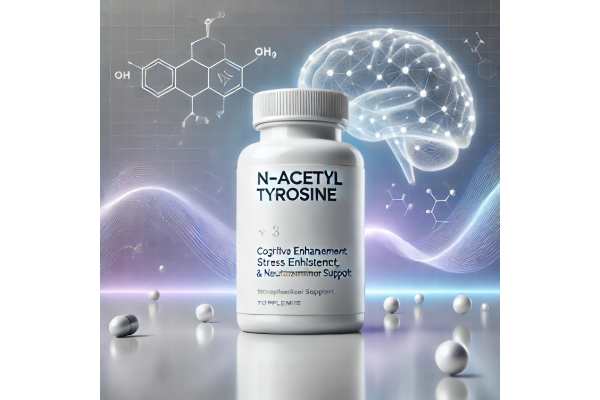
N-acetyl tyrosine (often labeled as N-acetyl-L-tyrosine or NALT) is a modified form of the amino acid L-tyrosine. It is popular in nootropic blends, pre-workout formulas, and some medical nutrition products because manufacturers claim it is more soluble and potentially more “bioavailable” than regular tyrosine. In practice, the story is more nuanced.
N-acetyl tyrosine can act as a precursor to tyrosine, which in turn is used to produce key brain and stress-related chemicals such as dopamine, norepinephrine, and epinephrine. It is also used in specialized intravenous nutrition solutions because of its improved water solubility. At the same time, research suggests that a significant portion of N-acetyl tyrosine can be excreted unchanged, and most human evidence for performance and mood support comes from standard L-tyrosine, not its acetylated form. This article walks through what we actually know about N-acetyl tyrosine, how it is used, possible benefits, sensible dosage ranges, and who should avoid it.
Quick Overview
- N-acetyl tyrosine is an acetylated form of L-tyrosine used in supplements and parenteral nutrition to support catecholamine production and stress resilience.
- Evidence for cognitive or performance benefits primarily comes from L-tyrosine studies; N-acetyl tyrosine does not clearly outperform regular tyrosine and may be less efficient at raising tyrosine levels.
- Typical supplemental intakes range from 300–1,000 mg per day of N-acetyl tyrosine, usually divided into one or two doses taken on an empty stomach.
- Safety data for long-term, high-dose N-acetyl tyrosine are limited, and total daily tyrosine from all sources is often kept below about 150 mg/kg body weight in research settings.
- People with hyperthyroidism, Graves disease, melanoma history, those taking MAOIs or levodopa, and pregnant or breastfeeding individuals should only use tyrosine derivatives under medical supervision, if at all.
Table of Contents
- What is N-acetyl tyrosine?
- How does N-acetyl tyrosine work?
- Benefits and uses of N-acetyl tyrosine
- How to take N-acetyl tyrosine
- N-acetyl tyrosine dosage per day
- Side effects and drug interactions
- Who should avoid or be cautious
What is N-acetyl tyrosine?
N-acetyl tyrosine is a derivative of the amino acid L-tyrosine in which an acetyl group is attached to the nitrogen of the amino group. Chemically, this small modification increases water solubility and changes how the molecule is handled by the body. You will see it listed on labels as N-acetyl tyrosine, N-acetyl-L-tyrosine, N-acetyltyrosine, or NALT; all of these refer to the same compound in supplement contexts.
Tyrosine itself is a non-essential amino acid that the body can make from phenylalanine or obtain from protein-rich foods. It serves as a building block for dopamine, norepinephrine, epinephrine, thyroid hormones, and the pigment melanin. Because of these roles, L-tyrosine has been studied for cognitive performance under stress, mood, and certain medical conditions such as phenylketonuria. N-acetyl tyrosine attempts to package that same biology in a more soluble form.
Clinically, N-acetyl tyrosine has been used for decades in parenteral nutrition formulations, especially in premature infants and some critically ill adults, because regular tyrosine is poorly soluble in water. The acetylated form allows higher tyrosine equivalents to be delivered via intravenous solutions without precipitation. However, research in humans shows that a considerable portion of intravenously infused N-acetyl tyrosine can be excreted unchanged in urine, which raises questions about how efficiently it is converted back to free tyrosine.
In the supplement world, N-acetyl tyrosine is marketed as a supposedly better-absorbed or “smoother” version of tyrosine. At present, there are very few controlled human trials directly studying oral N-acetyl tyrosine itself. Most of the evidence used to justify its use comes from L-tyrosine studies or intravenous nutrition data, so its oral advantages remain unproven.
Overall, N-acetyl tyrosine is best understood as a convenient, soluble tyrosine precursor rather than a dramatically different nutrient. Its core purpose is still to help supply tyrosine for the body’s neurotransmitters and hormones.
How does N-acetyl tyrosine work?
To understand how N-acetyl tyrosine works, it helps to follow its journey from capsule (or infusion) to neurotransmitters. When you ingest N-acetyl tyrosine orally, it is absorbed through the gut as a small molecule. Enzymes in the body can remove the acetyl group, turning it back into regular L-tyrosine. That tyrosine then enters the same metabolic pathways as tyrosine from food or standard supplements.
Tyrosine is converted by the enzyme tyrosine hydroxylase into L-DOPA, which is then transformed into dopamine. Dopamine can be further converted into norepinephrine and epinephrine. These catecholamines play central roles in alertness, motivation, stress response, and blood pressure regulation. When the body is under intense physical or mental stress, catecholamine demand increases, and precursors like tyrosine may become temporarily limiting. Supplementing with tyrosine can, in some circumstances, help maintain catecholamine levels and performance.
N-acetyl tyrosine also appears as an endogenous metabolite in response to certain stressors. Experimental work in animal models suggests that N-acetyl tyrosine formation may be part of a broader adaptive response called mitohormesis, where mild increases in reactive oxygen species signal cells to upregulate protective defenses. In these models, N-acetyl tyrosine has been associated with enhanced stress resistance and increased resilience to environmental insults. These findings are intriguing but remain early-stage and are not yet a basis for clinical recommendations in humans.
From a practical standpoint, the key mechanistic question for supplements is how efficiently N-acetyl tyrosine is deacetylated to free tyrosine. Intravenous studies in humans and parenteral nutrition research show that a substantial portion of N-acetyl tyrosine is excreted unchanged in urine. That means not all of the administered dose is converted to usable tyrosine, and the conversion rate may vary by age and health status.
For oral supplements, there is almost no direct pharmacokinetic data comparing N-acetyl tyrosine with L-tyrosine. Many experts therefore treat N-acetyl tyrosine as a somewhat less predictable, and possibly less efficient, way to deliver tyrosine compared with the standard amino acid. Conceptually, it still works by feeding into tyrosine-dependent neurotransmitter and hormone pathways, but its efficiency and any unique benefits remain incompletely characterized.
Benefits and uses of N-acetyl tyrosine
Most of the proposed benefits of N-acetyl tyrosine mirror those of L-tyrosine, since N-acetyl tyrosine ultimately acts as a tyrosine source. It is important to distinguish between areas where there is direct evidence and those where claims are largely theoretical or extrapolated.
One of the most studied roles of tyrosine is support for cognitive performance under acute stress. Human trials with L-tyrosine have found that it can help maintain working memory, reaction time, and mental flexibility during cold exposure, sleep deprivation, or demanding multitask environments. The effect tends to appear when there is strong stress or cognitive load; in low-stress or well-rested conditions, tyrosine does not consistently enhance cognition. N-acetyl tyrosine is often marketed on the back of these findings, yet the actual studies used regular L-tyrosine rather than its acetylated derivative.
Another area of interest is mood and resilience. Because tyrosine is a precursor to dopamine and norepinephrine, some people take tyrosine or N-acetyl tyrosine hoping to improve motivation, mood, or concentration. Current clinical evidence supports modest benefits in specific situations where catecholamine levels might be temporarily depleted, such as prolonged work shifts or military training under extreme conditions. There is little high-quality evidence that tyrosine or N-acetyl tyrosine treats chronic depression, anxiety disorders, or attention deficit conditions on its own.
N-acetyl tyrosine is also included in many pre-workout supplements. The rationale is that maintaining catecholamine synthesis may help support focus, perceived energy, and exercise performance, especially in demanding or fatiguing sessions. However, controlled trials of tyrosine on athletic performance show mixed results and overall do not support a strong ergogenic effect in healthy, physically active people.
In the medical setting, N-acetyl tyrosine has a clear and well-established use as a more soluble tyrosine source in parenteral nutrition, particularly in premature infants and certain critically ill patients. Here it is part of carefully designed amino acid mixtures, and dosing is calculated by clinical teams.
A newer, more experimental line of research explores N-acetyl tyrosine as an endogenous metabolite that may signal for cellular stress adaptation via mitohormesis. While this is scientifically interesting, it does not yet translate into proven supplement benefits for everyday users.
Overall, N-acetyl tyrosine can be considered a convenient tyrosine donor with potential to support stress-related cognition in line with L-tyrosine data. At present, there is no clear evidence that it provides superior benefits to standard L-tyrosine, and in some contexts it may be less efficient.
How to take N-acetyl tyrosine
In supplements, N-acetyl tyrosine typically appears as capsules, tablets, bulk powder, or as part of multi-ingredient nootropic and pre-workout blends. Labels may specify “N-acetyl-L-tyrosine,” but for practical purposes this is the same compound under discussion.
Most users take N-acetyl tyrosine orally, on an empty stomach or at least away from high-protein meals. Like other large neutral amino acids, tyrosine competes with other amino acids for transport across the gut wall and the blood–brain barrier. Taking it separately from a large protein-rich meal may support more consistent absorption and brain uptake, although this has not been rigorously studied for N-acetyl tyrosine specifically.
Timing depends on the goal:
- For cognitive support under stress (for example, intense study, shift work, or demanding tasks), N-acetyl tyrosine is often taken 30–60 minutes before the anticipated stressor.
- In pre-workout products, it is usually taken about 20–45 minutes before training, aligning with other ingredients such as caffeine.
- For general daily support, some people take smaller doses once or twice a day, such as in the morning and early afternoon, avoiding use near bedtime to reduce the risk of insomnia in sensitive individuals.
Because N-acetyl tyrosine is a tyrosine source, it is wise to consider your total tyrosine intake from all supplements and diet. Many products already contain L-tyrosine, and high-protein diets provide substantial amounts. Combining multiple tyrosine-containing supplements without accounting for total intake can push doses beyond what has been studied.
People who are on thyroid medication, have a history of hyperthyroidism, take medications that affect dopamine or norepinephrine, or have a history of melanoma or serious cardiovascular disease should consult a healthcare professional before using N-acetyl tyrosine. It is also prudent to avoid combining N-acetyl tyrosine with other strong stimulants, especially in individuals with heart rhythm issues, uncontrolled hypertension, or anxiety disorders.
As with any new supplement, starting with the lower end of the dose range, monitoring how you feel over several days, and adjusting gradually is more sensible than immediately using high doses.
N-acetyl tyrosine dosage per day
There is no universally accepted, evidence-based oral dosage for N-acetyl tyrosine because controlled human studies on the supplement form are limited. Most practical guidance is extrapolated from L-tyrosine research, parenteral nutrition experience, and common practice in dietary supplements.
For typical healthy adults who choose to use N-acetyl tyrosine, common supplemental ranges are:
- Low to moderate range: 300–500 mg per day, taken once or divided into two doses.
- Higher short-term range: 600–1,000 mg per day, often split into two doses (for example, 500 mg before a demanding task and another 500 mg later in the day if needed).
Many commercial pre-workouts provide 250–500 mg of N-acetyl tyrosine per serving, sometimes combined with additional L-tyrosine. When stacking products, it is important to add up the total amount of all forms of tyrosine you are taking.
From a safety standpoint, research on L-tyrosine suggests that single doses in the range of several grams and daily intakes up to roughly 100–150 mg/kg body weight have been used short term in adults under medical supervision. This would correspond to about 7–10 g per day for a 70 kg person. These higher intakes are not typical for self-directed supplement use and are generally unnecessary for most purposes. Since N-acetyl tyrosine may be less efficiently converted to free tyrosine and has not been as extensively studied, staying well below those high-dose ranges is prudent.
Practical, conservative guidelines for most healthy adults might include:
- Do not exceed about 1,000 mg per day of N-acetyl tyrosine without discussing it with a clinician, especially if you also take L-tyrosine or consume high amounts of protein.
- Use higher doses only for short periods related to specific stressors, not as a permanent daily regimen.
- Avoid using N-acetyl tyrosine in children, pregnant or breastfeeding individuals, or people with significant medical conditions unless a healthcare professional specifically recommends and supervises it.
Because individual tolerance and medical contexts differ, these ranges are not a substitute for personalized advice. People with kidney or liver impairment, thyroid disorders, or complex medication regimens may require much stricter limits or complete avoidance.
Side effects and drug interactions
At low to moderate doses, N-acetyl tyrosine is generally well tolerated in many healthy adults, but side effects can occur, especially at higher intakes or in sensitive individuals. Since it acts as a tyrosine source, its safety profile overlaps with that of L-tyrosine.
Commonly reported side effects include:
- Gastrointestinal discomfort such as nausea, stomach upset, or heartburn
- Headache or a feeling of pressure in the head
- Restlessness, irritability, or jitteriness
- Fatigue or mild lethargy in some individuals after the initial period of stimulation
Less common but potentially more serious reactions may include palpitations, increased blood pressure, or insomnia, particularly when N-acetyl tyrosine is combined with caffeine or other stimulants. People prone to migraines sometimes report that tyrosine-containing products can trigger or worsen headaches, possibly due to catecholamine changes.
Because tyrosine is a precursor to thyroid hormones and catecholamines, N-acetyl tyrosine may interact with several medications and conditions:
- Thyroid medications: In people taking levothyroxine or with hyperthyroidism, additional tyrosine intake might contribute to excessive thyroid hormone effects in some cases.
- Levodopa (for Parkinson disease): Tyrosine and its derivatives can compete with levodopa for transport into the brain, potentially reducing medication effectiveness.
- Monoamine oxidase inhibitors (MAOIs): Taking tyrosine or N-acetyl tyrosine with MAOIs may increase the risk of elevated blood pressure or other catecholamine-related adverse effects.
- Stimulants and certain antidepressants: Combining high tyrosine intake with medications that affect norepinephrine or dopamine could, in theory, increase side effects such as anxiety, insomnia, or cardiovascular strain.
In parenteral nutrition and specialized clinical settings, elevated blood or urine levels of N-acetyl tyrosine have been associated with metabolic patterns that require careful monitoring, especially in premature infants. While this does not directly translate to oral supplement users, it underscores that N-acetyl tyrosine is not metabolically neutral.
Anyone experiencing chest pain, severe headache, marked increases in blood pressure, or neurological symptoms (such as confusion or severe agitation) while using N-acetyl tyrosine should stop the supplement and seek medical help promptly. Mild side effects often improve with dose reduction or by taking the supplement farther from caffeine and other stimulants.
Who should avoid or be cautious
Because N-acetyl tyrosine feeds into pathways that regulate neurotransmitters, thyroid hormones, and blood pressure, some groups should avoid it entirely or use it only under medical supervision.
People who should generally avoid N-acetyl tyrosine unless specifically advised otherwise by a clinician include:
- Individuals with hyperthyroidism or Graves disease, since extra tyrosine may, in some cases, contribute to excess thyroid hormone production or symptoms.
- People with a history of melanoma, because melanin synthesis depends on tyrosine; some guidelines recommend avoiding high-dose tyrosine supplements in this group.
- Those taking monoamine oxidase inhibitors (MAOIs), due to the potential for exaggerated catecholamine responses and blood pressure spikes.
- Patients using levodopa for Parkinson disease, as tyrosine can compete with the medication for transport and may reduce its effect.
The following groups should use particular caution and seek personalized medical advice before considering N-acetyl tyrosine:
- People with uncontrolled hypertension, arrhythmias, or significant cardiovascular disease, especially if they already use stimulants like caffeine or decongestants.
- Individuals with bipolar disorder, psychotic disorders, or those at high risk of mood instability, because catecholamine shifts can sometimes aggravate symptoms.
- Anyone with chronic kidney or liver disease, since amino acid metabolism and clearance may be altered.
- Pregnant or breastfeeding individuals, as there is very limited safety data for N-acetyl tyrosine in these populations.
Children and adolescents should not use N-acetyl tyrosine supplements without specialist paediatric guidance. In neonates and infants receiving parenteral nutrition, N-acetyl tyrosine is sometimes present in carefully formulated solutions, but doses and monitoring are very different from over-the-counter supplement use.
Finally, people already taking L-tyrosine or high-protein sports supplements should consider whether adding N-acetyl tyrosine meaningfully adds benefit. In many cases, increasing dietary protein or using a moderate dose of regular L-tyrosine under guidance may be simpler and better validated than layering multiple tyrosine forms.
References
- N-acetyl-L-tyrosine and N-acetyl-L-cysteine as tyrosine and cysteine precursors during intravenous infusion in humans 1989 (RCT)
- N-acetyl-L-tyrosine as a tyrosine source in adult parenteral nutrition 2003 (Comparative Study)
- N-Acetyltyrosine as a Biomarker of Parenteral Nutrition Administration in First-Tier Newborn Screening Assays 2024 (Clinical Study)
- Effect of tyrosine supplementation on clinical and healthy populations under stress or cognitive demands: A review 2015 (Systematic Review)
- Tyrosine: Benefits, Side Effects and Dosage 2023 (Evidence-Based Overview)
Disclaimer
The information in this article is for general educational purposes only and is not intended to provide medical advice, diagnosis, or treatment. N-acetyl tyrosine and related supplements can interact with medications and underlying health conditions, and their safety has not been fully established for all populations or long-term use. Always consult a qualified healthcare professional before starting, stopping, or changing any supplement or treatment, especially if you have a medical condition, take prescription or over-the-counter medications, are pregnant or breastfeeding, or are considering use in a child.
If you found this article useful, you are welcome to share it on Facebook, X (formerly Twitter), or any platform you prefer, and to follow our work on social media. Your support in sharing our content helps our team continue to research and publish balanced, high-quality health information.