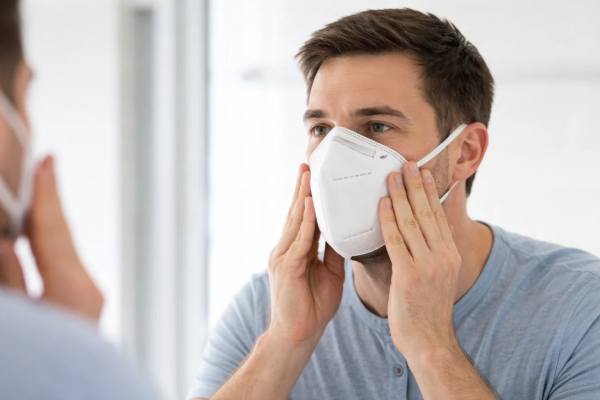
An N95 respirator can be an excellent layer of protection for cold, flu, and other respiratory viruses—but only when it actually seals to your face. The “95” describes filter performance under lab testing; real-world protection depends heavily on fit. Even small gaps at the nose bridge or along the cheeks can let unfiltered air slip in and out, especially when you talk, turn your head, or breathe hard. The good news is that most fit problems follow a handful of predictable patterns, and you can often fix them in under a minute.
This guide walks you through practical seal checks, how to spot common leak points, and the specific ways facial hair changes the equation. You will also learn how to choose a model that matches your face shape and how to stay comfortable without compromising the seal.
Essential Insights for a Reliable N95 Seal
- A well-fitted N95 reduces leakage by maintaining skin contact along the entire sealing edge, not just by having a strong filter.
- A quick seal check every time you put it on catches the most common failures before you enter a higher-risk setting.
- Nose-bridge and under-chin gaps are the most frequent leak zones, especially during talking and head movement.
- Facial hair that crosses the sealing surface can turn a high-performance respirator into a leaky mask, even if it “feels snug.”
- If you cannot consistently pass a seal check, switch models or sizes rather than “making it work” with repeated tightening.
Table of Contents
- Fit is the real performance driver
- A reliable seal check in 60 seconds
- Common leak patterns and quick fixes
- Facial hair and what it changes
- Choosing an N95 that fits your face
- Fit testing basics and when it matters
- Comfort, reuse, and keeping the seal
Fit is the real performance driver
“N95” is often discussed like a simple upgrade from a surgical mask, but the key difference is not just filtration material—it is the expectation of a tight facial seal. When an N95 seals properly, most of the air you inhale is pulled through the filter. When it does not seal, air takes the path of least resistance through gaps, and those gaps can dominate what you actually breathe.
A useful mental model is this: filtration rating tells you how well the filter media traps particles; fit determines how much of your airflow even touches the filter. If there is a gap near the nose, every breath becomes a mix of filtered and unfiltered air. That is why two people wearing the same model can get very different protection.
What “good fit” looks and feels like
A good fit has three consistent qualities:
- Continuous contact: The sealing edge touches skin all the way around—nose bridge, cheeks, jawline, and under the chin.
- Stable position: The respirator does not slide down when you talk or move your head.
- Predictable airflow: You do not feel jets of air at the eyes or cheeks during exhale, and you do not feel cool drafts rushing in at specific points during inhale.
Good fit is not the same as “tight.” Over-tightening can warp the respirator, buckle the nose area, or pull the chin cup out of position, creating new leaks. You want even tension rather than maximum tension.
Why seal checks matter even if you were fit tested
Fit testing (when available) helps identify a model and size that can seal well on your face. But daily life changes the setup: straps age, your hairline is different, you placed the nose clip slightly off-center, or you are wearing glasses today. A user seal check is a quick reality check that your respirator is seated correctly right now, in this moment.
If you think of fit testing as choosing the right shoes, the seal check is tying the laces correctly every time you put them on.
A reliable seal check in 60 seconds
A seal check is most effective when you do it the same way every time. The goal is not to “prove” the respirator is perfect; it is to catch obvious gaps and seating errors before you rely on it in a crowded clinic, on a plane, or while caring for someone who is sick.
Step-by-step: a repeatable routine
- Start with clean hands. If you are using the respirator for infection risk, clean hands reduce the chance you contaminate the inside surface while adjusting it.
- Seat the respirator on your face first, then straps. Hold it in place with one hand so it does not shift while you pull straps over your head.
- Set strap placement deliberately.
- Upper strap: high on the back of the head (crown area), not on the neck.
- Lower strap: below the ears, around the upper neck.
Straps that are too close together reduce stability and can encourage sliding.
- Mold the nose area slowly with two hands. Pinching hard with one hand often creates a sharp crease and a leak line. Use both hands to press the nose clip evenly from the center outward.
- Do a quick movement check (10 seconds). Turn head left and right, look up and down, talk a few sentences. The respirator should stay centered and not drift down.
Two seal checks to use (and what they tell you)
- Negative-pressure style check (inhale check):
Place your hands gently over the respirator to limit airflow through the filter surface without crushing the shape. Inhale sharply. You should feel the respirator pull slightly toward your face and stay pulled in for a moment. If you feel air rushing in near the eyes, cheeks, or chin, you have a leak. - Positive-pressure style check (exhale check):
Exhale gently. You should not feel air jetting upward toward your eyes or out the sides. Strong upward flow often signals a nose-bridge gap.
You do not need to use force. Gentle inhale and exhale are enough to reveal major leaks.
Red flags that mean “do not proceed yet”
- Fogging glasses immediately on exhale, especially if it stops when you press the nose bridge
- The respirator slides down when you speak
- You can feel a cool draft at one spot during inhale
- The chin area collapses or pops off the skin when you open your mouth
If you see these, adjust once or twice; if it still fails, switch models or sizes rather than escalating strap tension.
Common leak patterns and quick fixes
Most N95 fit problems repeat the same geometry: the nose bridge is too flat for the mask’s curve, the chin cup is too shallow or too long, or the cheeks are not contacting evenly. Learning to identify the pattern saves time and reduces the temptation to keep tightening.
Nose-bridge leaks (the “eye jet” problem)
What it feels like: air shooting up toward the eyes when you exhale; glasses fogging; a flutter at the top edge.
Fixes to try (in order):
- Reset the nose clip: lift the respirator slightly off the nose, reseat, then mold with two hands from the center outward.
- Check strap height: if the upper strap is too low, the top edge lifts off the nose bridge.
- Use a model with better nose structure: some designs have firmer nose foam or a stiffer top panel that seals better on prominent or narrow bridges.
- Avoid over-molding: an overly sharp bend can create a crease that becomes a leak channel.
If you must wear glasses, put them on after you have sealed and molded the nose. Glasses can push the top edge down and reopen a gap.
Under-chin leaks (the “talking breaks the seal” problem)
What it feels like: the bottom edge lifts when you talk; you feel air entering near the chin on inhale.
Fixes to try:
- Reposition the respirator higher on the nose and deeper under the chin. Many people seat it too low at first.
- Lower strap placement: it should anchor under the ears, not ride up onto the ears.
- Try a different size: a respirator that is too small often rides up; too large may buckle under the chin.
- Choose a design with a deeper chin panel: three-panel styles often handle jaw movement better than rigid cups for some faces.
Cheek and side leaks (the “smile gap” problem)
What it feels like: intermittent leaks when you smile, speak, or turn your head; air movement near the corners.
Fixes to try:
- Even out strap tension: if one strap is twisted or uneven, one side lifts.
- Smooth hair away from the sealing surface: sideburns or stray hair can create micro-gaps.
- Check for mask collapse: if the respirator collapses inward when you inhale, it may shift and leak—switch models to one with better structural support.
When “quick fixes” become risky
It is tempting to use accessories like braces, tape, or pads to force a seal. These can sometimes help, but they can also create a false sense of security or change airflow in unpredictable ways. A good rule: if you add anything that changes how the respirator sits on your face, you should treat it like a new configuration and be extra strict about seal checks. If you consistently need add-ons to make a model work, it is usually better to switch models.
Facial hair and what it changes
Facial hair is not just a comfort or style variable—it is a fit variable. Tight-fitting respirators rely on direct contact between the sealing edge and skin. Hair under that edge prevents full contact, creates channels for air, and makes leaks more likely during movement. Even when a respirator feels snug, the seal may be incomplete if hair crosses the sealing surface.
Why hair breaks the seal
Think of the sealing edge as a gasket. Skin can compress and conform; hair tends to spring back. That springiness creates tiny tunnels that connect the inside and outside air. Those tunnels may be small, but breathing is continuous—small leaks matter over minutes to hours, especially in higher-risk indoor air.
Hair also changes friction. A respirator may slip more easily on hair than on skin, making it harder to maintain a stable position when you talk or turn your head.
Which facial hair is most problematic
The most problematic facial hair is anything that sits under the seal line, which typically runs:
- Over the bridge of the nose and upper cheeks
- Along the cheekbones toward the jaw
- Around and under the chin
In practical terms, beards and many goatees usually interfere because they occupy the jawline and chin region where the respirator must seal. Stubble can be surprisingly disruptive because it creates a uniform “spacer” under the seal, preventing full contact.
Some moustache styles can be compatible if they do not extend into the seal area, but compatibility depends on the specific respirator shape and how high the seal rides on your upper lip.
Practical options if you have facial hair
- Best option for a tight-fitting N95: be clean-shaven anywhere the seal touches. If you want predictability, this is the most reliable path.
- If shaving is not possible: consider alternatives that do not require a tight face seal, such as loose-fitting powered air-purifying respirators (hoods or helmets) in occupational settings where they are available and appropriate.
- If you must keep some hair: keep hair completely outside the seal line and be realistic—your seal checks become more important, and some people will not be able to achieve a consistent seal with any tight-fitting model.
A note on “workarounds”
You may see suggestions like wrapping cloth over a beard, using tight bands, or heavily taping edges. These may change leakage patterns, but they can also introduce new gaps or make fit unpredictable. If you are relying on respiratory protection for high-risk exposure (healthcare, caregiving for a contagious person, or poor ventilation), a workaround that is not consistently verifiable is rarely a good trade.
Choosing an N95 that fits your face
Many fit struggles are not user error—they are model mismatch. Faces vary in nose height, cheek fullness, jaw angle, and chin length. A respirator that seals beautifully on one person may leak constantly on another. The goal is to find one or two models you can don reliably, seal-check successfully, and tolerate for the length of time you need it.
Start with design features that improve fit stability
When possible, prioritize:
- Headbands instead of ear loops: headbands typically provide more stable, even tension for tight-fitting respirators.
- A moldable nose piece with good structure: a stronger nose area resists collapse and helps maintain a seal during speech.
- A shape that matches your movement: if you talk frequently or work actively, a design that accommodates jaw motion can reduce bottom-edge leaks.
Common shapes include cup-style and flat-fold styles (including multi-panel designs). Cup styles can be stable but may not match every face; multi-panel flat-fold designs often adapt well to jaw movement, though this varies by brand and build.
How to “test shop” a respirator without guesswork
If you have access to multiple models, use a simple evaluation sequence:
- Put it on and seal-check once. If it fails immediately, do not spend 10 minutes forcing it.
- Do a two-minute movement trial: read a paragraph aloud, turn head, look down, and simulate what you do in real life.
- Watch for drift: if it slides down repeatedly, you will fight it all day.
- Assess pressure points early: a respirator that hurts at minute five often becomes unbearable at minute forty.
Keep brief notes on what failed (nose, chin, cheeks). Those notes guide your next choice better than general reviews.
Size is not just “small vs regular”
Sizing is not standardized across manufacturers. A “regular” in one model may behave like a “small” in another. If the respirator:
- Feels cramped across the nose and cheeks: try a larger size or a different shape with more width.
- Buckles under the chin or has slack at the cheeks: try a smaller size or a model with a tighter perimeter.
Avoiding common purchasing pitfalls
If you are relying on an N95 for respiratory infection risk, authenticity matters. Look for clear labeling and approval markings on the respirator and packaging, and be cautious with unfamiliar sellers. Also consider whether you need source control; models with exhalation valves can be more comfortable, but they may release unfiltered exhaled air, which is not ideal around other people if you might be sick.
Fit testing basics and when it matters
Fit testing is a formal way to confirm that a specific make, model, and size can seal on your face. It is the strongest protection against “I thought it fit” mistakes, because it challenges the seal during movement and measures (or detects) leakage.
Even if you are not in a workplace program, understanding fit testing helps you interpret your own seal-check results and decide when you should upgrade your approach.
Seal check vs fit test
- Seal check: a quick self-check performed each time you put on the respirator. It can catch obvious gaps, strap errors, and seating problems.
- Fit test: a structured test that evaluates leakage while you perform a set of exercises (talking, head movements, bending). It is meant to confirm that a respirator model truly fits you.
A seal check can pass even when overall fit is mediocre, and it can fail when you simply donned the respirator incorrectly. That is why the two are complementary rather than interchangeable.
Qualitative vs quantitative fit testing
- Qualitative fit testing: relies on your ability to detect a test agent (often a bitter or sweet aerosol). If you can taste or smell it during the exercises, the fit fails.
- Quantitative fit testing: uses an instrument to measure particle concentration inside and outside the respirator and calculates a numeric result (often called a fit factor). Higher numbers indicate less leakage.
Both methods can be valuable. Quantitative testing provides more detail, but access may be limited outside occupational health settings.
When fit testing is especially worth pursuing
Consider formal fit testing if:
- You wear an N95 for work or frequent high-risk exposures (healthcare, caregiving, or settings with close contact)
- You have repeated seal-check failures across models
- Your face shape or facial changes make fit unpredictable (recent dental work, significant weight change, facial surgery, or scarring)
- You need high confidence during long indoor exposures (hours rather than minutes)
If you cannot access fit testing, your best substitute is systematic model comparison: try multiple reputable models, use consistent seal-check technique, and retire any respirator that you cannot don reliably.
Comfort, reuse, and keeping the seal
Comfort is not a luxury feature; it affects adherence. If a respirator hurts, makes you feel panicky, or constantly fogs your glasses, you will touch it more, adjust it more, and be less likely to wear it consistently. The goal is sustainable use that preserves the seal.
Comfort adjustments that usually do not compromise fit
- Take time to seat it correctly: most “uncomfortable N95” complaints improve when the respirator is centered and the straps are positioned correctly.
- Reduce glasses fogging by improving the nose seal first: fogging is often a fit signal, not a glasses problem.
- Manage skin pressure strategically: pressure at the nose bridge is common. If you use a skin protectant, keep it away from the sealing edge. Anything slippery under the seal can increase leakage.
If discomfort forces you to break the seal repeatedly, it is often better to change models than to keep modifying the same one.
Talking, sweating, and motion: how seals fail over time
Seals tend to degrade in predictable situations:
- Speech-heavy settings: jaw movement can lift the bottom edge. Choose designs that accommodate chin movement and re-check the seal after long conversations.
- High humidity or sweat: moisture can soften materials and change friction, allowing the respirator to slide. If it starts drifting down, step away, clean hands, and reseat it.
- Frequent donning and doffing: each cycle stresses straps and increases the chance of mis-seating.
A good habit is to do a quick seal check after any major change: leaving a building and re-entering, taking a drink, changing glasses, or moving from cold outdoors to warm indoors.
Reuse: practical guidance without false confidence
N95s are often designed for single-shift or limited-use scenarios, but many people reuse them in everyday life. If you reuse an N95, focus on what affects fit and hygiene:
- Discard if the respirator no longer seals. If straps are loose, the nose area is permanently creased, or the shape is warped, performance drops.
- Discard if it is wet, visibly soiled, or difficult to breathe through.
- Store it to preserve shape: keep it in a clean, breathable container (not crushed in a pocket or bag).
- Minimize handling of the inside surface. The inner layer is meant to contact your face; treat it as a “clean zone.”
If you are wearing an N95 while sick to protect others, prioritize a non-valved model and replace it sooner, since moisture from coughing and heavy breathing can degrade comfort and fit.
References
- Fit Testing | Personal Protective Equipment | CDC 2025 (Guidance)
- A systematic review of fit improvement strategies for respirators: lessons learned from the COVID-19 pandemic – PMC 2025 (Systematic Review)
- A systematic review of passing fit testing of the masks and respirators used during the COVID-19 pandemic: Part 1-quantitative fit test procedures – PMC 2023 (Systematic Review)
- 1910.134 App B-1 – User Seal Check Procedures (Mandatory) | Occupational Safety and Health Administration 1998 (Regulation)
Disclaimer
This article is for general educational purposes and does not provide medical advice, diagnosis, or treatment. Respirator selection and use can vary by setting, health status, and workplace requirements. If you have breathing problems, heart or lung conditions, anxiety with respirators, or concerns about safe use, consult a qualified clinician. In workplaces, follow your employer’s respiratory protection program and applicable safety regulations, including fit testing requirements and training.
If you found this guide useful, consider sharing it on Facebook, X (formerly Twitter), or any platform you prefer so others can make more informed decisions about respiratory protection.