Nanas Batu, or Phytocrene bracteata, is not a mainstream medicinal herb. It is a woody tropical climber from the Icacinaceae family, known more in regional botany and traditional practice than in modern clinical herbalism. Its clustered fruits, prickly stems, and variable leaves make it distinctive in the forest, but the real reason people search for it is its reputation in folk medicine for vitality, urinary comfort, postpartum recovery, and fever-related use. At the same time, this is exactly the kind of herb that needs a careful, evidence-aware approach.
The most important point is simple: Nanas Batu has traditional medicinal value, but the published evidence around human health effects is still thin. Available sources are mostly botanical accounts, ethnobotanical notes, and older phytochemical screening rather than modern clinical trials. That does not make the plant unimportant, but it does mean benefits, dosage, and safety should be discussed honestly and conservatively.
Quick Overview
- Traditional use centers on urinary comfort and general vitality rather than clinically proven treatment.
- Folk practice also mentions postpartum recovery, fever support, and occasional respiratory use.
- A commonly shared household preparation is 1 fruit simmered in 2–3 cups of water, with intake limited to about 1 cup daily.
- Pregnant or breastfeeding people, children, and anyone taking prescription medicines should avoid unsupervised use.
Table of Contents
- What Nanas Batu Is and How to Identify It
- Traditional Benefits and What the Evidence Really Shows
- Key Ingredients in Phytocrene bracteata
- How Nanas Batu Is Used in Practice
- Dosage, Timing, and Sensible Limits
- Safety, Side Effects, and Who Should Avoid It
- Is Nanas Batu Worth Using
What Nanas Batu Is and How to Identify It
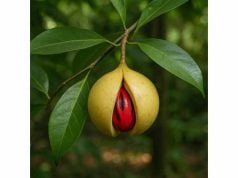
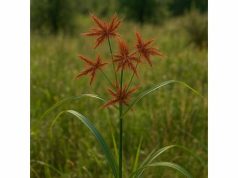
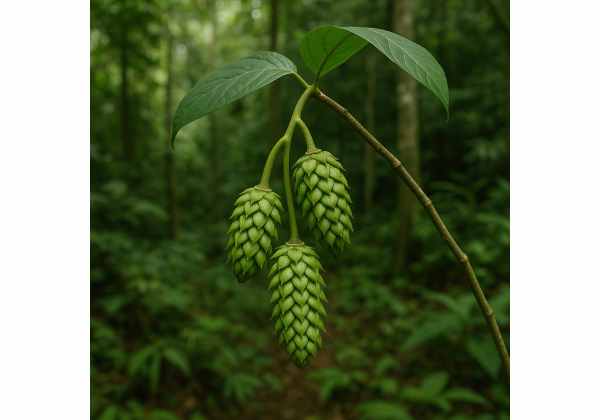
Phytocrene bracteata is a perennial, woody climber that grows in tropical forest settings from mainland Southeast Asia into parts of Malesia. In regional plant records, it is described as a native climber of primary rainforest, secondary rainforest, and freshwater swamp forest, with leathery leaves, dioecious flowers, and orange to pale-yellow bristly fruits. In taxonomic descriptions, the fruits are treated as drupes that form dense spherical clusters, and the species is notable for its variable leaf shape, especially on juvenile plants.
For practical identification, a few features matter most:
- It is a climber, not a small culinary herb.
- The stems can be prickly when young.
- Mature leaves are usually ovate to broadly ovate, while juvenile leaves may be lobed.
- The fruits form eye-catching ball-like clusters and have a hard woody endocarp.
The common name can create real confusion. “Nanas Batu” does not mean pineapple, and it is not a standard global common name. In some regional documentation, the same or similar vernacular name has even been applied to different plants, which is a major safety issue if someone is buying dried material, powder, or a home remedy without a confirmed botanical label. That alone is a good reason not to trust unlabeled market material.
This matters because identification is not just a botanical detail. It shapes every question that follows: what part is used, what compounds may be present, what dose people mean, and whether the product in hand is even the same species. Anyone interested in traditional climbers with clearer species-level descriptions may also find lagundi for cough support easier to interpret because it is better known in common herbal practice.
The bottom line is that Nanas Batu is a real plant with real ethnobotanical significance, but it is also a plant where misidentification is unusually easy. Start there before thinking about benefits or dosage.
Traditional Benefits and What the Evidence Really Shows
Most claims around Nanas Batu come from traditional use rather than controlled human research. In regional educational and botanical material, Phytocrene is described as being used for general vitality, frequent night urination, postpartum support, and fever-related complaints. Some traditional descriptions frame the tuberous root as a remedy for restoring male vitality and helping with night urination, while other ethnobotanical notes describe decoctions used as post-labour tonics and for fever.
That gives us a reasonable picture of traditional positioning. The main reported benefit areas are:
- Urinary support
Folk use often points to frequent urination, night urination, or general urinary comfort. - Vitality and sexual health
Some traditional descriptions frame it as a male vitality or reproductive tonic. - Postpartum recovery
Decoctions are sometimes described as post-labour tonics in local usage. - Fever and general illness support
Regional sources mention fever relief and, in some cases, broader symptomatic use.
There are also scattered mentions of respiratory use in traditional material, including asthma-related use, though these are far less standardized than the core vitality and urinary claims.
What the evidence does not show is equally important. There are no widely cited human clinical trials, standard treatment protocols, or modern dosing studies for Phytocrene bracteata. The available literature is mostly botanical, descriptive, or preliminary. So the safest way to talk about benefits is to say that Nanas Batu has reported traditional uses and possible medicinal relevance, but not proven outcomes in the way people might expect from a modern herbal monograph.
That distinction protects readers from a common mistake: turning a culturally meaningful plant into a guaranteed remedy. If someone is looking for proven treatment for infertility, urinary infection, asthma, kidney stones, diabetes, or persistent fever, this herb should not replace diagnosis or standard care. For comparison, better-known herbs such as corn silk for urinary comfort or other better-studied symptom-specific options are easier to place in an evidence-based plan.
Key Ingredients in Phytocrene bracteata
The phrase “key ingredients” sounds straightforward, but for Nanas Batu it needs a careful answer. We do not have the kind of modern compound map that exists for herbs like turmeric, peppermint, or green tea. What we do have is older phytochemical screening and scattered references suggesting that Phytocrene bracteata contains classes of compounds worth scientific attention. An early phytochemical survey of Malayan plants reported Phytocrene bracteata in the context of alkaloid and saponin screening, which is meaningful because those compound families often influence bitterness, membrane activity, and bioactivity in medicinal plants.
At a practical level, that means Nanas Batu may contain:
- Alkaloid-like constituents, which in many plants can affect the nervous system, smooth muscle activity, or general physiological response.
- Saponins, which often have a bitter or foaming character and may influence absorption, irritation potential, or traditional tonic use.
- Other unresolved secondary metabolites, which may exist but have not been characterized well enough for confident consumer guidance.
The problem is that “contains alkaloids and saponins” is not the same as “has proven medicinal action.” A screening study can tell us a plant is chemically interesting, but it does not tell us the best part to use, the safe dose, how compounds change with drying or boiling, or what benefits appear in humans. That is why claims about Nanas Batu as an anti-inflammatory, aphrodisiac, metabolic herb, or organ-support plant should be treated as hypotheses or traditions, not conclusions.
A useful way to think about its medicinal properties is this:
- The plant appears chemically active enough to justify folk interest.
- The chemistry is not mapped well enough to support aggressive self-experimentation.
- The gap between screening and treatment is still large.
So yes, Nanas Batu likely contains bioactive plant chemicals. No, we cannot yet define them with the confidence readers may expect from modern supplement articles. Readers who want a clearer example of how compound-level research can sharpen herb use can compare this with ginger’s better-characterized compounds, where the active chemistry and the practical uses line up much more clearly.
How Nanas Batu Is Used in Practice
One of the most challenging parts of Nanas Batu is that “uses” vary by region, tradition, and plant part. Some descriptions emphasize the tuberous root, others mention decoctions tied to postpartum care or fever, and still others describe whole-fruit or household preparations shared in community practice. That variation tells us two things at once: first, the plant clearly has a living medicinal reputation; second, that reputation is not standardized enough to treat as a single fixed protocol.
In practice, the plant is usually framed in one of these ways:
- Decoction herb
The material is boiled or simmered in water, then the strained liquid is consumed. - Short-term tonic
It is used for a defined concern, such as recovery, urinary discomfort, or vitality, rather than as an all-purpose daily beverage. - Culturally situated remedy
It is often embedded in local health traditions, not simply taken as a modern capsule with a standardized label.
This is also where consumers can go wrong. The commercial version of Nanas Batu may appear as raw fruit, sliced material, powder, or mixed herbal preparations. Without a botanical name, part used, harvest source, and clear preparation instructions, the product could be inconsistent or even misidentified. A powder marketed only as “Nanas Batu” is not enough information.
A sensible use framework would include these questions before anyone tries it:
- Is the material clearly labeled Phytocrene bracteata?
- Which part is being used: root, fruit, or something else?
- Is it a single-herb product or a mixture?
- Is the purpose traditional symptomatic support, or is someone trying to self-treat a medical condition?
- Is the source cultivated and reputable?
Where people are really seeking support for digestion or mild symptomatic comfort, a more familiar herb can be easier to use safely. For example, peppermint for digestive and respiratory comfort is far better documented for everyday use. Nanas Batu is more of a niche ethnobotanical plant than a first-line general wellness herb.
Dosage, Timing, and Sensible Limits
There is no clinically established dose for Nanas Batu. That is the most honest starting point. The sources available for this plant do not provide the kind of standardized mg, extract ratio, or duration guidance used in evidence-based supplement monographs. Instead, the dosing language around Nanas Batu is usually traditional and household-based.
A commonly shared traditional-style preparation describes:
- 1 fruit
- simmered in 2–3 cups of water
- for about 10–15 minutes
- with intake limited to roughly 1 cup daily
That is best understood as a folk preparation, not a validated medical dose. It may reflect community practice, but it does not tell us potency, active-compound yield, or safety margin.
Because the evidence is limited, the most sensible limits are conservative:
- Choose the lowest traditional intensity, not a concentrated extract.
- Keep use short-term, not indefinite.
- Avoid stacking it with multiple other tonic, urinary, hormonal, or sedating herbs.
- Stop immediately if there is stomach upset, rash, dizziness, unusual bleeding, or worsening symptoms.
Timing depends on why a person is considering it. Traditional tonics are often taken once daily rather than several times a day. That is another reason not to assume “more is better.” With poorly characterized herbs, dose escalation creates risk much faster than it creates certainty.
A practical rule is that Nanas Batu should not be used the way people use ordinary tea. It belongs in the category of occasional traditional remedy, if used at all, not casual daily hydration. Anyone seeking a measured botanical routine may be better served by herbs with clearer dosing traditions, such as gentian root for digestive bitters or other better-documented options matched to the actual symptom.
Safety, Side Effects, and Who Should Avoid It
Safety is where caution should outweigh curiosity. Nanas Batu has traditional use history, but limited modern human safety data. That means the burden of proof is still low, and the default approach should be restraint. The most likely immediate issues are not dramatic toxicity claims, but more ordinary risks: misidentification, variable strength, contamination, stomach upset, allergy, and interaction with existing illness or medication. The ambiguity around the common name “Nanas Batu” makes the identification risk especially important.
People who should avoid unsupervised use include:
- Pregnant people
- Breastfeeding people
- Children and adolescents
- Anyone trying to self-manage infertility or postpartum symptoms without medical oversight
- People with liver, kidney, or cardiovascular disease
- People taking prescription medicines regularly
Potential interaction groups that deserve special caution include:
- blood pressure medicines
- blood sugar medicines
- diuretics
- sedatives
- anticoagulants and antiplatelet drugs
- fertility or hormone-related treatments
That list is cautious rather than species-specific, but it is appropriate when a plant is being promoted for vitality, urinary, reproductive, or fever-related use without clear pharmacology.
Another important safety point is ethical sourcing. In Singapore records, Phytocrene bracteata is listed as vulnerable locally. That does not mean the plant is globally unavailable, but it does mean wild-harvesting from sensitive habitats is a poor choice. If someone uses the plant within a community tradition, cultivated and correctly identified material is far preferable to opportunistic wild collection.
A final common-sense rule: if the health problem is serious enough to make a person search for an unusual remedy, it is serious enough to justify proper diagnosis. Fever, urinary symptoms, breathing trouble, infertility concerns, and postpartum complications all deserve that standard.
Is Nanas Batu Worth Using
Nanas Batu is worth knowing about, but not worth romanticizing. It is an interesting and culturally meaningful medicinal climber with documented traditional use and some preliminary chemical relevance. It also has a clear evidence gap. That combination places it in a middle category: more than folklore, but far less than a clinically validated herbal treatment.
So when might it make sense?
- When someone is studying Southeast Asian medicinal plants.
- When it is being used within a knowledgeable traditional context.
- When the plant is correctly identified and the goal is modest, short-term traditional support.
When does it make less sense?
- As a substitute for medical care.
- As a first choice for infertility, UTI, asthma, kidney stones, diabetes, or persistent fever.
- As an everyday supplement bought from an unclear source.
- As a concentrated powder or extract with no botanical verification.
For most readers, the most useful takeaway is not “take Nanas Batu,” but “treat Nanas Batu respectfully.” Respect means understanding the plant, separating tradition from proof, refusing vague commercial claims, and choosing better-studied herbs when that is the safer option. Someone exploring reproductive or women’s traditional herbs, for example, may find motherwort’s traditional reproductive context easier to place, while those pursuing general safety education may benefit from a better-documented herb safety model.
Nanas Batu has a place in ethnobotanical conversation. It may also have future research value. But for now, its best use is careful, limited, and informed.
References
- NParks | Phytocrene bracteata 2025 (Government Species Database)
- Flora of Singapore precursors, 47: The genus Phytocrene (Icacinaceae) in Singapore 2024 (Taxonomic Paper)
- 100 Common Vascular Plants of the Nee Soon Swamp Forest, Singapore 2013 (Field Guide)
- Phytocrene macrophylla var. macrophylla (Icacinaceae) – a new record for Thailand 2024 (Botanical Paper)
- A phytochemical survey of Malaya Part III. alkaloids and saponins 1964 (Seminal Phytochemical Survey)
Disclaimer
This article is for educational purposes only and does not replace medical advice, diagnosis, or treatment. Nanas Batu has limited modern clinical evidence, and common-name confusion can lead to misidentification. Do not use it to self-treat infertility, urinary infection, breathing problems, postpartum symptoms, or persistent fever. If you are pregnant, breastfeeding, taking medicines, or living with a chronic condition, speak with a qualified clinician before using any preparation of Phytocrene bracteata.
If you found this article useful, please share it on Facebook, X, or your preferred platform.