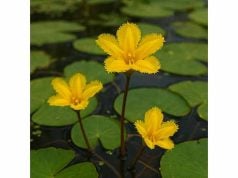
Nardoo, or Marsilea drummondii, is one of Australia’s most fascinating traditional wild foods. It is a small aquatic fern rather than a classic medicinal herb, and its reputation comes from a striking mix of usefulness and risk. For generations, properly prepared nardoo sporocarps were gathered, processed, and eaten as a starchy food. That practical role matters more than any modern “superfood” label. At the same time, nardoo is also known for containing thiaminase, an enzyme that can break down vitamin B1 and cause harm when the plant is used incorrectly or relied on too heavily.
That tension shapes the whole conversation around nardoo. Its main benefits are nutritional and ethnobotanical, not strongly clinical or drug-like. It may provide energy as a traditional starch source, and it holds real cultural importance as a resilient wetland food plant. But there is no established medicinal dose, no strong human trial base, and no safe shortcut around proper preparation. For most readers, the best approach is to understand what nardoo truly is: a remarkable traditional food with serious safety boundaries.
Essential Insights
- Properly prepared nardoo can serve as a traditional starch-based food rather than a proven medicinal herb.
- Its most realistic benefit is energy support from processed sporocarps, not broad therapeutic effects.
- There is no established medicinal dose, and any food trial should stay very small, such as about 1–2 tablespoons of fully processed flour, roughly 8–16 g.
- People at risk of thiamine deficiency should avoid casual or unsupervised use.
Table of Contents
- What Nardoo Is and Why It Stands Out
- Nardoo Health Benefits and Realistic Expectations
- Key Ingredients in Marsilea drummondii
- Traditional Uses and How Nardoo Is Prepared
- Dosage, Timing, and Common Mistakes
- Safety, Side Effects, and Who Should Avoid It
- Should You Use Nardoo Today
What Nardoo Is and Why It Stands Out
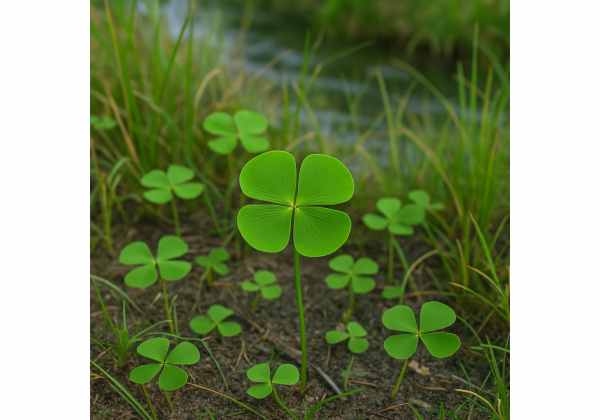
Nardoo is an aquatic or amphibious fern native to inland Australia. Botanically, it belongs to the genus Marsilea, a group often recognized for clover-like leaves that float or sit just above shallow water. Marsilea drummondii grows from creeping rhizomes and thrives in seasonal wetlands, floodplains, claypans, swamps, and slow-moving water. When floods come and later recede, nardoo can spread widely and become a dominant part of the groundcover. That ecological rhythm matters because the plant’s food value is tied to those cycles of drying and wetting.
What made nardoo important historically was not the leaves themselves, but the hard reproductive bodies called sporocarps. These small structures were collected and processed into a starchy food. That is why nardoo is best understood first as a traditional survival and staple food from wetland landscapes, not as a mainstream herb in the modern supplement sense. Its story is about adaptation, seasonal knowledge, and preparation skill.
Several features help explain why the plant stands out:
- It is a fern, not a seed grain or root crop.
- Its edible value comes mainly from processed sporocarps, not from common leafy use.
- It can appear abundant after floods, making it a practical food source in certain landscapes.
- It carries a built-in safety problem because of thiaminase, which can deplete vitamin B1.
That last point is central. Many plants are mildly irritating or indigestible if eaten raw, but nardoo is different because improper use can lead to nutritional injury rather than obvious instant poisoning. This is one reason the plant remains so important in Australian historical discussions. It is also why nardoo should never be reduced to a romantic “wild superfood” narrative.
From a modern perspective, nardoo belongs to a small group of traditional foods that reward careful processing and punish shortcuts. In that sense, it has more in common with other starch-first traditional foods than with common herbal tonics. Readers who want a gentler comparison point for resilient plant staples may find amaranth as a nutrient-dense traditional staple easier to place, because it does not carry the same preparation risk.
The most useful starting idea is simple: nardoo is valuable, but it is valuable in a very specific way. Its importance lies in ecology, traditional food knowledge, and human adaptation to dryland flood systems. Every later question about benefits, dosage, and safety needs to be built on that foundation.
Nardoo Health Benefits and Realistic Expectations
When people search for the health benefits of nardoo, they often expect a familiar herbal pattern: antioxidant effects, anti-inflammatory action, digestion support, or some clearly defined medicinal compound. Nardoo does not fit that model very well. The most realistic benefits are tied to its role as a traditional food source. Properly prepared nardoo offers value mainly through energy provision, cultural food security, and its place in traditional knowledge systems.
The first potential benefit is starch-based energy. The sporocarps contain a starchy material that, once processed, can be turned into flour or dough. In traditional settings, that would have been important for survival, satiety, and sustaining activity when other foods were scarce or seasonal. This is a practical benefit, not a supplement-style one. It means nardoo can function as food, not as a quick therapeutic fix.
The second benefit is food resilience. Nardoo appears in landscapes where dependable agriculture is difficult. A plant that can be gathered, dried, stored, and later processed has real value in that kind of environment. Health is not only about nutrients on paper. It is also about whether a food source is available, storable, and usable in challenging conditions. Nardoo’s historic importance comes partly from that resilience.
A third benefit is cultural continuity. Traditional foods often support health indirectly by preserving food knowledge, seasonal rhythm, and local ecological awareness. That matters here because nardoo is a clear example of how safe eating depended on inherited technique, not guesswork. From a public health point of view, that is a meaningful lesson in itself.
Still, it is important to keep expectations realistic. Nardoo is not well supported as a medicinal plant for modern conditions such as diabetes, arthritis, infections, or chronic fatigue. There is no strong human evidence showing that nardoo acts like a clinically useful botanical remedy. Its health value is more modest and more grounded:
- It may provide calories and satiety when properly processed.
- It may function as a traditional alternative starch.
- It may contribute to a broader understanding of wild food systems and food diversity.
What it does not justify is exaggerated marketing. Nardoo is not a general detox herb, not a safe daily tonic for everyone, and not a shortcut to better nutrition. In fact, if it is processed badly or relied on too heavily, it can produce the opposite of health by worsening thiamine status.
That is why comparisons should be careful. A familiar starch such as arrowroot as a starch-first traditional food is far easier to recommend casually because its risk profile is much lower. Nardoo sits in a narrower category: valuable when understood, risky when simplified.
So the clearest answer is this: nardoo’s main “health benefits” are traditional energy value and cultural significance, not well-proven medicinal effects. That may sound modest, but it is also the most accurate and useful way to view it.
Key Ingredients in Marsilea drummondii
The key ingredients in nardoo are unusual because the plant combines a useful food component with a serious anti-nutritional factor. That mix is exactly why Marsilea drummondii deserves more nuance than many other traditional plants.
The first important component is starch. The sporocarps contain starchy packing around the reproductive structures, and this is what gives nardoo its practical food role. When people describe nardoo flour, cakes, or dough, they are mostly talking about using this starch-rich material as an energy source. That explains why nardoo became a stand-by food in arid and semi-arid wetland systems. It could be gathered in quantity, dried, and transformed into something more filling than simple greens or gathered leaves.
The second relevant component is some protein and minor nutrients, though nardoo is not best thought of as a precision nutrition crop. It is not widely documented the way modern staple grains are, and published nutritional detail for routine consumer use is limited. So while nardoo can contribute nourishment, it should not be framed as a carefully standardized source of protein, iron, or vitamins in the way oats, legumes, or cultivated grains are.
The third, and most critical, component is thiaminase. This enzyme breaks down thiamine, also known as vitamin B1. That is the defining safety issue of nardoo. Thiamine is essential for energy metabolism, nerve function, and heart health. When thiaminase destroys it, the body can move toward deficiency, especially if the diet is already poor, restricted, or repetitive. This is why improper or heavy nardoo use can be dangerous even when the plant seems edible.
A useful way to think about nardoo’s chemistry is to split it into two layers:
- Food layer: starch, bulk, and a survival-food role
- Risk layer: thiaminase and possible nutrient depletion
This makes nardoo very different from a plant whose “active compounds” are mostly desirable. With nardoo, the most important active constituent is the one that creates the main hazard. That is why the medicinal properties discussion must stay balanced. The plant may contain other fern metabolites of biochemical interest, but those are not the main reason most readers need guidance.
The practical implication is clear. A person cannot talk sensibly about nardoo without understanding thiamine. Anyone new to that topic may benefit from vitamin B1 and deficiency basics, because the risks of nardoo make far more sense once you understand what thiamine does in the body.
So, if someone asks what the “key ingredients” of nardoo are, the honest answer is not a trendy list of plant bioactives. It is starch on one side, thiaminase on the other, and a narrow margin of safety that depends on preparation, dietary context, and restraint.
Traditional Uses and How Nardoo Is Prepared
Nardoo’s traditional use is primarily culinary. The plant’s sporocarps were collected, processed, and turned into a food rather than brewed as a casual tea or swallowed as a modern capsule. That matters because the word “uses” can sound broad, but with nardoo the practical tradition is quite focused. The key use is as a prepared wetland starch food.
Traditional preparation methods were deliberate. In several documented accounts, the sporocarps were collected after drying conditions, then roasted, opened or husked, and ground so the starchy spore material could be made into cakes or dough. This was not a careless bush snack. It was a skilled processing system. The safety of the food depended on the sequence, not just on the plant species.
A modern reader can take three major lessons from this:
- The edible part was processed, not simply chewed raw.
- Traditional knowledge separated useful material from less useful husk or casing.
- Preparation was part of the food itself, not an optional extra step.
That last point is crucial. With some plants, preparation improves flavor. With nardoo, preparation helps determine whether the plant behaves more like food or more like a nutritional hazard. This is one reason historical accounts of misuse are so instructive. Outsiders noticed that Indigenous communities ate nardoo, but some failed to copy the preparation accurately. The result was not successful imitation, but worsening health.
There is also a deeper lesson here about traditional food systems. They often encode biochemistry in practice. The people using nardoo safely did not need a modern enzyme assay to know that the plant required special handling. The safe pattern was already embedded in how it was harvested, treated, and eaten. This is a reminder that indigenous preparation methods are not decorative cultural details. In many cases, they are the safety protocol.
For contemporary use, that means buying some dried material labeled “nardoo flour” is not enough to guarantee safety. A person would want to know:
- exactly which plant was used
- which part was processed
- whether the preparation follows established traditional logic
- whether the product is meant as a food ingredient rather than a medicinal extract
Nardoo also makes a useful contrast with more straightforward starches. A food such as arrowroot for gentle starch use can often be handled like an ordinary pantry ingredient. Nardoo should not. It demands more respect, more caution, and more context.
So when discussing nardoo uses, the clearest wording is this: its main use is as a carefully processed traditional food. Any modern handling that skips that truth is already moving in the wrong direction.
Dosage, Timing, and Common Mistakes
There is no established medicinal dosage for nardoo. That should be stated plainly. Modern clinical guidance does not provide a standard amount in mg, extract ratio, or capsule form, because nardoo is not a mainstream evidence-based medicinal herb. Its most defensible use is as a traditional food ingredient, and even there, caution matters more than enthusiasm.
Because there is no validated dose, any modern use should be framed as a food trial, not a therapeutic protocol. A cautious starting amount would be very small, such as around 1–2 tablespoons of fully processed flour, about 8–16 g, used occasionally rather than daily. That is not a traditional rule or a clinical prescription. It is simply a conservative limit for someone who is trying to avoid the common error of treating nardoo like an ordinary flour.
Timing matters too. Nardoo should never be used as a repetitive staple in a restricted diet. The historical danger was not only that the plant was eaten, but that it could be eaten repeatedly under nutritionally poor conditions. This increases the risk of thiamine depletion. For that reason, nardoo should not be used:
- as a daily breakfast porridge
- as a regular flour replacement
- as a survival-food experiment without broader nutritional support
- as the main starch in a low-variety diet
If someone chooses to explore it as a food, the safest mindset is small amount, rare use, and strong surrounding nutrition. That means eating it alongside a varied diet rather than depending on it.
The biggest mistakes people make with nardoo are predictable:
- Assuming all cooking makes it safe
Heat helps many food risks, but nardoo’s thiaminase story is more complicated. Traditional preparation involved more than simple casual heating. - Treating it like a wellness flour
Nardoo is not a trendy gluten-free flour to swap into everyday baking without thought. - Ignoring diet quality
A person with low thiamine intake, heavy alcohol use, malnutrition, or major illness has much less safety margin. - Thinking “natural” means harmless
Traditional plants can be valuable and still demand technique. - Using concentrated preparations
Powders, extracts, or poorly described specialty products create more uncertainty, not less.
There is also a practical duration issue. Nardoo is far better thought of as an occasional ethnobotanical food than as a food you “take for six weeks” to judge benefits. That kind of supplement mindset does not fit the plant. If someone wants a daily digestive or fiber-support routine, options such as psyllium for structured fiber use are much easier to dose and monitor.
The safest dosage lesson is therefore negative rather than positive: do not look for a strong nardoo dose. Look for restraint, proper preparation, and a willingness to stop if there is any doubt.
Safety, Side Effects, and Who Should Avoid It
Safety is the most important part of any nardoo article. The main problem is thiaminase, the enzyme that can destroy thiamine in the diet and contribute to deficiency. Thiamine deficiency is not trivial. It affects energy metabolism, nerve function, muscle coordination, and heart health. In severe cases, deficiency can contribute to beriberi and serious neurologic complications. That is why nardoo safety should never be handled as a minor footnote.
The most likely risk pattern is not instant dramatic poisoning. Instead, it is progressive nutritional harm, especially when nardoo is eaten often, prepared poorly, or used in the setting of already low thiamine status. This is particularly relevant for people who are malnourished, dieting aggressively, or relying on a narrow range of foods.
Possible side effects or warning signs may include:
- unusual fatigue
- weakness
- poor appetite
- numbness or tingling
- confusion
- gait or coordination problems
- worsening general health on a repetitive nardoo-heavy diet
These signs are not specific enough to diagnose thiamine deficiency on their own, but they help explain why this plant should never be treated casually.
The people who should avoid unsupervised use are fairly easy to identify:
- Pregnant or breastfeeding people
- Children and adolescents
- People with alcohol use disorder or a history of poor nutrition
- People with digestive illness, malabsorption, or bariatric surgery history
- People already at risk of vitamin B1 deficiency
- Anyone with neurologic symptoms, unexplained weakness, or chronic illness
- Anyone planning to use nardoo often rather than rarely
Medication interactions are not the main issue here in the way they are for some herbs, but nutritional interactions matter. A low-thiamine diet, prolonged illness, or appetite suppression can all lower the body’s resilience. This is why nardoo is a poor candidate for experimentation during fasting, detox regimens, or weight-loss extremes.
There is also a form of false reassurance to watch for. Some people think that because a plant was used traditionally, any version sold today must be safe. That is not true. Traditional safety came from correct species knowledge, landscape knowledge, and proper preparation. Those protections disappear quickly in modern novelty use.
In that sense, nardoo is a good example of why “natural” and “safe” are not synonyms. Readers who want a broader frame for weighing plant benefits against plant risks may find a gentler herb safety model helpful, because nardoo sits much further toward the caution end of that spectrum.
The strongest practical advice is simple: if you are not already operating within informed traditional food knowledge, assume nardoo requires more caution than most plant foods. Its risks are real, and the consequences of getting it wrong are more serious than many people realize.
Should You Use Nardoo Today
For most readers, nardoo is more valuable as a subject of respect than as a food to seek out. It teaches several important lessons at once: wild foods can be nourishing, traditional knowledge can encode real biochemical safety, and not every culturally important plant translates well into modern casual wellness use.
So should you use it today? The answer depends on what you mean by “use.”
If you mean study, cultural appreciation, or ethnobotanical learning, then yes, nardoo is absolutely worth knowing about. It is one of the clearest examples of a traditional Australian food plant whose role can only be understood through ecology, history, and preparation practice together.
If you mean routine home use as a health food, the answer is much more cautious. Nardoo is not the easiest, safest, or most evidence-backed plant to bring into an ordinary diet. It lacks the reassuring everyday safety margin of common grains and starches, and it lacks the clinical evidence base that would justify calling it a proven medicinal herb.
A reasonable modern position would be:
- appreciate nardoo as a traditional processed food
- avoid treating it as a trendy supplement ingredient
- do not depend on it for therapeutic results
- be especially cautious if you are nutritionally vulnerable
There is also an ethical angle. Traditional foods often come from specific landscapes and knowledge systems. Using them well means avoiding extraction, simplification, and loose marketing. Nardoo deserves that level of care. It should not be stripped of context and sold as if it were just another novelty flour.
The best final judgment is balanced. Nardoo is significant, interesting, and genuinely useful in the right context. But its usefulness is narrower than many readers may expect. Its strength lies in food history, floodplain ecology, and traditional preparation skill, not in broad modern medicinal claims.
That makes the plant no less impressive. In fact, it makes it more so. Nardoo shows how deeply food safety, cultural memory, and plant chemistry can be connected. The safest modern takeaway is not “start using nardoo.” It is “understand why nardoo worked for skilled traditional users, and why that does not automatically make it a casual health food today.”
References
- Marsilea drummondii 2004 (Government Botanical Profile)
- Aboriginal Plant Use in SE Australia – Australian Plant Information 2024 (Government Educational Resource)
- Biological Properties of Vitamins of the B-Complex, Part 1: Vitamins B1, B2, B3, and B5 2022 (Review)
- Wernicke’s encephalopathy — from basic science to clinical practice. Part 1: Understanding the role of thiamine 2020 (Review)
- Mystery of the poisoned expedition 1994 (Historical Article)
Disclaimer
This article is for educational purposes only and does not replace medical advice, diagnosis, or treatment. Nardoo is not a routine self-care herb, and its safety depends heavily on correct identification, traditional-style processing, and overall nutritional status. Do not use it to self-treat fatigue, digestive problems, nerve symptoms, or any suspected vitamin deficiency. If you are pregnant, breastfeeding, malnourished, have a chronic illness, or may be at risk of thiamine deficiency, do not experiment with nardoo without qualified professional guidance.
If you found this article useful, please share it on Facebook, X, or any other platform you prefer.