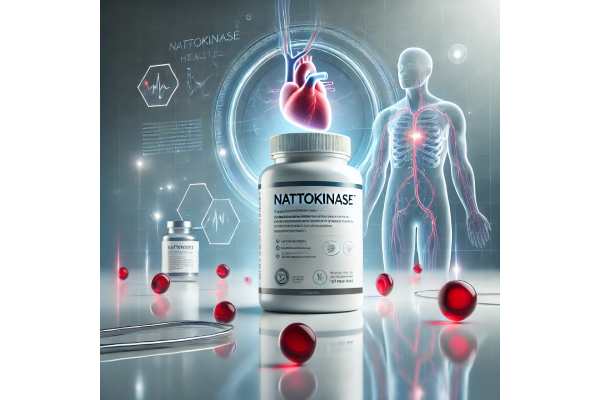
Nattokinase is an enzyme extracted from natto, a traditional Japanese food made by fermenting soybeans with Bacillus subtilis natto. In supplement form, nattokinase is promoted for heart and blood vessel health, especially for supporting healthy blood flow, blood pressure, and clot balance. Early clinical research suggests it may modestly reduce blood pressure, improve certain blood lipids, and influence markers related to clot formation and breakdown. At the same time, nattokinase acts on the body’s coagulation system, which means safety and interactions with medications deserve careful attention.
If you are considering nattokinase, it helps to understand what it actually does, how it is measured (in fibrin units rather than milligrams alone), and how human trials have used it. This guide walks through the main benefits, how nattokinase seems to work, typical dosing ranges, who might benefit, and who should avoid it or use it only under close medical supervision.
Key Insights for Nattokinase
- Nattokinase is a fibrinolytic enzyme from natto that may support cardiovascular health by modestly improving blood pressure and clot-related markers.
- Human studies suggest potential benefits for blood pressure and lipid profiles, but evidence for preventing heart attacks or strokes is still limited.
- Common supplemental intakes range from about 1,000 to 4,000 FU (fibrin units) per day, often taken once or twice daily on an empty stomach.
- Because nattokinase influences clotting, people using anticoagulants, antiplatelet drugs, or with bleeding risks should only use it under medical supervision.
- Individuals with bleeding disorders, upcoming surgery, a history of hemorrhagic stroke, or during pregnancy or breastfeeding should generally avoid nattokinase supplements.
Table of Contents
- What is nattokinase and how does it work?
- Nattokinase benefits for heart and circulation
- How to take nattokinase correctly
- Nattokinase dosage guide for adults
- Side effects, risks, and who should avoid nattokinase
- Nattokinase research and what we still do not know
What is nattokinase and how does it work?
Nattokinase is a proteolytic enzyme (a protein-digesting enzyme) produced during the fermentation of soybeans by Bacillus subtilis natto. In food form, it appears in natto; in supplements, it is purified and standardized, usually in capsules or tablets. Unlike many supplements that are vitamins or plant extracts, nattokinase is an active enzyme that can act directly on proteins involved in blood clotting.
The central concept behind nattokinase is fibrinolysis—breaking down fibrin, the fibrous protein that stabilizes blood clots. Laboratory and human studies suggest nattokinase can:
- Directly break down fibrin.
- Increase the body’s own clot-busting activity by influencing plasmin and tissue plasminogen activator.
- Modulate certain clotting factors and natural anticoagulant proteins.
In a controlled trial with healthy adults, a single 2,000 FU dose of nattokinase altered several coagulation and fibrinolysis markers for several hours, including changes in D-dimer, fibrin degradation products, factor VIII activity, antithrombin, and clotting times, though values stayed within normal ranges. This supports the idea that nattokinase can temporarily tilt the balance toward more fibrin breakdown rather than clot formation.
Nattokinase is quantified in fibrin units (FU), which describe its ability to dissolve fibrin in vitro. This is important because two products labeled “100 mg nattokinase” may not have the same enzyme activity. Quality supplements list FU per capsule (for example, 2,000 FU per capsule), making it possible to compare doses to research.
It is also worth distinguishing nattokinase from vitamin K2 (menaquinone-7), another nutrient found in natto. Vitamin K2 supports normal clotting and bone metabolism, while nattokinase promotes fibrin breakdown. Some natto-based products contain both, but many nattokinase supplements are purified to remove vitamin K, which matters if someone is taking warfarin or other Vitamin-K-sensitive medications.
Finally, nattokinase in food form (eating natto) delivers enzyme along with soy protein, fiber, and other nutrients, but the actual FU dose is variable and harder to quantify compared with standardized supplements.
Nattokinase benefits for heart and circulation
Most people consider nattokinase because of its potential cardiovascular benefits. Human research is still developing, but several themes appear repeatedly in trials and reviews.
Blood pressure
A randomized, controlled trial in people with prehypertension or mild hypertension used 2,000 FU of nattokinase daily for eight weeks. Compared with placebo, participants taking nattokinase experienced modest reductions in systolic and diastolic blood pressure, on the order of a few millimeters of mercury. This suggests nattokinase may help support blood pressure management, especially as part of a broader lifestyle approach.
A 2023 systematic review and meta-analysis of randomized trials concluded that nattokinase supplementation may reduce both systolic and diastolic blood pressure by small but statistically significant amounts. Across studies, typical doses ranged from about 1,200 to 8,000 FU per day over several weeks to months, generally with good tolerability.
Lipid profile and atherosclerosis markers
Several clinical studies have examined nattokinase in people with high cholesterol or established cardiovascular disease:
- In patients with hyperlipidemia or atherosclerosis, extended nattokinase use (often in higher FU ranges) has been associated with improvements in total cholesterol, LDL-cholesterol, and triglycerides in some trials, and with slower progression of arterial wall thickening in others.
- Newer work has looked at nattokinase combined with red yeast rice in patients with stable coronary artery disease. Over about three months, combinations typically improved triglycerides, total cholesterol, HDL-cholesterol, and certain markers of thrombosis more than placebo or single components, without major safety signals.
These findings suggest nattokinase may be particularly useful as part of a combined supplement strategy for dyslipidemia and cardiometabolic risk, although it does not replace statins or other guideline-directed therapies.
Clot-related markers and circulation
Short-term trials in healthy adults show that nattokinase can:
- Increase fibrin degradation products and D-dimer temporarily.
- Slightly prolong certain clotting times.
- Increase antithrombin and reduce factor VIII activity for several hours after ingestion.
Collectively, these changes point to enhanced fibrinolytic activity and a potential reduction in the tendency toward pathological clotting. However, these are laboratory markers, not direct evidence of fewer heart attacks, strokes, or venous clots.
Practical interpretation
Taken together, current evidence suggests that nattokinase:
- May modestly lower blood pressure.
- May contribute to improving lipid profiles and slowing atherosclerosis in some settings, especially at higher doses and longer durations.
- Influences clotting and fibrinolytic pathways in ways that might be protective, but the impact on hard outcomes (heart attack, stroke, mortality) has not been firmly established.
For now, it is best viewed as a potential adjunct to—not a replacement for—standard cardiovascular prevention strategies such as blood pressure control, lipid management, and lifestyle change.
How to take nattokinase correctly
If you and your healthcare professional decide that nattokinase is appropriate, a structured approach can improve safety and consistency.
- Choose a quality product
- Look for supplements that clearly state enzyme activity in fibrin units (FU) per capsule or per tablet.
- Products often provide 1,000–2,000 FU per capsule. Activity labeling is more important than milligram weight alone.
- Prefer manufacturers that provide third-party testing, good manufacturing practice (GMP) certification, or clear quality assurance statements.
- Decide on timing and relation to meals
- Many practitioners recommend taking nattokinase on an empty stomach (for example, at least 1 hour before or 2 hours after meals) to reduce the chance that the enzyme is used mainly for digesting dietary protein.
- If you experience stomach discomfort when taking it on an empty stomach, some clinicians allow taking it with a light snack, though this may theoretically reduce enzyme availability for fibrin-related effects.
- Start low and monitor
- A cautious starting point for otherwise healthy adults is often in the 1,000–2,000 FU per day range.
- Take it at the same time each day to establish a routine and make it easier to track any changes in blood pressure, bruising, or other symptoms.
- Keep a simple log of blood pressure readings (if you monitor at home), as well as any unusual bleeding (nosebleeds, gum bleeding, heavier menstrual periods, easy bruising).
- Coordinate with medications and lab tests
- Always tell your clinician and pharmacist if you begin nattokinase, especially if you use anticoagulants (such as warfarin, apixaban, rivaroxaban, dabigatran) or antiplatelet medicines (such as aspirin, clopidogrel).
- Do not stop or adjust prescription blood thinners on your own based on nattokinase use.
- If you are using nattokinase for blood pressure or lipid support, arrange appropriate follow-up: blood pressure checks, lipid panels, and any tests your clinician deems necessary.
- Reassess regularly
- Dietary supplements for cardiovascular health should be re-evaluated periodically. If blood pressure, lipid levels, or symptoms do not improve after several months, your clinician may recommend adjusting the regimen or discontinuing nattokinase.
- Before any planned surgery, dental extraction, or invasive procedure, inform the care team about nattokinase use; they may ask you to stop it several days beforehand.
Used thoughtfully and under professional guidance, nattokinase can be integrated into a broader heart-health strategy. The key is transparency with your healthcare team and realistic expectations about what an enzyme supplement can and cannot do.
Nattokinase dosage guide for adults
Nattokinase dosing is often confusing because labels may list both milligrams and fibrin units. Human trials and reviews handle dosage almost entirely in FU, so it is helpful to think in those terms.
Typical ranges used in research
Across randomized trials and clinical studies, daily nattokinase amounts have generally fallen into these ranges:
- Lower range: about 1,200–2,000 FU per day, often used in blood pressure studies over 8–12 weeks.
- Moderate range: about 2,000–4,000 FU per day, sometimes divided into two doses, used for blood pressure, coagulation markers, or modest lipid support.
- Higher range: roughly 6,500–10,800 FU per day, usually in more intensive dyslipidemia or atherosclerosis studies and generally under medical supervision.
A 2023 meta-analysis of nattokinase trials reported that daily doses from 1,200 to 8,000 FU had been studied for cardiovascular risk factors. Higher doses tended to be used in more advanced or high-risk populations, often with careful monitoring.
Practical dosage guidance for generally healthy adults
This is general information and not a prescription, but typical supplemental patterns look like:
- Initial trial dose:
- 1,000–2,000 FU once daily.
- Suitable for people who are otherwise healthy, not on blood thinners, and exploring nattokinase for mild cardiovascular support under professional guidance.
- Common maintenance dose (if tolerated and appropriate):
- 2,000 FU per day (for example, one 2,000 FU capsule daily), or
- 2,000 FU twice daily (4,000 FU total), often considered toward the higher end for self-directed use.
- Higher doses:
- Amounts above about 4,000 FU per day should be reserved for situations where a clinician is actively supervising, as bleeding risk and interactions with other medications become more relevant.
Conversion from milligrams
Some products list “100 mg nattokinase (2,000 FU)” or similar. This is manufacturer-specific; the mg amount reflects the weight of extract, while FU reflects enzyme activity. Do not assume that 100 mg always equals 2,000 FU. Always follow the FU number for comparisons.
Special populations and adjustment
- Older adults, people with low body weight, or those with multiple medications often start at the lower end (around 1,000 FU daily) and only increase if clearly needed and well tolerated.
- People with kidney, liver, or bleeding disorders should not use nattokinase without explicit specialist guidance, and in many cases it will be avoided altogether.
Duration of use
Clinical studies often run from 8 weeks up to several months. Longer-term daily use is common in practice, but the data on many years of continuous supplementation are still limited. Periodic breaks, check-ins with a clinician, and regular monitoring of blood pressure and other markers can help manage uncertainty around long-term safety.
Remember that any dosing decision should be personalized. This includes considering diet (such as regular natto intake), other supplements (fish oil, garlic, ginkgo), and all prescription medications.
Side effects, risks, and who should avoid nattokinase
Although nattokinase has generally appeared safe in animal toxicology work and small human studies, its effects on clotting mean that caution is essential. Safety depends heavily on dose, health status, and what other drugs and supplements you use.
Commonly reported or plausible side effects
Most people in clinical trials tolerated nattokinase without serious events, but potential side effects include:
- Mild digestive symptoms such as nausea, stomach discomfort, or loose stools.
- Headache or lightheadedness, especially if blood pressure drops.
- Easy bruising or slightly longer bleeding from cuts, reflecting changes in clotting.
Because published trials often exclude people at highest bleeding risk, real-world experience could differ, especially in older adults with multiple conditions.
Serious risks and interactions
The main concern is excessive bleeding, particularly when nattokinase is combined with other agents that affect clotting or platelets.
Use is generally discouraged or restricted in people who:
- Take anticoagulants such as warfarin, apixaban, rivaroxaban, dabigatran, or edoxaban.
- Take antiplatelet drugs such as clopidogrel, prasugrel, ticagrelor, or high-dose aspirin.
- Use multiple OTC agents with anticoagulant or antiplatelet effects (for example, high-dose fish oil, ginkgo, garlic, or high-dose vitamin E) alongside prescription blood thinners.
- Have a history of hemorrhagic stroke, intracranial bleeding, or active peptic ulcers.
- Have known bleeding disorders (such as hemophilia, severe thrombocytopenia, or von Willebrand disease).
In these situations, nattokinase could theoretically tip the balance toward dangerous bleeding. If it is considered at all, it must be under direct specialist supervision with clear monitoring.
Who should avoid nattokinase (or use only under strict medical guidance)
- People with:
- Active bleeding or recent major surgery or trauma.
- Planned surgery, dental extraction, or invasive procedures in the near future (most clinicians would advise stopping nattokinase well in advance).
- Severe liver disease, severe kidney disease, or uncontrolled hypertension.
- A history of hemorrhagic stroke.
- Pregnancy and breastfeeding:
- There is insufficient data to establish safety for the fetus or infant. Because nattokinase acts on clotting pathways, most experts recommend avoiding it during pregnancy and lactation.
- Children and adolescents:
- Nattokinase supplements are not typically studied or recommended in this age group, except perhaps in exceptional cases under specialist care.
Allergic reactions
Since nattokinase ultimately comes from soy fermentation, people with soy allergy should be cautious. While the enzyme preparation may be highly purified, traces of soy proteins or other fermentation products could remain. Anyone with a history of severe food allergies should consult an allergist or clinician before trying nattokinase.
Warning signs to stop immediately and seek care
- Unusual or heavy bruising.
- Blood in urine or stool, vomiting blood, or black, tarry stools.
- Sudden, severe headache, neurological changes, or vision changes.
- Prolonged nosebleeds or gum bleeding.
If any of these occur while using nattokinase, stop the supplement and seek urgent medical advice.
Nattokinase research and what we still do not know
Interest in nattokinase has grown quickly, and recent years have seen more systematic reviews, mechanistic studies, and larger clinical trials. At the same time, many important questions remain open.
What recent research suggests
- A comprehensive 2023 systematic review and meta-analysis of randomized trials found that nattokinase can modestly reduce blood pressure and may have limited or dose-dependent effects on blood lipids, with few reported adverse events over the trial periods.
- A classic double-blind crossover trial in healthy men showed that a single 2,000 FU dose of nattokinase dynamically changed multiple coagulation and fibrinolytic parameters for 8 hours, reinforcing that even a single capsule is biologically active.
- Larger clinical work in people with hyperlipidemia and atherosclerosis has used higher nattokinase doses over many months, sometimes showing improvements in cholesterol profiles and artery wall measurements.
- Newer randomized trials in patients with stable coronary artery disease suggest that combining nattokinase with red yeast rice can produce more robust improvements in triglycerides, total cholesterol, HDL-cholesterol, blood pressure, and certain clot-related biomarkers than either alone, while appearing safe over around three months.
- A 2025 narrative review on nattokinase and blood lipids highlights multiple potential mechanisms, including effects on enzymes involved in lipid metabolism and inflammation, but also emphasizes the variability of study designs and products.
Gaps and limitations
Despite these encouraging results, several limitations are important:
- Many studies are relatively short (weeks to a few months) and focus on surrogate markers—blood pressure, lipid levels, clotting markers—rather than long-term clinical outcomes such as non-fatal stroke, myocardial infarction, or cardiovascular mortality.
- Sample sizes are often modest, and study populations may not fully reflect older, multi-morbid patients who are most likely to use nattokinase alongside multiple medications.
- Doses, formulations, and quality of nattokinase differ widely between trials, making it hard to define a single “optimal” dose for all situations. Some products are enteric-coated to protect the enzyme through the stomach, while others are not, and comparative data are limited.
- Regulatory standards for enzyme activity (FU) and impurity limits are not fully harmonized across manufacturers and countries, which can lead to inconsistent product quality on the market.
- Safety data beyond several months are sparse, particularly in people with high bleeding risk or on complex regimens of anticoagulant and antiplatelet drugs.
What this means for practical use
At present, nattokinase is best considered as:
- A promising adjunctive option for certain cardiovascular risk factors, particularly mild blood pressure elevation and dyslipidemia, when combined with lifestyle change and conventional therapy.
- A supplement that clearly affects clotting and fibrinolysis, requiring careful screening for contraindications and drug interactions.
- A tool that should not be used as a stand-alone replacement for proven therapies such as antihypertensive medications, statins, or prescribed anticoagulants.
Future research priorities include large, long-term randomized trials in diverse populations, standardized dosing and product quality, and more detailed monitoring of bleeding events and interactions with medications.
Until such evidence is available, the safest approach is individualized use under clinician guidance, aiming for moderate doses, clear goals (such as incremental blood pressure improvement), and regular monitoring.
References
- Nattokinase Supplementation and Cardiovascular Risk Factors: A Systematic Review and Meta-Analysis of Randomized Controlled Trials 2023 (Systematic Review)
- A single-dose of oral nattokinase potentiates thrombolysis and anti-coagulation profiles 2015 (RCT)
- Effects of nattokinase on blood pressure: a randomized, controlled trial 2008 (RCT)
- Lipid-lowering, antihypertensive, and antithrombotic effects of nattokinase combined with red yeast rice in patients with stable coronary artery disease: a randomized, double-blinded, placebo-controlled trial 2024 (RCT)
- Research Progress of Nattokinase in Reducing Blood Lipid 2025 (Narrative Review)
- Toxicological assessment of nattokinase derived from Bacillus subtilis var. natto 2016 (Toxicology Study)
Disclaimer
The information in this article is for general educational purposes only and is not intended to provide medical advice, diagnosis, or treatment. Nattokinase can influence blood clotting and may interact with medications or underlying health conditions. Always consult a qualified healthcare professional before starting, stopping, or changing any supplement, especially if you have cardiovascular disease, bleeding risk, chronic illness, or take prescription drugs such as anticoagulants or antiplatelet agents. Never delay professional medical care or ignore medical advice because of something you have read here.
If you found this guide helpful, you are welcome to share it with others on Facebook, X (formerly Twitter), or any platform you prefer, and to follow our work on social media. Your thoughtful support by sharing our articles helps our team continue producing careful, evidence-based content for readers like you.