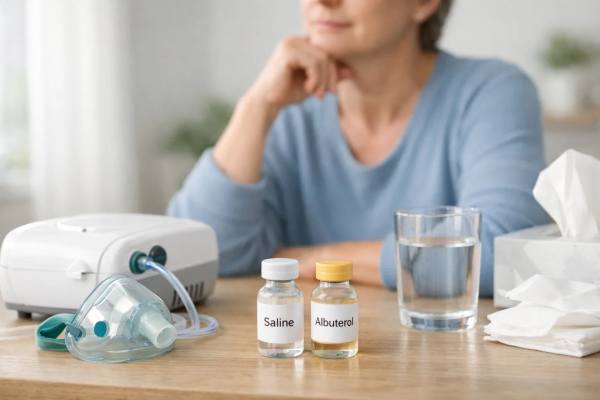
Viral wheeze can be frightening: a child who was playing normally at breakfast is suddenly breathing fast, coughing in bursts, and making a whistling sound by lunchtime. Nebulizers are often seen as the “strong” option, partly because the mist looks medical and the routine feels decisive. But viral wheeze is not one condition, and nebulizers are not one treatment. Sometimes the problem is mucus and airway irritation that improves with time and comfort care. Sometimes the airways temporarily tighten and respond to a bronchodilator such as albuterol. And sometimes a nebulizer adds noise, cost, and side effects without changing the course at all. This article walks through the real differences between nebulized saline, nebulized albuterol, and the often-correct choice of doing less—while still watching closely. The goal is not to “pick a team,” but to match the tool to the pattern of symptoms and the level of breathing effort.
Quick Overview for Smart Choices
- Nebulized albuterol helps when wheeze is driven by airway tightening and there is a clear response within 15–30 minutes.
- Nebulized saline may soothe and loosen secretions, but it rarely changes wheeze caused by airway spasm.
- Many mild viral wheeze episodes improve with supportive care alone, especially when breathing effort is low and hydration is good.
- Nebulizers can spread infectious aerosols; use them away from others and prioritize ventilation.
- If symptoms escalate quickly, a child is struggling to breathe, or you see bluish lips or unusual sleepiness, seek urgent care rather than repeating treatments at home.
Table of Contents
- What viral wheeze really means
- Saline nebulizers: where they fit
- Albuterol nebulizers: when they matter
- When supportive care is enough
- How clinicians decide quickly
- Safe nebulizer technique and cleaning
- Red flags and follow up timing
What viral wheeze really means
“Viral wheeze” is a description, not a diagnosis. It usually means wheezing or noisy breathing that shows up during a viral respiratory infection and fades as the virus clears. The tricky part is that wheeze can come from different mechanisms, and the right treatment depends on which mechanism is dominant.
Two common patterns that get lumped together
- Infant bronchiolitis pattern (often under 12 months): inflammation and swelling in very small airways, plus mucus and crackles. Wheeze can be present, but the airway narrowing is not primarily “spasm,” so bronchodilators often do not make a meaningful difference.
- Preschool viral induced wheeze pattern (often 1–5 years): a viral trigger leads to airway tightening in a child with more reactive airways. This can look like an asthma flare, even if the child does not have an asthma diagnosis. Bronchodilators can help when bronchospasm is driving symptoms.
In real life, children do not read textbooks. A toddler may have mucus-heavy symptoms plus some airway tightness, or an older child may wheeze with surprisingly little congestion. That is why “try a treatment and reassess” is such a common approach.
What wheeze sounds like and why it matters
Wheeze is typically a musical or whistling noise, often more noticeable when breathing out. It suggests airflow limitation in the lower airways. But the severity of an episode is not measured by wheeze volume. A child can wheeze loudly and still be moving air well, or wheeze less as fatigue sets in and airflow drops. More useful markers include:
- Breathing rate compared with normal for age
- Work of breathing (retractions between ribs, belly breathing, flaring nostrils)
- Ability to talk, feed, or drink
- Alertness and color
Nebulizers enter the story because they deliver medication or moisture directly into the airways. The question is not “can a nebulizer deliver something,” but “is there something worth delivering for this pattern today?”
Saline nebulizers: where they fit
Nebulized saline is essentially sterile salt water turned into a mist. It is not a bronchodilator, and it does not directly relax tightened airway muscle. Its potential value is narrower: it can moisturize irritated airways, thin sticky secretions, and sometimes make coughs more productive. That can feel helpful, especially when the chest sounds “junky” or the cough is tight and unproductive.
Isotonic vs hypertonic saline
- Isotonic saline (0.9%): similar salt concentration to the body’s fluids. It is mainly a humidifying and soothing tool.
- Hypertonic saline (often 3%): higher salt concentration. In hospital research settings, it has been studied for bronchiolitis with the theory that it may draw fluid into the airway surface layer and improve mucus clearance. Results across studies are mixed, and effects—when present—tend to be modest and context-dependent.
For many families, the key distinction is practical: nebulized saline is unlikely to “open” the airways quickly the way a bronchodilator can. If a child’s main problem is tight, wheezy breathing with clear signs of bronchospasm, saline alone usually disappoints.
When saline is most reasonable
Nebulized saline can be a reasonable supportive option when the child has:
- Mild wheeze with prominent congestion and thick mucus
- Cough that seems driven by dryness or irritation
- No clear prior response to bronchodilators
- Comfort needs (especially at night) that improve with humidified air
It may also be used as part of a broader routine when you are trying to avoid unnecessary medication. The emphasis is on comfort and secretion management, not “treating the virus.”
When saline can backfire
Even saline can worsen symptoms in some children. A mist can trigger coughing fits, gagging, or transient wheeze in very reactive airways. If a child becomes more distressed during or right after nebulized saline, stop and reassess rather than pushing through.
How to judge whether it is helping
A practical way to evaluate saline is to watch for changes within 30–60 minutes:
- Easier cough with mucus moving more freely
- Improved comfort and ability to settle
- Reduced throat clearing and less “sticky” breathing noise
If you see no functional benefit after a few uses, saline is not “failing”—it is simply not the right tool for that episode. Many cases do best with simpler measures like nasal suctioning (for younger children), warm fluids, and time.
Albuterol nebulizers: when they matter
Albuterol (also called salbutamol in many countries) is a short-acting beta agonist that relaxes airway smooth muscle. In plain language: it helps when the tubes are squeezing down. That is why it can be effective for asthma and for viral triggered wheeze in children with reactive airways. It is also why it often does little for classic infant bronchiolitis, where swelling and mucus are the main drivers.
The most useful concept is “response”
Rather than assuming albuterol is always right or always wrong, many clinicians think in terms of a documented response. A meaningful response usually shows up quickly, often within 15–30 minutes of a treatment, and looks like:
- Less work of breathing (fewer retractions, less belly breathing)
- Improved ability to talk, feed, or drink
- Less chest tightness or distress
- Reduced wheeze intensity paired with easier breathing (not just “quieter”)
If a child has no clear improvement after appropriately delivered albuterol—especially after more than one observed trial—continuing repeated doses at home may add side effects without benefit.
Clues a child is more likely to respond
Albuterol responsiveness is more common when a child has a wheeze pattern that resembles asthma physiology. Clues include:
- Prior episodes that improved with albuterol
- Wheeze that occurs with multiple viruses, not just one memorable illness
- Personal or family history of eczema, allergies, or asthma
- Symptoms that worsen at night or with exercise during recovery
- Minimal crackles but prominent wheeze and prolonged exhalation
These clues are not a diagnosis, but they help you make a more accurate first choice.
Side effects that change the risk benefit equation
Albuterol can cause:
- Fast heartbeat, jitteriness, shakiness
- Restlessness or trouble sleeping
- Headache or nausea (less common)
These effects can be mild and temporary, but they matter when you are deciding whether to keep treating. A child who is breathing comfortably but cannot sleep due to repeated bronchodilator doses is not necessarily “better.”
Why nebulizer vs inhaler matters
Nebulizers are sometimes used because they feel easier during distress. However, for many children, a metered-dose inhaler with a spacer can deliver bronchodilator effectively and with less aerosol spread into the room. Nebulizers may still be appropriate when a child cannot coordinate inhalation through a spacer due to severity or age, but “nebulizer equals stronger” is not a reliable rule.
The most important message: albuterol is a targeted tool. It is most valuable when you can clearly see it making breathing easier.
When supportive care is enough
The “nothing needed” option can sound dismissive, but it is often the safest and most evidence-aligned choice for mild viral wheeze. Many episodes peak over the first few days of a viral illness and then gradually improve without medication that targets bronchospasm. Supportive care is not passive; it is a set of actions that reduces strain on breathing and lowers the risk of dehydration and fatigue.
What supportive care actually includes
Supportive care is more than “wait it out.” It typically focuses on four areas:
- Airway comfort: keep the nose as clear as possible, since nasal blockage increases work of breathing, especially in younger children.
- Hydration: offer small, frequent fluids. Dehydration thickens secretions and can make coughing harsher.
- Fever and pain control: comfort can reduce rapid shallow breathing driven by distress rather than lung mechanics.
- Rest and positioning: upright positioning often reduces the sensation of tight breathing; sleep matters for recovery.
When “no nebulizer” is a strong choice
Supportive care alone is often appropriate when:
- Breathing effort is mild (no significant retractions, no sustained distress)
- The child can drink, talk, and interact reasonably well
- Wheeze is occasional rather than constant
- Symptoms fluctuate but do not steadily worsen hour by hour
In these cases, repeated nebulizer sessions can become a trap: the routine adds fatigue, the mask can increase anxiety, and the focus shifts away from the markers that actually predict safety.
A simple home monitoring rhythm
If you are managing mild wheeze at home, a clear monitoring plan helps you avoid both underreaction and overreaction:
- Check breathing effort during calm moments, not during crying. Crying can mimic respiratory distress.
- Reassess every few hours, especially after sleep and after activity.
- Track fluids and urine. Reduced urination and dry mouth are early dehydration clues.
- Notice the trend. A stable or improving trend is reassuring; a steadily worsening trend needs help.
Why “doing less” can be safer
Unneeded treatments can create false reassurance (“we nebulized, so we are covered”) or false alarm (“they coughed more after the mist, so they must be getting worse”). Supportive care keeps attention on the essentials: breathing effort, hydration, alertness, and trajectory.
When supportive care is enough, it is not because the illness is trivial. It is because the body’s recovery plan is already in motion and does not need extra interventions that do not match the mechanism.
How clinicians decide quickly
In urgent care settings, decisions about saline, albuterol, or no nebulizer are usually made through a fast pattern check: age, symptom cluster, severity, and response to an initial intervention. Understanding that pattern can help families make calmer decisions at home and seek care earlier when needed.
Step one: distinguish likely bronchiolitis from viral induced wheeze
Clinicians often start with age and the “sound profile”:
- More bronchiolitis-like: very young infant, lots of nasal symptoms, crackles, feeding difficulty, and diffuse chest noises.
- More wheeze-like: toddler or preschool child, prominent wheeze, prolonged exhalation, history of prior wheeze, fewer crackles.
This matters because it predicts whether bronchodilation is likely to help.
Step two: grade severity by function
Rather than counting coughs, clinicians focus on function:
- Can the child speak or feed comfortably?
- Are there retractions or nasal flaring?
- Is the child alert and responsive?
- Does breathing improve when calm?
If the child is struggling to do basic tasks, more active treatment and observation become more appropriate.
Step three: use a time-limited trial when uncertain
When it is unclear whether albuterol will help, a time-limited trial can clarify the answer. A well-delivered bronchodilator should produce observable improvement in breathing effort within a short window. If there is no meaningful change, the plan often shifts toward supportive care and monitoring rather than escalating medication.
The same logic can apply to saline as a comfort measure: if it clearly reduces coughing distress or helps secretions move, it can stay in the plan. If it increases distress or does nothing, it should be dropped.
Why nebulizers are not automatically preferred
Clinicians choose delivery method based on what the child can tolerate and what will reach the lungs effectively. A child who can use a spacer may receive inhaled bronchodilator that way because it can be efficient and reduces drug mist spreading into the environment. Nebulizers may be reserved for situations where the child cannot inhale adequately through a spacer, or where distress is high and rapid delivery is needed.
What “better” looks like after treatment
The best outcome marker is not silence. The best marker is a child who is breathing more comfortably, is less anxious, and can drink or speak more easily. If you only measure the sound and ignore the effort, you can miss the real trend.
Safe nebulizer technique and cleaning
If you do use a nebulizer, safe technique protects both the child and everyone nearby. Nebulizers create a fine mist that can carry respiratory particles into the surrounding air. That matters during viral illness, especially in small rooms with poor ventilation.
Set up the environment first
- Use the nebulizer in a well-ventilated space, ideally away from other household members.
- Keep siblings and older adults out of the room during treatment when possible.
- If weather allows, open a window or run an exhaust fan to improve airflow.
This does not need to be dramatic. The goal is simple dilution: more fresh air, less shared aerosol.
Technique that improves delivery and reduces distress
- Choose the correct interface: a mask for younger children and a mouthpiece for those who can seal lips and breathe through it.
- Aim for a calm breathing pattern. A crying child inhales poorly and may swallow more medication mist than they inhale.
- Use a comfort routine: sit upright, hold a favorite toy, use a quiet timer, and keep the session predictable.
- Avoid stacking treatments back-to-back without reassessing. If you do not check whether it helped, you risk turning a tool into a ritual.
Basic cleaning rules that prevent contamination
Nebulizer parts can grow bacteria or mold if left damp. A practical routine is:
- After every use: wash the medication cup and mask or mouthpiece with warm soapy water, rinse well, and air dry completely.
- Daily during active illness: disinfect per manufacturer guidance, which often includes soaking in a recommended solution or using heat-safe methods for certain parts.
- Weekly: inspect tubing and replace parts that look cloudy, cracked, sticky, or smell musty.
Never share nebulizer masks between people without proper disinfection. If multiple family members need treatments, separate labeled accessories reduce cross-contamination.
Medication safety essentials
- Use only medication prescribed for that person and that episode.
- Avoid “mixing” drugs in the nebulizer unless a clinician has explicitly advised it.
- Label nebules and check expiration dates; outdated solutions can be less reliable and increase irritation.
If a child becomes more wheezy, more distressed, or unusually sleepy during or right after a treatment, stop and seek advice. A nebulizer should not turn mild symptoms into escalating distress.
Red flags and follow up timing
Viral wheeze can swing quickly, especially in young children with small airways. Knowing what requires urgent evaluation protects against the two most common mistakes: waiting too long during a real deterioration, or repeatedly treating at home when the pattern is not responding.
Urgent red flags that should not be managed at home
Seek urgent medical care if you notice any of the following:
- Struggling to breathe: marked retractions, nasal flaring, grunting, or breathing that looks labored even when calm
- Color changes: bluish lips or face, or unusually pale and sweaty appearance
- Reduced responsiveness: extreme sleepiness, confusion, limpness, or difficulty waking
- Poor intake: refusal to drink, repeated vomiting, or signs of dehydration (very little urine, dry mouth, no tears)
- Rapid worsening over hours rather than a stable or slowly improving course
- A baby with pauses in breathing or episodes of turning blue
These signs matter more than the presence or absence of wheeze.
When to call for advice the same day
A same-day call to a clinician is reasonable when:
- You are using bronchodilator as directed and the child needs it more often than expected to stay comfortable
- Symptoms persist beyond the usual viral window and are not gradually improving
- Wheeze episodes are repeating with many viruses, suggesting a pattern that may benefit from an action plan
- There is persistent fever with worsening respiratory symptoms or new focal chest pain
Follow up after the episode ends
A single viral wheeze episode can be isolated. Recurrent episodes deserve a plan. After recovery, consider follow-up if:
- The child has had two or more wheeze episodes in a season
- Symptoms linger beyond the infection (night cough, activity limitation)
- There is a strong atopy pattern (eczema, allergic rhinitis, family asthma)
- You are uncertain whether future episodes should be treated with albuterol or monitored with supportive care
A written action plan reduces emergency decisions at 2 a.m. It clarifies what “mild,” “moderate,” and “severe” look like for that specific child and what to do at each step.
A final perspective that helps families
The goal is not to avoid all medication or to use it at the first hint of noise. The goal is to match treatment to response. If a child clearly improves after bronchodilation, that is useful information. If there is no response, that is also useful information, and the safest next step may be supportive care and reassessment rather than escalation.
References
- Bronchiolitis in children: diagnosis and management 2021 (Guideline)
- UPDATE – 2022 Italian guidelines on the management of bronchiolitis in infants – PMC 2023 (Guideline)
- Nebulised hypertonic saline solution for acute bronchiolitis in infants – PMC 2023 (Systematic Review)
- Management of Preschool Wheezing: Guideline from the Emilia-Romagna Asthma (ERA) Study Group – PMC 2022 (Guideline)
- Wheeze (including viral-induced or suspected asthma) | Paediatric ECAT protocol | Emergency care assessment and treatment 2023 (Clinical Guidance)
Disclaimer
This article is for general education and does not provide medical advice, diagnosis, or treatment. Wheeze can have different causes, and the safest choice depends on the child’s age, medical history, current breathing effort, hydration status, and response to any prescribed medicine. Do not start, stop, or change prescription treatments without guidance from a qualified clinician. Seek urgent care for signs of significant breathing difficulty, bluish lips or face, unusual drowsiness, dehydration, or rapid worsening.
If you found this guide useful, please consider sharing it on Facebook, X (formerly Twitter), or any platform you prefer.