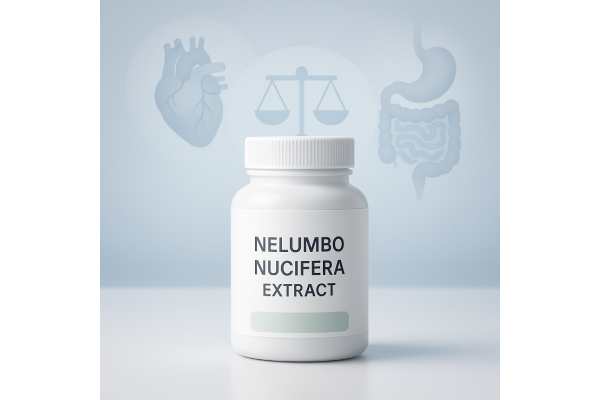
Nelumbo nucifera, better known as sacred lotus, has been used for centuries as both food and medicine in many Asian traditions. Today, standardized extracts from its leaves, seeds, flowers, and rhizomes are promoted for metabolic health, heart and liver support, antioxidant protection, and calming or mood balancing effects. Modern research has identified dozens of bioactive compounds in lotus, including alkaloids such as nuciferine and neferine, flavonoids, tannins, and polysaccharides, which may act on blood lipids, blood sugar, inflammation, and the nervous system.
At the same time, most of the evidence still comes from laboratory and animal studies, with only a small number of human trials. That means lotus extract is best viewed as a promising but still emerging option rather than a proven treatment. In this guide, you will learn what Nelumbo nucifera extract is, where it seems most useful, how it is typically used, what is known about dosage, and which side effects and precautions matter in real life.
Quick Overview for Nelumbo nucifera extract
- Nelumbo nucifera extracts may support weight management, blood lipids, and antioxidant defenses, although human data are still limited.
- Traditional uses include support for digestion, heart and liver function, and stress, but these roles have not all been confirmed in rigorous trials.
- Supplements commonly provide about 500–2,000 mg of standardized lotus extract per day, usually divided in one to two doses with food, but there is no officially established dose.
- People who are pregnant or breastfeeding, children, those with serious heart, liver, or kidney disease, and anyone taking anticoagulants or drugs for blood pressure, blood sugar, or mood should avoid unsupervised use of lotus extract.
Table of Contents
- What is Nelumbo nucifera extract?
- What are the main benefits?
- How to use Nelumbo nucifera extract day to day
- Nelumbo nucifera extract dosage guidelines
- Side effects, risks, and who should avoid it
- What does the research actually show?
What is Nelumbo nucifera extract?
Nelumbo nucifera is an aquatic plant from the Nymphaeaceae family, known as sacred lotus or Indian lotus. It grows in ponds and lakes, producing large circular leaves, showy flowers, edible seeds, and thick starchy rhizomes. In traditional systems of medicine, nearly every part of the plant has been used: leaves for excess heat and lipids, seeds and seed embryo for sleep and anxiety, rhizome for digestion and bleeding, and flowers for heart and liver complaints.
When you see “Nelumbo nucifera extract” on a supplement label, it usually refers to a standardized extract from one specific plant part, most often the leaf, but sometimes the seed, rhizome, flower, or seed embryo (the green shoot inside the seed). Each part has a slightly different profile of active compounds:
- Leaves are rich in alkaloids such as nuciferine and liensinine, plus flavonoids and tannins.
- Seeds offer proteins, complex carbohydrates, and antioxidant polyphenols.
- Seed embryos contain alkaloids like neferine that may have calming and cardioprotective effects.
- Rhizomes provide starch, fiber, and polyphenols, and are often eaten as food.
Extraction methods also differ. Many dietary supplements use hydroalcoholic extracts (water and ethanol), sometimes standardized to a certain percentage of total alkaloids or flavonoids. Others use water-only extracts similar to a very concentrated tea. Topical products may include lotus flower or leaf extracts in oils, gels, or creams for skin and scalp care.
Because labels often say only “lotus extract” or “Nelumbo nucifera,” it is important to look carefully for which plant part is used, the extraction solvent, and any standardization details. Leaf and seed extracts are the most commonly studied for metabolic and cardiovascular effects.
Overall, Nelumbo nucifera extract is best understood as a broad family of preparations rather than a single uniform product. The specific part of the plant and the extraction method strongly shape what it does in the body.
What are the main benefits?
Because different lotus parts have different chemistry, potential benefits cluster into several themes. Most findings come from animal and in vitro studies, with a few human trials, so the strength of evidence varies considerably.
First, lotus leaf extract has been studied for weight management and lipid control. In animal models, it can reduce body fat gain, lower triglycerides and LDL cholesterol, and improve insulin sensitivity when animals are fed high fat diets. A small randomized trial in overweight adults found that a lotus leaf based beverage taken daily for 12 weeks led to modest reductions in body weight, body fat, and waist circumference compared with placebo, especially when combined with lifestyle advice.
Second, Nelumbo nucifera shows consistent antioxidant and anti-inflammatory properties. Extracts from leaves, seeds, and rhizomes scavenge free radicals, protect lipids from oxidation, and reduce markers of oxidative stress in experimental models. This activity may underlie many downstream effects on blood vessels, liver cells, and nerves.
Third, lotus components may support cardiovascular health. Alkaloids such as neferine and nuciferine appear to relax blood vessels, reduce blood pressure in certain models, and protect heart tissue during experimental injury. Leaf and seed extracts have shown lipid-lowering and anti-atherosclerotic effects, such as reducing plaque formation and improving blood lipid profiles in animals.
Fourth, early work suggests neuroprotective and cognitive benefits. Extracts from sacred lotus, particularly those rich in phenolic compounds, can inhibit enzymes linked to neurodegenerative processes, including acetylcholinesterase and beta secretase, in laboratory assays. These mechanisms may support memory and brain aging, though human data are not yet available. Seed embryo preparations are also traditionally used for anxiety and insomnia, and some animal data support sedative and calming effects.
Additional areas under exploration include support for liver health, improved glucose tolerance, anti-allergic effects in airway and skin models, and potential anti-cancer activities. These findings are intriguing but should not be interpreted as proof that lotus extract can prevent or treat serious diseases in humans.
Taken together, Nelumbo nucifera extract looks most promising for gentle support of metabolic health, lipid balance, oxidative stress, and possibly mood or sleep, with early but interesting signals in cardiovascular and brain health.
How to use Nelumbo nucifera extract day to day
In practice, people encounter Nelumbo nucifera extract in three main forms: dietary supplements, functional foods and teas, and topical products for skin or scalp. How you use it should match the form and the goal.
Capsules and tablets are the most common supplemental forms. A typical product might provide a standardized lotus leaf extract in the range of a few hundred milligrams per capsule, sometimes combined with other botanicals for weight management or metabolic support. For these products, manufacturers usually recommend taking the extract once or twice daily with meals, both to improve absorption of fat-soluble compounds and to reduce the risk of stomach discomfort.
Lotus teas and beverages use dried leaves, flowers, or seeds steeped in hot water. Traditional use often involves mild daily amounts rather than high-potency doses. If you are new to lotus, starting with tea can be a gentle way to see how you respond, especially if you are interested in relaxation, digestion, or very mild metabolic support. However, the composition of tea is less standardized than that of an extract, and the actual intake of active compounds is more variable.
Topical products, such as creams, serums, and hair oils, may include lotus flower or leaf extract for antioxidant and soothing effects on the skin or scalp. These are used like any cosmetic: applied once or twice per day to clean skin or hair. Systemic absorption from topical use is likely lower than from oral supplements, so internal side effects are less of a concern, but allergic or irritation reactions are still possible.
Some people use different lotus parts for different aims. For example:
- Leaf extract, often in capsules, for metabolic and lipid support.
- Seed or seed embryo teas in the evening for relaxation and sleep.
- Rhizome and seeds as foods in soups or porridges for general nourishment.
Whatever the form, it is sensible to introduce lotus gradually, monitor how you feel over several days, and avoid combining it with multiple new supplements at once. This makes it easier to tell which product is responsible for any benefit or side effect you notice.
Nelumbo nucifera extract dosage guidelines
There is currently no officially established daily intake or standardized therapeutic dose for Nelumbo nucifera extract. Dosing in human studies and commercial products varies, and the optimal amount likely differs depending on which part of the plant is used and the health goal.
In a controlled clinical study in overweight adults, a lotus leaf based beverage delivering about 2,000 mg of leaf extract per day, taken for 12 weeks, produced modest but measurable reductions in body fat and waist circumference compared with placebo. Animal experiments on obesity, high lipids, and fatty liver often use lotus leaf or seed extracts at doses that correspond to several hundred milligrams per kilogram of body weight, which would translate to gram-level doses in humans, although direct conversions are not straightforward.
Most dietary supplements fall in a more moderate range. Common patterns include:
- 250–500 mg lotus leaf extract once or twice daily with meals.
- 250–1,000 mg seed or rhizome extract per day, sometimes divided into two doses.
- Teas prepared with 1–2 teaspoons of dried leaf or flower per cup, steeped 5–10 minutes, up to two or three cups per day.
Because extract strength and standardization differ widely, these numbers are only broad reference points rather than strict rules. It is important to read the label for details such as “standardized to X% total alkaloids” or “Y:1 extract,” then follow the manufacturer’s instructions unless your clinician suggests otherwise.
A cautious way to begin is:
- Choose a single product from a reputable company that clearly identifies the plant part and extract type.
- Start at the lower end of the suggested dose (for example, 250–500 mg per day).
- Maintain that dose for one to two weeks while monitoring energy, sleep, digestion, and any changes in blood pressure or blood sugar if you track them.
- Discuss any planned increase with your healthcare professional, especially if you have chronic conditions or take prescription medication.
For long-term use, many clinicians prefer intermittent patterns (such as five days on, two days off, or several weeks on followed by a break) rather than continuous, indefinite dosing, particularly when the evidence base is still developing.
Side effects, risks, and who should avoid it
Overall, Nelumbo nucifera extracts have shown relatively low toxicity in many animal studies, with high tolerated doses of seed, rhizome, and leaf extracts. However, “low toxicity” in experiments does not mean “risk free” in real life, especially for people with underlying health conditions or those taking medication.
Reported or plausible side effects include:
- Mild digestive upset, such as nausea, stomach fullness, or loose stools, particularly at higher doses or on an empty stomach.
- Drowsiness or sedation, more likely with seed embryo preparations that contain calming alkaloids.
- Lowered blood pressure or dizziness, especially in people who already have low blood pressure or take antihypertensive medications.
- Changes in blood sugar control, since lotus components can affect glucose metabolism.
- Allergic reactions, including rash, itching, or breathing difficulty in people sensitive to lotus or related aquatic plants.
Because lotus extracts can influence blood lipids, blood sugar, blood pressure, and possibly neurotransmitters, they may interact with common medications. Potential interactions include:
- Stronger effects of diabetes medications, increasing the risk of hypoglycemia.
- Additive blood pressure lowering with antihypertensive drugs.
- Possible interactions with antidepressants, antipsychotics, or anxiolytics via alkaloids that act on serotonin and dopamine systems.
- Altered response to anticoagulants or antiplatelet drugs, although data here are still limited.
Some lotus based products, particularly those using seed embryo or mixed herbal formulas, may contain trace amounts of higenamine, a stimulant alkaloid that is prohibited in sport and has triggered positive doping tests in athletes at relatively low intake levels. Drug-tested athletes should therefore avoid unsupervised use of lotus extracts.
You should avoid or only use Nelumbo nucifera extract under close medical supervision if you:
- Are pregnant, trying to conceive, or breastfeeding.
- Are a child or adolescent.
- Have significant heart disease, arrhythmias, or very low blood pressure.
- Have advanced liver or kidney disease.
- Take medications for diabetes, blood pressure, heart rhythm, mood, or coagulation.
- Are scheduled for surgery, in which case lotus should be stopped at least one to two weeks beforehand.
In all these situations, the potential for interactions and unpredictable responses outweighs any unproven benefit from self-directed supplementation.
What does the research actually show?
Research on Nelumbo nucifera has grown quickly over the last two decades, but much of it remains preclinical. Reviews describe more than 250 identified constituents across the plant, spanning proteins, polysaccharides, flavonoids, alkaloids, essential oils, and other phytochemicals. These reviews summarize a wide range of activities in experimental systems: anti-obesity, antioxidant, anti-inflammatory, hepatoprotective, blood sugar-lowering, lipid-lowering, cardioprotective, neuroprotective, antiviral, and anti-tumour effects.
For metabolic health and obesity, animal studies consistently show that lotus leaf extract reduces weight gain, improves lipid profiles, and supports better insulin sensitivity in high fat diet models. A more recent investigation of lotus leaf ethanol extract found favorable changes in gut microbiota and metabolic parameters in obese rodents, suggesting a gut-mediated mechanism for some of the benefits. The clinical trial in overweight adults demonstrates that these effects can translate, at least modestly, to humans when combined with lifestyle management.
In the area of brain health, sacred lotus extracts have shown the ability to inhibit several enzymes involved in the breakdown of neurotransmitters and the production of amyloid-related proteins, while also demonstrating antioxidant effects in cultured cells. These findings support its traditional use for memory and mood, but without human trials they remain preliminary.
Cardiovascular research highlights vasorelaxant and anti-arrhythmic effects of certain lotus alkaloids, along with reduced markers of oxidative stress and inflammation in heart and vessel tissues in animal models. In cancer research, seed and leaf extracts and isolated compounds have shown anti-proliferative and pro-apoptotic effects in various cell lines, but this work is still at an early stage.
Importantly, large, long-term human trials on outcomes such as cardiovascular events, diabetes progression, or cognitive decline are not yet available. Most human data come from small, short-term studies focusing on surrogate markers like body weight, lipid levels, or subjective symptoms. That means lotus extract should be seen as a complementary option that may add incremental benefit to lifestyle and medical care, not as a replacement for established treatment.
The overall picture is that Nelumbo nucifera is a chemically rich plant with multiple plausible mechanisms and good support from preclinical science, but still limited and early clinical evidence. Using it wisely involves respecting both sides of this picture: the promise and the remaining uncertainty.
References
- Research advances in traditional and modern use of Nelumbo nucifera: phytochemicals, health promoting activities and beyond 2019 (Systematic Review)
- The sacred lotus (Nelumbo nucifera) – phytochemical and therapeutic profile 2009 (Review)
- Fat reducing effects of Nelumbo nucifera leaf extract in overweight patients 2022 (RCT)
- Effects and action mechanisms of lotus leaf ethanol extract on gut microbes and obesity in rats 2023 (Experimental Study)
- The effect of sacred lotus (Nelumbo nucifera) on phenolic profiles, antioxidant activities and inhibitions of key enzymes relevant to Alzheimer’s disease 2020 (Experimental Study)
Disclaimer
The information in this article is for general educational purposes only and is not intended to replace professional medical advice, diagnosis, or treatment. Nelumbo nucifera extract is not a cure or sole treatment for any medical condition, and its safety and effectiveness have not been established for all populations or long-term use. Always consult your physician, pharmacist, or other qualified health provider before starting, changing, or stopping any supplement, especially if you have a medical condition, are pregnant or breastfeeding, take prescription or over-the-counter medications, or are planning a medical procedure. Never ignore or delay seeking professional advice because of something you have read here.
If you found this guide helpful, you are warmly invited to share it with others on Facebook, X (formerly Twitter), or any social platform you prefer, and to follow our work on social media. Your thoughtful support by sharing our articles helps our team continue creating careful, evidence-informed health content.