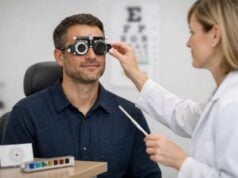
Getting new glasses can be surprisingly disorienting—even when the prescription is correct. Your brain has spent months or years interpreting the world through a specific optical “map.” A new pair changes that map: edges look sharper (or stretched), floors feel slanted, and screens may seem too bright or too close. These sensations are usually a sign that your visual system is updating how it blends two eyes, focuses at different distances, and stabilizes motion as you move. The good news is that most people adapt with consistent wear and a few practical tweaks, especially when the lenses are centered and the frames fit well. The harder part is knowing what is normal discomfort and what points to a fixable issue like lens alignment, an over-strong change, or the wrong lens design for your daily tasks.
Core Points to Remember
- Mild blur, “fishbowl” distortion, or depth misjudgment often improves within several days of steady wear.
- Headaches usually come from focus effort, new astigmatism correction, or lens design changes—not “weak eyes.”
- Persistent nausea, double vision, or worsening symptoms after a week can signal a fitting or prescription issue worth rechecking.
- Wear the new glasses consistently, and start with familiar environments to speed adaptation.
Table of Contents
- Why new glasses feel weird
- Adjustment timeline by lens type and prescription change
- Headaches, dizziness, and eye strain causes and fixes
- Practical adjustment plan for first 7 to 14 days
- Warning signs you should recheck or return sooner
- Making the next pair easier: measurements and habits that matter
Why new glasses feel weird
New glasses don’t just make things clearer—they change how your eyes and brain coordinate. When you switch prescriptions, your visual system must recalibrate three overlapping jobs: where objects are in space, how much effort it takes to focus, and how images from both eyes line up.
Your brain is updating its “visual math”
Your brain builds a stable picture by combining visual input with balance (inner ear) and body position cues. A new prescription can shift apparent size, distance, and motion. That is why the ground can look tilted, stairs feel oddly steep, or hallway walls seem slightly curved. This is especially common after a moderate change in astigmatism correction or when moving to a different lens design (like progressives).
Lens optics can introduce edge effects
Even with perfect manufacturing, lenses can create peripheral distortion because power changes across the lens surface. You may notice:
- Wavy edges or a “swim” feeling when you turn your head.
- Clear center vision but blur or smearing near the edges.
- A sense that objects move faster or slower than expected as you walk.
These effects are often stronger in higher prescriptions, stronger astigmatism, or with certain lens materials and designs.
Frames and lens positioning matter more than most people realize
Glasses are a device that must sit in a precise place in front of your eyes. Small changes in where the lenses sit can alter how the prescription behaves:
- A frame that rides low can change how you look through the lens and strain focusing.
- A frame that sits too far from your eyes can subtly change perceived clarity and comfort.
- Slight mis-centering can create unwanted prism-like effects, which can feel like dizziness or eye pulling.
Sometimes “weird” is a sign of a useful upgrade
If your previous glasses were outdated, your brain may have quietly adapted to blur. The first days with clearer optics can feel intense: sharp edges, brighter lights, and more noticeable screen flicker. That can be uncomfortable, but it is often temporary as your visual system relaxes into the new clarity.
Adjustment timeline by lens type and prescription change
Most adaptation follows a predictable pattern: the biggest improvements happen early, then comfort steadily increases with consistent wear. The exact timeline depends on how much changed and what kind of lenses you are using.
Typical adjustment windows
Many people notice meaningful improvement within 2 to 3 days, especially with small prescription updates. For more complex changes, a reasonable range is:
- Single-vision distance or reading lenses: often 1 to 5 days
- Astigmatism (cylinder) changes: often 3 to 7 days
- Progressive addition lenses: often 7 to 14 days, sometimes longer
- Bifocals or occupational “computer” progressives: often 5 to 10 days
These are not strict rules. What matters is whether symptoms trend better with steady use.
What slows adaptation
Certain changes demand more recalibration:
- A significant cylinder change (strength or axis) can make the world feel skewed or off-balance at first.
- A first-time progressive wearer may notice swim and narrower clear zones until head and eye movements become automatic.
- A big “plus” change (more farsighted correction) can initially feel too strong, with more focus effort up close.
- A big “minus” change (more nearsighted correction) can make objects look smaller and farther away, affecting depth cues.
Why progressives often take longer
Progressives contain multiple viewing zones—distance, intermediate, and near—blended without a visible line. This is convenient, but it requires a different strategy:
- You aim your nose at what you want to see clearly.
- You move your head more, not just your eyes, for side-to-side scanning.
- You learn where “intermediate” lives for screens and dashboards.
If you do not wear them consistently during the learning phase, your brain resets and the process drags out.
When the timeline should make you suspicious
Some discomfort is expected, but a key checkpoint is day 7 for single-vision and day 14 for progressives. If symptoms are not improving—or if they are worsening—there may be a measurable issue like lens centering, frame fit, or a prescription parameter that needs refinement.
Headaches, dizziness, and eye strain causes and fixes
Headaches after new glasses are common, but they are not all the same. The pattern of symptoms—when they start, where they hurt, and what activities trigger them—often points to the cause.
Focus effort headaches
These are usually felt around the forehead or behind the eyes and show up after reading, computer work, or switching between near and far. Common contributors include:
- A change in your “plus” power that alters near focusing demands.
- Hidden reliance on squinting or leaning in with the old prescription.
- Long screen sessions without breaks during the adjustment period.
What helps:
- Use a simple 20-20-20 routine: every 20 minutes, look 20 feet away for 20 seconds.
- Increase screen text size temporarily so you do not “force” clarity.
- Make sure the screen sits slightly below eye level to reduce eye opening and dryness.
Astigmatism and “tilt” sensations
Astigmatism correction changes how lines and angles are rendered. Early on, it can feel like:
- Slanted floors or leaning walls.
- A mild pulling sensation in one eye.
- A headache that appears quickly when walking or shopping.
What helps:
- Wear the glasses in short, frequent walking sessions in familiar places.
- Avoid switching back and forth with the old pair unless instructed.
- Ask about a fit check if the frame is crooked or sliding.
Progressive-related dizziness or nausea
With progressives, the peripheral zones can cause “swim,” especially in large open spaces. Triggers include grocery aisles, escalators, and turning quickly.
What helps:
- Turn your head toward what you want to see instead of scanning with your eyes alone.
- Use handrails on stairs for a few days while depth cues settle.
- If you are a first-time progressive wearer, avoid driving at night until you feel stable.
When headaches point to a correctable problem
A few fixable issues can mimic “normal adjustment”:
- Lens centering errors can strain alignment and cause fast fatigue.
- Frame tilt or excessive wrap can change how the prescription behaves in real life.
- Unaddressed prism needs can cause persistent pulling or double vision sensations.
If headaches are sharp, one-sided, worsening, or associated with visual disturbances (like flashing lights, curtain-like shadows, or sudden double vision), treat that as urgent rather than “glasses adjustment.”
Practical adjustment plan for first 7 to 14 days
A smart adjustment plan is less about “toughing it out” and more about giving your brain consistent input while removing avoidable friction like poor frame fit, harsh lighting, or marathon screen sessions.
Days 1 to 3: establish consistency
- Wear the new glasses as your default pair (unless your clinician told you otherwise). Intermittent wear slows adaptation because your brain keeps switching maps.
- Start with predictable tasks: cooking, reading labels, walking indoors, and short outdoor walks.
- If you feel off-balance, slow down. Sudden head turns amplify distortion early on.
If you have progressives:
- Practice “nose pointing.” Pick an object across the room, then a near object, and deliberately aim your nose at each for clarity.
- Use good lighting for near work to reduce strain.
Days 4 to 7: train real-world movement
This is when you should notice improvement in walking comfort and less distortion.
- Take a daily 10 to 20 minute walk in a familiar area.
- Do a short store visit when you are not rushed.
- Add intermediate tasks: laptop use, kitchen counters, and dashboard viewing (while parked).
Helpful habits:
- Keep lenses clean. Smudges can mimic blur and cause squinting.
- Watch for frame slippage. If you keep pushing them up, comfort suffers.
Days 8 to 14: refine and stress-test
For progressives and larger prescription changes, this is the period where comfort becomes more automatic.
- Try longer screen sessions with breaks.
- Resume more complex environments: busy sidewalks, shopping aisles, and night driving only if you feel steady.
- Notice whether discomfort is now occasional rather than constant.
One simple rule for deciding “normal” versus “needs help”
Ask yourself: Is the trend improving? Mild symptoms that steadily fade are typical. Symptoms that stay the same, spike repeatedly, or limit basic activities deserve a recheck—especially if you have been wearing the glasses consistently.
Warning signs you should recheck or return sooner
A recheck is not a failure. It is part of getting a precise optical device tuned to your eyes, your posture, and your daily work. Some issues are best addressed early because a small adjustment can transform comfort.
Red flags that are not “just adaptation”
Consider rechecking promptly if you notice:
- Persistent double vision, even intermittently, especially when tired.
- Nausea or strong dizziness that does not lessen after several days of consistent wear.
- One eye consistently clearer than the other in a way that feels new and limiting.
- Headaches that worsen over time, or appear within minutes every time you put the glasses on.
- A stable blur at one distance (for example: distance is always fuzzy) despite good lighting and clean lenses.
Signs of a fitting or measurement issue
Comfort problems can come from how the lenses sit in front of your eyes. Clues include:
- You see clearly only if you lift the frames with your finger.
- The clearest spot seems too high or too low in the lens.
- You feel better when you tilt your chin up or down.
- With progressives, the reading zone feels “missing,” or you cannot find a comfortable screen zone.
These patterns often point to centering, frame adjustment, or lens height issues rather than the prescription power itself.
When your lifestyle and lens design do not match
Sometimes the prescription is fine, but the lens design is wrong for the job:
- Heavy computer users may need a dedicated intermediate-focused option.
- People who move a lot at work (walking, turning, looking up and down) may need a different corridor style or frame size for progressives.
- High astigmatism or certain axis changes may benefit from a more gradual update strategy.
How to prepare for a productive recheck
Bring information that helps the clinician troubleshoot:
- What tasks trigger symptoms (walking, reading, screens, driving).
- How long symptoms take to appear.
- Whether one eye feels dominant or strained.
- Whether the frame slips, pinches, or sits crooked.
This turns a vague “they feel weird” into actionable data that can be measured and corrected.
Making the next pair easier: measurements and habits that matter
If you have struggled with new glasses before, you can often prevent a repeat by focusing on the details that influence comfort: lens placement, frame geometry, and realistic expectations about how your day uses vision.
The measurements that most affect comfort
Small errors can feel surprisingly big—especially with progressives, higher prescriptions, or strong astigmatism.
Key factors include:
- Monocular pupillary distance (PD): each eye’s center matters, not just a combined number.
- Optical center height: where your eyes sit in the frame when you wear it naturally.
- Vertex distance: how far the lens sits from your eye; changes can alter effective power.
- Pantoscopic tilt and wrap angle: how the frame tilts and curves around your face; these affect how you look through the lens in motion.
You do not need to memorize these, but it helps to choose an optician who measures them carefully—especially for progressives.
Frame choice is part of the prescription
A frame that looks great can still be a poor match for your lenses. Consider:
- A frame that is too large can increase peripheral distortion.
- A frame that sits low can reduce usable near or intermediate zones in progressives.
- A heavy frame that slides changes your viewing angle all day, increasing strain.
A practical approach is to pick a frame that sits stable on your nose without constant adjustment and keeps your pupils comfortably centered vertically.
Habits that reduce strain with any new prescription
- Give yourself brighter, even lighting for near tasks in the first week.
- Treat dryness early: blink fully, and take breaks during screens to reduce burning and blur.
- Avoid “testing” your glasses by hunting for tiny flaws. Your brain learns what you repeatedly focus on—so focus on real tasks instead.
- If you wear contacts sometimes, ask how to transition without confusing adaptation.
A useful mindset shift
Think of new glasses as a calibration period, not a verdict. If they improve day by day, stay consistent. If they do not, a recheck is a normal step toward comfort—and often the fastest route to the clear, effortless vision you expected.
References
- What are the causes of non‐tolerance to new spectacles and how can they be avoided? 2022 (Observational Study)
- Visual satisfaction with progressive addition lenses prescribed with novel foveal fixation axis measurements 2023 (Clinical Study)
- Theoretical performance of progressive addition lenses with poorly measured individual parameters 2023 (Methods and Modeling Study)
- Optical interventions for presbyopia 2025 (Systematic Review)
Disclaimer
This article provides general educational information about adapting to new eyeglasses. It is not a substitute for personalized medical advice, diagnosis, or treatment from an optometrist, ophthalmologist, or other qualified clinician. Seek prompt professional care if you have sudden vision loss, new flashing lights, a curtain-like shadow, severe or worsening headache, persistent double vision, or eye pain—especially if symptoms are one-sided or rapidly changing.
If you found this helpful, consider sharing it with others on Facebook, X (formerly Twitter), or any platform you prefer.