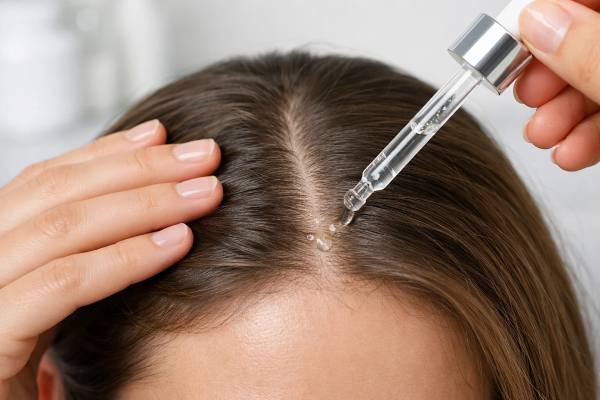
A scalp that feels greasy by noon, tight after washing, and itchy for no obvious reason usually does not need a dramatic fix. More often, it needs steadier barrier care. That is why niacinamide has started showing up in scalp serums, pre-wash treatments, and even shampoos. It is familiar from facial skincare, but the scalp is not simply “face skin with hair.” It has more sebaceous activity, more friction, more product buildup, and a different tolerance for leave-on formulas.
Niacinamide can be genuinely useful here, but only when its role is framed correctly. It is best understood as a supportive scalp-care ingredient that may help calm excess oil, reinforce barrier function, and reduce irritation-linked itch in some people. It is not a cure for every flaky scalp, and it is not a stand-alone hair-growth treatment. The value lies in matching it to the right scalp pattern, the right formula, and the right expectations. Done well, niacinamide can make the scalp feel less reactive and easier to manage.
Essential Insights
- Niacinamide is most useful for oily, sensitive, or easily irritated scalps that need better barrier support.
- It may help reduce surface oil and improve comfort, especially when the scalp feels shiny, tight, or mildly itchy.
- Scalp-specific evidence is still limited, so niacinamide works best as a supportive ingredient rather than a cure-all.
- Very high-strength formulas are not clearly better and may sting a sensitive scalp.
- Start with a simple leave-on serum or scalp tonic and use it consistently for several weeks before judging the result.
Table of Contents
- What Niacinamide Can Realistically Do
- How It Supports Oil Balance and the Barrier
- Who May Benefit Most
- How to Use Niacinamide on the Scalp
- What It Cannot Fix on Its Own
- Side Effects and When to Get Help
What Niacinamide Can Realistically Do
Niacinamide, a form of vitamin B3, has one of the better reputations in topical skincare because it is versatile, generally well tolerated, and useful across several overlapping problems. On the scalp, that overlap matters. Many people who think they have “just an oily scalp” also have some barrier stress, low-grade irritation, or a cycle of overwashing followed by rebound oiliness. Others describe itch without major flakes, or stinging after trying strong exfoliants, essential oils, or dandruff shampoos too often. These are the situations where niacinamide makes the most sense.
Its strongest practical role is supportive care, not aggressive correction. A niacinamide scalp product may help reduce that slick, coated feeling at the roots, make the scalp feel calmer between washes, and improve tolerance to the rest of a routine. If the barrier is strained, the scalp often feels paradoxical: oily on the surface but tight underneath, or itchy even when there is no obvious rash. Niacinamide fits best in that middle ground.
What it does not do is matter just as much. Niacinamide is not a direct antifungal medicine. It is not a substitute for medicated therapy when someone has clear seborrheic dermatitis, psoriasis, or scalp folliculitis. It is also not a proven hair-growth ingredient in the way people often hope. A better scalp environment may support hair quality indirectly, but niacinamide itself is not established as a stand-alone treatment for patterned thinning or shedding.
That distinction keeps the article honest. The scalp-specific evidence for niacinamide is still much thinner than the facial-skin literature. Some encouraging scalp data involve multi-ingredient products rather than niacinamide alone. That means a person may notice improvement from a formula that includes niacinamide, caffeine, panthenol, zinc salts, or antifungal agents without being able to credit one ingredient with certainty.
Still, the ingredient earns attention because the overall biology is sensible. A scalp with better barrier function is usually less reactive. A less reactive scalp is less likely to push people into harsh cycles of scrubbing, product hopping, or treating every itch as a sign of infection. That may sound modest, but in scalp care, modest improvements often matter more than flashy claims.
The fairest summary is simple: niacinamide can be a very good scalp-conditioning ingredient. It is especially useful when the goal is to control shine, reduce irritability, and make the scalp feel more resilient. It becomes less useful when the scalp problem is primarily infectious, autoimmune, or strongly inflammatory.
How It Supports Oil Balance and the Barrier
The scalp is a difficult environment to keep balanced because it is both exposed and occluded. It deals with shampoo, sweat, hats, dry air, styling products, friction from brushing, and the chemistry of sebum. Niacinamide matters here because it may help at two pressure points at once: surface oil regulation and barrier support.
On the oil side, niacinamide has been shown in topical studies to reduce sebum-related measures on the skin, especially at lower concentrations such as around 2%. That does not mean it “turns off” oil glands. The effect is subtler. Many people notice that roots look less shiny, feel less coated, and stay fresher longer when niacinamide is used regularly. For the scalp, that can be useful because heavy sebum often traps sweat, styling residue, and flakes close to the skin, which can make itch and odor feel worse.
Barrier support may be even more important than oil control. A healthy scalp barrier helps limit water loss, tolerate cleansing better, and resist irritation from actives. Niacinamide is often discussed as a barrier-friendly ingredient because it supports the outer skin layer and is associated with improved comfort in irritated, dry, or inflammation-prone skin. On the scalp, that can translate into less post-wash tightness, less sting from leave-on products, and a calmer feel overall.
This is also why niacinamide can make sense even for a scalp that is not obviously dry. Oiliness and barrier weakness can coexist. In practice, many people with greasy roots still have a stressed barrier because they are washing too aggressively, using frequent exfoliants, or layering too many actives. Niacinamide can help interrupt that cycle by making the scalp easier to manage, not by stripping it harder.
A few related ideas help clarify where it fits:
- It is better at steady regulation than quick degreasing.
- It supports scalp comfort better than it clears thick scale.
- It works best when the rest of the routine is not overly harsh.
- It may be especially helpful when irritation and oiliness overlap.
This is where routine design matters. A niacinamide serum used with an overly stripping shampoo may never get a fair chance. A gentler wash pattern, a lighter leave-on, and attention to scalp pH often produce better results than adding more active ingredients. People dealing with persistent slickness usually benefit from reviewing their wash routine for an oily scalp alongside any serum choice.
The scalp does not usually need to be forced into balance. It responds better when excess oil, irritation, and barrier stress are addressed together. Niacinamide is appealing because it can contribute to all three, even if its effect is gradual rather than dramatic.
Who May Benefit Most
Niacinamide is not equally useful for every scalp type. The best candidate is usually someone with a scalp that feels oily, sensitive, easily irritated, or mildly itchy, especially when symptoms are worse after washing, weather changes, or product overload. If your roots get slick quickly but the scalp also feels tight, reactive, or uncomfortable, niacinamide makes more sense than another harsh oil-control product.
People who often benefit include:
- Those with oily roots and visible scalp shine.
- People who feel itch without thick plaques or heavy crusting.
- Anyone whose scalp seems less tolerant after frequent exfoliation or medicated shampoos.
- People with product buildup and scalp discomfort from layering too much at the roots.
- Those who want a supportive leave-on that is gentler than acid exfoliants or strong essential oil blends.
Niacinamide can also be useful for the “in-between” scalp that is neither fully dandruff-prone nor fully dry. That group often struggles the most because standard dandruff advice feels too strong, but simple moisturizers feel too heavy. A light niacinamide tonic or serum can sit nicely in that middle space.
Who is less likely to benefit? People whose main problem is not barrier stress or mild oil imbalance. If the scalp is thickly flaky, inflamed, very red, painful, or developing bumps, niacinamide is unlikely to be enough. If the itching is intense or persistent, the real issue may be seborrheic dermatitis, psoriasis, eczema, allergic contact dermatitis, or folliculitis. In those cases, niacinamide may still be a supportive add-on later, but it should not delay proper treatment.
It is also important to separate scalp comfort from hair growth goals. Someone with thinning hair but no real scalp discomfort may not notice much from niacinamide unless the formula also contains other active ingredients. A calmer scalp can be helpful, but that is not the same as treating the biology of patterned hair loss or telogen effluvium.
A useful mental filter is this: niacinamide fits best when your complaint sounds like “my scalp feels reactive and unbalanced” rather than “my scalp has a defined disease I need to treat.” If the issue is mostly mild oil, low-level itch, stinging after products, or poor tolerance to a routine, niacinamide deserves consideration. If the issue is heavy scale, persistent inflammation, or obvious dandruff recurrence, it is more important to understand what is causing the itchy scalp before relying on a cosmetic ingredient.
The right match matters more than the hype. A well-matched niacinamide product can make the scalp feel noticeably calmer. A poorly matched one just becomes another bottle in the cabinet.
How to Use Niacinamide on the Scalp
The most practical way to use niacinamide on the scalp is as a leave-on product rather than expecting a rinse-off shampoo to do all the work. Shampoos containing niacinamide can still be worthwhile, especially if they are gentle and part of a scalp-soothing routine, but a leave-on serum, tonic, or lightweight scalp lotion usually gives the ingredient more time to work.
For most people, the safest starting point is a simple formula used once daily or a few times per week, depending on tolerance. Consistency matters more than intensity. Niacinamide is usually not the kind of ingredient that delivers an overnight shift. It tends to improve comfort and balance gradually over several weeks.
A practical approach looks like this:
- Start with a clean or at least not heavily coated scalp.
- Apply the product directly to the scalp, not just the hair.
- Focus on the oiliest, itchiest, or most reactive areas.
- Use a modest amount so the roots do not feel sticky.
- Stay with one routine for at least 3 to 6 weeks before judging it.
Concentration also matters, though labels do not always make it easy. Lower to moderate strengths often make more sense for scalp care than chasing the highest number on the box. In practice, formulas in the low single digits to around 5% are often plenty for oil control and barrier support. Very high-strength products are not clearly better for the scalp and may be more likely to sting, especially if the skin is already irritated.
Niacinamide also pairs well with the right supporting ingredients. In a scalp product, it often makes sense alongside panthenol, humectants, ceramide-supportive ingredients, zinc salts, or gentle soothing agents. What it does not pair well with is a routine that is already too aggressive. If you are using strong acids, frequent scrubs, or repeated clarifying shampoos, niacinamide may spend more time compensating for irritation than actually improving the scalp.
A few routine tips improve the odds of success:
- Use gentler wash frequency instead of overwashing for quick relief.
- Avoid applying heavy oils directly over a niacinamide scalp serum.
- Do not stack several strong scalp actives on the same day at first.
- Reduce harsh exfoliation if the scalp is stinging or flaky.
- Patch test if you have a history of scalp sensitivity.
Niacinamide can also be a smart follow-up ingredient after the scalp has been calmed with treatment for a more defined condition. For example, once dandruff is controlled, some people keep comfort steadier by maintaining a barrier-friendly routine rather than continuing medicated products too aggressively. That is where it overlaps nicely with broader scalp health support instead of acting like a stand-alone fix.
The best way to use niacinamide is not “as much as possible.” It is regularly, lightly, and in a formula your scalp will actually tolerate.
What It Cannot Fix on Its Own
Niacinamide is easy to like because it sounds safe, modern, and broadly useful. That is exactly why it gets stretched beyond what the evidence supports. On the scalp, its limits are important.
First, niacinamide is not a reliable monotherapy for true dandruff or seborrheic dermatitis. Those conditions involve more than oil. They also involve inflammation, barrier disruption, and the scalp microbiome, especially Malassezia-related processes. A supportive niacinamide serum may improve comfort around the edges, but it does not replace antifungal or other condition-specific therapy when dandruff is persistent. People dealing with recurring flakes, greasy scale, and itch usually need to understand the basics of seborrheic dermatitis and scalp shampoos rather than treating niacinamide as the whole answer.
Second, niacinamide is not a direct hair-growth treatment. It may improve the scalp environment and help some people tolerate their routines better, but there is no strong case for using it as a substitute for established treatments when the real issue is patterned thinning. A healthy scalp matters, but scalp comfort and follicle stimulation are not the same thing.
Third, it is not the right fix for heavy buildup, major irritation from hair dye, or true allergic reactions. A product that contains niacinamide can still be irritating if the rest of the formula is not well tolerated. Preservatives, fragrance, botanical extracts, or solvents are often the real reason a scalp reacts. That is why people with repeat stinging or redness after products may need to think in terms of allergy versus irritation from hair products, not simply “I need a gentler active.”
It also helps to know what niacinamide is unlikely to fix quickly:
- Thick adherent scale.
- Painful inflammation.
- Pustules or folliculitis.
- Hair shedding driven by illness, hormones, iron deficiency, or medication.
- Itch caused by lice, ringworm, or a strong allergic reaction.
This is not a weakness of niacinamide so much as a reminder that scalp symptoms are not all built the same way. One of the most common mistakes in scalp care is taking a useful support ingredient and forcing it into a job meant for a medicated treatment, a diagnostic workup, or both.
A good rule is this: niacinamide is a maintenance and support ingredient. It shines when the scalp needs balance, not rescue. It can help a scalp feel less oily, less tight, and less reactive. It is much less helpful when the scalp is sending a stronger clinical signal that something more specific is wrong.
When readers understand those limits, niacinamide becomes more useful, not less. Expectations stop inflating, and the product is judged by the job it can actually do.
Side Effects and When to Get Help
Topical niacinamide is usually well tolerated, which is a major reason it appears in so many scalp and skincare formulas. Most people who react do not experience anything dramatic. The more typical problem is mild stinging, temporary redness, or a feeling that the roots are tacky or overloaded because the formula base is too heavy. In other words, the issue is often the product design, not niacinamide itself.
Still, “usually gentle” does not mean “impossible to react to.” The scalp can be surprisingly sensitive, especially when it is already inflamed, over-exfoliated, sunburned, or recovering from hair dye. In those settings, even a good ingredient can sting.
A few patterns are worth watching:
- Burning or worsening itch after each use.
- New redness that lingers.
- Greasy buildup that makes the scalp feel dirtier rather than calmer.
- Tiny bumps or follicle irritation after repeated application.
- Sensitivity that gets worse when niacinamide is paired with strong acids or scrubs.
If one of these shows up, stop and simplify. Sometimes the scalp just needs a break from actives. Sometimes the formula is too concentrated. Sometimes the actual culprit is fragrance, denatured alcohol, or another ingredient hiding in the same product.
Patch testing is especially useful if you have a history of reacting to hair color, scented scalp products, or leave-on serums. This matters because symptoms from irritation and allergy can overlap. If the scalp is already inflamed, niacinamide will not perform well no matter how elegant the claims are.
It is also important to know when not to keep experimenting at home. Please seek professional help if:
- Itch is intense, persistent, or disturbing sleep.
- Flakes are thick, yellow, or stuck to the scalp.
- The scalp is painful, bleeding, or oozing.
- You develop pustules, crusting, or patchy hair loss.
- Eyebrows, eyelashes, or other areas are involved.
- Symptoms keep returning despite a careful routine.
Those signs point away from simple cosmetic imbalance and toward a scalp disorder that deserves a clearer diagnosis. When the story becomes recurrent or more inflammatory, the better next step is learning when to see a dermatologist for scalp or hair concerns rather than adding another soothing serum.
Niacinamide is at its best when used early, gently, and for the right reason. It is not a treatment to push through when the scalp is getting angrier. A calmer scalp is the goal. If the routine is moving you in the opposite direction, the answer is not more persistence. It is better matching of diagnosis, formula, and care plan.
References
- Mechanistic Insights into the Multiple Functions of Niacinamide: Therapeutic Implications and Cosmeceutical Applications in Functional Skincare Products 2024 (Review)
- A single‐center, randomized, controlled study on the efficacy of niacinamide‐containing body emollients combined with cleansing gel in the treatment of mild atopic dermatitis 2023 (RCT)
- Scalp application of antioxidants improves scalp condition and reduces hair shedding in a 24-week randomized, double-blind, placebo-controlled clinical trial 2021 (RCT)
- Topical nicotinamide for seborrheic dermatitis: an open randomized study 2014 (RCT)
- The effect of 2% niacinamide on facial sebum production 2006 (RCT)
Disclaimer
This article is for educational purposes only and is not medical advice, diagnosis, or treatment. Niacinamide can support scalp comfort, oil balance, and barrier care, but it is not a replacement for medical evaluation when the scalp is very itchy, inflamed, infected, heavily flaky, painful, or associated with hair loss. Product choice and frequency should be tailored to scalp sensitivity, existing conditions, and the rest of your routine. If symptoms persist or worsen, seek care from a qualified clinician.
If this article helped, please share it on Facebook, X (formerly Twitter), or your preferred platform so more readers can find clear, evidence-based scalp guidance.