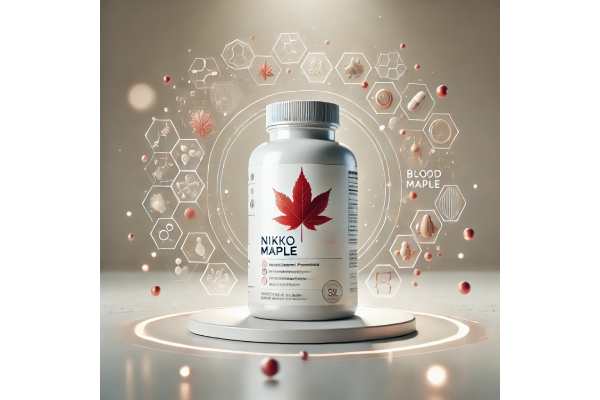
Nikko maple (Acer nikoense, also called Acer maximowiczianum or megusuri-no-ki) is a small deciduous maple native to Japan and parts of China. Traditionally, the bark has been prepared as a tea for tired eyes, blurred vision, and vague liver complaints. Today, it appears in some “eye health” and liver support supplements, usually in small amounts within combination formulas.
Modern laboratory research has identified several interesting compounds in Nikko maple bark, including diarylheptanoids such as acerogenin A and M, coumarins, and other phenolic compounds. In cells and animals, these show antioxidant, anti-inflammatory, vasorelaxant, and neuroprotective actions. However, there are still no strong clinical trials proving that Nikko maple improves vision, protects the liver, or treats any disease in humans.
This guide walks through what is actually known: how Nikko maple is used, its key constituents, potential benefits, how supplements are typically dosed, and—most importantly—its safety limits and the many unanswered questions that remain.
Quick Overview for Nikko Maple Users
- Nikko maple bark is a traditional Japanese remedy for eye strain and liver complaints and contains antioxidant diarylheptanoids and other phenolic compounds.
- Evidence for human health benefits is limited to preclinical and early mechanistic research; no well-designed trials show clear clinical effects yet.
- Commercial products typically provide Nikko maple as tea (about 3 g bark per tea bag) or as 30–60 mg bark powder in combination eye formulas per day; no evidence-based “optimal dose” exists.
- People who are pregnant or breastfeeding, children, those with significant eye or liver disease, bleeding or cardiovascular disorders, or who take multiple medicines should avoid Nikko maple unless a clinician specifically recommends and supervises its use.
Table of Contents
- What is Nikko maple and how is it used?
- What are the main properties and active compounds?
- Potential health benefits of Nikko maple bark
- How to take Nikko maple and typical dosage ranges
- Side effects, risks and who should avoid Nikko maple
- What does current research say about Nikko maple?
What is Nikko maple and how is it used?
Nikko maple is a trifoliate maple tree native to Japan and parts of China, now often listed under the botanical name Acer maximowiczianum, with Acer nikoense treated as a synonym. In gardens it is appreciated for its three-part leaves and red to orange autumn colour, but in Japanese folk medicine it is better known as megusuri-no-ki—literally “eye medicine tree.”
Historically, the bark and sometimes leaves were harvested, dried, and boiled as a decoction. This tea has been used for several centuries for:
- Eye fatigue from reading or close work
- Red or irritated eyes
- Blurred vision in older adults
- Non-specific “liver fatigue,” sometimes described as support for detoxification or circulation
At some temples in Japan, visitors can still be served megusuri-no-ki tea as a traditional remedy for eye health. In modern commerce, the same plant appears in:
- Loose bark or tea bags for home brewing
- Combination eye-health supplements alongside bilberry, lutein, and vitamins
- Complex “liver support” formulas, sometimes with milk thistle or artichoke
- A smaller number of single-herb capsules marketed for eye and liver support
These products usually position Nikko maple as a gentle, plant-based antioxidant for the eyes and liver. However, major evidence reviews and professional monographs still describe its effectiveness as “insufficiently studied” for any indication. Regulatory agencies do not recognize Nikko maple as an approved treatment for eye disease, liver disease, or any other medical condition.
If you see Nikko maple on a supplement label, it is best to think of it as an experimental traditional ingredient whose modern clinical role has not yet been defined.
What are the main properties and active compounds?
Laboratory work on Nikko maple bark has focused on its rich spectrum of polyphenols and related phytochemicals. Several classes of compounds appear repeatedly in the scientific literature:
- Diarylheptanoids (for example acerogenin A, C, and M)
- Phenolic derivatives with strong free-radical-scavenging activity
- Coumarins and coumarinolignans such as scopoletin, cleomiscosin A, and aquillochin
- Acylated triterpene saponins isolated from the stem bark
- A background of flavonoids and tannins typical of maple species
Diarylheptanoids are seven-carbon skeleton molecules with two aromatic rings. In cell and animal models, acerogenin-type diarylheptanoids from Nikko maple:
- Reduce production of inflammatory mediators like nitric oxide and prostaglandins
- Inhibit tumour-promoting processes in certain skin and leukemia models
- Show antioxidant behaviour by neutralising reactive oxygen species
- Influence signalling pathways such as Nrf2/HO-1, which help cells cope with oxidative stress
Vasorelaxant studies in rat aorta suggest that organic extracts of the heartwood and isolated coumarinolignans can relax blood vessels, both with and without intact endothelium. This implies multiple mechanisms—perhaps calcium-channel modulation and nitric-oxide-linked pathways—but these observations remain preclinical and at doses far higher than those found in human supplements.
Other research on the bark and leaves indicates:
- Radical-scavenging capacity comparable to other polyphenol-rich herbs, suggesting general antioxidant potential
- Melanogenesis-modulating effects in cell lines, raising interest in cosmetic or skin-tone applications
- Neuroprotective effects of acerogenin A and C in mouse hippocampal cells, tied to upregulation of HO-1 and related genes
In short, Nikko maple offers a dense package of antioxidant and signalling-active compounds. What remains uncertain is how much of this activity survives oral digestion, what blood levels are achieved in humans, and whether those levels meaningfully alter disease processes.
Potential health benefits of Nikko maple bark
When people search for “Nikko maple benefits,” they are usually interested in practical outcomes: better eyesight, a healthier liver, or general antioxidant support. It is important to separate traditional expectations from what has actually been tested.
Eye health and visual comfort
In Japanese practice, megusuri-no-ki tea is strongly associated with tired, strained, or aging eyes. Modern eye-health supplements from Japan and East Asia often combine small amounts of Nikko maple bark with bilberry, lutein, zeaxanthin, or vitamin A. Users are typically instructed to take one or two tablets per day for ongoing eye support.
However:
- No high-quality clinical trials have tested Nikko maple alone for visual acuity, night vision, macular health, or dry-eye symptoms.
- Where it appears in combination formulas, the amounts are low and the benefits, if any, cannot be attributed specifically to Nikko maple rather than to better-studied ingredients such as bilberry or lutein.
At present, any eye-related benefit is speculative and should not replace standard ophthalmologic care.
Liver support and metabolic effects
Folk usage links Nikko maple with “liver fatigue” and general detoxification. Mechanistically, its antioxidant and anti-inflammatory diarylheptanoids could, in theory, lessen oxidative stress in the liver and vasculature. Some research on related maple species also explores corilagin and similar compounds for metabolic and vascular effects.
Yet, there are:
- No human trials where Nikko maple was given to people with fatty liver, hepatitis, or raised liver enzymes
- No dosing studies defining safe or effective ranges for liver-related indications
For now, Nikko maple should not be used as a primary treatment for any liver condition.
Cardiovascular and vascular function
Rat-aorta experiments show Nikko maple heartwood extracts and coumarinolignans relaxing blood vessel rings pre-contracted with norepinephrine. While interesting, these findings:
- Use isolated tissues in controlled laboratory conditions
- Often employ concentrations that would be difficult to reach in human blood with oral doses
- Have not been followed by blood-pressure or cardiovascular outcome trials in humans
Thus, Nikko maple should not be considered an evidence-based blood-pressure or heart remedy.
Anti-inflammatory, antioxidant, and anti-cancer potential
In test-tube models:
- Hot-water bark extracts induce apoptosis (programmed cell death) in leukemia cell lines.
- Diarylheptanoids inhibit tumour-promoting agents and reduce inflammatory mediators.
- Acerogenin A and related compounds protect neuronal cells from glutamate-induced oxidative damage via Nrf2/HO-1 activation.
These results support the idea that Nikko maple is biologically active, but they do not show that drinking the tea or taking a supplement prevents or treats cancer, dementia, or chronic inflammatory disease in humans. Translating cell-culture concentrations into realistic oral doses is complex and has not yet been done.
Overall, Nikko maple’s potential benefits remain promising but unproven. It is more accurate to describe it as “under investigation” than “clinically effective” for any specific condition.
How to take Nikko maple and typical dosage ranges
At this time, professional monographs and consumer guidance agree on one key point: there is not enough reliable scientific information to define an evidence-based dose for Nikko maple. Available advice focuses on following product labels and using the herb cautiously, if at all.
Still, understanding how products are typically formulated can help you interpret labels and have an informed discussion with your clinician.
Traditional tea and decoction
Commercial “megusuri-no-ki” teas often contain tea bags with about 3 g of dried bark per bag. Label directions usually recommend:
- Steeping 1 tea bag (around 3 g dried bark) in hot water for several minutes.
- Drinking one cup, once or twice daily, sometimes as part of a short course of several weeks.
This reflects traditional practice rather than a clinically optimised schedule. If you choose to try the tea, it is sensible to:
- Limit use to short periods (for example 2–4 weeks).
- Avoid very concentrated decoctions or multiple bags per cup.
- Stop if you notice any unusual symptoms.
Capsules and combination supplements
Vision and eye-strain formulas from Japan and East Asia frequently list megusuri-no-ki powder alongside bilberry extract and lutein. Typical label amounts per daily serving cluster around:
- Approximately 30–60 mg of Nikko maple bark powder.
- 100–120 mg bilberry extract.
- 6 mg or more of lutein.
In some research supplements designed for eye health, Nikko maple appears at about 30 mg per capsule within a multi-nutrient blend. Again, this reflects formulator choice, not a recognised therapeutic dose.
Practical dosage guidance
Given the lack of dose-finding studies, a cautious, medically supervised approach is essential:
- Treat any amount above what you would get from a single commercial tea bag (about 3 g bark) or a small capsule (around 30–60 mg powder) as unstudied.
- Do not attempt to concentrate or home-extract the bark for high-dose use.
- Do not use Nikko maple continuously for months without medical oversight.
- Always tell your doctor and pharmacist about any Nikko maple products you take, especially if you already use medication for blood pressure, clotting, diabetes, or the liver.
If your healthcare professional agrees that a short trial is reasonable, they will usually recommend staying within the manufacturer’s suggested daily intake, monitoring your eyes, digestion, and general health, and stopping the product if any adverse effect appears.
Side effects, risks and who should avoid Nikko maple
Unlike well-studied herbs, Nikko maple does not have a substantial safety database. Major monographs from natural-medicine reference services therefore classify its overall safety as “unknown” or “insufficient data,” and list side effects as “not well documented.”
That does not mean it is automatically unsafe, but it does mean we must assume uncertainty and proceed conservatively.
Possible and theoretical side effects
Based on its chemistry and on general experience with tannin-rich barks and polyphenol-dense herbs, potential adverse effects could include:
- Digestive upset (nausea, stomach discomfort, loose stools).
- Headache or dizziness, especially if blood pressure drops.
- Skin rash or itching in people allergic to maples or related plants.
- Changes in liver enzymes or coagulation markers (this is theoretical but must be considered, since constituents influence inflammatory and vascular pathways).
Because no long-term human trials exist, we also do not know whether chronic use could contribute to liver stress, kidney issues, or other organ effects at high cumulative doses.
Drug, herb, and disease interactions
Most professional datasheets currently list “no known interactions” simply because systematic studies have not been performed. However, laboratory data and case-by-case reasoning suggest several areas of caution:
- Blood-pressure and cardiovascular medicines: vasorelaxant effects in animal arteries raise the possibility of additive blood-pressure lowering with antihypertensives.
- Anticoagulants and antiplatelet drugs: polyphenols and coumarin-type constituents may influence clotting pathways.
- Chemotherapy, immunotherapy, and hormone therapies: antioxidant and signal-modulating compounds sometimes interfere with certain oncology drugs; this has not been tested for Nikko maple but should be considered.
- Diabetes medicines: some Acer species are being explored for metabolic effects; until interactions are clearer, cautious monitoring is prudent for people on glucose-lowering drugs.
Who should avoid Nikko maple?
Until better safety data exist, the following groups are generally advised to avoid Nikko maple unless a specialist explicitly recommends otherwise:
- Pregnant or breastfeeding individuals.
- Children and teenagers.
- People with diagnosed eye disease (for example glaucoma, macular degeneration, diabetic retinopathy) unless their eye doctor agrees to supervised use.
- People with significant liver, kidney, bleeding, or autoimmune disorders.
- Anyone scheduled for major surgery (stop at least two weeks before, in line with general herbal-surgery guidance).
- Individuals with known maple, tree-pollen, or bark allergies.
Even for healthy adults, it is wise to view Nikko maple as an experimental adjunct, not a replacement for established treatments or for regular eye and liver check-ups.
What does current research say about Nikko maple?
The research landscape for Nikko maple is surprisingly rich at the laboratory level but almost empty when it comes to human trials.
Preclinical highlights
Key strands of work include:
- Cancer-related models, where hot-water bark extracts trigger apoptosis in leukemia cells and diarylheptanoids block tumour-promotion processes in skin models.
- Neuroprotection, where acerogenin A and C from Nikko maple shield mouse hippocampal neurons from glutamate-induced oxidative stress by activating Nrf2 and HO-1 pathways.
- Vascular function, where heartwood extracts and coumarinolignans cause dose-dependent relaxation in rat aortic rings, sometimes independent of the endothelium.
- Chemistry and taxonomy, including detailed mapping of flavonoids, acylated triterpene saponins, and diarylheptanoids, and sequencing of the chloroplast genome to clarify its place within the maple family.
These studies confirm that Nikko maple contains multiple bioactive molecules with plausible mechanisms for anti-inflammatory, antioxidant, and vasomodulatory actions.
Human data and real-world use
By contrast, human data remain sparse and indirect:
- Some Japanese health-promotion studies and observational work mention supplements that include small amounts of Nikko maple in combination with omega-3 fatty acids, bilberry, and other nutrients. Any benefits seen cannot be isolated to Nikko maple itself.
- Commercial reports and marketing materials describe subjective improvements in eye comfort or general wellbeing, but these are not controlled scientific evidence.
No robust randomised controlled trials have yet tested Nikko maple bark alone for eye disease, liver disease, cognitive decline, or cardiovascular endpoints. Nor are there published long-term safety, pharmacokinetic, or interaction studies.
How should you interpret this?
Given the current state of evidence, a cautious interpretation is appropriate:
- The plant is pharmacologically active, so ignoring it entirely would be premature.
- The clinical relevance is unknown, so using it as a primary treatment is not justified.
- Future research may clarify specific niches—for example, as a supportive antioxidant in eye or neuroprotective formulations—but that evidence does not exist yet.
For now, Nikko maple fits best as a subject of scientific curiosity and a traditional herb that might be used in low doses under professional supervision, not as a proven therapy.
References
- Nikko Maple: Health Benefits, Side Effects, Uses, Dose & Precautions 2021 (Monograph)
- Nikko maple 2022 (Professional Monograph)
- Traditional uses, phytochemistry, and pharmacology of the genus Acer (maple): A review 2016 (Systematic Review)
- Acerogenin M, a cyclic diarylheptanoid, and other phenolic compounds from Acer nikoense and their anti-inflammatory and anti-tumor-promoting effects 2006 (Preclinical Study)
- Hot Water Extract of Bark of Nikko Maple (Acer nikoense) Induces Apoptosis in Leukemia Cells 1999 (Preclinical Study)
Disclaimer
The information in this article is intended for general educational purposes only. Nikko maple is a traditional plant remedy whose modern clinical effects and long-term safety have not been established in rigorous human studies. Nothing here is meant to diagnose, treat, cure, or prevent any disease, and it must not replace personalised advice from a qualified healthcare professional who knows your medical history. Always consult your doctor, pharmacist, or licensed practitioner before starting, stopping, or combining any herbs, supplements, or medicines, especially if you have existing health conditions, are pregnant or breastfeeding, or are taking prescription drugs.
If you found this guide useful, you are warmly invited to share it on Facebook, X (formerly Twitter), or any social platform you prefer, and to follow our future updates. Thoughtful sharing helps more readers access balanced information and supports our ability to keep producing careful, evidence-informed content.