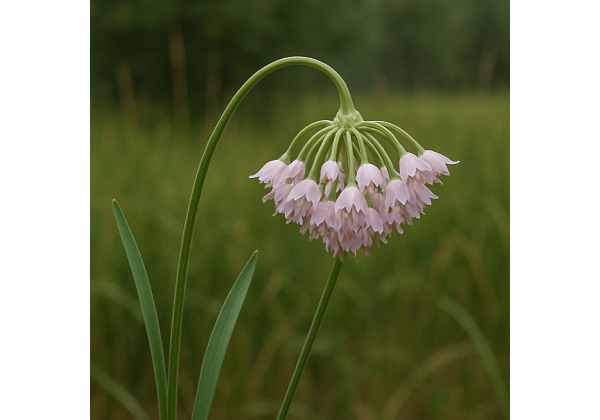
Nodding onion is a native North American allium with graceful pink-to-lavender flower heads, slender leaves, and the unmistakable aroma of an onion when crushed. Unlike common bulb onions grown at scale, Allium cernuum is better known as a wild edible, pollinator-friendly garden plant, and traditional medicinal food. That combination makes it appealing to people who want a plant that is both beautiful and practical. Its likely health value comes less from modern clinical trials and more from two overlapping strengths: its long-standing use as food and medicine by Indigenous communities, and its place within the broader Allium family, whose members are rich in sulfur compounds, flavonoids, and other bioactive molecules linked with antioxidant, antimicrobial, and cardiometabolic benefits. Still, nodding onion should be approached honestly. Species-specific human research is limited, so most stronger benefit claims are inferred from the wider onion and garlic family rather than proven directly in Allium cernuum. The most grounded view is that nodding onion is a food-first medicinal plant with real promise, but modest evidence and best results when used sensibly.
Core Points
- Nodding onion is best understood as a food-first native allium with traditional medicinal uses.
- Its most plausible benefits relate to antioxidant support, mild antimicrobial activity, and digestive or respiratory comfort.
- A practical culinary range is about 5–15 g fresh chopped leaves or flowers, or one small bulb at a time.
- No standardized medicinal extract dose has been established for self-treatment.
- People with allium allergy, sensitive digestion, or those using blood thinners should avoid medicinal use without guidance.
Table of Contents
- What nodding onion is and what parts are used
- Key ingredients and medicinal properties
- Potential health benefits and what is most realistic
- Traditional food and household uses
- Dosage, timing, and best preparation methods
- Safety, side effects, and who should avoid it
- Common mistakes and responsible harvesting
What nodding onion is and what parts are used
Nodding onion, Allium cernuum, is a perennial North American bulb in the amaryllis family. It grows in prairies, rocky outcrops, open woods, and dry meadows, and it is widely appreciated in native plant gardens because it is easy to grow, drought-tolerant once established, and highly attractive to pollinators. Its name comes from its drooping flower clusters, which hang rather than stand upright like many ornamental onions. That nodding habit makes it easy to recognize in the field, but the real reason people value it goes beyond appearance.
Every part of the plant carries the familiar allium scent. Horticultural and ethnobotanical sources describe the bulb as edible, and foraging literature commonly extends that food use to the leaves and flowers as well. In practical terms, nodding onion has historically been treated less like a powerful medicinal extract and more like a useful native allium that can move between food, seasoning, and home remedy. That distinction matters. When a plant sits close to the kitchen as well as the medicine basket, the safest and most realistic benefits often come from small, repeated use rather than from high-dose supplementation.
The plant also has a genuine cultural history. Indigenous communities across parts of North America used nodding onion as food and for medicine, particularly in simple preparations rather than concentrated modern-style products. Some traditions used the whole plant or bulb for fever-related complaints, while other regional accounts describe applications for respiratory discomfort, sore throats, and external complaints. Modern readers should take that history seriously, but not as proof that every traditional use has been clinically confirmed.
Compared with stronger kitchen alliums, nodding onion is usually discussed as milder, more delicate, and more “wild” in character. A helpful comparison is chives in everyday allium use. Both are used fresh, both fit well into food, and both offer subtle, repeated support rather than dramatic short-term effects. The difference is that chives are common and well standardized in kitchens, while nodding onion is more regionally known and much less studied.
That combination of beauty, edibility, and traditional use explains why nodding onion attracts so much curiosity. It is not just another ornamental flower, and it is not simply a substitute for common onion. It is best understood as a native medicinal food plant whose leaves, bulbs, and blossoms have value when identity is clear, harvest is respectful, and expectations stay grounded.
Key ingredients and medicinal properties
The chemistry of nodding onion is one of the most important reasons it deserves a serious look. Species-specific work is limited, but a useful amount is known. In a review of Cherokee aromatic medicinal plants, Allium cernuum was specifically associated with cysteine sulfoxides such as methiin, alliin, and isoalliin, along with diosgenin. Those names may sound technical, but they matter because they help explain why nodding onion smells, tastes, and behaves like a medicinal allium rather than like a neutral leafy herb.
Cysteine sulfoxides are among the signature compounds of the Allium genus. When plant tissue is cut or crushed, these sulfur-containing molecules contribute to the sharp aroma and to many of the biologically active compounds for which onions, garlic, chives, and related species are known. In broader Allium research, sulfur compounds are tied to antimicrobial, antioxidant, anti-inflammatory, cardiometabolic, and sometimes anticancer activity. That does not prove those effects in nodding onion at everyday doses, but it gives the species a credible chemical basis for its traditional reputation.
Alliin is especially familiar because it is part of the chemistry that makes garlic so intensively studied. Nodding onion is not garlic, but the overlap matters. It suggests that the plant belongs to the same broad pharmacological conversation, even if it occupies a milder and less researched corner of it. The presence of methiin and isoalliin adds to that picture, reinforcing the idea that nodding onion likely shares the protective sulfur-rich chemistry that makes alliums so nutritionally interesting.
The report of diosgenin is also notable. Diosgenin is a steroidal sapogenin discussed in plant chemistry for a range of biologic activities. Here again, caution is important. The presence of a compound in a species does not automatically translate into a safe or clinically meaningful human outcome. But it does suggest that nodding onion’s medicinal profile is not based on sulfur compounds alone.
Beyond species-specific findings, broader modern reviews of Allium plants highlight a wider chemical family that includes phenolics, flavonoids, saponins, and other antioxidant compounds. Those reviews also stress a recurring limitation: the genus has strong preclinical promise, but human translation is uneven and strongest for garlic and common onion rather than for lesser-known species.
That is the best way to think about nodding onion’s medicinal properties. It likely offers:
- sulfur-based defense chemistry associated with pungency and antimicrobial potential
- antioxidant and anti-inflammatory signaling potential
- food-based phytochemical support rather than drug-like activity
- a milder allium profile that suits fresh culinary use
If you already know the value of garlic compounds and applications, you already understand the broader chemical world that nodding onion belongs to. The difference is that nodding onion is less studied, usually used in smaller quantities, and better approached as a native edible medicine than as a strong therapeutic concentrate.
Potential health benefits and what is most realistic
When people search for health benefits, they usually want a confident list. With nodding onion, the more helpful answer is a careful one. The plant almost certainly has useful properties, but the evidence is layered. Some benefits come from traditional use, some from species-specific chemistry, and many from what we know about the Allium genus as a whole.
The most realistic benefit is food-based antioxidant support. Alliums are rich in bioactive compounds, especially sulfur compounds and flavonoids, and modern reviews consistently connect these with antioxidant and anti-inflammatory effects. Nodding onion likely participates in that pattern. In practice, this means it may support overall health best when eaten as part of a vegetable-rich diet, not when treated like a miracle remedy.
The second plausible area is mild antimicrobial and immune-supportive activity. Sulfur compounds in alliums have long been studied for their role in plant defense and in human antimicrobial research. This helps explain why nodding onion was historically used in home remedies for fever or respiratory discomfort. Still, the key word is supportive. There is no strong evidence that nodding onion alone can treat infections or replace medical care.
The third possible benefit is cardiometabolic support through diet quality. The broader Allium literature often links regular intake of onion-family plants with heart-friendly and metabolic benefits. Much of that evidence is strongest for common onions and garlic, not Allium cernuum. But a food-first native allium can still contribute to this pattern by adding flavor, phytochemicals, and variety to everyday meals without relying on ultra-processed seasonings.
Digestive benefit is also reasonable, though it needs nuance. Pungent alliums can stimulate appetite and digestive secretions in some people, yet they can also cause bloating or irritation in others. Nodding onion is not a universal digestive herb. It is better thought of as a culinary plant that may gently support digestion when tolerated well. If your main goal is a more established digestive botanical, ginger as a better-studied digestive herb is a stronger evidence-based choice.
The benefits least justified at this point are the dramatic ones. It would be misleading to claim that nodding onion is a proven anticancer herb, a dependable cholesterol-lowering agent, or a validated respiratory treatment. Broader Allium science is exciting, but species-specific clinical research on Allium cernuum is not there yet.
A balanced summary would look like this:
- likely useful as a nutrient-dense and phytochemical-rich native edible
- plausible antioxidant and mild antimicrobial support
- traditional value for fever-related and everyday household complaints
- possible small cardiometabolic benefits when used as part of a healthy diet
That may sound modest, but modesty is part of good herbal writing. Nodding onion does not need exaggerated claims to be worthwhile. Its quiet value lies in being edible, aromatic, culturally meaningful, and pharmacologically plausible without pretending to be something it is not.
Traditional food and household uses
Nodding onion makes the most sense when seen as a plant that lives in ordinary life. It is not only a wildflower, and it is not only a medicine. It belongs to the old category of useful plants that were gathered, eaten, and turned to when simple household remedies were needed.
Food use is the clearest place to start. The bulb has long been recognized as edible, and many modern native-plant and foraging sources also describe the leaves and flowers as useful in the kitchen. The taste is onion-like, often stronger and sharper than people expect from such a graceful-looking plant. This makes nodding onion especially useful as a seasoning herb. A small amount can brighten eggs, potatoes, beans, soups, or grain dishes. Fresh flowers can also be used as garnish, where they bring both color and a mild onion bite.
Traditional household use is broader. Ethnobotanical sources describe nodding onion as a Native American food and medicine, while Cherokee-focused phytochemical work records the plant in relation to fever. Other horticultural and biocultural accounts describe medicinal uses for bulbs or juice in general terms rather than as standardized treatments. That pattern is common in traditional medicine. A plant can be clearly valued without being reduced to a single “approved” indication.
External use is another thread. Older reports describe poultice-style applications of onion-family plants for minor sores, swellings, or chest complaints. With nodding onion, that history is worth noting, but it should not be romanticized. Fresh alliums can irritate sensitive skin, and homemade poultices are not automatically safer because they are natural. If your main interest is a gentler topical herb, calendula for gentle topical support is usually a better first option.
The respiratory household tradition is also understandable. Pungent alliums have long been used where warmth, aroma, and stimulation were wanted during colds or congestion. That does not make nodding onion a modern cough medicine, but it does explain why people historically reached for it. In this sense it resembles other kitchen-adjacent plants that sit between food and remedy. A comparison with garden thyme for respiratory kitchen use is helpful: both are flavorful plants with household medicinal reputations, though thyme has a deeper modern herbal record.
The strongest practical lesson from traditional use is not “copy old remedies exactly.” It is this: nodding onion works best close to food, close to moderation, and close to everyday life. Its most believable role today is as a native edible and traditional support plant, not as a high-potency supplement or a replacement for evidence-based treatment.
Dosage, timing, and best preparation methods
There is no standardized medicinal dose for nodding onion. That single fact should shape the whole way the plant is used. The literature does not provide a modern clinically validated capsule dose, tincture dose, or extract ratio for self-treatment. For that reason, the best dose advice is food-centered rather than pharmaceutical.
A practical culinary range is about 5 to 15 g of fresh chopped leaves or flowers, or one small bulb at a time, depending on tolerance and the way the plant is prepared. This is not a proven medicinal dose. It is a realistic food-use range that keeps nodding onion close to the way it has historically been used: as a flavoring, vegetable, or modest household plant rather than a concentrated intervention.
Preparation changes the experience more than people often expect.
Fresh use is best for flavor and likely preserves more of the volatile allium chemistry. Finely chopped leaves work well as a finishing herb over eggs, beans, soups, and roasted vegetables. Fresh blossoms can be separated and used like a garnish. Bulbs can be chopped and cooked like other wild onions, but their stronger flavor means small amounts are usually enough.
Light cooking softens the bite and may make the plant easier to tolerate. Quick sautéing, gentle simmering, or adding the chopped leaves late to a warm dish can reduce sharpness while still keeping some aroma. Overcooking tends to dull both flavor and character.
If a person wants to explore nodding onion for household wellness rather than as food, the safest pattern is still meal-based use. Take it with food, not on an empty stomach. That reduces the chance of stomach irritation and keeps expectations anchored in culinary reality rather than speculative medicine. If your goal is digestive comfort from a plant with much clearer everyday dosage traditions, fennel dosage and tea use offers a more established path.
There are also several forms that make less sense:
- concentrated homemade tinctures
- strong decoctions intended as medicine-first products
- high-dose dried powders
- combining nodding onion with several other pungent alliums and expecting a larger benefit
Those uses move further away from the actual evidence base. A wild native allium is not automatically safer or better when concentrated.
Timing is straightforward. Use it with meals, especially lunch or dinner, where it can act as a seasoning herb or vegetable accent. There is no established reason to take nodding onion before bed, between meals, or in repeated medicinal doses throughout the day.
The best summary is simple: there is no established medicinal dosing protocol, so the most responsible “dose” is culinary. Food use is the strongest, safest, and most evidence-aligned way to benefit from nodding onion.
Safety, side effects, and who should avoid it
Nodding onion is generally better approached as a food than as a medicine, and that is also the safest starting point. Small culinary amounts are likely well tolerated by most people who already handle onions, chives, or garlic well. Problems become more likely when the plant is eaten in larger amounts, used as a concentrated preparation, or tried by someone with digestive sensitivity or allium intolerance.
The most likely side effects are digestive. Like other alliums, nodding onion may cause:
- bloating
- gas
- stomach burning or irritation
- reflux in sensitive people
- loose stools if used heavily
This is especially relevant for people with IBS, fructan sensitivity, or a history of reacting poorly to onions and garlic. In those cases, even a plant with interesting medicinal potential may simply be the wrong fit.
Allergy is less common than intolerance, but it is possible. Anyone with a known allium allergy should avoid nodding onion completely, even if the plant is wild or traditionally used. “Natural” does not reduce allergy risk.
Medicinal use deserves more caution than culinary use. Because nodding onion likely shares some of the sulfur-rich chemistry of other alliums, people using blood thinners or preparing for surgery should avoid self-prescribing large amounts or extracts. Species-specific interaction data are limited, but this is exactly the kind of situation where caution is smarter than confidence.
The groups most likely to benefit from restraint are:
- pregnant people
- breastfeeding people
- children, unless it is just part of normal food use
- people taking anticoagulants or multiple prescription medicines
- people with severe reflux, IBS, or allium sensitivity
- anyone with a known onion, garlic, or chive allergy
One more safety point matters because nodding onion is often gathered rather than bought: identification. Although Allium species have a recognizable smell, foraging mistakes can still happen. A wild plant should never be eaten unless identification is certain. The onion smell is helpful, but it is not a license for guesswork.
Topical use also needs realism. Fresh crushed alliums can sting or irritate skin, especially broken skin. Traditional poultice use exists, but modern users should not assume that strong-smelling plant material belongs on sensitive tissue. In many cases, gentler options make more sense.
Overall, nodding onion is not a high-risk human food plant, but it is also not a free-form medicinal toy. The safest approach is small food use, careful identity, and extra caution whenever medications or sensitive digestion are involved.
Common mistakes and responsible harvesting
Nodding onion invites a particular kind of mistake: people assume that because it is wild, edible, and belongs to the onion family, it can be used exactly like common onion or garlic. That is rarely true. Wild plants deserve more humility than cultivated ones, not less.
The first common mistake is overstating the evidence. Much of nodding onion’s appeal comes from broader Allium science. That is useful, but it is not the same as direct evidence on Allium cernuum. A sensible article or product should say clearly when benefits are inferred from the genus rather than proven in the species.
The second mistake is jumping straight to extracts. People often assume that concentrating a plant makes it more medicinal. In reality, concentration usually raises the risk of irritation and interaction faster than it raises certainty. Nodding onion is strongest as a food and seasoning plant, not as a self-made supplement.
The third mistake is harvesting too aggressively. Because this is a native perennial bulb, pulling whole plants to eat bulbs can deplete local populations quickly. This matters even more in wild settings and in places where the plant is valued for pollinators. Ethical use usually means one of three things: grow it yourself, harvest sparingly from abundant populations where permitted, or use leaves and flowers more often than bulbs. That approach protects both the plant and the habitat.
The fourth mistake is confusing culinary value with unlimited safety. Food plants can still cause digestive trouble, allergic reactions, or medication issues. The fact that nodding onion is edible does not mean everyone should eat it freely or medicinally.
A more responsible way to think about quality is to ask a few basic questions:
- Is the plant definitely Allium cernuum?
- Was it harvested legally and sustainably?
- Am I using it as food or trying to turn it into medicine?
- Am I expecting a modest benefit or chasing a cure?
Those questions prevent most problems before they begin.
Because nodding onion sits between edible plant, wildflower, and home remedy, it is best appreciated in small, repeatable ways. A few chopped leaves in a meal, a few blossoms in a salad, or a carefully tended garden patch can be more meaningful than any speculative extract. If you like the idea of food plants that blur the line between nourishment and gentle wellness, coriander as a culinary medicinal plant offers a useful comparison. The principle is the same: real value often comes from modest daily use, not from dramatic claims.
Nodding onion deserves respect precisely because it is quiet. It is not a headline herb. It is a native food-medicine plant whose best qualities emerge when it is used carefully, harvested ethically, and understood on its own terms.
References
- Allium cernuum (Allegheny Onion, Lady’s Leek, Nodding Onion, Nodding Wild Onion, Wild Onion) | North Carolina Extension Gardener Plant Toolbox n.d.
- The Phytochemistry of Cherokee Aromatic Medicinal Plants 2018 (Review)
- Harnessing the nutraceutical and therapeutic potential of Allium spp.: current insights and future directions 2024 (Review)
- Alliums as Potential Antioxidants and Anticancer Agents 2024 (Review)
- Biochemical diversity in Allium species: key metabolite profiles for breeding and bioprospecting 2025
Disclaimer
This article is for educational purposes only and does not replace medical advice, diagnosis, or treatment. Nodding onion is an edible native allium with traditional medicinal uses, but there is no standardized medicinal dose and very limited species-specific human research. Do not use it as a substitute for care of infections, breathing problems, or chronic disease, and seek professional guidance before medicinal use if you are pregnant, breastfeeding, taking prescription medicine, or have digestive sensitivity or allium allergy.
Share this article on Facebook, X, or your preferred platform if it may help someone use native food and medicinal plants more safely and thoughtfully.