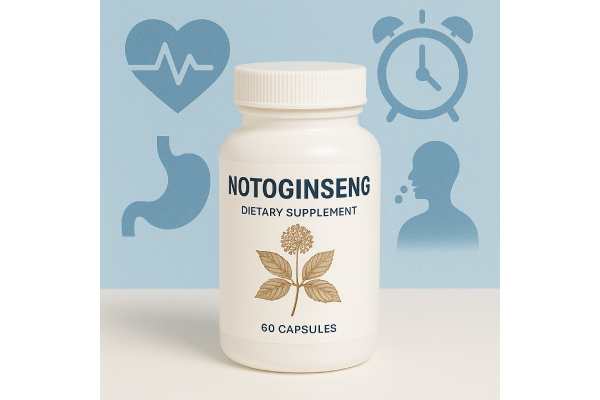
Notoginseng (Panax notoginseng), also known as sanqi or tienchi ginseng, is a traditional Chinese medicinal root used for over 400 years to “move the blood” and stop bleeding. Today it is standardized into extracts rich in notoginsenosides and ginsenosides, and studied for cardiovascular, cerebrovascular, and microcirculatory health. Modern research suggests that notoginseng saponins may support blood flow, protect blood vessels, and help the brain and heart recover after ischemic events when used alongside conventional treatment. At the same time, its effects on clotting, platelets, and drug metabolism mean it is not a benign kitchen herb. This guide walks you through what notoginseng is, how it seems to work, where the evidence is strongest, how people typically use it, what dosage ranges appear in clinical research, and which side effects and interactions you need to consider before using it.
Quick Summary for Notoginseng Users
- Notoginseng saponins may support circulation, microvascular health, and recovery after ischemic stroke when used with standard medical treatment.
- Evidence suggests possible benefits in coronary heart disease symptoms such as angina, but trials are mostly from China and vary in quality.
- Common supplemental doses range from about 100–400 mg of standardized extract, taken 1–3 times daily (roughly 100–1,200 mg per day) for limited periods under supervision.
- Because it can influence clotting and platelets, notoginseng may increase bleeding risk, especially with anticoagulant or antiplatelet drugs.
- People with bleeding disorders, those on blood thinners, pregnant or breastfeeding women, and anyone awaiting surgery should avoid notoginseng unless specifically advised by a clinician.
Table of Contents
- What is notoginseng and how does it work?
- Main benefits of notoginseng
- How to use notoginseng in practice
- Notoginseng dosage: how much per day?
- Side effects and who should avoid notoginseng
- Evidence summary and research gaps
What is notoginseng and how does it work?
Notoginseng (Panax notoginseng) is a small perennial plant in the ginseng family (Araliaceae). The medicinal parts are mainly the root and rhizome, though flowers and leaves are also used in some preparations. In traditional Chinese medicine (TCM), notoginseng is described as “sweet and slightly bitter, warm in nature,” and it is classically used to stop bleeding while at the same time promoting blood circulation. That dual action—both hemostatic and blood-moving—captures one of its central modern research themes: balancing clotting and flow.
Chemically, notoginseng is rich in dammarane-type saponins called notoginsenosides and ginsenosides. The main compounds include ginsenosides Rb1, Rg1, Rd and notoginsenoside R1, which together make up the majority of its saponin content. These molecules interact with multiple cellular pathways involved in inflammation, oxidative stress, vascular tone, and platelet function. Experimental studies suggest they can reduce free radical damage, modulate nitric oxide production, and influence the behavior of endothelial (blood vessel) cells and platelets.
After oral ingestion, notoginseng saponins are only partly absorbed in their original form. They are transformed by gut microbiota into metabolites such as compound K, which may have higher bioavailability and distinct biological activity. This means that an individual’s gut flora, diet, and concurrent medications may subtly shape how notoginseng works in their body. Pharmacokinetic studies show that some saponins have relatively long half-lives, with measurable levels in the blood many hours after dosing.
In TCM formulations, notoginseng appears both as a single-herb powder and as a component of complex formulas aimed at trauma, bruising, menstrual pain, chest discomfort, or stroke recovery. Modern pharmaceutical preparations standardize the saponin content, turning the traditional root into capsules, tablets, granules, and injections approved as drugs in China. These products are not equivalent to simple dried root powders; they often contain defined amounts of Panax notoginseng saponins (PNS) and may act more like multi-target drugs than like gentle tonics.
Taken together, notoginseng appears to act as a multi-system modulator: influencing coagulation and platelets, supporting microcirculation, dampening inflammation, and protecting tissues under ischemic or oxidative stress. This broad pharmacology partly explains why research spans cardiovascular, cerebrovascular, metabolic, and even oncologic indications.
Main benefits of notoginseng
Most people encounter notoginseng because of its reputation for supporting heart and brain health, especially in the context of circulation. Modern clinical research has focused heavily on ischemic stroke and coronary heart disease, where notoginseng is used alongside standard treatments rather than instead of them.
In ischemic stroke, several randomized controlled trials and meta-analyses have evaluated standardized notoginseng saponin preparations, such as Xuesaitong soft capsules. A large multicenter randomized clinical trial in adults with acute ischemic stroke found that patients receiving a notoginseng saponin capsule (120 mg twice daily) plus conventional care were more likely to regain functional independence at three months than those receiving placebo plus the same standard care. The rate of serious adverse events and overall safety profile were similar between groups. These results suggest that, in carefully selected patients under specialist supervision, notoginseng saponins can meaningfully support recovery when added to evidence-based stroke management.
Multiple systematic reviews and meta-analyses have pooled data from randomized trials in acute ischemic stroke. Overall, they report improvements in neurological scores and activities of daily living when notoginseng saponin preparations are added to conventional treatment. However, many underlying trials have limitations: small sample sizes, short follow-up, and issues with blinding and randomization. The highest-quality newer data are more reassuring, but researchers still call for rigorous confirmatory trials in diverse populations.
In coronary heart disease, oral notoginseng preparations have been studied in patients with angina pectoris. A systematic review of randomized trials found that adding notoginseng products to conventional therapy improved angina symptoms and electrocardiogram changes, reduced the frequency and duration of angina attacks, and lowered nitroglycerin use. At the same time, the review did not show clear reductions in major cardiovascular events like heart attack or cardiovascular death, and trial quality again varied. This means notoginseng may help symptoms but is not a proven replacement for established cardioprotective therapies.
Beyond heart and brain, experimental and early clinical work suggests notoginseng may:
- Support microcirculation and reduce blood viscosity in vascular conditions.
- Protect neurons and glial cells from ischemia and excitotoxicity.
- Modulate inflammatory pathways relevant to metabolic conditions and some cancers.
For now, the most credible benefits are in symptom control for angina and functional recovery after ischemic stroke, always as an adjunct to medical care. Other potential indications remain promising but preliminary.
How to use notoginseng in practice
In practice, notoginseng is available in several forms, each with different potency and use cases:
- Standardized extract capsules or tablets containing defined amounts of Panax notoginseng saponins (PNS).
- Traditional powdered root, taken in capsules or mixed with warm water.
- Granules, effervescent tablets, or soft capsules based on pharmaceutical-grade extracts.
- External preparations (creams, plasters, powders) for bruises and minor trauma, often in combination formulas.
Standardized extracts are the form most often used in clinical trials for stroke and coronary heart disease. These products usually state the amount of PNS per capsule and may contain specific ratios of ginsenosides and notoginsenosides. Because potency can differ widely between brands and countries, it is important to follow the dosage listed on the specific product and, ideally, to choose products that disclose saponin content and undergo third-party quality testing.
Traditional powdered root is often used differently: smaller amounts several times per day, typically with food or warm water. In TCM practice, notoginseng powder is sometimes taken sublingually in acute trauma or nosebleeds, but such use is highly individualized and should be guided by an experienced practitioner who understands both herbal and conventional medical risks.
When integrating notoginseng into a health plan, consider:
- Goal of use
- Short-term symptomatic support (for example, after a bruising injury or dental procedure) is very different from long-term vascular support after a stroke.
- For serious conditions like stroke, angina, or peripheral artery disease, notoginseng should never be the primary or only treatment.
- Medical supervision
- Because of its actions on clotting, platelets, and drug metabolism, notoginseng should be coordinated with your healthcare team, especially if you take antiplatelet or anticoagulant medications.
- In hospital settings, notoginseng-based drugs are prescribed and monitored like any other medication.
- Combination formulas
- Notoginseng often appears in complex formulas (for example, trauma powders or circulation blends). These can include other herbs that further influence blood pressure, clotting, or liver enzymes. Always evaluate the entire formula, not just the notoginseng component.
- Duration of use
- Most studies use notoginseng for weeks to a few months, not indefinitely. For long-term use, periodic re-evaluation of benefit, side effects, and lab tests may be appropriate.
A practical approach is to treat notoginseng as a serious adjunctive therapy rather than a harmless “natural booster.” Align its use with clear goals, clear timeframes, and clear communication with your medical team.
Notoginseng dosage: how much per day?
There is no single universal dosage for notoginseng, and products vary in concentration and composition. However, several patterns emerge from clinical and traditional use.
In modern supplement and clinical practice, adults commonly use standardized notoginseng extracts in the following range:
- About 100–400 mg of Panax notoginseng extract, taken 1–3 times per day.
- This corresponds roughly to total daily doses of 100–1,200 mg of extract, usually over a period of several weeks to a few months.
In the large randomized clinical trial in adults with ischemic stroke, participants took 120 mg of a standardized Panax notoginseng saponin capsule twice daily (240 mg per day) for three months, in addition to standard stroke care. This dose is often used as a reference point for cerebrovascular indications in clinical settings, but it is specific to that particular drug product and patient group.
Traditional TCM usage distinguishes between raw root decoctions and direct powders:
- Decoction: typically 5–10 g of sliced root simmered in water for short-term use in formulas designed by a practitioner.
- Powder: 1–3 g of finely ground notoginseng root per day, divided into several doses, sometimes taken directly with warm water or mixed into food.
These traditional doses refer to crude herb, not concentrated extract. A capsule with 200 mg of standardized extract is not equivalent to 200 mg of crude powder.
When interpreting dosage information, keep these points in mind:
- Always follow product-specific directions. Standardization, extraction method, and excipients can change how much active saponin you get from a given milligram amount.
- Start at the lower end of the suggested range, especially if you are sensitive to herbs or are taking other medications.
- For serious conditions like stroke or coronary heart disease, never attempt to copy research trial doses on your own. Those doses were prescribed under strict criteria with medical monitoring.
As a cautious generalization for otherwise healthy adults who have medical clearance:
- Short-term circulation support or recovery: 100–200 mg standardized extract two times daily, or an equivalent traditional root dose, for a defined period.
- Do not exceed 1,200 mg per day of standardized extract without specialist supervision, and avoid combining multiple high-dose notoginseng products unless your clinician explicitly recommends it.
Children, pregnant individuals, and people with liver, kidney, or bleeding disorders require individualized dosing or complete avoidance; over-the-counter guidelines do not apply to them.
Side effects and who should avoid notoginseng
Overall, notoginseng has shown a relatively favorable short-term safety profile in clinical studies, especially when used at moderate doses and under supervision. However, “relatively safe” does not mean risk-free, particularly when other medications and health conditions are involved.
Reported side effects in human studies and post-marketing surveillance are usually mild to moderate and can include:
- Digestive symptoms such as nausea, stomach discomfort, or loose stools.
- Headache, dizziness, or a sense of light-headedness.
- Insomnia or restlessness in some individuals, similar to other ginseng species.
- Skin reactions such as rash or itching, suggesting allergy or intolerance.
More concerning are potential effects on coagulation, platelets, and drug metabolism:
- Notoginseng saponins can inhibit platelet aggregation and influence coagulation parameters. In some settings this is desirable (for example, to reduce blood clot risk), but in others it can increase bleeding tendencies.
- A comprehensive review of herb–drug interactions with notoginseng highlights pharmacodynamic interactions (for example, additive antiplatelet effects with aspirin or clopidogrel) and pharmacokinetic interactions via cytochrome P450 enzymes and transporters like P-glycoprotein. For drugs with narrow therapeutic windows (such as warfarin or some chemotherapy agents), these interactions can be clinically significant.
- Experimental and clinical data suggest that notoginseng may enhance the effects of certain anticancer and antimicrobial drugs, but also potentially alter their blood levels.
Because of these mechanisms, the following groups should avoid notoginseng unless a knowledgeable clinician specifically recommends and monitors its use:
- People taking anticoagulants (such as warfarin or direct oral anticoagulants) or antiplatelet drugs (such as aspirin, clopidogrel, ticagrelor).
- Individuals with known bleeding disorders (for example, hemophilia, von Willebrand disease, thrombocytopenia) or active bleeding.
- Anyone with a recent hemorrhagic stroke, intracranial hemorrhage, major trauma, or upcoming surgery or invasive dental procedures.
- Pregnant or breastfeeding individuals, due to insufficient safety data and theoretical risks.
- Young children, unless in a supervised clinical research context.
- People with uncontrolled hypertension, unstable cardiovascular status, or significant liver or kidney impairment, where small changes in drug levels could matter.
If you are already using notoginseng and notice unusual bruising, prolonged bleeding from cuts, blood in urine or stool, severe headache, sudden weakness, or visual changes, seek urgent medical evaluation and mention your notoginseng use. Even if notoginseng is not the cause, these symptoms require prompt assessment.
As with any biologically active herb, the safest approach is to treat notoginseng like a medication: disclose it to all your healthcare providers, review potential interactions, and stop it before elective surgeries if advised.
Evidence summary and research gaps
Notoginseng stands at an interesting intersection of tradition and modern pharmacology. On one hand, centuries of TCM use emphasize its ability to stop bleeding, move blood, and relieve pain and swelling. On the other hand, contemporary science highlights its complex saponin profile, multi-target actions, and measurable clinical effects in vascular diseases.
Current evidence supports several cautious conclusions:
- Mechanistically, notoginseng saponins show antioxidant, anti-inflammatory, antiplatelet, vasodilatory, and neuroprotective actions in cell and animal models. They also appear to modulate gut microbiota and metabolic pathways linked to obesity and atherosclerosis.
- Clinically, the strongest data are in ischemic stroke and coronary heart disease, where notoginseng preparations used alongside conventional therapy improve functional outcomes or angina symptoms without clear signals of increased serious adverse events in the short term.
- Safety reviews suggest that, at typical doses and durations studied, notoginseng is generally well tolerated, but meaningful herb–drug interactions with anticancer, antiplatelet, and antimicrobial drugs are plausible and sometimes beneficial, sometimes harmful.
At the same time, important research gaps remain:
- Long-term safety data are limited. Most trials last weeks to a few months, not years. We do not yet know the full impact of prolonged daily use, especially in older adults with multiple medications.
- Many trials are conducted in Chinese populations within a relatively narrow age range. It is unclear how well results apply to other ethnic groups, different healthcare systems, or patients with more complex comorbidities.
- Dosage, formulation, and quality control vary widely between products and studies. Standardization of notoginseng preparations, including precise saponin profiles, is essential for future research and for consumers to make informed choices.
- Interactions with specific drug classes (for example, direct oral anticoagulants, targeted cancer therapies, immunosuppressants) remain under-studied at the clinical level, even though mechanistic data point to potential risks and benefits.
For now, a balanced view is prudent:
- Notoginseng is more than a folklore remedy; it has credible pharmacology and growing clinical evidence, particularly as an adjunct in vascular disease.
- It is also more than a “natural vitamin”; it behaves like a multi-component drug that can meaningfully interact with other therapies and physiological systems.
- Responsible use means integrating it into a broader medical plan, not using it instead of proven treatments in emergencies like stroke or heart attack.
If you are considering notoginseng, the most practical step is to bring specific questions—about your diagnosis, medications, and risk factors—to a physician or pharmacist familiar with herbal and conventional therapies. Together, you can decide whether notoginseng adds value to your situation or whether the potential risks outweigh the possible benefits.
References
- Panax notoginseng: Pharmacological Aspects and Toxicological Issues 2024 (Systematic Review)
- Efficacy and Safety of Panax notoginseng Saponins in the Treatment of Adults With Ischemic Stroke in China: A Randomized Clinical Trial 2023 (RCT)
- Systematic Review and Meta-Analysis on Randomized Controlled Trials on Efficacy and Safety of Panax Notoginseng Saponins in Treatment of Acute Ischemic Stroke 2021 (Systematic Review)
- Oral Panax notoginseng Preparation for Coronary Heart Disease: A Systematic Review of Randomized Controlled Trials 2013 (Systematic Review)
- Herb–drug interactions between Panax notoginseng or its biologically active compounds and therapeutic drugs: A comprehensive pharmacodynamic and pharmacokinetic review 2023 (Systematic Review)
Disclaimer
The information in this article is for general educational purposes only and is not intended to replace individualized medical advice, diagnosis, or treatment. Notoginseng products vary in quality, strength, and composition, and their effects can differ based on your health status and other medications. Never start, stop, or change any prescription medicine or herbal supplement, including notoginseng, without consulting a qualified healthcare professional who knows your medical history. In emergencies such as stroke, heart attack, or severe bleeding, seek immediate conventional medical care; do not attempt self-treatment with herbs.
If you found this guide helpful, you are welcome to share it with others on Facebook, X (formerly Twitter), or any platform you prefer, and to follow our work on social media. Your considerate sharing helps support our team in continuing to provide careful, evidence-informed health content.
Alternative H1 title ideas (for SEO use):