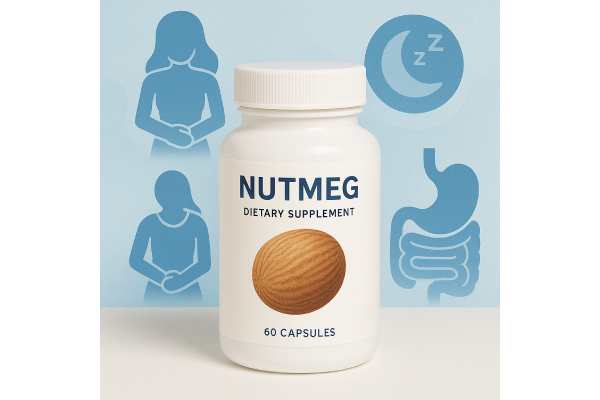
Nutmeg is much more than the warm, fragrant spice that shows up in desserts and winter drinks. It comes from the seed of the evergreen Myristica fragrans tree and has been used for centuries in cooking and traditional medicine. Modern research suggests that nutmeg contains a complex mix of essential oils, polyphenols, and other plant compounds that may support digestion, help manage inflammation, influence mood and sleep, and act as a potent antioxidant.
At the same time, nutmeg carries a real risk of toxicity when consumed in large amounts. Compounds such as myristicin and safrole can trigger serious neurological and cardiovascular symptoms if doses are too high. This combination of potential benefits and clear risks makes nutmeg a spice that should be used thoughtfully.
In this guide, you will learn what nutmeg can realistically do for health, how it works, how to use it safely in food and supplements, what dosage ranges are considered prudent, and who should avoid high intake altogether.
Key Facts for Nutmeg Use
- Typical culinary use of nutmeg (around 1/4–1 teaspoon or about 0.5–2 g per day) is generally considered safe for healthy adults.
- Experimental research suggests possible antioxidant, anti-inflammatory, digestive, and mild mood-supporting effects, but robust human trials are limited.
- Toxicity and hallucinations have been reported at doses around 5 g or more of ground nutmeg in a single sitting, especially in adolescents and young adults.
- As a practical upper guide, many clinicians advise avoiding more than about 2 teaspoons (≈5 g) of nutmeg in 24 hours and avoiding repeated high doses.
- Children, pregnant or breastfeeding individuals, and people with psychiatric conditions, heart disease, or liver or kidney problems should avoid deliberate high-dose nutmeg use.
Table of Contents
- What is nutmeg and how does it work?
- Evidence based benefits of nutmeg
- Everyday culinary and supplement uses
- Nutmeg dosage: how much is safe?
- Side effects, risks, and who should avoid nutmeg
- Research summary and key knowledge gaps
What is nutmeg and how does it work?
Nutmeg is the dried inner seed of the tropical tree Myristica fragrans, originally from the Spice Islands and now grown in several tropical regions. The same fruit also produces mace, a separate spice made from the seed’s outer aril. In the kitchen, nutmeg is used ground or freshly grated to add a warm, slightly sweet, resinous aroma to both sweet and savory dishes.
From a nutritional viewpoint, nutmeg is very concentrated. Per 100 g it is high in fat, provides moderate carbohydrate and fiber, and contains minerals such as manganese, copper, magnesium, and small amounts of B vitamins. In practice, however, people only use a fraction of a gram to a few grams at a time, so its macronutrient contribution is small, while its bioactive compounds are the main interest for health.
The key health-related constituents of nutmeg include:
- Volatile oils: especially monoterpenes and phenylpropenes such as sabinene, myristicin, safrole, and eugenol.
- Lignans and neolignans: complex phenolic compounds with antioxidant and potential anti-inflammatory effects.
- Diphenylalkanes and other phenolic molecules: which may modulate enzymes and cellular signaling pathways.
Laboratory and animal studies suggest several possible mechanisms of action:
- Digestive support: aromatic oils stimulate salivary and gastric secretions and relax intestinal smooth muscle, which may reduce gas and cramping.
- Anti-inflammatory and antioxidant effects: polyphenols and some essential oil components appear to reduce oxidative stress markers and inflammatory mediators in experimental models.
- Neuromodulation: compounds such as myristicin may influence monoamine oxidase and neurotransmitter systems, which could partly explain reported effects on mood, sleep, and perception at both low and high doses.
- Antimicrobial actions: nutmeg extracts can inhibit the growth of certain bacteria and fungi in vitro, sometimes including oral pathogens and foodborne microbes.
It is important to understand that these mechanisms are mostly documented in cell cultures, animals, or concentrated extracts. They do not automatically translate into clinically meaningful benefits from the small, safe amounts of nutmeg used in cooking. Nevertheless, they provide a plausible scientific basis for some of nutmeg’s traditional uses in digestion, pain relief, and mood support.
Evidence based benefits of nutmeg
Nutmeg’s reputation in traditional systems of medicine, including Ayurveda and various Asian folk practices, covers digestion, pain, sleep, and sexual health. Modern research partly supports some of these uses, but the evidence is still limited and often indirect.
Digestive comfort and gut function
Traditional texts describe nutmeg as a carminative spice that eases gas and bloating. Experimental data show that nutmeg extracts can relax intestinal smooth muscle and influence gut motility in animals. In practical terms, small amounts of nutmeg in food may:
- Help relieve occasional gas and mild cramping.
- Stimulate appetite and digestive secretions when added to heavy or rich dishes.
These effects are modest and best understood as part of a broader pattern of using aromatics like ginger, cardamom, and cloves in cooking to make meals easier to digest, rather than as a stand-alone treatment for digestive disease.
Pain, inflammation, and joints
Several preclinical studies indicate that nutmeg extracts can reduce markers of inflammation and provide analgesic effects in animal models of pain. There are also data suggesting potential benefits for inflammatory conditions when nutmeg oil or specific constituents are applied or administered in controlled settings.
For everyday use, this does not mean nutmeg can replace anti-inflammatory medications. However, including nutmeg along with other spices in a balanced diet may contribute to an overall anti-inflammatory pattern, especially when paired with whole foods, fruits, and vegetables.
Brain, mood, and sleep
Nutmeg has a long-standing reputation as a calming spice that may support relaxation and sleep. Animal studies show that nutmeg and some of its compounds can affect neurotransmitters such as serotonin and dopamine, and in some cases demonstrate antidepressant- or anxiolytic-like effects in rodent models.
In humans, there are anecdotal reports of mild sedation or relaxation after small amounts in warm milk or evening desserts. At high doses, however, the same psychoactive pathways can lead to confusion, agitation, and hallucinations. Because strong clinical trials in humans are lacking, nutmeg should not be used as a primary treatment for insomnia, anxiety, or depression. Any potential calming effect from culinary doses is best viewed as subtle and supportive, not therapeutic.
Oral and antimicrobial health
In vitro, nutmeg essential oil shows activity against some oral bacteria and fungi, including organisms involved in dental plaque and oral infections. This has prompted interest in using nutmeg components in mouthwashes or dental formulations. For now, these uses are experimental, and standard dental hygiene practices remain the foundation of oral care.
Overall, existing evidence suggests that nutmeg in culinary quantities can be part of a health-supportive diet and may offer modest benefits for digestion, inflammation, and possibly mood. It should not be treated as a stand-alone remedy or high-dose supplement without professional guidance.
Everyday culinary and supplement uses
For most people, the safest and most practical way to obtain any potential benefits from nutmeg is through normal food use rather than supplements. Understanding how forms and preparation methods differ can help you choose sensible options.
Common forms of nutmeg
Nutmeg is typically available as:
- Whole nutmeg seeds: hard, marble-sized seeds that you grate fresh using a microplane or nutmeg grater. Freshly grated nutmeg is aromatic and potent.
- Pre-ground nutmeg powder: convenient but loses aroma and some volatile components over time.
- Nutmeg essential oil: a concentrated distillation of volatile compounds, used in food manufacturing, perfumery, or aromatherapy.
- Nutmeg extracts and capsules: sold as herbal supplements, sometimes standardized for particular compounds.
Whole or ground nutmeg used in cooking exposes you to very small doses of active constituents relative to your body weight. Essential oil, tinctures, or high-dose capsules can deliver much higher amounts and therefore carry a higher risk of side effects or interactions.
Practical ways to use nutmeg safely in food
Nutmeg works well with both sweet and savory dishes. Examples include:
- Lightly grating nutmeg over oatmeal, porridge, or baked apples.
- Adding a pinch to cream sauces, spinach, mashed potatoes, or pumpkin dishes.
- Including a small amount in spice blends for baking or hot drinks, such as chai-like blends.
- Stirring a pinch into warm milk or plant milk as part of a relaxing evening drink.
Some guidelines for everyday use:
- Start with a pinch (about 1/16–1/8 teaspoon) and adjust for taste.
- For recipes serving several people, 1/4–1/2 teaspoon is usually enough for a noticeable flavor.
- Rotate nutmeg with other spices such as cinnamon, ginger, and cardamom to broaden flavor and nutrient variety.
Supplements, essential oils, and multi-herb formulas
Nutmeg also appears in some:
- Herbal capsules marketed for digestion, mood, or sexual health.
- Multi-herb sleep or “relaxation” blends.
- Ayurvedic or Unani formulations for joint pain, indigestion, or nerve complaints.
If you are considering a supplement containing nutmeg:
- Check the amount of nutmeg or its extract per dose, not just per capsule.
- Be cautious with products that supply the equivalent of several grams of nutmeg per day, especially if taken for long periods.
- Avoid nutmeg essential oil taken internally unless prescribed and monitored by a qualified practitioner, as it is highly concentrated.
In general, there is insufficient human evidence to recommend nutmeg supplements for specific medical conditions, and they should not replace established treatments.
Nutmeg dosage: how much is safe?
There is no officially established “therapeutic” dose of nutmeg, and no health authority has set a recommended daily intake. Safety guidance therefore relies on a combination of traditional use, laboratory findings, and poison-center data.
Culinary amounts versus toxic amounts
Key points about quantities:
- Culinary use: Most recipes use 1/4–1/2 teaspoon of ground nutmeg in a dish that serves several people. This typically means each person consumes well under 1/4 teaspoon, often less than 1 g.
- Teaspoon conversion: One level teaspoon of ground nutmeg weighs roughly 2–2.5 g, depending on how densely it is packed.
- Reported toxic range: Case reports and poison-center reviews describe psychoactive and toxic effects at around 5 g or more of ground nutmeg consumed at once by an adult, roughly equivalent to about 2 teaspoons. Some individuals, especially children and smaller adults, may react at lower doses.
Because of these observations, clinicians and toxicologists typically advise staying far below the doses associated with toxicity.
Practical dosage guidance for adults
For generally healthy adults:
- Using nutmeg as a spice in food, with a typical daily intake around 1/4–1 teaspoon (about 0.5–2 g) spread through meals, is generally considered low risk.
- As a practical upper boundary, it is prudent not to exceed about 2 teaspoons (≈5 g) of nutmeg in 24 hours, and not to repeat high intakes on consecutive days.
- For routine use, aim for less than 1 teaspoon per day on average, ideally shared across multiple servings.
If you are using a supplement that lists nutmeg:
- Add up your total daily intake from all sources, including food.
- Prefer products that keep the daily nutmeg-equivalent dose in the low gram or sub-gram range.
- Do not combine multiple nutmeg-containing products without professional advice.
Special populations and conservative limits
Certain groups should be especially cautious:
- Older adults: may be more sensitive to psychoactive and cardiovascular effects, so staying near the low end of the culinary range (well under 1 teaspoon per day) is advisable.
- People with low body weight: a given gram dose represents a higher dose per kilogram of body weight, raising risk.
- Individuals on psychoactive medications, blood thinners, or cardiac drugs: even moderate doses could theoretically interact; medical guidance is recommended before regular use.
If you suspect you or someone else has ingested more than a few teaspoons of nutmeg (especially intentionally for a “high”), medical evaluation is essential, even if symptoms are mild at first, because effects can be delayed and long lasting.
Side effects, risks, and who should avoid nutmeg
Nutmeg is classified as generally recognized as safe for use as a flavoring in food when used at normal culinary levels. However, at higher doses the risk profile changes significantly, largely due to compounds such as myristicin, safrole, and related chemicals in the essential oil.
Common side effects at modest but higher-than-culinary doses
When people take more nutmeg than typical recipe amounts, but below clearly toxic levels, they may experience:
- Nausea, stomach discomfort, or vomiting.
- Dry mouth and facial flushing.
- Drowsiness, dizziness, or a feeling of being “spaced out.”
- Mild confusion or anxiety.
These effects may appear several hours after ingestion and can last for a day or more.
Toxicity and overdose
At higher doses (often reported around or above 5 g in adults, and lower in children), nutmeg can cause more serious symptoms, including:
- Neurological and psychiatric effects: agitation, disorientation, intense anxiety, hallucinations, a sense of detachment from reality, or, in severe cases, coma.
- Cardiovascular effects: rapid heart rate, palpitations, possible blood pressure changes.
- Severe gastrointestinal distress: persistent vomiting, abdominal pain.
- Dehydration and electrolyte imbalance from prolonged vomiting or reduced fluid intake.
These symptoms may last 24–72 hours, and hospitalization may be required. Very rarely, fatal cases have been reported, usually when extremely large doses were ingested, sometimes along with other substances.
Long term and organ effects
Longer-term high intake or repeated overdosing raises additional concerns:
- Liver stress or damage, especially when combined with alcohol or other hepatotoxic drugs.
- Potential kidney effects in predisposed individuals.
- Possible reproductive toxicity at very high doses in animal models.
While occasional culinary use is not associated with these problems, deliberate repeated high-dose use is a different scenario and should be avoided.
Who should avoid high-dose or supplemental nutmeg?
The following groups should not take nutmeg in medicinal or high amounts beyond normal food seasoning, unless specifically advised and monitored by a qualified clinician:
- Children and adolescents, who are more vulnerable to toxic effects and are overrepresented in poisoning reports.
- Pregnant individuals, due to concerns about uterine effects and fetal exposure to psychoactive compounds.
- People who are breastfeeding, because active compounds may pass into breast milk.
- Individuals with psychiatric conditions (such as psychosis, bipolar disorder, or severe anxiety), as psychoactive effects could worsen symptoms.
- People with cardiovascular disease, arrhythmias, or uncontrolled hypertension, because of possible heart rate and blood pressure changes at higher doses.
- Individuals with liver or kidney disease, who may have impaired detoxification and elimination of nutmeg constituents.
- Anyone taking psychoactive medications, sedatives, or certain heart medications, where interactions are possible.
If significant symptoms such as hallucinations, severe agitation, chest pain, or persistent vomiting occur after nutmeg ingestion, emergency medical evaluation is crucial.
Research summary and key knowledge gaps
Over the last decade, nutmeg has received renewed scientific attention. Multiple reviews have compiled data on its phytochemical profile, pharmacological actions, and toxicity. These analyses reveal a plant with rich chemical diversity and interesting biological activities, but also highlight major evidence gaps.
What is well documented?
Current research broadly supports that:
- Nutmeg is chemically complex, containing essential oils, lignans, neolignans, diphenylalkanes, phenylpropanoids, and terpenoids with a variety of biological actions.
- Antioxidant and anti-inflammatory effects are consistently seen in vitro and in animal models using nutmeg extracts or isolated compounds.
- Antimicrobial activity against certain bacteria and fungi, including some oral and foodborne pathogens, is reproducible in laboratory studies.
- Central nervous system effects, including sedation, anxiolytic-like behavior, and changes in monoamine neurotransmitters, have been observed in animals.
- Toxicity data, including case reports and poison-center reviews, clearly show that doses in the multi-gram range can cause significant neuropsychiatric and cardiovascular symptoms, particularly in young people.
These findings justify caution but also encourage further research on potential therapeutic applications using carefully standardized, lower-dose preparations.
Where evidence is weak or preliminary
Several popular claims about nutmeg go beyond what the evidence supports:
- Mood, memory, and cognition: while some animal studies show nootropic or antidepressant-like effects, high-quality human trials are lacking. Nutmeg should not be considered a proven treatment for depression, anxiety, or cognitive decline.
- Sexual function: a small body of animal data suggests possible pro-erectile or libido-enhancing effects at certain doses. Human data are minimal, and safety at such doses remains uncertain.
- Metabolic and weight effects: early experiments hint at anti-obesity or metabolic benefits, but these are far from established in humans.
Overall, the jump from promising preclinical findings to routine human use has not yet been made in a rigorous way.
Key knowledge gaps and future directions
Important open questions include:
- What is the safest and most effective dose range for specific potential indications, such as pain modulation or mood support, if any are confirmed in humans?
- How does long term, low-to-moderate intake (for example, daily supplemental use over months) affect liver function, cardiovascular markers, mood, and cognition?
- Which preparations are safest and most predictable, such as standardized extracts versus whole spice, and how do individual compounds contribute to benefits and risks?
- How do genetic differences and co-existing conditions influence susceptibility to both benefits and toxicity?
Until these questions are answered, the most evidence-aligned approach is to treat nutmeg as a flavorful culinary spice with interesting bioactive properties, to respect its toxicity at higher doses, and to avoid using it as a high-dose remedy or recreational substance.
References
- An Update on Pharmacology, Phytochemical, and Toxicity of Myristica fragrans Houtt. as the Source of Treatment: A Scoping Review 2023 (Scoping Review)
- Phytochemical and pharmacological properties of Myristica fragrans Houtt.: an updated review 2020 (Systematic Review)
- Nutmeg (Myristica fragrans Houtt.) essential oil: A review on its composition, biological, and pharmacological activities 2022 (Systematic Review)
- Pharmacological and Therapeutic Potential of Myristicin: A Literature Review 2021 (Review)
- Nutmeg Poisonings: A Retrospective Review of 10 Years Experience from the Illinois Poison Center, 2001–2011 2014 (Toxicology Case Series)
Disclaimer
The information in this article is for general educational purposes only and is not intended to provide medical advice, diagnose any condition, or recommend any specific treatment, supplement, or dosage. Nutmeg can cause serious side effects at higher doses, and individual responses vary based on health status, medications, and other factors. Always speak with a qualified health professional before using nutmeg or any other herb or supplement for therapeutic purposes, changing your medication regimen, or if you have any symptoms that may indicate illness, toxicity, or an allergic reaction. In cases of suspected overdose or severe symptoms, seek emergency medical care without delay.
If you found this guide helpful, you are warmly invited to share it with others on Facebook, X (formerly Twitter), or any platform you prefer, and to follow our work on social media. Your considerate sharing supports our ability to continue creating careful, evidence-informed health content.