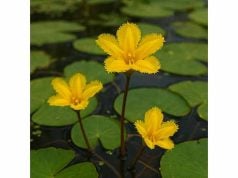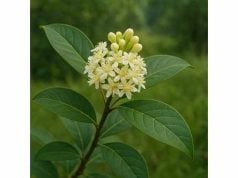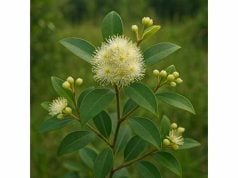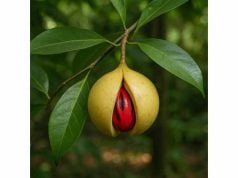
Nutmeg Laurel, Litsea myristicifolia, is an aromatic Southeast Asian tree in the laurel family, not a true nutmeg. Its name reflects the resemblance of its leaves to Myristica species rather than a direct culinary equivalence. In traditional and regional plant knowledge, it is valued more as a useful forest tree and edible-fruited species than as a mainstream medicinal herb. That distinction matters. People searching for its health benefits often expect a spice-like remedy, yet the strongest evidence for this plant is still botanical, ethnobotanical, and genus-level rather than clinical. Even so, Nutmeg Laurel remains genuinely interesting. The wider Litsea genus is rich in volatile oils, flavonoids, alkaloids, terpenoids, and other phytochemicals linked with antioxidant, anti-inflammatory, antimicrobial, and analgesic activity in laboratory and animal research. For Litsea myristicifolia itself, the safest conclusions are more modest: it appears to be an aromatic, edible, and culturally useful tree with plausible medicinal properties, but with very limited species-specific dosing data and no established human therapeutic protocol.
Key Takeaways
- Nutmeg Laurel is best understood as an aromatic edible-fruited tree with early medicinal promise rather than a proven clinical herb.
- Its most realistic potential benefits are antioxidant support and mild traditional digestive or comfort-oriented use.
- No evidence-based medicinal dose is established; the safest unsupervised medicinal range is 0 mg per day.
- Food use is more defensible than extracts because species-specific human studies are scarce.
- Pregnant or breastfeeding people, children, and anyone taking prescription medicines should avoid medicinal self-treatment.
Table of Contents
- What Nutmeg Laurel is and why its identity matters
- Key ingredients and what is actually known
- Potential health benefits and what the evidence really supports
- Traditional food and practical uses
- Dosage, timing, and how it should be used
- Safety, side effects, and who should avoid it
- Common mistakes and how to think about quality
What Nutmeg Laurel is and why its identity matters
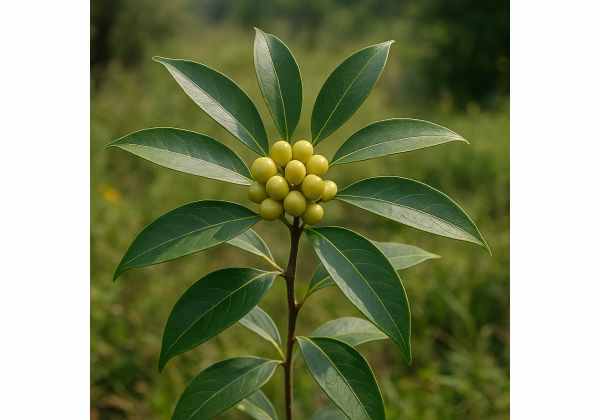
Nutmeg Laurel, Litsea myristicifolia, is a tropical tree in the Lauraceae family, the same broad family that includes cinnamon, bay laurel, avocado, and many aromatic forest trees. It is native to parts of Southeast Asia, including Peninsular Malaysia and Singapore, and grows in lowland to montane forests. In species descriptions, it is usually presented as a medium to tall evergreen tree with leathery alternate leaves, axillary flower clusters, and small white fleshy fruits. When cut, its twigs are described as slightly aromatic, which helps explain why it attracts interest as more than a timber species.
Its name can be misleading. “Nutmeg Laurel” does not mean it behaves like culinary nutmeg, and it is not a substitute for Myristica fragrans. The botanical name actually points to leaf resemblance, not to shared chemistry or interchangeable use. This matters because many plant articles blend together similar-sounding species and accidentally overstate benefit claims. With Nutmeg Laurel, clear identification is essential because the strongest evidence about the species concerns its taxonomy, ecology, edible fruit use, and ethnobotanical context, not a well-developed body of medicinal trials.
This species also sits in an unusual position between food plant and forest tree. Singapore’s flora database describes the fruits as edible and notes that the wood has been used in house construction. Ethnobotanical work in Northern Thailand likewise records Litsea myristicifolia as a food plant in Lahu communities, with use focused on shoots and leaves. That is a useful clue. A species used as food in some settings often deserves to be understood first as a traditional edible or aromatic resource, then only second as a medicinal candidate.
That framing helps prevent a common mistake: assuming that every aromatic laurel relative is a hidden herbal remedy waiting to be unlocked. In reality, many forest trees are regionally useful without being standardized medicines. Nutmeg Laurel fits that pattern well. It seems culturally meaningful, chemically interesting, and worthy of further study, yet not established enough to justify confident disease-treatment claims.
A helpful comparison is bay laurel as an aromatic laurel-family plant. Both belong to an aromatic botanical world where fragrance, food, and gentle traditional medicine overlap. The difference is that bay laurel has a much stronger culinary identity and a far more familiar evidence base. Nutmeg Laurel remains more obscure, more ecological, and more dependent on careful interpretation.
Key ingredients and what is actually known
The “key ingredients” section is where accuracy matters most, because this is also where the evidence for Nutmeg Laurel becomes thinnest. At present, there is very little openly available species-specific phytochemical work focused directly on Litsea myristicifolia. That means any honest article has to distinguish between what is known about this exact species and what is inferred from the broader Litsea genus.
What is known with reasonable confidence is that Litsea species as a group are chemically rich. Modern reviews describe the genus as containing hundreds of isolated constituents, including flavonoids, alkaloids, terpenoids, volatile oils, tannins, lactones, and other secondary metabolites. Some reviews also note that common Litsea volatile profiles may include compounds such as 1,8-cineole, linalool, limonene, methyl eugenol, and related aromatic constituents, though these patterns vary widely by species. These molecules are relevant because they help explain why many Litsea plants smell distinctive and why so many show antimicrobial, antioxidant, anti-inflammatory, or analgesic activity in preclinical research.
For Nutmeg Laurel itself, however, it would be inaccurate to claim a fixed, well-established compound profile with the same confidence used for better-studied species like Litsea cubeba. The safest interpretation is that L. myristicifolia is likely to share some of the aromatic and phenolic richness common to the genus, while its own fully mapped medicinal chemistry remains underdescribed in accessible modern literature.
This has an important practical consequence. Readers often assume that if a genus has a strong phytochemical reputation, every member of that genus can be discussed as though its key actives are settled. That is not how plant science works. A species may be edible, aromatic, and ethnobotanically valuable while still lacking the kind of precise composition data needed for supplement-style recommendations.
Even with that caution, the genus-level profile still tells us something useful. The most plausible ingredient categories for Nutmeg Laurel are:
- volatile aromatic compounds that contribute fragrance and possible antimicrobial action
- flavonoids and related polyphenols that may support antioxidant effects
- terpenoid and alkaloid-like fractions associated in the genus with anti-inflammatory and analgesic interest
- broader Lauraceae-style secondary metabolites that may give the bark, leaves, or fruits sensory and biologic activity
This is enough to justify interest, but not enough to justify precision dosing or strong therapeutic branding. In other words, the chemistry supports curiosity, not certainty.
If you want a point of comparison for a better-characterized aromatic tree-spice with clearer compound discussion, cinnamon and its active aromatic profile offers a useful contrast. Nutmeg Laurel belongs to the same broad sensory universe of fragrant tree-based botanicals, but its medicinal chemistry is much less settled.
Potential health benefits and what the evidence really supports
The most responsible way to talk about Nutmeg Laurel’s health benefits is to separate likely possibilities from proven effects. On the possibility side, the plant belongs to a genus with a substantial traditional-medicine record and a meaningful modern pharmacology literature. On the proof side, species-specific human evidence for Litsea myristicifolia is extremely limited.
The most realistic potential benefit is antioxidant support. This is not because there are strong human trials on Nutmeg Laurel itself, but because antioxidant activity is one of the most consistent patterns described across Litsea phytochemistry and pharmacology. Reviews of the genus repeatedly identify flavonoids, terpenoids, and aromatic compounds associated with antioxidant effects in vitro and in vivo. For a species like Nutmeg Laurel, that makes “antioxidant potential” a fair description, provided it is not turned into a clinical promise.
A second plausible area is mild digestive or comfort-oriented traditional use. Many Litsea species have been used for stomach discomfort, dyspepsia, diarrhea, or related complaints, and aromatic trees often acquire this kind of role in local medicine because fragrance and bitterness are both culturally associated with digestive relief. Yet here again the key issue is specificity. The broader genus has this history. The direct evidence that L. myristicifolia reliably improves digestive symptoms in humans is not established.
A third likely area is antimicrobial and anti-inflammatory interest. Genus-wide reviews and systematic work on Litsea species describe antibacterial, anti-inflammatory, and analgesic activities in extracts and isolated compounds. That creates a reasonable scientific backdrop for Nutmeg Laurel, especially if the species proves to contain similar aromatic constituents. But the evidence is still mostly mechanistic and preclinical.
The least justified claims are the most dramatic ones. It would be misleading to present Nutmeg Laurel as a proven pain herb, a validated anti-infective, or a clinically confirmed anti-inflammatory treatment. Those claims belong to the level of ongoing botanical research, not settled practice.
A balanced summary of likely benefits would therefore be:
- possible antioxidant support through aromatic and phenolic compounds
- possible mild digestive or comfort-supportive value in traditional use
- possible antimicrobial and anti-inflammatory interest based on genus patterns
- modest wellness potential when used in food-like or traditional contexts rather than as a concentrated medicine
That may sound restrained, but restraint is part of being helpful. It protects readers from confusing plausible biology with established medicine. If a person is specifically seeking a plant with clearer digestive and warming evidence, ginger as a better-studied aromatic digestive herb is a stronger evidence-based choice. Nutmeg Laurel is more accurately described as a promising aromatic forest tree whose medicinal profile is still emerging.
Traditional food and practical uses
Nutmeg Laurel’s most grounded uses are practical. In Singapore’s official flora records, its fruits are listed as edible and its wood is noted as suitable for building houses. In ethnobotanical work from Northern Thailand, Litsea myristicifolia is recorded as a food plant in Lahu communities, with shoots and leaves used as food. These two records are important because they show the species is not merely a forest tree with theoretical pharmacology. It has actually been eaten and integrated into daily life.
Food use is the most trustworthy starting point for understanding the plant. When a species appears in local diets, even modestly, it usually means one of three things. First, it is tolerated in ordinary human use at some level. Second, its value may come as much from aroma, texture, or seasonal availability as from direct medicinal action. Third, small repeated exposures are often more traditional than concentrated remedies. That pattern fits Nutmeg Laurel very well.
Its wood use is less directly medicinal, but still relevant. A plant used for construction is a plant deeply woven into livelihood and landscape. That usually means people know it well. In ethnobotany, those are often the species that also accumulate food and household applications over time. Yet a species with many practical uses can also face more harvest pressure, which makes sustainability part of any responsible discussion.
What about medicinal household use? Here the evidence becomes less direct. Genus-wide reviews show that Litsea species have been used traditionally for fever, stomach discomfort, pain, inflammation, diarrhea, cold-related complaints, and other conditions. It is therefore reasonable to say that Nutmeg Laurel sits inside a medicinally respected lineage. What is not reasonable is to convert genus-wide folklore into a list of clinically supported uses for this species.
This distinction matters because people often read traditional-plant articles as instructions rather than context. With Nutmeg Laurel, context is the more useful gift. It helps readers understand why the plant is interesting without pushing them into unsupported self-treatment.
A good comparison here is coriander as a culinary medicinal plant. Coriander also lives between kitchen and household remedy, where flavor and health overlap. The difference is that coriander has a stronger everyday culinary footprint and more widely recognized safety patterns. Nutmeg Laurel remains more local, more ecological, and much less standardized in its preparation.
In practical modern use, the most defensible role for Nutmeg Laurel is as a food-associated aromatic species or ethnobotanical subject, not as a mainstream herbal supplement. That may be less dramatic than some readers hope, but it is much more useful.
Dosage, timing, and how it should be used
Dosage is the clearest place where caution should replace improvisation. There is no established medicinal dosing framework for Litsea myristicifolia. No well-recognized capsule standard, no validated tincture ratio, and no clinically grounded therapeutic schedule appears to exist in the accessible literature. Because of that, the safest unsupervised medicinal dose is 0 mg per day.
That does not mean the plant has no value. It means its value is not well served by pretending precision where none exists. In many lesser-known botanicals, false confidence begins when food use is treated as proof that an extract must also be safe or effective. Nutmeg Laurel is exactly the kind of species where that leap should be avoided.
The best modern use framework is simple:
- For medicinal self-treatment:
No evidence-based dose is established. Avoid medicinal self-dosing. - For food use:
Stay close to known traditional patterns, such as food-level use of edible fruits or regionally documented edible plant parts. - For aromatic interest:
Treat it as an aromatic botanical subject rather than a self-prescribed remedy.
Timing is therefore not really a question of “before meals” or “at bedtime,” because no medicinal schedule has been validated. If the plant is being consumed as a food in a traditional setting, then meals are the obvious and safest context. That keeps intake low, buffered by food, and closer to how useful aromatic plants are normally integrated into daily life.
A second reason to avoid extract-style dosing is chemical uncertainty. When a plant’s species-specific profile is not fully described, concentrated preparations can amplify the least understood part of the plant rather than the safest one. This is especially relevant in the Lauraceae family, where aromatic compounds can be biologically active in ways that are pleasant at low levels and irritating or unpredictable at higher ones.
It is also wise not to borrow dosage assumptions from better-studied Litsea species. A fruit-rich essential-oil plant, a bark medicine, and an edible-fruited tree are not necessarily interchangeable. Shared genus identity does not create dose equivalence.
If someone is specifically seeking a gentle aromatic herb with clearer dosage traditions for calm or stomach comfort, chamomile as a gentler traditional option is much easier to use responsibly. Nutmeg Laurel remains a plant where the best dosing advice is really a boundary: stay close to food use, and stay away from speculative medicinal concentration.
Safety, side effects, and who should avoid it
Nutmeg Laurel’s safety profile is defined less by known dramatic toxicity and more by uncertainty. Because the species lacks standardized medicinal products and strong human-use trials, the sensible approach is conservative. Food-level exposure in traditional contexts is one thing. Medicinal experimentation is another.
The most likely risks are the ordinary ones associated with aromatic plant materials: digestive irritation, intolerance, and unpredictable interaction potential when extracts are used. A person trying an unfamiliar aromatic fruit, leaf, or bark preparation may notice:
- stomach upset
- nausea
- reflux or upper-abdominal discomfort
- mouth or throat irritation from poorly prepared material
- headache or sensory sensitivity to aromatic compounds
These are not confirmed hallmark side effects of Litsea myristicifolia specifically, but they are reasonable risks to keep in mind when species-specific safety data are sparse.
A second safety issue is interaction uncertainty. Broader Litsea research suggests the genus contains pharmacologically active constituents, including volatile oils and other bioactive fractions. A plant with plausible analgesic, antimicrobial, or anti-inflammatory chemistry should not automatically be combined with prescription medicines simply because it is “natural.” This is especially true for people taking multiple drugs, people with liver disease, or people already using concentrated botanical products.
Several groups should avoid medicinal self-treatment entirely:
- pregnant people
- breastfeeding people
- children
- people taking prescription medicines on a daily basis
- people with known sensitivity to aromatic spices, tree barks, or essential-oil-rich plants
- anyone with chronic gastrointestinal disease who is tempted to experiment with strong preparations
The safest principle is to respect the difference between edible and medicinal. Many plants are safe as foods in modest traditional use yet not appropriate as concentrated remedies. That distinction is especially important for species like Nutmeg Laurel that sit in an underdocumented middle ground.
Another issue is identification and sourcing. A poorly labeled powder sold as a “forest spice” or “nutmeg laurel extract” should not be trusted simply because the name sounds botanical. Quality begins with accurate species identity, a clear plant part, and transparent sourcing. Without those, even food use becomes less certain.
If a reader mainly wants a culinary aromatic with clearer safety expectations and broader household use, cardamom as a better-known aromatic spice is easier to use with confidence. Nutmeg Laurel deserves more caution not because it is known to be especially dangerous, but because the modern evidence base is still too thin to justify casual medicinal use.
Common mistakes and how to think about quality
Most mistakes with Nutmeg Laurel come from forcing it into a category it has not earned. People often assume that if a plant is aromatic, edible somewhere, and part of a medicinal genus, then it must also be a ready-made supplement candidate. That assumption is exactly what should be avoided here.
The first mistake is confusing species identity with family reputation. Lauraceae includes many aromatic plants, and Litsea has a substantial medicinal literature. But a family reputation does not automatically turn Litsea myristicifolia into a clinically useful herb. Species-specific evidence is still limited, and any article or seller who skips that distinction is oversimplifying.
The second mistake is using genus-wide chemistry as though it were species-level proof. It is fair to say that Litsea species can contain volatile oils, flavonoids, alkaloids, and terpenoids. It is not fair to imply that Nutmeg Laurel has a fully mapped, therapeutically reliable compound profile simply because related plants do.
The third mistake is moving straight to concentrated extracts. This is common in modern wellness culture. A plant gets framed as “rich in actives,” and the next step is powder, tincture, or essential-oil language. Yet with underdocumented species, concentration often outpaces understanding. Nutmeg Laurel should be approached from the side of traditional food use and ethnobotanical humility, not from the side of potency.
The fourth mistake is ignoring plant part. Fruits, shoots, leaves, bark, and wood do not all carry the same food or medicinal implications. A species record that notes edible fruits does not automatically validate bark medicine. A food-use report on shoots and leaves in one community does not automatically justify every other part in every other context.
A practical quality checklist is therefore simple:
- confirm the full botanical name, Litsea myristicifolia
- know which plant part is being discussed
- prefer whole-plant food context over concentrated products
- avoid sellers who make dramatic disease claims
- favor sources that understand provenance and sustainable harvest
That final point matters because this is also a forest tree. A tree valued for food, timber, and ethnobotanical use can face real pressure if demand rises faster than understanding.
Nutmeg Laurel is most interesting when it is treated as what it actually is: an aromatic, edible-fruited forest tree with promising medicinal context but incomplete direct evidence. The smartest use is not aggressive. It is informed, modest, and respectful of the gap between tradition and proof.
References
- Litsea myristicifolia (Wall. ex Nees) Hook.f. 2022 ([Default][1])
- A revision of Litsea (Lauraceae) in Peninsular Malaysia and Singapore 2021
- Ethnobotanical study in the underexplored species of Genus Litsea (Lauraceae) in Northern Thailand 2023 ([Semantic Scholar][2])
- The genus Litsea: A comprehensive review of traditional uses, phytochemistry, pharmacological activities and other studies 2024 (Review) ([PubMed][3])
- The Analgesic Potential of Litsea Species: A Systematic Review 2024 (Systematic Review) ([MDPI][4])
Disclaimer
This article is for educational purposes only and does not replace medical advice, diagnosis, or treatment. Nutmeg Laurel is not a clinically standardized medicinal herb, and most of its potential benefits are inferred from ethnobotanical context and broader Litsea research rather than direct human trials on Litsea myristicifolia. Do not use it medicinally during pregnancy, breastfeeding, or alongside prescription medicines without qualified guidance.
Share this article on Facebook, X, or your preferred platform if it may help others approach lesser-known medicinal plants with more care and accuracy.