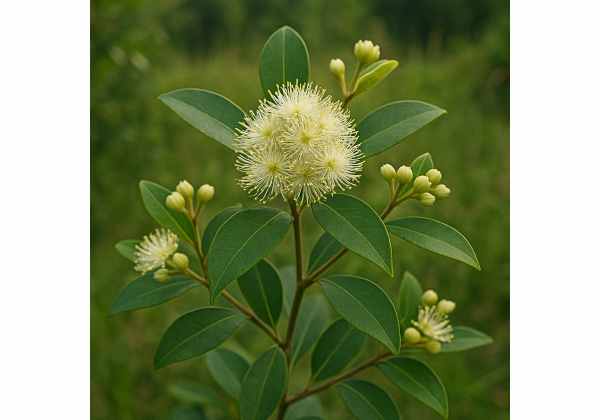
Nutmeg myrtle, botanically Backhousia myrtifolia, is an aromatic Australian rainforest tree whose leaves carry a warm, spice-like scent that can suggest cinnamon, nutmeg, clove, and soft eucalyptus notes all at once. It is more commonly sold as cinnamon myrtle or grey myrtle, but the “nutmeg myrtle” name reflects the plant’s sweet, woody fragrance and its growing place in bushfood cooking, herbal teas, and aromatic leaf blends. What makes this species genuinely interesting is that it is not just a flavor plant. Its leaves contain distinctive essential-oil chemotypes, phenolic compounds, tannins, and flavonoid-like constituents that have drawn attention for antioxidant, antimicrobial, and anti-inflammatory potential in laboratory research.
At the same time, nutmeg myrtle is best approached with balance. It is a promising medicinal food and spice, not a well-proven clinical herb. The most practical benefits come from culinary use, aromatic leaf infusions, and thoughtful food-based intake. Stronger claims, especially around essential oil or concentrated extracts, remain preclinical and should be treated cautiously.
Brief Summary
- Nutmeg myrtle is best understood as an aromatic bushfood spice with antioxidant and flavor-rich phytochemicals.
- Its leaf chemistry includes phenolics, tannins, and distinctive aromatic compounds such as elemicin and methyl eugenol in some chemotypes.
- A practical food-based amount is about 0.25 to 1 g dried leaf per serving, or roughly 1/8 to 1/2 teaspoon.
- People who are pregnant, highly sensitive to spices, or considering internal use of the essential oil should avoid self-treatment and stick to ordinary culinary use.
Table of Contents
- What nutmeg myrtle is and how it is used
- Nutmeg myrtle key ingredients and aromatic chemotypes
- Health benefits and medicinal properties of nutmeg myrtle
- Traditional food uses and practical applications
- Dosage, timing, and the best ways to take it
- Common mistakes and safety considerations
What nutmeg myrtle is and how it is used
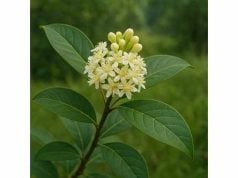
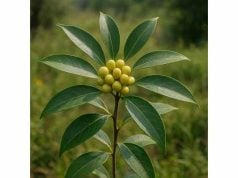
Nutmeg myrtle is a native Australian tree in the myrtle family, Myrtaceae. It grows naturally in subtropical rainforest zones from southeastern Queensland into New South Wales and has long attracted interest for its fragrant leaves, ornamental white flowers, and adaptability as both a landscape tree and a culinary species. The botanical name is Backhousia myrtifolia, but in food and horticultural trade it is more often called cinnamon myrtle or grey myrtle. The “nutmeg myrtle” label is less common, yet it captures an important sensory truth: the leaf aroma is warm, woody, and spice-forward rather than purely herbal.
That aroma explains why the plant has become increasingly important in modern bushfood use. The leaves are dried and milled into a spice, infused into teas, added to desserts, and blended into sweet or savory seasoning mixtures. Unlike true nutmeg, which comes from the seed of Myristica fragrans, nutmeg myrtle is a leaf spice. Unlike cinnamon bark, it is gentler and greener in character, though still bold enough to perfume custards, biscuits, stewed fruit, braises, syrups, and native-inspired spice blends.
This dual identity matters because it shapes how the plant should be understood. Nutmeg myrtle is not a classic dispensary herb with a long standardized medicinal monograph. It is closer to a medicinally interesting spice leaf. That puts it in a category with other aromatic culinary plants that can support health mainly through repeated low-dose food use rather than through pharmaceutical-style dosing.
The plant is also chemically diverse. Research on the genus and on B. myrtifolia specifically shows that leaf oils can differ by chemotype, with some dominated by elemicin and others by methyl eugenol, methyl isoeugenol, or isoelemicin. This means not every nutmeg myrtle product is identical in aroma or potential biological behavior. A dried culinary leaf powder is one thing. A distilled essential oil from a particular chemotype is something else entirely.
In practical use, people encounter nutmeg myrtle in four main ways:
- dried leaf powder used as a spice
- fresh or dried leaves used in tea or infusions
- flavoring in desserts, sauces, and slow-cooked dishes
- essential oil or extract products, which are more specialized and require more caution
That last category deserves emphasis. Food use is far better grounded than internal essential-oil use. The plant’s strongest everyday role is culinary and aromatic, not aggressively medicinal.
For readers who already know Australian aromatic leaf spices, nutmeg myrtle sits naturally beside lemon myrtle, though the flavor profile and major compounds are quite different. Lemon myrtle is bright and citral-heavy. Nutmeg myrtle is warmer, sweeter, and more spice-like.
The best starting point is simple: think of nutmeg myrtle as a flavorful native spice leaf with medicinal potential, not as a proven cure hidden inside a bushfood label.
Nutmeg myrtle key ingredients and aromatic chemotypes
The phrase “key ingredients” can be misleading if it suggests one magic molecule. Nutmeg myrtle is better understood as a chemically layered aromatic leaf. Its most important constituents fall into two broad groups: volatile aromatic compounds that shape the scent and flavor, and non-volatile phenolic compounds that contribute antioxidant and broader functional-food interest.
The essential-oil profile is the first thing that sets the plant apart. One of the most useful findings from the literature is that Backhousia myrtifolia occurs in several chemotypes. In plain language, different plants or plant lines can produce oils dominated by different major compounds. The main reported aromatic ethers include:
- elemicin
- isoelemicin
- methyl eugenol
- methyl isoeugenol
These compounds help explain the plant’s sweet-spicy profile and why it can smell like a blend of nutmeg, clove, warm wood, and soft spice rather than like a simple mint or citrus leaf. They also explain why safety discussions become more important when people move from culinary leaf use to concentrated essential oil. A spice leaf in food is not the same as a distilled oil rich in aromatic ethers.
The second major chemistry layer comes from phenolic compounds. Recent analytical work on Australian myrtle leaves, including cinnamon or nutmeg myrtle, identified a broad phenolic profile and measured total phenolic content, total flavonoids, and condensed tannins. Compounds such as catechin, epicatechin, quercetin-related constituents, cinnamic-acid-related molecules, and other phenolic derivatives help explain the plant’s antioxidant activity in test systems. This matters because it gives the plant a functional-food identity beyond aroma alone.
A practical breakdown of nutmeg myrtle’s chemistry looks like this:
- Volatile aromatic ethers shape the spice aroma and likely contribute part of the biological activity
- Phenolic compounds and flavonoids support antioxidant potential
- Tannins add a slightly drying, tea-like quality in some preparations
- Minor terpenes and related compounds deepen complexity rather than dominating the profile
This is also why the plant behaves differently depending on form. Fresh leaves, dried powder, tea, ethanolic extract, and essential oil do not deliver the same chemistry in the same proportions. Dry leaf spice emphasizes food-friendly flavor and some water- or alcohol-extractable polyphenols. Essential oil isolates the volatile fraction and can therefore act more strongly, but also more narrowly and with more safety concerns.
Another useful point is that nutmeg myrtle should not be confused with true cinnamon or true nutmeg, even if the scent overlaps. True cinnamon relies heavily on cinnamaldehyde-related chemistry, while nutmeg is famous for compounds such as myristicin and sabinene in the seed oil. Nutmeg myrtle overlaps mainly at the sensory level, not by being chemically identical. Readers who want that comparison may find cinnamon’s better-known spice chemistry useful as a contrast.
So what are the key ingredients that matter most for health discussions? The answer is not “vitamins” or “minerals” first, although the dried leaf powder does contain some nutritional value. The real focus is its combination of aromatic ether chemotypes and phenolic-rich leaf chemistry. Together, these make the plant attractive as a flavorful spice with antioxidant and preclinical medicinal relevance.
Health benefits and medicinal properties of nutmeg myrtle
Nutmeg myrtle has enough evidence to be interesting, but not enough to be treated like a proven therapeutic herb. That balance is the heart of the article. The most credible benefits are food-level antioxidant support, functional flavor use, and preclinical anti-inflammatory and antimicrobial potential. The least credible claims are the ones that leap from chemical promise to disease treatment.
The first believable benefit is antioxidant support through diet. Analytical studies of Australian myrtles, including Backhousia myrtifolia, show meaningful phenolic content and measurable antioxidant activity. This does not mean the herb “neutralizes all oxidative stress” or works like a supplement megadose. It means that the leaf contributes polyphenols and tannins that fit well within a plant-rich eating pattern. When used regularly as a spice or tea leaf, it can add another layer of protective phytochemicals to the diet.
The second benefit is its role as a functional flavoring agent. This sounds less dramatic, but it is often more practical. Aromatic leaves that make healthy food taste better can support better eating habits overall. Nutmeg myrtle can deepen porridges, fruit compotes, baked goods, herbal teas, and savory braises without requiring large amounts of sugar or heavy sauces. That kind of subtle benefit matters in real life because a spice that increases meal quality is more likely to be used consistently than a harsh “medicinal” preparation.
A third area of interest is anti-inflammatory activity, but here the evidence is preclinical. Recent work isolated new peltogynoid flavonoid derivatives from the leaves and found promising in vitro effects on nitric oxide and tumor necrosis factor pathways. That is scientifically important, but it is not the same as proving that a teaspoon of leaf powder reduces inflammatory disease in people. The gap between isolated compounds in cell models and daily dietary outcomes remains wide.
Antimicrobial potential is another plausible but limited claim. Earlier studies found that B. myrtifolia extracts inhibited a range of pathogenic bacteria in laboratory testing. This helps explain why aromatic native leaves attract interest for food preservation, topical formulations, and natural antimicrobial research. Still, in vitro antibacterial activity should never be translated into “treat infections at home” advice.
A careful summary of the evidence looks like this:
- antioxidant support is plausible and well aligned with the plant’s phenolic chemistry
- anti-inflammatory activity is promising but still preclinical
- antimicrobial activity is supported in laboratory settings, not clinical use
- there is no strong human evidence for treating chronic disease with nutmeg myrtle
That is why food-first use remains the best framing. Nutmeg myrtle is credible as a medicinal spice, less credible as a self-prescribed therapy.
Readers who enjoy comparing aromatic culinary plants with functional potential may also appreciate rosemary’s antioxidant herb profile. The chemistry differs, but both plants show how flavor herbs can have meaningful health relevance without becoming cure-all remedies.
The best claim for nutmeg myrtle, then, is modest but real: it is a flavorful native leaf with antioxidant-rich chemistry and encouraging preclinical medicinal properties, best used as part of the diet rather than as a substitute for treatment.
Traditional food uses and practical applications
The most useful thing about nutmeg myrtle is that it already has a place in the kitchen. Unlike many obscure herbs that require tinctures or capsules to become practical, Backhousia myrtifolia works naturally as a spice leaf. This is where its culinary, cultural, and health value come together.
Modern bushfood use centers on the leaves. They are dried, milled, and used in sweet and savory dishes, often as a native alternative to cinnamon or mixed warm spice. The flavor is more layered than true cinnamon, with woody sweetness, light clove notes, gentle resin, and a warm nutmeg-like finish. Because of that, it works in:
- teas and tisanes
- spiced biscuits and cakes
- poached fruit and compotes
- custards, syrups, and creams
- braises, sauces, and marinades
- native spice blends and rubs
The plant also carries ethnopharmacological interest. Recent anti-inflammatory research explicitly notes that the investigation was guided by Indigenous knowledge, which is important because it shows the species is not merely a modern culinary invention. At the same time, responsible writing should avoid inventing detailed traditional medical claims that are not clearly documented in accessible primary sources. The most defensible statement is that the plant has Indigenous cultural and ethnopharmacological significance, and that this has helped guide modern scientific interest.
In practical home use, nutmeg myrtle behaves best when treated with restraint. It is not a leafy herb to add by the handful. A small amount perfumes an entire dish. This intensity is part of its value. You can add warmth and complexity without relying on sugar-heavy spice blends or large doses of conventional cinnamon.
A few smart ways to use it are:
- Infuse a pinch into hot water for a mild aromatic tea.
- Add it to stewed apples, pears, or stone fruit.
- Blend it into oat porridge or granola.
- Use it in rubs for roasted root vegetables or poultry.
- Stir a very small amount into custard, yogurt, or baked batters.
Fresh leaves can also be used, but dried leaf powder is more common and easier to measure. The dried form stores well and makes dosing simpler, which matters because the plant is highly aromatic even in small amounts.
Nutmeg myrtle is also a useful example of how spice plants can be medicinal without being medicinal in an aggressive sense. It can improve the flavor of nutrient-dense foods, make low-sugar dishes more satisfying, and offer a food-based route to consuming antioxidant-rich plant compounds. That kind of use is sustainable and realistic.
For readers who like plants that live equally well in the spice jar and the wellness conversation, coriander as a culinary medicinal herb offers a useful comparison. The taste is completely different, but the practical lesson is the same: daily food use often matters more than occasional therapeutic ambition.
Dosage, timing, and the best ways to take it
Nutmeg myrtle does not have a standardized medicinal dose backed by human clinical trials. That needs to be said clearly. The most practical and defensible dosage guidance is culinary and food-based rather than therapeutic in the supplement sense.
For most people, a useful range is:
- 0.25 to 1 g dried leaf per serving
- about 1/8 to 1/2 teaspoon dried leaf powder
- or 1 small leaf to 3 small leaves if using fresh leaf in an infusion or pot of food
This is enough to contribute aroma, flavor, and likely some food-level phytochemicals without overwhelming the dish. Because the flavor is strong, more is not automatically better. Overuse can make food bitter, woody, or medicinal-tasting, which often reduces both enjoyment and consistency.
For tea or infusion use, a sensible starting point is:
- Add about 0.25 to 0.5 g dried leaf to 200 to 250 mL hot water.
- Steep for 5 to 10 minutes.
- Taste before increasing the amount.
- Avoid very strong long-steeped brews unless you already know the leaf suits you.
For cooking, the timing depends on the result you want. Adding the spice early gives a deeper, warmer note. Adding it late preserves more of the brighter aromatic edge. In desserts, a small amount usually goes a long way. In savory cooking, it pairs well with slow heat, fats, broths, and fruit-based glazes.
A practical culinary guide looks like this:
- Porridge or yogurt: 1/8 teaspoon
- Stewed fruit: 1/4 teaspoon for 2 to 4 servings
- Herbal tea: 0.25 to 0.5 g per cup
- Baking: start low and adjust in future batches
- Savory sauces or braises: 1/4 to 1/2 teaspoon depending on batch size
What about essential oil? This is where the answer becomes more cautious. Because B. myrtifolia can occur in aromatic ether-dominant chemotypes, essential-oil composition can vary and some constituents deserve more conservative handling than ordinary culinary leaf use. Internal essential-oil dosing is not well standardized or well supported. For most readers, it makes far more sense to use the dried leaf as a food spice and avoid internal essential-oil experimentation altogether.
The same caution applies to concentrated extracts. A plant can be safe in food amounts and still become questionable when highly concentrated. With nutmeg myrtle, culinary use is the best-supported route.
If you already use warming spice herbs and want a comparison point, ginger as a kitchen medicinal shows what a more established food-first herb looks like when dose guidance is stronger and better recognized.
The simplest dosage rule is this: start small, keep it food-based, and let the plant remain a spice unless a qualified practitioner gives you a better reason to do otherwise.
Common mistakes and safety considerations
Most problems with nutmeg myrtle come from overreach rather than from normal culinary use. In food amounts, it is generally handled like a strong aromatic spice. In concentrated forms, however, the chemistry deserves more caution. That difference is where most mistakes begin.
The first mistake is confusing the leaf with the essential oil. A dried culinary leaf used in tea or baking is not equivalent to a distilled essential oil. The oil concentrates volatile compounds, and in Backhousia myrtifolia those compounds can include methyl eugenol, methyl isoeugenol, elemicin, or isoelemicin depending on the chemotype. That is one reason internal use of the essential oil is not something to improvise casually.
The second mistake is assuming the plant is “just like cinnamon” because of the scent. It is not. The aroma may remind people of cinnamon and nutmeg, but the chemistry is distinct. This matters for both expectations and safety. Someone who tolerates cinnamon well may still find nutmeg myrtle unusually strong or stimulating in concentrated form.
The third mistake is treating preclinical findings as proven outcomes. Nutmeg myrtle has laboratory evidence for antioxidant activity, antibacterial action, and isolated anti-inflammatory compounds. That is promising, but it is not the same as human clinical proof. Food use can be confidently encouraged. Disease claims cannot.
Another common mistake is simply using too much. The dried leaf is potent, and excess can make a dish bitter, cloying, or medicinal. With aromatic leaf spices, accuracy improves experience.
A safer-use checklist is straightforward:
- Prefer dried leaf or food-based preparations over concentrated oil
- Start with very small culinary amounts
- Avoid internal essential-oil use unless professionally supervised
- Keep expectations tied to flavor and food-level support
- Stop if the plant causes irritation, nausea, rash, or headache
Who should be more cautious?
- Pregnant or breastfeeding people
- Children being given concentrated herbal preparations
- People with known spice or essential-oil sensitivities
- People using multiple concentrated botanical products at once
- Anyone taking the essential oil internally without expert guidance
The reason for extra caution is not that ordinary food use is clearly dangerous. It is that concentrated aromatic ether-rich products deserve more respect than many internet summaries give them. The leaf as a spice is the gentle form. The oil is not.
There is also a quality issue. Products sold as cinnamon myrtle, grey myrtle, or nutmeg myrtle may vary in grind, age, aroma, and likely composition. Choose reputable food-grade suppliers, especially if you plan to use the product regularly in teas or foods.
For readers interested in aromatic oils more generally, tea tree provides a useful reminder that food use and essential-oil use are not interchangeable categories, even within Australian aromatic plants.
In short, nutmeg myrtle is easiest to trust when you keep it in the kitchen and harder to justify when you try to turn it into a self-prescribed concentrated remedy.
References
- Macronutrient and mineral composition of Australian indigenous spices: nutritional opportunities and considerations for food product development 2025
- LC-ESI-QTOF-MS/MS Identification and Characterization of Phenolic Compounds from Leaves of Australian Myrtles and Their Antioxidant Activities 2024
- Myrtinols A-F: New Anti-Inflammatory Peltogynoid Flavonoid Derivatives from the Leaves of Australian Indigenous Plant Backhousia myrtifolia 2023
- Review of the Leaf Essential Oils of the Genus Backhousia Sens. Lat. and a Report on the Leaf Essential Oils of B. gundarara and B. tetraptera 2022 (Review)
- Growth inhibitory properties of Backhousia myrtifolia Hook. and Harv. and Syzygium anisatum (Vickery) Craven and Biffen extracts against a panel of pathogenic bacteria 2016
Disclaimer
This article is for educational purposes only and does not replace medical advice, diagnosis, or treatment. Nutmeg myrtle is best used as an aromatic food spice, not as a substitute for clinical care. Although the plant contains promising phytochemicals and has shown antioxidant, anti-inflammatory, and antimicrobial potential in laboratory research, there is not enough human evidence to support strong therapeutic claims or standardized internal dosing of concentrated extracts or essential oil. If you are pregnant, breastfeeding, taking regular medication, or considering non-culinary use, speak with a qualified healthcare professional before using it.
If you found this article helpful, please share it on Facebook, X, or another platform you prefer.