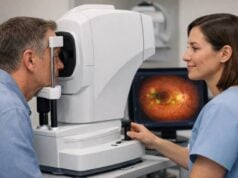
The term “ocular migraine” can sound like an eye disease, yet most of the time it describes a brain-based visual event: a migraine aura that temporarily changes how you see. For many people, the first episode is unsettling—shimmering zigzags, a growing blind spot, or a bright arc that makes reading and driving feel unsafe. The reassuring part is that typical visual aura is reversible and follows recognizable patterns that help clinicians distinguish it from urgent eye or neurologic problems. Understanding those patterns can also help you identify triggers, reduce recurrence, and know when an evaluation is truly time-sensitive. This article breaks down what ocular migraine usually means, what visual aura looks like in real life, why it happens, and which warning signs should prompt urgent care—so you can respond calmly and choose the right next step.
Key Insights
- Visual aura often builds gradually and resolves fully, even when it disrupts reading or driving in the moment.
- Tracking timing, laterality (one eye versus both), and symptom shape helps separate migraine aura from eye and stroke emergencies.
- New or sudden monocular vision loss, eye pain, or neurologic deficits should be treated as urgent until proven otherwise.
- Aim for a two-week log that notes sleep, meals, hydration, screens, stress, and hormonal shifts to identify repeatable triggers.
Table of Contents
- What ocular migraine usually means
- How visual aura typically behaves
- Common triggers and risk patterns
- Ocular migraine versus retinal emergencies
- Evaluation and tests your clinician may use
- Treatment, prevention, and daily strategies
What ocular migraine usually means
“Ocular migraine” is a popular term, but it is not a single, precise diagnosis. Clinically, it is used in two different ways, and the difference matters.
Most people who say “ocular migraine” are describing migraine with visual aura. In this scenario, the visual symptoms come from temporary changes in the visual cortex (the brain’s visual processing area), not from damage to the eye itself. Because the brain’s visual system represents both eyes, these symptoms often affect the visual field of both eyes, even if it feels stronger on one side. A simple clue is that the pattern tends to remain visible with either eye closed, because it is generated centrally.
Less commonly, people use “ocular migraine” to mean retinal migraine, a rare condition involving repeated episodes of monocular (one-eye) visual disturbance. Retinal migraine is considered a diagnosis of exclusion because transient monocular vision loss can also be caused by reduced blood flow to the retina or optic nerve, inflammation, or other urgent disorders. This is why it is risky to assume that “one eye went dark” is a benign migraine event.
Another point that causes confusion: visual aura can happen with or without a headache. Some people experience aura followed by a typical migraine headache. Others get aura with a mild headache or no pain at all, sometimes called “acephalgic migraine.” The absence of headache does not automatically mean the event is harmless or dangerous—it means you need to look closely at the aura’s pattern, timing, and associated symptoms.
Finally, “ocular migraine” is not the same as eyestrain, dry eye blur, or a glasses issue. Those can cause fluctuating clarity and discomfort, but they typically do not cause a growing shimmering arc, a marching blind spot, or a geometric zigzag. When the symptom is a distinct moving pattern, think “neurologic visual phenomenon” first, then confirm with a clinician if it is new, changing, or accompanied by red flags.
How visual aura typically behaves
Visual aura has a few classic behaviors that, once you know them, can be surprisingly recognizable. The most common descriptions include a shimmering zigzag, a bright crescent, a flickering patch, or a blind spot that grows and drifts. Many people notice that the disturbance is “busy” or “sparkly” rather than simply dark. Clinicians call these “positive” symptoms (added light or pattern) and “negative” symptoms (missing vision), and they often appear together during one episode.
A key feature is gradual evolution. Typical aura tends to build over several minutes, spread across the visual field, and then fade. Many episodes last between 5 and 60 minutes. The progression can feel like:
- A small shimmering point appears near the center of vision.
- The point expands into a jagged arc or ring.
- A blurred or missing area follows behind it, making reading difficult.
- The pattern drifts outward and disappears.
People often ask whether aura affects one eye or both. The most practical way to check is to cover one eye at a time during an episode. If the same pattern persists no matter which eye is covered, it is more consistent with a brain-based aura. If the disturbance clearly occurs only in one eye, that deserves a more urgent approach because one-eye events have a different differential diagnosis.
Visual aura may be accompanied by other reversible neurologic symptoms, such as tingling that marches from fingers to face, mild word-finding trouble, or a sense of “fog.” These can still be part of migraine, but they also increase the need for careful assessment if the pattern is new.
Not all aura is dramatic. Some people mainly notice blurred patches, heat-wave shimmer, or difficulty focusing on text. Others notice sensitivity to light and motion, making screens or headlights feel overwhelming. A practical safety rule: if your vision is distorted, avoid driving until it clears, even if you suspect it is “just migraine.” Aura can impair reaction time and lane tracking long before it feels severe.
If your episodes follow a stable pattern—gradual onset, consistent shape, full resolution—migraine becomes more likely. When the pattern is abrupt, one-sided in the body, or leaves lingering deficits, it should be treated differently.
Common triggers and risk patterns
Migraine aura is often less about a single trigger and more about a nervous system that becomes vulnerable when several factors stack together. Think of triggers as “load,” and your body’s resilience as “capacity.” When load exceeds capacity, an episode becomes more likely.
Common trigger patterns include:
- Sleep disruption: too little sleep, oversleeping, jet lag, or inconsistent sleep timing. Even a single late night can lower your threshold the next day.
- Skipped meals and blood sugar swings: going long stretches without food, dieting changes, or high-sugar meals followed by a crash.
- Dehydration and heat: mild dehydration can increase headache risk and make aura more likely during exertion.
- Stress shifts: both stress and the “letdown” after a stressful period. Some people get aura on the first day of vacation or after a deadline ends.
- Hormonal changes: perimenstrual days, postpartum shifts, perimenopause, and changes in hormonal contraception can all affect frequency.
- Bright light and visual strain: glare, flickering LEDs, long screen sessions, or intense visual environments. This is especially common when combined with poor sleep or dehydration.
- Alcohol and certain foods: not everyone has dietary triggers, but some notice patterns with red wine, aged cheeses, cured meats, or high-histamine foods.
- Weather and pressure changes: for some, rapid barometric shifts correlate with clusters of attacks.
Risk patterns are just as important as triggers. Migraine with aura tends to cluster in people with a personal or family history of migraine. Frequency can shift across life stages, especially during hormonal transitions. Some individuals develop aura later in life with fewer headaches, which can be confusing and warrants a thoughtful evaluation to rule out mimics.
A simple approach that works better than guesswork is a two-week log. Each day, jot down:
- bedtime and wake time
- meals and long fasting gaps
- hydration estimate
- caffeine and alcohol
- screen-heavy periods
- unusual stressors or exercise
- whether aura occurred, start time, and duration
Patterns often appear quickly, especially around sleep timing and meal gaps. The goal is not to avoid everything; it is to identify your highest-impact levers. For many people, stabilizing sleep, eating predictably, and addressing visual strain reduces episodes more than any single supplement or “migraine diet.”
Ocular migraine versus retinal emergencies
The most important clinical task with “ocular migraine” symptoms is deciding whether the episode behaves like a typical migraine aura or like something that could threaten vision or signal a vascular event. You do not need to self-diagnose, but you do need to recognize red flags.
A typical migraine visual aura often has:
- gradual onset and spread over minutes
- shimmering, zigzag, or geometric features
- full resolution within an hour
- similar recurrence pattern over time
In contrast, transient monocular vision loss—a sudden curtain, gray-out, or complete dimming in one eye—should be treated cautiously. One-eye events can be caused by reduced blood flow to the retina or optic nerve, inflammatory conditions, or other problems that require prompt evaluation. Retinal migraine exists, but it is uncommon and is considered only after other causes are excluded.
Red flags that should prompt urgent assessment include:
- vision loss in one eye that is clearly monocular, especially if it is sudden
- new flashes of light with a shower of floaters or a curtain-like shadow
- eye pain, severe redness, or nausea with visual symptoms
- new neurologic deficits such as weakness, facial droop, persistent speech difficulty, or confusion
- a first-ever aura after midlife, or a major change in your established aura pattern
- aura lasting longer than an hour, repeated back-to-back auras, or lingering deficits afterward
A practical “pattern check” can help while you seek care. Migraine aura often produces positive visual phenomena (added light and pattern), whereas many vascular events produce negative symptoms (vision missing) that begin abruptly. Migraine aura also tends to move or expand; vascular events are more likely to be fixed and sudden.
There are also gray zones. Some people with migraine experience aura without headache, and some people experience numbness or word-finding difficulty that resolves fully. Those can still be migraine, but if the symptom is new for you or you have vascular risk factors, clinicians will often evaluate more urgently.
When in doubt, choose safety: treat a new or clearly monocular event as urgent until a clinician confirms the cause. Protecting vision and reducing stroke risk is always the priority, and most evaluations are straightforward once the right details are collected.
Evaluation and tests your clinician may use
A good evaluation for suspected ocular migraine is part story, part examination, and part targeted testing when the history raises concern. The most helpful details are surprisingly practical: timing, laterality, shape, progression, and full recovery.
Clinicians often start by clarifying:
- Did the visual change affect one eye or both?
- Did it build gradually or start suddenly?
- How long did it last from first symptom to full recovery?
- Was it shimmering and moving, or a dark fixed area?
- Were there associated symptoms: headache, nausea, light sensitivity, tingling, speech changes?
From there, the eye-focused exam may include:
- visual acuity and refraction to check whether uncorrected astigmatism or poor focus is adding strain
- pupil testing to look for signs of optic nerve involvement
- eye pressure measurement when pain or halos suggest pressure-related issues
- slit-lamp examination to assess the ocular surface and lens
- dilated retinal exam to look for retinal tears, vascular changes, or other structural problems
If the episode was clearly neurologic or has red flags, clinicians may consider additional evaluation such as:
- visual field testing to map any residual defects
- retinal imaging when monocular symptoms suggest retinal or optic nerve causes
- neurologic assessment if symptoms suggest a transient ischemic attack, seizure, or another neurologic disorder
A common frustration is being told “your exam is normal.” For migraine aura, a normal eye exam can be expected because the symptom is generated by temporary brain activity rather than ongoing eye damage. The purpose of the exam is to rule out conditions that can mimic aura and to identify modifiable contributors like dry eye, ocular inflammation, or significant refractive error.
Before your visit, it helps to write a short episode summary:
- start time and total duration
- whether it was in one eye or both (and how you checked)
- what you saw (zigzag, shimmer, blind spot, distortion)
- what happened next (headache, nausea, normal recovery)
- any unusual triggers in the prior 24 hours
This kind of description can reduce unnecessary testing while ensuring that urgent conditions are not missed. It also helps your clinician decide whether preventive migraine treatment is worth discussing, especially if aura is frequent, disabling, or changing.
Treatment, prevention, and daily strategies
Managing ocular migraine has two goals: reducing immediate disruption during an episode and lowering the chance of recurrence. The best plan depends on how often episodes occur, how disabling they are, and whether headache is part of the picture.
What to do during a visual aura
- Pause visually demanding tasks. If you are driving, pull over safely as soon as possible.
- Reduce sensory load. Dim screens, lower brightness, and avoid flickering or high-contrast patterns.
- Hydrate and stabilize. A glass of water and a small, balanced snack can help if the episode follows a meal gap.
- Use a calm timer. Many people feel less anxious when they time the event and see a familiar duration pattern.
- Avoid risky self-tests. Do not stare into bright lights to “see if it is still there,” and do not keep driving to “push through.”
Some people use clinician-prescribed acute migraine medications when headache follows aura. If aura occurs without headache, the treatment discussion can be different, and it is worth reviewing options with a clinician rather than experimenting.
When prevention becomes a priority
Prevention is usually considered when episodes are frequent, prolonged, unpredictable, or disabling—especially if you are avoiding work tasks or night driving, or if aura symptoms are concerning even without severe headache. Prevention can be medication-based, device-based, or lifestyle-based, and many people do best with a combined approach.
High-impact lifestyle strategies
These are not generic wellness tips; they are threshold management tools:
- Anchor sleep timing. Choose a consistent wake time, then protect the 60 to 90 minutes before bed from intense light and work.
- Plan predictable fueling. Avoid long fasting gaps, especially on busy days or during travel.
- Treat visual strain like a trigger. Use regular breaks during screens, adjust text size, and reduce glare from overhead lighting.
- Be careful with caffeine swings. Consistent intake is often better than intermittent high doses.
- Protect recovery days. After an aura day, prioritize hydration, sleep regularity, and lower sensory stress.
How to judge whether a plan is working
Track episodes for 8 to 12 weeks and look for:
- fewer episodes
- shorter duration
- lower intensity of visual disruption
- improved ability to resume tasks quickly
If aura is changing in character, becoming strictly monocular, lasting longer than usual, or adding new neurologic symptoms, do not assume it is a routine fluctuation. That is the moment to recheck and reassess the diagnosis and risk profile.
References
- What does a migraine aura look like?—A systematic review – PMC 2025 (Systematic Review)
- Clinical features of migraine with aura: a REFORM study – PMC 2024
- Pharmacologic prevention of migraine – PMC 2023
- Headaches in over 12s: diagnosis and management – NCBI Bookshelf 2025 (Guideline)
- Current Perspective on Retinal Migraine – PMC 2021
Disclaimer
This article is for general educational purposes and does not replace individualized medical advice, diagnosis, or treatment from a qualified clinician. Visual aura can occur with migraine, but similar symptoms can also signal urgent eye or neurologic conditions. Seek prompt medical care if you have sudden monocular vision loss, severe eye pain or redness, new weakness or speech difficulty, a curtain-like shadow in vision, a new shower of floaters with flashes, or any rapid or persistent change in vision—especially if this is your first episode or the pattern is changing.
If you found this article helpful, please consider sharing it on Facebook, X (formerly Twitter), or any platform you prefer.