Ocular rosacea is a chronic inflammatory condition that affects the eyelids, tear film, and the surface of the eye. For some people it arrives quietly—gritty irritation, watery eyes, and lids that look mildly swollen. For others it flares dramatically, with burning, light sensitivity, and blurred vision that makes work and driving harder. The value of understanding ocular rosacea is that many symptoms are treatable, and early care can prevent long-term surface damage. The condition often overlaps with meibomian gland dysfunction, recurrent styes, and dry eye, so treatment usually works best when it addresses eyelid inflammation and tear quality rather than relying on drops alone. This guide explains how ocular rosacea typically presents, what tends to trigger flares, how clinicians confirm the diagnosis, and which home strategies, medications, and in-office options can reduce symptoms and protect vision.
Quick Overview
- Consistent eyelid care and tear support often reduce burning, grit, and fluctuating vision within weeks.
- Identifying repeatable triggers can lower flare frequency and make symptoms more predictable.
- Corneal involvement, increasing pain, or persistent blurred vision can signal complications that need prompt care.
- Use a simple daily routine: warm compresses, lid cleaning, and preservative-free lubrication as needed, then escalate with clinician guidance if symptoms persist.
Table of Contents
- What ocular rosacea is and why it happens
- Symptoms you might not realize are related
- Triggers that fuel flares and how to limit them
- How clinicians diagnose ocular rosacea
- Treatment options from home care to prescriptions
- When to worry and how to prevent complications
What ocular rosacea is and why it happens
Ocular rosacea is inflammation centered around the eyelid margins and ocular surface that occurs in people with rosacea tendencies, even when facial skin changes are subtle. It is best understood as a condition of surface instability: the eyelids, meibomian glands (oil glands along the lid margin), tears, and corneal surface fall out of balance, leading to irritation and recurrent flares.
The eyelid margin is the “control panel”
The meibomian glands release oils that slow tear evaporation and keep the tear film smooth. In ocular rosacea, these glands often become inflamed, clogged, or produce thicker oil. When the oil layer becomes inconsistent, tears evaporate faster and the surface becomes patchy. That patchiness can cause burning, fluctuating blur, and sensitivity to wind, screens, or air conditioning.
Inflammation can be disproportionate to symptoms
Some people report severe discomfort with mild redness. Others have very red, watery eyes but feel only mild grit. This mismatch happens because ocular rosacea affects both the surface tissues and the sensitivity of ocular nerves. A small change in tear stability can feel large when nerves are sensitized, especially during flares.
Skin and eye signs do not always travel together
It is common to assume rosacea must be obvious on the face first. In reality, eyelid signs can precede noticeable facial flushing, or skin rosacea may be well controlled while ocular symptoms persist. That is why recurring styes, lid margin irritation, and chronic “dry eye that does not behave like dry eye” should raise suspicion, particularly if symptoms wax and wane.
Why it tends to be chronic
Ocular rosacea often behaves like asthma: there may be quiet periods, then flare-ups after specific exposures. The condition is not typically “cured” by a short course of drops, but it can often be controlled with a layered plan—daily maintenance plus stronger treatments during flares. The goal is to restore a stable tear film, keep eyelid inflammation low, and protect the cornea from repeated irritation.
Symptoms you might not realize are related
Ocular rosacea can mimic several other eye conditions, which is why it is frequently underrecognized. Many people cycle through “pink eye,” “allergies,” and “dry eye” labels before the pattern becomes clear. Paying attention to the combination of eyelid symptoms and surface symptoms is often more helpful than any single sign.
Common eye and eyelid symptoms
Symptoms often include:
- Burning, stinging, or a hot, sandy feeling
- Watery eyes that paradoxically accompany dryness
- Light sensitivity, especially outdoors or under bright indoor lighting
- Fluctuating blur that improves briefly after blinking
- Itchy lids or lash-line tenderness
- A sensation of pressure or heaviness in the eyelids
Many people also notice cosmetic changes that feel separate but are connected:
- Lid redness along the lash line
- Visible tiny blood vessels on the lid margin
- Crusting or oily debris at the lashes
- Recurrent styes or chalazia (blocked oil gland bumps)
- Puffy lids on waking that improve later in the day
Signs that suggest meibomian gland dysfunction
Because gland dysfunction is so common in ocular rosacea, you may notice:
- Symptoms that worsen late in the day or after long screen sessions
- “Dry eye” that is worse in windy or air-conditioned environments
- Contact lens intolerance, reduced wearing time, or lenses that feel filmy
- A need to blink repeatedly to clear vision, especially when reading
When the cornea becomes involved
Corneal involvement is the reason clinicians take ocular rosacea seriously. Warning symptoms can include:
- Persistent foreign-body sensation that does not improve with lubrication
- Pain that is sharper than typical dry eye discomfort
- New blurred vision that does not clear after blinking
- Increased light sensitivity and tearing during a flare
These symptoms can reflect surface inflammation, small erosions, or keratitis. Even if they resolve, repeated episodes can leave the surface more fragile over time. In practice, one of the most telling clues is recurrent pattern: symptoms improve with care, then return after predictable exposures or during skin flares, stress, travel, or seasonal changes.
Triggers that fuel flares and how to limit them
Ocular rosacea usually flares when your baseline inflammation is nudged higher by heat, dryness, irritants, or physiologic stress. Triggers differ by person, but they tend to fall into repeatable categories. The most helpful approach is not avoidance of everything, but identifying your top two or three triggers and building practical guardrails.
Environmental triggers
Common culprits include:
- Wind, cold air, and low humidity
- Air conditioning or car vents aimed at the face
- Smoke exposure, strong fragrances, and aerosolized irritants
- Chlorinated pools or hot tubs
- Prolonged heat exposure (saunas, hot yoga, hot kitchens)
A useful trick: if symptoms spike during travel, it is often the combined effect of cabin air dryness, altered sleep, and less consistent lid care. Packing a small “flare kit” (lubrication, lid cleanser, warm compress option) can prevent a minor flare from becoming a multi-week setback.
Behavioral and physiologic triggers
These often matter as much as weather:
- Long, unbroken screen time with reduced blinking
- Sleep disruption and irregular schedules
- Alcohol, very hot drinks, and spicy foods in some people
- Intense exercise in hot environments
- Stress cycles, especially the “letdown” after sustained stress
Blinking is a surprisingly powerful lever. When you concentrate, blink rate drops and incomplete blinks increase. In ocular rosacea, incomplete blinks can prevent proper oil expression and leave the surface unstable. If your symptoms are screen-linked, try a simple structure:
- Every 20 minutes, look across the room and do 5 slow, complete blinks
- Lower screen brightness and increase text size to reduce stare intensity
- Position screens slightly below eye level to reduce eye opening and evaporation
Skin-care and eye-area product triggers
Because the eyelids are thin and sensitive, irritants can tip you into a flare:
- Overuse of exfoliating acids or retinoids near the eyes
- Heavy makeup removal rubbing or oil-based products that migrate into the tear film
- Lash serums and certain cosmetic adhesives in sensitive users
If you suspect a product trigger, change one variable at a time for two weeks rather than “detoxing” everything at once. Keeping the routine simple during a flare is often better than adding multiple new products.
How to track triggers without obsession
A short log for 14 days can reveal patterns quickly:
- flare days and severity (mild, moderate, severe)
- heat exposure and alcohol
- screen-heavy blocks and late nights
- travel, illness, or stress spikes
- whether warm compresses and lid care were consistent
The goal is to predict flares earlier and shorten them, not to live in avoidance mode.
How clinicians diagnose ocular rosacea
Diagnosis is usually clinical, meaning it is based on the pattern of symptoms and exam findings rather than a single test. A good evaluation looks at the eyelids, the tear film, and the corneal surface, and it also considers whether the broader rosacea pattern is present in the skin or history.
History clues that narrow the diagnosis
Clinicians often ask:
- Do symptoms flare with heat, alcohol, stress, or dry environments?
- Have you had recurring styes or chalazia?
- Do you have facial flushing, redness, or sensitivity, even intermittently?
- Do symptoms improve briefly after blinking or lubricating drops?
- Are you using contact lenses, lash serums, or strong skin-care actives?
The way symptoms behave over the day matters. Dryness and burning that build through the day and spike with screens suggest tear evaporation and gland dysfunction. Recurrent “pink eye” that is not contagious, especially with lid margin irritation, can also point toward ocular rosacea.
What the eye exam focuses on
Common exam elements include:
- Inspection of the lid margin for redness, thickening, blocked gland openings, and telangiectasia
- Expression of meibomian glands to assess oil quality and ease of flow
- Assessment of tear stability and surface staining patterns
- Evaluation for blepharitis signs, Demodex-related lash debris, and inflammation
- Corneal assessment for keratitis, infiltrates, or surface breakdown during severe flares
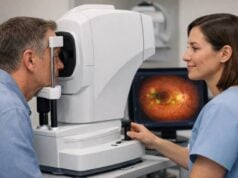
In some cases, clinicians may use imaging or measurements of gland structure and tear stability to document severity and monitor response, especially if symptoms are persistent.
Conditions that can look similar
Ocular rosacea overlaps with, and can be mistaken for:
- Allergic conjunctivitis (especially when itching is prominent)
- Chronic blepharitis without rosacea features
- Primary dry eye disease not driven by gland dysfunction
- Recurrent bacterial conjunctivitis
- Medication or preservative irritation from frequent drop use
What often separates ocular rosacea is the combination of eyelid margin disease, meibomian gland dysfunction, recurring bumps, and flare patterns tied to heat, dryness, and systemic triggers.
Why diagnosis sometimes takes time
Flares can be intermittent. If you are evaluated on a good day, findings may look mild. Bringing a brief symptom timeline and, if comfortable, a couple of photos taken during a flare can help clinicians match your reported severity to the exam and choose a treatment plan that is realistic.
Treatment options from home care to prescriptions
Ocular rosacea treatment works best as a stepwise plan: daily maintenance to keep baseline inflammation low, then escalation during flares. The aim is to stabilize the tear film, reduce lid margin inflammation, and prevent corneal complications.
Foundational home care
These steps often make the biggest long-term difference when done consistently:
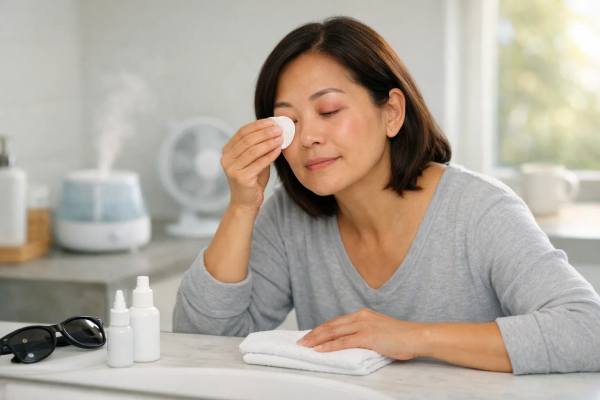
- Warm compresses for 5 to 10 minutes, then gentle lid massage to encourage oil flow
- Lid margin cleaning once daily using a lid cleanser or clinician-recommended method
- Lubrication with preservative-free artificial tears as needed, especially during screen time and dry environments
Two practical details matter:
- Heat should be comfortably warm, not scalding. Overheating can irritate skin and worsen redness.
- Scrubbing harder is not better. Gentle, consistent cleaning beats aggressive rubbing that inflames the lid margin.
Targeted treatments often used by clinicians
Depending on severity and exam findings, clinicians may add:
- Topical therapies to reduce lid margin bacteria and inflammation or to address associated surface inflammation
- Anti-inflammatory eye drops when surface inflammation is prominent or when symptoms do not respond to lubrication alone
- Oral tetracycline-class medications (commonly used at anti-inflammatory dosing strategies) when gland inflammation and recurrent flares are significant
- Treatments for Demodex when mite-related lash debris or inflammation is suspected
Because ocular rosacea often behaves as an inflammatory condition rather than an infection, the benefit of some medications comes from immune and gland-modulating effects, not only antimicrobial action.
In-office options for stubborn gland dysfunction
If meibomian gland dysfunction is significant, clinicians may consider procedures designed to improve gland expression and reduce inflammation. These are not needed for everyone, but they can be helpful when daily care and medications are not achieving stable control.
How long improvement usually takes
Many people feel some relief within 1 to 3 weeks of consistent lid care, but deeper stabilization often takes longer. A realistic time frame is:
- 2 to 4 weeks to reduce day-to-day irritation
- 6 to 12 weeks to reduce flare frequency and improve tear stability
- longer-term maintenance to prevent relapse
If you start multiple treatments at once, it can be hard to know what helped. When possible, clinicians try to build a plan that is structured and measurable, with a clear recheck point to adjust intensity.
When to worry and how to prevent complications
Ocular rosacea is often manageable, but it can become vision-threatening when inflammation reaches the cornea or when recurrent surface breakdown leads to scarring or infection risk. Knowing the warning signs helps you seek care early, when treatment is simpler and outcomes are better.
Symptoms that deserve prompt evaluation
Seek earlier clinical assessment if you notice:
- Increasing pain rather than simple irritation
- New or persistent blurred vision that does not clear after blinking
- Marked light sensitivity that makes it hard to keep the eye open
- A feeling that something is stuck in the eye that does not improve with lubrication
- Increasing redness with discharge, especially if one eye is much worse
These symptoms can signal keratitis, corneal involvement, or secondary infection risk. Even when the cause is inflammatory, the cornea is less forgiving than the eyelid margin and should be protected.
Red flags that should be treated as urgent
Get urgent care if you have:
- Sudden, significant vision reduction
- Severe eye pain with nausea or vomiting
- A white spot on the cornea or rapidly worsening redness
- New swelling around the eye with fever or severe tenderness
While these are not the most common ocular rosacea presentations, they are important because they can reflect serious complications that require prompt treatment.
Prevention is mostly about consistency
Long-term control usually depends on maintaining a stable baseline:
- Keep lid care consistent even when you feel better, then intensify briefly during early flare signs.
- Protect the tear film during known high-risk periods: long screen days, travel, cold wind, and dry indoor air.
- Choose eye-area products carefully and avoid friction. If makeup removal triggers flares, consider gentler techniques and fewer steps.
- Treat related conditions that amplify inflammation, such as chronic blepharitis and persistent dry eye patterns.
What “good control” looks like
A helpful goal is not perfect symptom-free days, but:
- fewer flares per month
- shorter flare duration
- reduced need for frequent rescue drops
- stable vision without constant blinking to clear blur
If you are doing consistent home care and still having frequent, disruptive flares, that is a strong signal to revisit the diagnosis, confirm contributing factors (including mites and gland dysfunction), and discuss escalation options. The most successful plans are individualized, measurable, and adjusted over time rather than fixed forever.
References
- Ocular Rosacea: An Updated Review – PMC 2025 (Review)
- Treatment of ocular rosacea: a systematic review – PubMed 2024 (Systematic Review)
- Preferred practice patterns and review on rosacea – PMC 2023 (Review)
- Ocular rosacea – College of Optometrists 2024 (Guideline)
Disclaimer
This article is for general educational information and does not replace personalized medical advice, diagnosis, or treatment from an optometrist, ophthalmologist, dermatologist, or other qualified clinician. Ocular rosacea can overlap with other conditions and, in some cases, may lead to complications affecting the cornea and vision. Seek prompt medical care if you develop severe eye pain, sudden vision changes, intense light sensitivity, a visible white spot on the cornea, significant swelling, or rapidly worsening redness, especially if symptoms are concentrated in one eye.
If you found this article helpful, please consider sharing it on Facebook, X (formerly Twitter), or any platform you prefer.