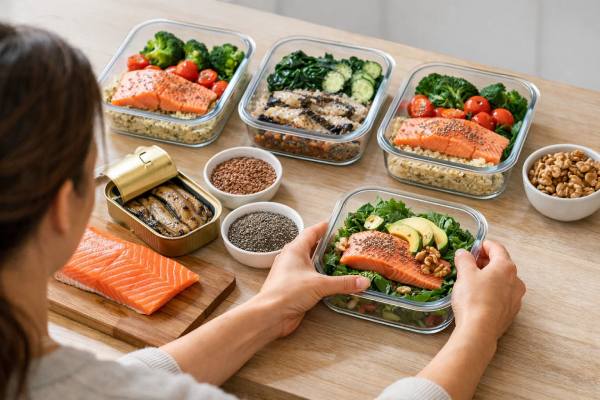
A healthy scalp rarely depends on one “superfood,” yet some foods do more heavy lifting than others. Omega-3-rich foods stand out because they support cell membranes, help moderate inflammatory signaling, and fit naturally into the broader nutrition pattern that tends to favor calmer, more comfortable skin. That matters on the scalp, where dryness, irritation, excess reactivity, and poor barrier function can make even good hair care feel less effective.
The useful question is not whether salmon or chia seeds can magically fix every scalp problem. They cannot. The better question is whether a steady intake of omega-3 foods can strengthen the nutritional foundation for a healthier scalp environment. In many cases, the answer is yes, especially when these foods replace a lower-quality diet rather than being sprinkled on top of one. The good news is that you do not need an elaborate supplement routine to get started. A small number of familiar foods, used consistently through the week, can make the plan both realistic and sustainable.
Quick Overview
- Fatty fish such as salmon and sardines provide marine omega-3s that are more directly useful to the body than plant-only sources.
- Chia seeds, flaxseed, and walnuts can still add value, especially in people who eat little or no seafood.
- Omega-3 foods may support scalp comfort by helping with inflammatory balance and skin barrier function, but they are not a stand-alone treatment for every scalp disorder.
- Fish oil supplements are not automatically better than food and can add cost, side effects, or unrealistic expectations.
- An easy way to apply this is to plan two fatty-fish meals each week and add one plant omega-3 food most days.
Table of Contents
- Why omega-3s matter for the scalp
- Salmon, sardines, and chia: what each one does best
- Foods first or supplements first
- An easy weekly plan you can actually follow
- Simple meal ideas for busy weeks
- When diet is helpful and when the scalp needs more
Why omega-3s matter for the scalp
Omega-3 fats matter to the scalp for the same reason they matter to skin elsewhere: they are structural fats built into cell membranes, and they help shape how the body handles inflammation. That does not mean they act like a prescription dandruff treatment or that every itchy scalp is caused by low omega-3 intake. It means they can support the background conditions that make the scalp more resilient.
The scalp is easy to overlook because it is hidden by hair, but biologically it is still skin. It has a barrier, oil production, immune activity, microbes, and constant exposure to sweat, friction, styling products, UV light, and temperature changes. When that environment becomes irritated or unbalanced, symptoms may show up as dryness, tightness, flaking, tenderness, or a scalp that seems to react to everything. Omega-3 fats are relevant here because they are tied to membrane fluidity and to anti-inflammatory pathways that can help keep skin from becoming excessively reactive.
There is also a practical dietary point. Omega-3-rich foods tend to arrive in nutrient-dense packages. Salmon and sardines bring protein and other micronutrients along with EPA and DHA. Chia and walnuts bring fiber, minerals, and plant compounds. So when someone improves omega-3 intake through food, the benefit is often not from one molecule acting alone. It is part of a broader shift toward a more supportive eating pattern.
This is why omega-3 foods make the most sense in the context of overall scalp health rather than miracle claims. They are best viewed as one of the quieter foundations:
- they may help support a calmer inflammatory tone
- they contribute to skin barrier integrity
- they pair well with protein-rich meals that support hair structure
- they often replace less helpful ultra-processed foods
That last point is worth stressing. Adding salmon once a week while the rest of the diet is dominated by refined snacks, sugary drinks, and very little fiber may not move the needle much. A scalp-friendly diet works more like a pattern than a hack. If you are interested in the bigger food picture behind irritation and reactivity, the connection between scalp inflammation and diet quality is worth understanding.
Another nuance matters here: plant omega-3 and marine omega-3 are not interchangeable in a perfect one-to-one way. Chia and flax provide ALA, while fish provides EPA and DHA directly. The body can convert ALA into EPA and DHA, but that conversion is limited. That is one reason fatty fish remains the most efficient food route when the goal is to increase long-chain omega-3 intake.
So the real value of omega-3 foods for the scalp is not hype. It is consistency. They help create the kind of internal environment in which the scalp barrier, follicle surroundings, and skin comfort are more likely to behave well over time.
Salmon, sardines, and chia: what each one does best
All omega-3 foods are not doing the same job. If you want a plan that actually works, it helps to know what each food brings and where its strengths stop.
Salmon is the food many people think of first, and for good reason. It is one of the more familiar fatty fish, easy to build into dinner, and rich in EPA and DHA, the marine omega-3 fats the body can use directly. Salmon also brings high-quality protein, which matters because a scalp-friendly diet should not focus on fats alone. Hair fibers are built from protein, and meals that combine protein with omega-3s are often more useful than “healthy fats” floating alone in the day. Salmon can also contribute vitamin D in some cases, which makes it a nutritionally efficient choice for people trying to improve multiple weak spots at once. That is one reason it pairs naturally with bigger discussions around vitamin D and hair-related nutrition.
Sardines are less glamorous but often more practical. They are shelf-stable, usually less expensive, and provide EPA and DHA in a compact format. They also bring calcium if the soft bones are eaten, plus protein and other minerals. Sardines work well for people who struggle to cook fish regularly because they remove the prep barrier. The main drawback is taste preference. If you dislike them intensely, they are not a sustainable “best food” for you, no matter how nutritious they are.
Chia seeds belong in the conversation for a different reason. They are an excellent plant source of ALA, not EPA and DHA. That means they are useful, but not equivalent to salmon or sardines. Their real strengths are flexibility and consistency. They can be added to yogurt, oats, smoothies, or overnight puddings with almost no effort. They also bring fiber, which many people need more urgently than they realize. For someone who eats little seafood, chia is a helpful part of the solution, though usually not the whole solution.
It also helps to think in terms of role, not ranking:
- salmon is a strong main-meal fish
- sardines are a convenient pantry shortcut
- chia is a daily background food
- walnuts and flax can support the same plant-based side of the plan
There is no need to force all of them every day. A better approach is to let each one solve a different problem. Salmon covers your intentional fish meals. Sardines rescue busy lunches. Chia keeps omega-3 intake from dropping to zero on the days fish is not on the menu.
The biggest mistake is assuming that one tablespoon of seeds “cancels out” never eating seafood. For some people, especially vegetarians, plant omega-3 foods are still valuable and worth emphasizing. But for those who do eat fish, marine sources are usually the more direct route to EPA and DHA.
Foods first or supplements first
This topic often gets pushed too quickly toward capsules. Someone hears that omega-3s may help skin or scalp health, and within minutes the plan becomes a supplement dose rather than a food routine. That is not always the best first move.
A foods-first approach has several advantages. First, foods bring a nutritional package, not just isolated fat. Salmon gives you protein, satiety, and a meal structure. Sardines offer protein and minerals. Chia adds fiber and texture to breakfast. Supplements, by contrast, are efficient but narrow. They may raise intake, but they do not automatically improve the rest of the diet. For scalp health, that distinction matters because dry, reactive, or flaky skin often reflects the broader pattern as much as one nutrient.
Second, food tends to be easier to interpret. If you add two fish meals and a daily chia habit, you can observe how your scalp feels while the rest of your diet stays grounded in real meals. With supplements, expectations often become distorted. People assume a pill should calm itching fast, fix dandruff, or replace medical treatment. When that does not happen, they either abandon the idea entirely or keep increasing the dose without a good reason.
Third, the evidence for nutritional supplements in hair and scalp problems is often weaker and more mixed than marketing suggests. That does not make supplements useless. It means they should be chosen carefully and for a clear purpose. Food is usually the safer first layer.
There are still situations where supplements make sense:
- you do not eat fish and struggle to meet needs through food
- your clinician recommends them for a specific reason
- you have a very limited diet or travel pattern
- you are trying to fill a realistic gap, not chase a miracle
Even then, more is not always better. Omega-3 supplements can cause gastrointestinal side effects, fishy aftertaste, and interactions in some people, especially when other medications are in the picture. They also tempt people to ignore the basics. A scalp irritated by harsh products, poor sleep, heavy diet swings, or untreated dermatitis is unlikely to be “fixed” by fish oil alone.
That is why I usually frame the question this way: can you build a repeatable food pattern first? If yes, start there. If no, or if there is a clear reason not to, then supplementation becomes easier to think about rationally. Readers who want a broader guide to supplement skepticism may also benefit from how to spot red flags in hair growth supplements.
The strongest long-term plan is often not anti-supplement or pro-supplement. It is proportional. Use foods to create the base. Use supplements only when the base truly needs help.
An easy weekly plan you can actually follow
The easiest omega-3 plan is the one that survives a busy week. That usually means repeating a few dependable foods rather than aiming for a perfect menu. For most adults, a practical target is two fatty-fish meals each week plus a simple plant omega-3 habit on most days. You do not need to calculate every gram to make the plan useful.
Here is an easy weekly structure:
- Choose two fish anchors.
Pick two meals that are realistic every week, not aspirational. One might be baked salmon on Tuesday. The other might be sardines at lunch on Friday or tinned salmon mixed into a grain bowl. - Add one daily plant habit.
Use chia seeds, ground flaxseed, or walnuts most days. This could mean chia stirred into yogurt, flax added to oats, or walnuts added to a snack. - Pair omega-3s with real meals.
Avoid treating omega-3 foods like garnish. Build them into breakfasts, lunches, or dinners that also provide protein, produce, and enough total calories. - Keep one backup option at home.
A shelf-stable fish or seed option prevents the plan from collapsing when shopping is delayed.
A sample week might look like this:
- Monday: Greek yogurt with chia seeds and berries
- Tuesday: Salmon with potatoes and roasted vegetables
- Wednesday: Oatmeal with walnuts and fruit
- Thursday: Eggs, toast, and a side salad, with ground flax mixed into a smoothie later
- Friday: Sardines on toast or in a grain bowl with cucumber and tomatoes
- Saturday: Chia pudding or yogurt with seeds
- Sunday: Whatever fits, without forcing a third fish meal unless you want it
This kind of plan works because it is light-touch. It does not require specialty shopping or meal prep theater. It also fits well with a broader nutrition pattern that supports the scalp. If breakfast is where your week falls apart, high-protein breakfast ideas that support hair health can make the omega-3 habit easier to attach to something stable.
A few small details improve adherence:
- keep chia where you can see it
- buy fish in a form you already like
- use frozen salmon if fresh fish goes to waste
- repeat the same two fish meals until they become automatic
The plan should feel boring in a good way. Scalp health improves more from repetition than from occasional “clean eating” bursts. Two fish meals and daily seeds will outperform a heroic one-week nutrition sprint followed by a month of inconsistency.
Simple meal ideas for busy weeks
People often understand the nutrition logic but still fail at execution. The problem is rarely lack of knowledge. It is friction. Fish feels perishable, seeds feel forgettable, and weekdays move fast. The way around that is to build a short list of repeatable meals that take little thought.
For breakfast, omega-3 foods work best when they are invisible in the routine. Chia seeds can disappear into overnight oats, yogurt bowls, or smoothies. Ground flax works well in oatmeal or blended drinks. Walnuts are easiest when used as a topping instead of a separate “healthy snack” that you keep meaning to remember. Breakfast is also a smart place to combine omega-3 foods with protein and fruit, which makes the meal more complete and more likely to support scalp and hair needs over time.
For lunch, convenience matters even more. Sardines can be mashed with lemon and yogurt or mustard, then spread on toast or crackers. Tinned salmon can go into a bowl with rice, cucumber, greens, and olive oil. If you already meal-prep lunch, simply rotate one omega-3 option into the cycle instead of trying to reinvent the whole system.
For dinner, salmon is the easiest entry point for most people. It works baked, pan-seared, or air-fried and pairs well with potatoes, rice, quinoa, greens, or roasted vegetables. If you dislike salmon, trout or another fatty fish you actually enjoy is a better choice than forcing a food you will start avoiding within two weeks.
Some low-effort combinations that work well:
- salmon with roasted carrots and potatoes
- sardines on sourdough with tomato and arugula
- chia yogurt bowl with berries and pumpkin seeds
- oatmeal with walnuts, cinnamon, and fruit
- grain bowl with tinned salmon, cucumber, herbs, and olive oil
There is also value in combining omega-3 foods with other nutrients people often under-eat. Sardines can fit alongside foods that support minerals such as iron or zinc. Seed-based breakfasts pair well with fruit and dairy or fortified alternatives. Fish dinners often improve overall protein quality for the day. If your meals are also weak in iron-rich foods, how to build iron-rich meals for hair support can complement this plan nicely.
The key is to make the menu modular. You do not need seven different omega-3 recipes. You need three or four reliable moves that can rotate without effort. Once those are in place, consistency takes less motivation, and consistency is what turns a scalp-friendly idea into a scalp-friendly pattern.
When diet is helpful and when the scalp needs more
Omega-3 foods can support scalp health, but they have limits. That is not a weakness of the foods. It is a reminder that scalp symptoms have different causes, and not all of them are nutritional.
A food-first omega-3 plan makes the most sense when the goal is general support: a drier scalp, mild sensitivity, a desire to improve overall diet quality, or a wish to build a more anti-inflammatory eating pattern over time. In those settings, better nutrition can genuinely help the scalp environment feel steadier. But when the scalp is very itchy, painful, crusted, clearly inflamed, or shedding heavily, food should not be mistaken for a substitute for diagnosis.
This matters because people often wait too long while trying to “eat cleaner.” A few examples:
- Seborrheic dermatitis may improve with better overall diet, but often still needs targeted scalp treatment.
- Psoriasis is not solved by salmon dinners.
- Contact dermatitis from hair dye or fragranced products will not calm just because you added chia pudding.
- Scalp pain or burning deserves a broader look if it persists.
- Hair shedding may reflect illness, stress, hormones, medications, or iron deficiency, not an omega-3 gap.
That is why diet should be framed as support, not as a diagnosis or cure. It is powerful in the background and limited in the foreground when a scalp disorder is actively driving symptoms.
You should look beyond food if:
- flaking is thick, persistent, or very inflamed
- the scalp feels sore, hot, or tender
- itching disrupts sleep
- hair loss is increasing
- symptoms persist despite several weeks of consistent scalp care and a better diet
In those cases, it helps to read the scalp more like skin than like a simple dryness problem. If you are not sure when a symptom crosses that line, itchy scalp causes and when to worry is a good next step.
The encouraging part is that diet and treatment do not compete. They work best together. A prescribed shampoo, a gentler product routine, and a better omega-3 food pattern can all belong in the same plan. The nutrition piece makes the scalp environment more supportive. Medical care addresses disease when disease is present.
So the balanced conclusion is this: use omega-3 foods to build a better baseline. Use common sense to recognize when baseline support is not enough. That combination is what makes a scalp plan both practical and credible.
References
- Omega-3 Fatty Acids – Health Professional Fact Sheet 2025
- Nutritional Dermatology: Optimizing Dietary Choices for Skin Health 2025 (Review)
- Evaluation of the Safety and Effectiveness of Nutritional Supplements for Treating Hair Loss: A Systematic Review 2023 (Systematic Review)
- Omega 3 Fatty Acid and Skin Diseases 2021 (Review)
Disclaimer
This article is for educational purposes and is not a substitute for medical advice, diagnosis, or treatment. Omega-3-rich foods can support general scalp health, but persistent itching, thick scaling, pain, patchy hair loss, or rapid shedding may reflect a medical condition that needs evaluation. People with fish allergy, bleeding concerns, or medication questions should seek individualized guidance before making major dietary or supplement changes.
If this article was useful, please share it on Facebook, X, or another platform where it might help someone build a simpler, more effective scalp-supportive routine.