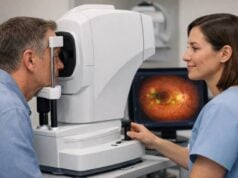
Optic neuritis is an inflammation of the optic nerve that can cause rapid vision changes, often with pain when moving the eye. Since the COVID-19 pandemic began, clinicians have reported optic neuritis occurring during or after SARS-CoV-2 infection in a small number of people. For patients, the uncertainty is often the hardest part: is this a temporary post-viral problem, the first sign of an autoimmune condition, or an emergency that could threaten vision if treatment is delayed? The good news is that optic neuritis is a condition where timing, pattern recognition, and prompt evaluation can make a meaningful difference. Many patients recover vision partially or even substantially, especially when the right treatment is started early. This guide explains the symptoms that matter, how post-COVID cases can present, which risks raise concern for atypical causes, and exactly when to seek urgent care rather than waiting for an appointment.
Quick Summary
- Sudden vision loss, washed-out colors, and pain with eye movement are classic optic neuritis features that warrant prompt evaluation.
- Optic neuritis after COVID-19 appears uncommon, but it can occur within weeks of infection and may be bilateral more often than “typical” cases.
- Severe vision loss, prominent disc swelling, or recurrence increases concern for conditions like MOG antibody disease or neuromyelitis optica spectrum disorder.
- High-dose steroids are commonly used early, and plasma exchange may be time-sensitive for severe or high-risk presentations.
- If vision worsens over hours to days or you notice a new blind spot, treat it as urgent today, not “watch and wait.”
Table of Contents
- What optic neuritis feels like
- How COVID-19 may trigger optic nerve inflammation
- Symptom timing and patterns after COVID-19
- Risk factors and important look-alikes
- When to act fast red flags
- How doctors confirm the diagnosis
- Treatment, recovery, and follow-up
What optic neuritis feels like
Optic neuritis usually announces itself clearly, but the details matter. The most common story is an eye that “does not see right” over hours to a few days. Vision may be blurry, dim, or foggy, as if a gray filter has been placed over the scene. Many people notice that colors look duller, especially reds, or that contrast is weaker. A central blind spot (a smudge in the middle of vision) is also common. These symptoms are often frightening because they can be dramatic while the eye looks normal in the mirror.
Pain is a hallmark in many typical cases. It is usually worse with eye movement and may feel like soreness behind the eye rather than surface burning. Pain often starts before the vision loss or alongside it, and it can improve over several days even if vision remains reduced for longer. Not everyone has pain, but painful visual loss should raise suspicion for optic neuritis.
You may also notice “brightness desaturation,” where the world looks less vivid through the affected eye, or a sense that light is dimmer on one side. Another clue is that symptoms can worsen temporarily with heat, exertion, fever, or a hot shower. This does not necessarily mean the condition is worsening; it can reflect how inflamed or demyelinated nerves conduct signals under stress.
On exam, some people have a swollen optic disc visible during a dilated eye exam, while others have a normal-looking disc because the inflammation is behind the eye. A normal fundus exam does not rule out optic neuritis.
Because optic neuritis affects the optic nerve, it can also change the pupils. A clinician may detect a relative afferent pupillary defect, meaning the affected eye responds less strongly to light. Patients sometimes experience this as a subtle delay in light response, but most do not notice it directly.
What optic neuritis does not usually cause is eye discharge, crusting, or the gritty sensation typical of conjunctivitis or dry eye. It is also different from a refractive problem, where blur improves quickly with glasses or pinhole testing. Optic neuritis is a neurological vision problem, not a surface irritation problem.
If you suspect optic neuritis, avoid testing yourself by repeatedly shining bright lights into the eye. The best self-check is functional: compare eyes by reading, noticing color intensity, and covering one eye at a time to detect asymmetry. Then seek timely evaluation.
How COVID-19 may trigger optic nerve inflammation
Optic neuritis after COVID-19 is best understood as a rare, post-infectious neurologic complication rather than a routine consequence of the virus. A key point for readers is that “after COVID-19” does not automatically mean “caused by COVID-19.” Timing can be suggestive, but clinicians still need to evaluate for the same underlying conditions that cause optic neuritis in other settings. The purpose of this section is to explain why COVID-19 can be a plausible trigger without overstating certainty.
There are several biologically credible pathways. One is immune activation. SARS-CoV-2 infection can provoke a strong inflammatory response, and in some people the immune system may remain activated or become misdirected after the acute illness. Optic neuritis is often immune mediated, meaning the optic nerve becomes inflamed because the immune system attacks components of the nerve or surrounding myelin.
Another pathway is a “molecular mimicry” concept: viral antigens may resemble parts of human proteins closely enough that antibodies or immune cells cross-react. This is one mechanism discussed in other post-viral neurologic syndromes.
COVID-19 can also influence blood clotting and vascular inflammation, especially during severe infection. While classic optic neuritis is inflammatory rather than vascular, clinicians will still consider vascular causes of sudden vision loss when the story is atypical, particularly in older adults or in those with vascular risk factors.
A practical and important nuance is that optic neuritis can be the first presentation of an underlying demyelinating disorder. Multiple sclerosis, myelin oligodendrocyte glycoprotein antibody-associated disease, and neuromyelitis optica spectrum disorder are all conditions where optic neuritis can be a primary feature. A viral infection can act as a stressor that brings the first episode to clinical attention, even if the autoimmune condition was developing already. That is one reason post-COVID optic neuritis requires careful workup rather than assumptions.
In reported post-COVID cases, clinicians have described a mix of patterns: single-eye optic neuritis similar to classic presentations, and bilateral cases with significant optic disc swelling. Bilateral involvement can still recover well, but it raises the likelihood of certain subtypes that deserve targeted testing and, sometimes, a different long-term plan.
The most helpful takeaway is this: COVID-19 may be part of the timeline, but the clinical pattern and test results determine the real diagnosis and the safest treatment pathway. Your care should focus on what the optic nerve is doing now, not only on what infection came before.
Symptom timing and patterns after COVID-19
People often ask, “How soon after COVID-19 could optic neuritis happen?” In reported cases, symptoms have appeared during the active infection, in the early recovery period, or weeks later. Clinically, a common post-infectious window is within the first several weeks after illness, but later presentations have also been described. This range is one reason clinicians focus less on a single cutoff and more on pattern, severity, and test results.
The timing often follows a recognizable trajectory. Many patients describe a relatively sudden onset over 24 to 72 hours, with worsening over several days. Vision may stabilize after about a week and then begin gradual improvement. If vision keeps worsening steadily beyond roughly two weeks without plateau, clinicians become more concerned about atypical causes and the need for urgent escalation.
Post-COVID optic neuritis has been described as bilateral more often than “classic” optic neuritis in some reports. Bilateral symptoms may feel like generalized blur, difficulty driving, or loss of detail rather than an obvious “one-eye problem.” This is why covering one eye at a time can be revealing. If both eyes are affected, you may still notice asymmetry, but the overall effect can feel like a sudden change in the whole visual world.
Optic disc swelling is another pattern that may be more prominent in some post-COVID cases. Disc swelling can occur in typical optic neuritis, but when swelling is marked, clinicians also consider other diagnoses such as MOG antibody-associated optic neuritis or, less commonly, conditions that raise intracranial pressure. The difference is not something you can diagnose at home, but it shapes urgency and testing.
Symptoms often come as a cluster, and the combination can be more informative than any single sign:
- Visual blur plus pain with eye movement points strongly toward optic neuritis.
- Visual blur plus color fading suggests optic nerve dysfunction.
- Visual blur plus prominent headache and transient “graying out” when standing raises broader neurologic considerations.
- Visual blur plus new neurologic symptoms, such as numbness, weakness, imbalance, or bladder changes, raises concern for a broader inflammatory process.
Some people in post-COVID recovery also experience dry eye, migraine, or focusing fatigue that can mimic optic nerve problems. The difference is that optic neuritis tends to produce true acuity and color changes in one eye or both, often with a distinct blind spot or dimming that does not simply fluctuate with blinking or screen time.
If you have new vision loss after COVID-19, do not self-label it as Long COVID vision changes. Treat it as a new neurologic symptom until an eye clinician confirms it is something more benign.
Risk factors and important look-alikes
Optic neuritis is a diagnosis, but it is also a signpost. The biggest clinical question is not only “Is this optic neuritis?” but “What type, and what is driving it?” That is where risk factors and look-alikes matter.
Typical optic neuritis often occurs in younger adults and is frequently linked to demyelinating disease risk, especially multiple sclerosis. A first episode does not mean you have multiple sclerosis, but it is one reason MRI testing is often recommended. Features that increase suspicion for an underlying demyelinating disorder include other neurologic symptoms, prior episodes of neurologic dysfunction, or MRI findings consistent with demyelination.
Atypical optic neuritis patterns deserve special attention because they can require different treatment urgency or long-term prevention strategies. Red flags for atypical disease include:
- Bilateral involvement at onset
- Very poor visual acuity at presentation
- Marked optic disc swelling or hemorrhages
- Recurrence, especially soon after stopping steroids
- Poor recovery after appropriate acute treatment
- Minimal pain or a pain pattern that does not fit the typical “eye movement pain” story
Two antibody-mediated conditions are particularly important:
- Myelin oligodendrocyte glycoprotein antibody-associated disease, which often presents with optic neuritis that can be bilateral and can recur
- Neuromyelitis optica spectrum disorder, which can cause severe optic neuritis and may require rapid escalation if vision is threatened
These conditions are not diagnosed by symptoms alone. They require targeted blood tests and MRI patterns, and they influence decisions about acute treatment and long-term relapse prevention.
There are also look-alikes that can be mistaken for optic neuritis:
- Ischemic optic neuropathy, which is more common in older adults and often presents with sudden painless vision loss and optic disc swelling
- Compressive optic neuropathy, where a mass effect causes more gradual progression rather than an acute inflammatory course
- Intracranial pressure elevation, which can cause disc swelling and transient visual obscurations, often with headache
- Severe migraine aura, which can cause transient visual phenomena but usually does not cause sustained color fading in one eye
In the post-COVID setting, clinicians may also consider inflammatory vascular events, particularly if the patient is older or has major vascular risk factors. This does not mean the cause is vascular, but it reinforces why prompt, thorough evaluation is essential.
If you are trying to estimate personal risk, the most practical question is not “What did COVID do to me?” but “Is my presentation typical or atypical?” Typical patterns often recover well with standard care. Atypical patterns require faster workup and may change the treatment pathway.
When to act fast red flags
Optic neuritis is a condition where delays can matter, especially when the presentation suggests severe inflammation or a higher-risk subtype. The safest mindset is to treat new vision loss as urgent until proven otherwise. The goal is not to panic, but to avoid the common mistake of waiting days to see if it improves.
Seek same-day urgent evaluation if you have any of the following:
- Sudden or rapidly worsening vision loss in one eye or both over hours to days
- A new blind spot, curtain-like shadow, or a large missing area in your visual field
- Severe pain with eye movement, especially with significant light sensitivity or nausea
- Double vision that is new and persistent
- New neurologic symptoms such as weakness, numbness, trouble speaking, imbalance, or severe new headache
- Bilateral symptoms at onset, especially if vision is markedly reduced
- Vision loss plus significant optic disc swelling noted on any exam
There are also red flags that signal a need for urgent evaluation even if symptoms are less dramatic:
- Vision keeps worsening beyond roughly 10 to 14 days without plateau
- Vision loss is painless in an older adult, which can point toward vascular causes
- There is a history of recurrent episodes or steroid-dependent relapses
- You have known autoimmune disease, prior demyelinating disease, or prior optic neuritis
Why the emphasis on speed? Because acute treatments, when indicated, are time sensitive. High-dose steroids are often used to speed recovery and reduce inflammation. In severe optic neuritis or in conditions such as neuromyelitis optica spectrum disorder, timely escalation to plasma exchange can be critical for preserving vision. The window for best outcomes is not measured in hours alone, but it is also not “whenever you get around to it.”
If you are unsure where to go, an emergency department with ophthalmology and neurology access is often appropriate for significant vision loss, severe pain, bilateral symptoms, or neurologic signs. For milder but clearly new monocular symptoms, an urgent eye clinic visit can be appropriate if it can be arranged quickly. The wrong move is waiting a week for a routine appointment.
A final safety note: do not self-treat suspected optic neuritis with leftover steroids. Steroids can mask infections and complicate diagnosis. Optic neuritis treatment is not just “take steroids,” it is “confirm the subtype and treat appropriately.”
How doctors confirm the diagnosis
A thorough optic neuritis evaluation aims to answer three questions: is the optic nerve involved, what is the most likely cause, and how urgent is treatment. Most patients benefit when the workup is organized rather than scattershot.
Clinicians start with functional testing that captures optic nerve performance:
- Best-corrected visual acuity and pinhole testing
- Color vision testing or color comparison between eyes
- Visual field testing to map blind spots
- Pupil testing for a relative afferent pupillary defect
- Contrast sensitivity in selected settings
Next, the eye exam looks for optic disc swelling, hemorrhages, and signs of retinal disease that could mimic optic nerve symptoms. Optical coherence tomography may be used to assess the retinal nerve fiber layer and ganglion cell layer. Early in optic neuritis, these layers may not show thinning yet, but baseline imaging can be useful for future comparison.
Imaging is often a cornerstone. MRI of the brain and orbits with contrast can detect optic nerve enhancement and evaluate for demyelinating lesions in the brain that influence future risk assessment. MRI findings can also suggest atypical patterns, such as long segments of optic nerve enhancement or involvement of specific regions that are more common in certain antibody-mediated diseases.
Blood tests are not automatically required for every case, but they become important when features are atypical or when the presentation raises concern for specific causes. Clinicians may test for antibodies associated with neuromyelitis optica spectrum disorder and myelin oligodendrocyte glycoprotein antibody-associated disease, especially when there is bilateral disease, severe vision loss, prominent disc swelling, recurrence, or poor recovery.
Other tests may be considered based on context: inflammatory markers, infectious screening when indicated, or lumbar puncture when broader neurologic inflammation is suspected. The goal is not to order everything; it is to order what changes management.
In the post-COVID setting, clinicians will also clarify the timeline: the date of infection, severity, treatments received, and whether neurologic symptoms occurred during the infection. This timeline helps, but it does not replace objective testing.
If you want to make the evaluation more efficient, bring these details:
- Exact onset time and progression pattern over the first 7 to 10 days
- Whether pain occurs with eye movement
- Whether colors appear washed out in one eye
- Any prior episodes of vision loss or neurologic symptoms
- A list of medications and supplements, including recent changes
A good diagnostic process should leave you with a clear working diagnosis, a plan for treatment urgency, and a follow-up strategy for both vision recovery and relapse risk assessment.
Treatment, recovery, and follow-up
Optic neuritis treatment is individualized, but it usually follows a structured logic: reduce acute inflammation when appropriate, protect vision in high-risk cases, and plan follow-up based on the likely underlying cause.
High-dose corticosteroids are commonly used in acute optic neuritis to speed recovery. A typical approach in many settings is intravenous methylprednisolone for several days, sometimes followed by an oral taper. The goal is not only faster symptom improvement, but also control of active inflammation. Steroids do not guarantee better final vision in every case, but they can shorten the time to recovery and are often favored when vision loss is moderate to severe, when both eyes are involved, or when the patient’s work or safety depends on faster functional return.
When optic neuritis is severe, atypical, or suspected to be associated with neuromyelitis optica spectrum disorder, clinicians may escalate quickly to plasma exchange. This is especially relevant when vision is very poor or not improving with steroids. Timing can matter, and escalation is often considered within days to a couple of weeks rather than after a prolonged wait.
Recovery expectations depend on subtype. Many typical cases begin to improve within 2 to 4 weeks, with continued recovery over weeks to months. Even with good recovery, some patients notice lasting changes in contrast sensitivity, color perception, glare sensitivity, or fatigue-related blur. These subtler deficits can matter in real life, especially for driving at night or extended screen work.
Follow-up is not only about recovery. It is also about risk management:
- If MRI shows brain lesions consistent with demyelination, clinicians may discuss multiple sclerosis risk and whether early disease-modifying therapy is appropriate.
- If antibodies suggest myelin oligodendrocyte glycoprotein antibody-associated disease or neuromyelitis optica spectrum disorder, long-term relapse prevention planning becomes central because repeated attacks can cause cumulative damage.
- If the episode appears isolated and typical, follow-up may focus on confirming stability and ensuring no recurrence.
A practical recovery plan often includes:
- A scheduled recheck of visual acuity, color testing, and visual fields
- Repeat imaging or optical coherence tomography to document structural changes over time
- Guidance on activity pacing during recovery, since fatigue and heat can worsen symptoms temporarily
- Clear instructions on what recurrence looks like and when to seek urgent care again
If optic neuritis occurs after COVID-19, it is also reasonable to address broader recovery factors: sleep quality, hydration, nutrition, and management of lingering post-viral symptoms. These do not replace medical treatment, but they can support resilience and reduce symptom amplification.
The most important reminder is that optic neuritis is treatable, and many patients recover meaningful vision. The path is safest when you act quickly, complete the recommended workup, and stay engaged in follow-up so that any underlying condition is identified early rather than after a second attack.
References
- Systematic review exploring the clinical features of optic neuritis after SARS-CoV infection and vaccination – PMC 2023 (Systematic Review)
- Frontiers | Clinical features of COVID-19-related optic neuritis: a retrospective study 2024 (Clinical Study)
- The Treatment of Acute Optic Neuritis – PubMed 2023 (Review)
- Optic neuritis: a comprehensive review of current therapies and emerging treatment strategies – PMC 2025 (Review)
Disclaimer
This article is for educational purposes only and does not provide medical advice, diagnosis, or treatment. Optic neuritis can overlap with other causes of vision loss, some of which are medical emergencies. If you have sudden vision loss, rapidly worsening vision, severe eye pain, new double vision, or neurologic symptoms such as weakness, numbness, trouble speaking, or severe headache, seek urgent medical evaluation immediately. Do not start corticosteroids on your own, as they can complicate diagnosis and may be unsafe in certain infections. For personalized care, consult a licensed ophthalmologist or neurologist who can perform appropriate testing and guide treatment and follow-up.
If you found this helpful, please consider sharing it on Facebook, X (formerly Twitter), or any platform you prefer.