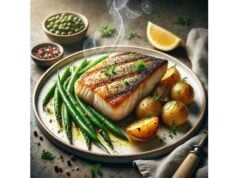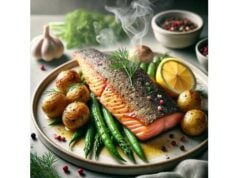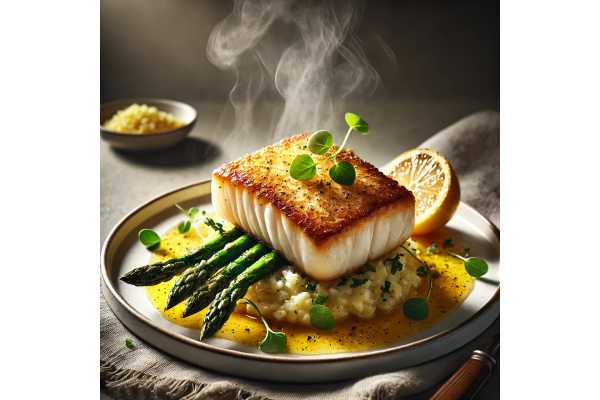
Orange roughy—once marketed as “slimehead”—is a deep-sea fish known for its delicate, snowy flesh and mild, sweet flavor. Cooks prize it for even flaking, a lean profile, and the way it takes to quick, high-heat methods without tasting “fishy.” Nutritionally, orange roughy is a high-protein, very low-fat white fish with meaningful selenium and modest sodium, making it easy to fit into heart-conscious menus. Yet it also comes with two realities smart shoppers should know: it is a very long-lived species (often several decades old) that can accumulate mercury, and it is commonly harvested by bottom trawls in vulnerable deep-sea habitats. This article helps you navigate both the kitchen and the science—how orange roughy’s nutrients look per 100 g, where the true benefits are, what the safety guidelines say (especially for pregnancy and young children), and practical steps for buying, storing, and cooking it well while prioritizing sustainability.
Key Takeaways
- Typical serving: 115–150 g (about a palm-sized fillet), up to once weekly within a varied seafood rotation.
- Main benefits: high-quality lean protein and naturally low calories for satisfying, lighter meals.
- Safety caveat: classified among higher-mercury fish; choose sparingly and rotate with low-mercury species.
- Who should limit or avoid: people who are pregnant or breastfeeding and young children should avoid orange roughy and choose lower-mercury options instead.
- Handling note: keep very cold from purchase to cooking to prevent quality loss and histamine risk.
Table of Contents
- Detailed Overview
- Nutrition Profile
- Evidence-Based Health Benefits
- Risks, Allergies and Interactions
- Selecting, Quality, Sustainability and Storage
- Preparation, Cooking and Nutrient Retention
- Portions, Comparisons and FAQs
Detailed Overview
Orange roughy (Hoplostethus atlanticus) is a deepwater species found on continental slopes and seamounts, commonly between 600 and 1,200 meters. It’s a slow-growing, late-maturing fish that can live for many decades. That unusual biology explains much of what consumers notice: supply that arrives in waves, lean flesh with a very fine, delicate flake, and a growing set of sustainability questions because deepwater trawls can disturb long-lived corals and sponges.
In the kitchen, orange roughy plays the role of “crowd-pleasing white fish.” Its flavor is mild and sweet, closer to cod or haddock than to strong, oily fish. The fillets are thin to medium in thickness, cook fast, and flake into moist, pearly segments if you avoid overcooking. Because the flesh is naturally low in fat, it benefits from quick sears in a hot pan with a little oil, gentle oven-roasting on a preheated sheet, or steaming with aromatics. Citrus, capers, herb butters, and miso or yogurt-based sauces complement its sweetness without overpowering it.
Nutritionally, orange roughy is all about protein quality and calorie efficiency: around 16 g of complete protein per 100 g raw with roughly 75–80 kcal. It offers meaningful selenium and small amounts of minerals like phosphorus and potassium. Unlike salmon or mackerel, it is not an omega-3 heavyweight; treat it as a lean protein rather than a major source of EPA and DHA. For heart-focused meal planning, you can pair orange roughy with omega-3-rich sides (e.g., walnut-herb pesto, chia-lemon yogurt) or rotate it with oily fish on other days.
Two cautions merit emphasis. First, mercury: because orange roughy is long-lived and feeds in deep ecosystems, it falls into higher-mercury categories in national guidance. Sensitive groups are advised to avoid it and choose lower-mercury fish most of the time. Second, sustainability: deep-sea trawling for orange roughy can contact fragile habitats; recommendations often encourage limiting consumption and selecting alternatives from better-rated fisheries when possible.
In short, orange roughy can be a tender, reliable white fish for occasional meals—best enjoyed with good handling, precise cooking, and a seafood rotation that leans more heavily on lower-mercury, well-managed species.
Nutrition Profile
Notes on data and units: Values below are per 100 g raw orange roughy for clear comparison across species. Natural variability occurs by season, habitat, and cut. Percent Daily Value (%DV) uses current adult reference intakes where applicable. Rounding is to sensible precision for home use.
Macros and Electrolytes (per 100 g, raw)
| Nutrient | Amount | %DV |
|---|---|---|
| Energy | 76 kcal | — |
| Protein | 16.4 g | — |
| Total fat | 0.7 g | 1% (78 g DV) |
| Saturated fat | 0.1 g | 1% (20 g DV) |
| Carbohydrate | 0 g | 0% |
| Total sugars | 0 g | — |
| Dietary fiber | 0 g | — |
| Sodium | 61 mg | 3% (2,300 mg DV) |
| Water | ~82 g | — |
What this means: Orange roughy is a lean, high-protein, low-calorie choice that accepts many flavor profiles. Because it is so low in fat, pair it with healthy oils, nuts, or creamy yogurt-based sauces when you want more richness.
Fats and Fatty Acids
| Component | Amount | %DV |
|---|---|---|
| Total omega-3 (EPA+DHA) | low (species is lean) | — |
| Cholesterol | ~51 mg | — |
Context: Compared with salmon or sardines, orange roughy’s omega-3 contribution is modest. Build your weekly pattern around oily fish for EPA/DHA, and use orange roughy as a light protein.
Protein and Amino Acids
- High-quality, complete protein typical of marine finfish.
- A 120–150 g portion yields roughly 20–25 g protein cooked—enough to anchor a meal and support satiety without many calories.
Vitamins (typical qualitative levels)
- B-vitamins: small to moderate niacin (B3) and vitamin B6 amounts.
- Vitamin B12: present in lean white fish but variable by cut and handling.
- Vitamin D: often low; do not rely on orange roughy for vitamin D.
Minerals (per 100 g, raw)
| Mineral | Amount | %DV |
|---|---|---|
| Selenium | ~67 µg | 122% (55 µg DV) |
| Phosphorus | ~91 mg | 7% (1,250 mg DV) |
| Potassium | ~142 mg | 3% (4,700 mg DV) |
| Iron | ~0.9 mg | 5% (18 mg DV) |
| Calcium | ~8 mg | 1% (1,300 mg DV) |
Why selenium matters: Selenium supports antioxidant enzymes and thyroid function. Many lean white fish provide substantial selenium, and orange roughy is no exception.
Allergens and Intolerance Markers
- Orange roughy is a finfish allergen. Individuals with finfish allergy should avoid it.
- Cross-contact with shellfish can occur in mixed seafood processing facilities.
Contaminants and Residues
- Mercury: classified among higher-mercury fish; see safety section for practical limits and alternatives.
- Histamine: can form in temperature-abused fish; strict cold handling prevents this problem.
Footnote on preparation: Pan-searing or baking adds minimal fat if you use measured oil (e.g., 1 tsp = ~40 kcal). Grilling or steaming keeps totals very low while preserving moisture.
Evidence-Based Health Benefits
1) Lean, complete protein that supports satiety and muscle maintenance
Per 100 g raw (about 85 g cooked), orange roughy delivers roughly 14–17 g of complete protein with very little fat. That protein slows gastric emptying, helps stabilize appetite between meals, and provides essential amino acids for daily repair. In practice, a palm-sized fillet alongside vegetables and whole grains creates a filling plate at a modest calorie cost.
2) Selenium for antioxidant defense
Orange roughy can supply about—or even more than—the daily value for selenium in a typical serving. Selenium is integral to glutathione peroxidases and other selenoproteins that protect lipids and cell membranes from oxidative damage. Including selenium-rich seafood in a varied pattern is a practical way to meet needs without supplements.
3) Heart-conscious meal building, when used strategically
While orange roughy is not an omega-3 standout, it supports heart-smart menus by replacing higher-saturated-fat meats and encouraging cooking methods that use less oil (quick sear, steam, parchment). Pairing it with plant fats (olive oil, walnuts) and fiber-dense sides (beans, barley, leafy greens) further improves overall cardiometabolic quality.
4) Helpful for energy balance
At about 75–80 kcal per 100 g raw, orange roughy lets you build generous portions without inflating calories. For people aiming to manage weight, swapping a high-fat protein for orange roughy once a week can trim meal calories while preserving satisfaction.
5) Gentle flavor that broadens seafood acceptance
Many diners who avoid “fishy” profiles enjoy orange roughy’s mild sweetness. Serving it well-seasoned and not overcooked can expand the number of seafood meals a household enjoys, a small but meaningful dietary shift.
What these benefits are not
- Orange roughy is not a primary omega-3 source; rely on salmon, sardines, mackerel, or trout for EPA/DHA.
- It is not a frequent, everyday choice for sensitive groups because of mercury.
- It is not a sustainability “easy button”; deep-sea habitats recover slowly, so informed purchasing matters.
Practical use pattern
- For most healthy adults: a 115–150 g portion up to once weekly fits a rotation that emphasizes lower-mercury fish on other days.
- Combine with vegetables and whole grains, and add a small amount of healthy fat for flavor and fat-soluble nutrient absorption.
Risks, Allergies and Interactions
Mercury: why orange roughy is higher risk
Orange roughy matures late and can live for many decades. Over a long lifespan, methylmercury accumulates in muscle tissue. National seafood advisories group orange roughy among the highest-mercury fish, recommending avoidance for those who are pregnant or breastfeeding and for young children, and infrequent use for others. For most adults, the simplest pattern is to enjoy orange roughy occasionally and choose lower-mercury species (e.g., salmon, sardines, trout, pollock, tilapia, anchovies) most of the time.
Histamine (scombrotoxin) risk when temperature abused
If certain fish are held too warm after harvest, bacteria can convert natural histidine to histamine, causing rapid-onset symptoms (flushing, headache, hives). Histamine is heat-stable—cooking does not destroy it. The control step is a strict cold chain from boat to plate. Buy from reputable sellers, transport on ice, keep below 4°C, and discard fish that smells sour, “cheesy,” or unusually pungent.
Allergy considerations
Orange roughy is a finfish. Anyone with a diagnosed finfish allergy should avoid it. Cross-contact with shellfish is possible at seafood counters; ask about handling if you have allergies.
Parasites and raw use
For raw preparations, use fish that has been properly frozen for parasite control according to food safety codes, and keep it chilled during prep and service. While orange roughy is typically cooked, any decision to serve it raw requires sashimi-grade handling.
Interactions and special diets
- Pregnancy, breastfeeding, and young children: avoid orange roughy due to high mercury classification; choose lower-mercury species instead.
- Thyroid conditions and selenium supplements: orange roughy is high in selenium; factor this in if you take selenium-containing multivitamins.
- Sodium management: naturally modest sodium; main contributors are brines and sauces added during cooking.
Bottom line on safety
Use orange roughy sparingly, keep it very cold, and prioritize a seafood rotation centered on low-mercury, well-managed species. That approach captures the culinary upside while minimizing risk.
Selecting, Quality, Sustainability and Storage
How to choose quality fillets
- Look: translucent white to ivory flesh with a moist sheen; avoid drying, browning, or separations (“gaping”).
- Smell: clean, sea-fresh, never sour or “cheesy.”
- Touch: fillets should be firm and spring back when pressed.
- Label cues: country of origin, gear type (often bottom trawl), and whether product was frozen at sea. Previously frozen fish can be excellent when processed quickly after catch.
Sustainability snapshot
- Biology: very slow growth and late maturity; populations recover slowly after overfishing.
- Fishing method: commonly deep-sea bottom trawl, which can contact fragile corals and sponges on seamounts.
- What to do as a buyer: when sustainability is your priority, limit orange roughy purchases and choose alternatives rated better by independent programs (e.g., line-caught pollock, U.S. farmed rainbow trout, Alaskan salmon, or U.S. hook-and-line mahi-mahi). If you do buy orange roughy, look for fisheries with documented rebuilding plans and habitat protections.
Storage and handling
- Refrigeration: store at 0–2°C on a rack over ice; cook within 24–36 hours for best texture.
- Freezing: wrap tightly and freeze promptly if not cooking within two days; use within 1–2 months for optimal quality.
- Thawing: slow-thaw in the refrigerator on a tray; pat dry before cooking. Avoid countertop thawing.
- Leftovers: cool quickly and refrigerate within two hours; consume within 1–2 days.
Cost-savvy tips
- Purchase whole sides or value packs and portion at home.
- Consider frozen fillets during peak seasons; blast-frozen product often outperforms “fresh” that has spent days in transit.
- Ask your fishmonger for center cuts when you plan to pan-sear; use thinner tail pieces for tacos or soups.
Choosing alternatives
If a recipe calls for mild white fish, suitable substitutes include Pacific cod, haddock, tilapia, or Alaska pollock. For more omega-3, use salmon or trout and adjust cooking time.
Preparation, Cooking and Nutrient Retention
Baseline prep
- Unwrap and pat fillets very dry to promote browning.
- Lightly salt 15–30 minutes ahead (dry-brine) to season evenly.
- If using acid (lemon juice, vinegar), add near the end to prevent surface “cooking” and moisture loss.
Quick, low-fat methods
- Pan-sear: heat a nonstick or well-seasoned skillet; add 1–2 tsp oil; cook 2–3 minutes per side until just opaque. Finish with lemon and herbs.
- Roast: preheat a heavy sheet at 220°C; arrange fillets, brush with oil, and roast 6–10 minutes depending on thickness.
- Steam: place on an aromatic bed (ginger, scallion, citrus peel) and steam until the thickest part turns opaque and flakes.
Moist-heat options for super-tender texture
- En papillote (parchment): seal with vegetables, olives, and a splash of white wine; bake 10–12 minutes for a self-saucing, low-fat entrée.
- Shallow poach: simmer aromatics, reduce to barely steaming, and cook fillets gently to avoid albumin weeping.
Crusting and coatings
- Herb panko: mix panko with parsley, lemon zest, and a teaspoon of oil; press on top, roast until golden.
- Almond-citrus crust: finely chopped nuts with orange zest for crunch plus healthy fats.
Retention tips
- Pull early: lean fish overcooks quickly; carryover heat finishes the center.
- Add fat strategically: a teaspoon of oil, a yogurt-herb sauce, or a knob of butter provides mouthfeel without many calories.
- Keep flavor bright: citrus, capers, and fresh herbs make low-fat preparations satisfying.
Food safety reminders
- Maintain refrigeration below 4°C from store to stove.
- Use separate boards and knives for raw fish and ready-to-eat items.
- For anyone sensitive to histamine reactions, avoid fish that has been warm, unrefrigerated, or smells off.
Serving ideas
- Lemon-caper pan sauce with sautéed green beans and farro.
- Ginger-soy steamed fillets with bok choy and jasmine rice.
- Mediterranean parchment packets with cherry tomatoes, olives, and fennel.
Portions, Comparisons and FAQs
How much counts as a serving?
- A practical adult portion is 115–150 g (4–5 oz) cooked or raw weight. That yields roughly 20–25 g protein with 90–120 kcal depending on cooking method.
How often should I eat orange roughy?
- For most adults: up to once weekly within a seafood pattern that emphasizes low-mercury species the rest of the time.
- People who are pregnant or breastfeeding and young children should avoid orange roughy and choose low-mercury fish options instead.
Is orange roughy good for weight management?
- Yes—its high protein and low calorie density make satisfying meals. Pair with vegetables and whole grains, and use modest amounts of healthy fats for flavor.
How does it compare to other white fish?
- Cod or haddock: similarly mild but often flakier; both are generally lower in mercury and widely available from well-managed fisheries.
- Tilapia: very mild, affordable, low in mercury; softer texture than orange roughy.
- Pollock: lean, flaky, low mercury; excellent for frequent meals.
Orange roughy vs. salmon
- Salmon offers far more omega-3 and is usually a better frequent choice nutritionally. Orange roughy provides lean protein with a subtler flavor and very low fat.
Can I serve it raw?
- Orange roughy is typically cooked. If serving raw, use product that has been properly frozen for parasite control and keep it chilled throughout prep.
Does it contain vitamin D?
- Levels are variable and often low. Do not rely on orange roughy for vitamin D intake; incorporate other foods or fortified sources if needed.
What if I want similar taste with fewer concerns?
- Choose cod, pollock, haddock, or farmed rainbow trout. These often have better sustainability ratings and lower mercury, with textures and flavors that suit the same recipes.
References
- Advice about Eating Fish 2024 (Guidance)
- Selecting and Serving Fresh and Frozen Seafood Safely 2024 (Guidance)
- Mercury Levels in Commercial Fish and Shellfish (1990–2012) 2022 (Dataset)
- Orange Roughy New Zealand Seafood Watch Report 2025 (Assessment)
- Nutrition Facts for Fish, roughy, orange, raw 2024 (Analysis)
Disclaimer
This article is for general education and is not a substitute for professional medical advice, diagnosis, or treatment. Nutrient and contaminant levels vary by species, size, and harvest area. If you are pregnant or breastfeeding, planning pregnancy, or serving young children, follow national fish-intake guidance that emphasizes low-mercury choices and avoid orange roughy. For raw use, select properly frozen fish from reputable suppliers. If you have allergies or specific medical conditions, consult a qualified health professional about seafood choices and portion frequency.
If you found this guide useful, please consider sharing it on Facebook, X, or any platform you prefer. Your support helps us keep creating clear, practical nutrition resources.