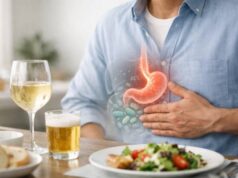
After gallbladder removal, digestion can feel “off” in ways that are surprising: urgent stools after meals, loose bowel movements that appear out of nowhere, or a new sensitivity to fatty foods. It is natural to wonder whether adding bile back—through an ox bile supplement—could restore comfort. The twist is that most post-surgery diarrhea is not caused by too little bile. Instead, it is often driven by bile flowing more continuously into the intestine and reaching the colon in a form or amount that irritates it.
That is why ox bile can be a help for a narrow set of problems (mainly fat-digestion support), but a mismatch for classic post-cholecystectomy diarrhea—sometimes making urgency and looseness worse. The goal is to match the tool to the pattern, not the label.
Key Insights
- Ox bile is more likely to support fat digestion than to treat watery, urgent post-meal diarrhea.
- If diarrhea is driven by bile acids reaching the colon, adding bile can intensify urgency, burning, and frequency.
- A short, structured trial with clear stop-rules is safer than “taking it and hoping.”
- Soluble fiber and prescription bile-acid binders are often better fits for bile-acid diarrhea patterns.
Table of Contents
- Why diarrhea happens after gallbladder removal
- What ox bile supplements actually do
- Signs ox bile might help
- Signs ox bile might worsen diarrhea
- How to try ox bile with less risk
- Better options for bile acid diarrhea
- When to avoid ox bile and get checked
Why diarrhea happens after gallbladder removal
Your gallbladder is a storage and “release-timing” organ. The liver makes bile continuously, but the gallbladder concentrates it and releases a stronger dose when you eat—especially when a meal contains fat. After removal, bile still exists and still flows, but the rhythm changes: instead of being stored and delivered in a coordinated surge, bile tends to trickle into the small intestine more steadily.
For many people, the gut adapts over weeks to months. For others, that altered flow contributes to diarrhea—often soon after meals, sometimes with urgency that feels disproportionate to what you ate. One common mechanism is bile acid diarrhea (also called bile acid malabsorption in some contexts). In this pattern, bile acids reach the colon and pull water into it while also stimulating motility. The result is loose, watery stool, urgency, and sometimes a burning sensation, particularly after meals.
It is important to note that “post-gallbladder diarrhea” is a bucket, not a single diagnosis. Several patterns can look similar:
- Bile acid diarrhea pattern: watery, urgent, often soon after eating; may be worse after higher-fat meals.
- Fat intolerance without watery urgency: discomfort, bloating, and stools that seem loose mainly after greasy foods.
- Gut sensitivity and motility changes: the bowel becomes more reactive after surgery and diet shifts, resembling IBS-type patterns.
- Unrelated causes that happen to start after surgery: infections, medication side effects, thyroid disease, celiac disease, microscopic colitis, or pancreatic enzyme insufficiency in susceptible people.
This matters because ox bile is not a general “post-gallbladder fix.” It is a very specific tool. Before adding bile, you want a working hypothesis about whether your main issue is (1) fat digestion support or (2) bile acids irritating the colon.
What ox bile supplements actually do
Ox bile supplements typically contain purified, dried bovine bile or “bile salts.” Their main job is straightforward: help emulsify dietary fat so your enzymes can break it down and your intestine can absorb it. Bile acids act like detergents—forming micelles that ferry fats and fat-soluble vitamins (A, D, E, and K) toward absorption.
That mechanism is most relevant when the problem is insufficient bile acids in the small intestine at the right time. In real-world practice, bile-acid depletion is more common in certain malabsorption conditions (for example, some forms of short bowel physiology) than it is after gallbladder removal alone. After cholecystectomy, your liver still produces bile acids; the issue is more often timing and downstream handling, not a true shortage.
This leads to a key distinction:
- Ox bile may improve how fats are processed in the small intestine.
- Ox bile does not inherently calm a colon that is being overstimulated by bile acids. In fact, it can add to that stimulation.
Many products also bundle ox bile with digestive enzymes (lipase, amylase, protease) or herbs. That can blur the picture during a trial—if you feel better, you may not know which ingredient helped, and if you feel worse, you may not know which ingredient irritated you. If you decide to experiment, a single-ingredient product is usually easier to evaluate.
Finally, “more bile” is not automatically “better bile.” Bile acids are potent signaling molecules. They can influence gut motility, the microbiome, and intestinal secretion. That is why the same supplement can feel supportive for one person (less fatty stool, less heaviness after meals) and aggravating for another (more urgency, looser stool, burning).
Signs ox bile might help
Ox bile tends to make the most sense when your symptoms point toward fat digestion difficulty more than watery urgency. After gallbladder removal, some people notice that certain meals—pizza, creamy sauces, fried foods—trigger discomfort and stools that seem “incompletely processed.” If that is your dominant pattern, bile support may be worth discussing with a clinician.
Clues that lean toward a fat-digestion support trial include:
- Stools that are pale, bulky, or difficult to flush, especially after fatty meals.
- A visible sheen in the toilet bowl or stool that seems unusually greasy.
- Bloating, belching, nausea, or upper-abdominal heaviness after higher-fat meals, with only mild looseness rather than explosive urgency.
- Symptoms that improve when you distribute fat more evenly (smaller portions across the day) rather than avoiding fat entirely.
If you recognize this pattern, it can still be wise to step back and ask: “Is bile the only possible bottleneck?” Fat digestion is a relay race. Bile acids help, but so do pancreatic enzymes and the absorptive surface of the small intestine. That is why a thoughtful approach often includes checking for other contributors when symptoms are persistent:
- If stool changes are dramatic or accompanied by weight loss, fatigue, or nutrient issues, it is reasonable to ask about evaluation for malabsorption.
- If symptoms started after a major diet shift (for example, much higher fat after months of low-fat eating), the most effective intervention may be meal structure rather than supplements.
- If you have risk factors for pancreatic enzyme insufficiency (such as chronic pancreatitis, heavy alcohol exposure, certain pancreatic procedures, or longstanding diabetes), bile is not the first place to guess.
A practical way to think about ox bile after gallbladder removal is this: it is most plausibly helpful as a meal-specific assist for higher-fat meals in people who are not already experiencing bile-driven watery diarrhea. It is less likely to be a “daily fix” for frequent urgent stools.
Signs ox bile might worsen diarrhea
If your diarrhea looks like classic bile acid irritation, adding bile can be like adding fuel to a fire. The colon is not designed to be bathed in large amounts of bile acids. When that happens, bile acids can increase secretion of water and electrolytes and speed transit. In plain terms: more bile acids reaching the colon can mean more urgency and looser stools.
Ox bile is more likely to worsen symptoms when you have some of the following:
- Watery stools with urgency, especially soon after meals.
- A sense of “I have to go now,” sometimes with cramping that resolves after the bowel movement.
- Burning or irritation during bowel movements, particularly after richer meals.
- Diarrhea that started soon after surgery and has a predictable relationship with eating.
- Symptoms that improve when meals are lower in fat, smaller, and more evenly spaced.
You should also be cautious if you have upper-GI sensitivity. Bile acids can irritate the stomach and esophagus in susceptible people. A subset of people experience bile reflux-like symptoms after surgery (bitter taste, nausea, upper abdominal discomfort), and bile-containing supplements may aggravate that.
Other reasons ox bile can backfire include:
- Dose mismatch: Many products are dosed for “digestive support” broadly, not tailored to post-cholecystectomy sensitivity. Too much, too soon can tip the stool toward looseness even in people who are not bile-acid diarrhea–prone.
- Combination formulas: Added magnesium, certain sugar alcohols, herbal bitters, or enzyme blends can loosen stool independently of bile.
- Timing errors: Taking bile on an empty stomach can cause nausea or cramping, and taking it with very low-fat meals can increase irritation without delivering a benefit.
If your main problem is frequent watery diarrhea, ox bile is usually the wrong “first experiment.” It is often safer to start with approaches that bind or buffer bile acids rather than add them.
How to try ox bile with less risk
If you still want to test ox bile, treat it like a structured experiment—not an open-ended habit. The goal is to learn quickly whether it helps your pattern, with minimal downside.
Here is a cautious approach many clinicians would recognize as reasonable self-monitoring:
- Pick the right target meal.
Choose a meal that reliably causes fat-related discomfort or stool changes. Do not test during a week when your gut is already flaring from stress, travel, antibiotics, or a stomach bug. - Start with the smallest practical dose.
If a capsule is large, consider a lower-dose product or a way to take a partial dose if the product allows it. Start once daily at most, not with every meal. - Take it with the first bites of food, not before.
Taking bile on an empty stomach can cause nausea or cramping. Pairing it with the meal it is meant to support is more physiologic. - Track two outcomes: digestion and stool behavior.
Use a simple note for three days:
- Stool frequency and urgency (especially within 1–3 hours after meals)
- Stool consistency (watery vs soft vs formed)
- Any burning, cramping, or reflux symptoms
- Whether “fatty meal symptoms” improved (heaviness, greasy stool)
- Use clear stop-rules.
Stop the trial if you notice any of the following:
- New or worse watery diarrhea
- Markedly increased urgency
- Burning stools that intensify
- New reflux-type symptoms, nausea, or significant cramping
- Avoid stacking variables.
Do not start a probiotic, magnesium supplement, new fiber regimen, and ox bile in the same week. If you improve, you will not know what did the work.
A few practical cautions:
- Separate ox bile from medications if you are sensitive to GI effects, and be especially careful if you take multiple daily meds where timing is tight.
- If you already suspect bile acid diarrhea, consider trying soluble fiber first (such as psyllium), which can thicken stool and bind bile acids for some people—often a gentler first step.
- If diarrhea is significant or persistent, it is reasonable to ask a clinician about testing or a therapeutic trial that targets bile acids directly rather than guessing.
The most useful mindset is: ox bile is a targeted tool. Your trial should answer one question—“Does this improve fat tolerance without worsening stool urgency?”—and you should be willing to stop if the answer is no.
Better options for bile acid diarrhea
When the dominant issue is watery, urgent diarrhea after meals—especially after higher-fat foods—strategies that reduce bile acid impact on the colon are often a better match than adding bile.
Commonly used options include:
- Soluble fiber (often first-line for self-care):
Psyllium husk is a classic choice. It can thicken stool and may bind bile acids for some people. The key is slow titration with adequate fluids. If you jump to a large dose, bloating can make you quit before it helps. - Meal fat distribution (often underappreciated):
Instead of very low fat (which can be hard to sustain), many people do better with moderate fat split across meals. Large, high-fat meals can overwhelm the new bile delivery rhythm and increase bile reaching the colon. - Prescription bile acid sequestrants (often the most targeted):
These bind bile acids in the gut so they are less able to trigger watery diarrhea. They can be very effective, but timing matters because they can also bind other medications and may cause constipation or bloating in some people. - Antidiarrheal agents (symptom control):
For some, a clinician-guided plan using agents like loperamide helps reduce urgency while other measures (diet, fiber, bile acid binding) are being optimized. - Evaluation for look-alikes when symptoms persist:
If diarrhea is persistent, wakes you at night, is associated with weight loss, anemia, fever, blood, or significant fatigue, it is worth investigating rather than assuming it is “just post-surgery.” Conditions like microscopic colitis, celiac disease, inflammatory bowel disease, thyroid disease, medication effects, and pancreatic insufficiency can overlap or mimic post-cholecystectomy changes.
A simple stepwise plan many people find workable:
- Stabilize basics for 1–2 weeks: consistent meal timing, moderate fat portions, hydration, and a slow fiber trial if tolerated.
- If watery urgency remains prominent: talk with a clinician about bile acid diarrhea and whether testing or a therapeutic trial aimed at bile acids is appropriate.
- If symptoms are mixed or atypical: broaden the differential rather than escalating supplements.
This approach tends to produce clearer answers with less trial-and-error discomfort than adding bile acids when the colon is already reactive.
When to avoid ox bile and get checked
Ox bile is not a harmless “digestive vitamin,” and it should not be the go-to option in several situations—especially when diarrhea is significant. Avoid experimenting on your own (or pause a trial and seek care) if any of the following apply:
- Red-flag symptoms: blood in stool, black/tarry stool, persistent fever, severe abdominal pain, fainting, signs of dehydration, or unintentional weight loss.
- Nighttime diarrhea: waking from sleep to have watery stools can point away from simple meal-related intolerance.
- Recent antibiotics or high infection risk: diarrhea after antibiotics deserves careful attention, especially if severe.
- Known inflammatory bowel disease, microscopic colitis, or celiac disease: bile acid manipulation can complicate symptoms and obscure what is going on.
- Significant reflux, gastritis, or ulcer history: bile acids can aggravate upper GI irritation in some people.
- Pregnancy, breastfeeding, or complex medication regimens: supplement safety data and interaction risks are often limited.
Even without red flags, it is reasonable to seek a clinician’s input if:
- Diarrhea persists beyond the early recovery window and affects quality of life.
- You cannot maintain nutrition due to fear of eating.
- You are relying on frequent antidiarrheals just to function.
- Stools have become persistently greasy, pale, or bulky, suggesting malabsorption that deserves a work-up.
A helpful way to prepare for that visit is to bring a short symptom summary: how soon after meals diarrhea occurs, whether fat clearly triggers it, stool frequency, and whether symptoms are watery vs greasy. This makes it easier for a clinician to decide whether bile acid diarrhea is likely, whether testing is available, and which treatment trial is most logical.
Bottom line: after gallbladder removal, ox bile can be helpful when the problem is fat processing—but it can worsen diarrhea when bile acids are already the irritant. Matching the supplement to the symptom pattern is the safest path.
References
- Diagnosis and treatment of post-cholecystectomy diarrhoea – PMC 2023 (Review). ([PMC][1])
- Postcholecystectomy diarrhoea rate and predictive factors: a systematic review of the literature – PMC 2022 (Systematic Review). ([PMC][2])
- New Developments in Bile Acid Diarrhea – PMC 2023 (Review). ([PMC][3])
- Functional bowel disorders with diarrhoea: Clinical guidelines of the United European Gastroenterology and European Society for Neurogastroenterology and Motility – PMC 2022 (Guideline). ([PMC][4])
- European Consensus on Malabsorption—UEG & SIGE, LGA, SPG, SRGH, CGS, ESPCG, EAGEN, ESPEN, and ESPGHAN 2025 (Consensus). ([espen.org][5])
Disclaimer
This article is for educational purposes and is not a substitute for personal medical advice, diagnosis, or treatment. Diarrhea after gallbladder removal has multiple possible causes, and the safest option depends on your symptoms, medical history, and medications. Supplements such as ox bile can worsen diarrhea in some people and may interact with medications through timing and absorption effects. If you have severe symptoms, dehydration, blood in stool, fever, unintentional weight loss, or nighttime diarrhea, seek prompt medical care.
If you found this helpful, consider sharing it on Facebook, X (formerly Twitter), or any platform you prefer.