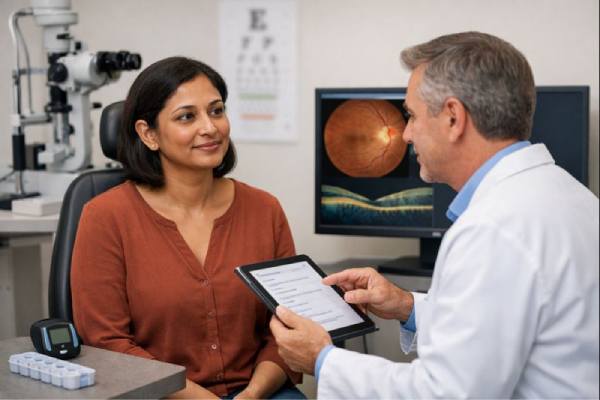
Ozempic and Wegovy (both forms of semaglutide) have reshaped treatment for type 2 diabetes and obesity by improving blood sugar control, supporting weight loss, and reducing cardiovascular risk in many patients. With any therapy that can change metabolism quickly, questions about vision are reasonable. Some visual changes are temporary and relate to shifts in blood glucose, hydration, or medication side effects. Others involve the retina or optic nerve and deserve faster attention, especially in people with diabetes or pre-existing eye disease. The key is separating common, reversible issues from uncommon but urgent problems. This article explains what researchers and regulators currently recognize, why vision changes can occur during rapid glucose improvement, what symptoms should trigger an immediate eye exam, and how to plan eye screening if you are starting or escalating semaglutide.
Essential Insights
- Temporary blur can happen during rapid blood sugar change and often settles once glucose is stable.
- People with existing diabetic retinopathy need closer monitoring when starting or escalating semaglutide.
- Sudden painless vision loss, a new dark area in the visual field, or persistent one-eye dimming should be treated as urgent.
- Avoid updating glasses during a period of active glucose swings; wait until readings have been stable for several weeks.
- Plan an eye exam before dose escalation if you have long-standing diabetes, insulin use, or prior retinopathy.
Table of Contents
- Why vision can change on semaglutide
- Diabetic retinopathy and the rapid A1c drop
- Common non-retina causes of blurry vision
- Optic nerve concerns and NAION symptoms
- Who needs an eye exam and how often
- What to do if vision changes start
- Using Ozempic and Wegovy with eye health in mind
Why vision can change on semaglutide
Vision depends on a surprisingly delicate balance of hydration, blood sugar, blood flow, and nerve signaling. Semaglutide can influence several of these factors at once, which is why “vision changes” is a broad umbrella rather than a single side effect.
The first mechanism is rapid metabolic change. When blood glucose improves quickly, it can temporarily alter the way the eye focuses. The lens and its surrounding fluids respond to glucose shifts. Even if the retina is perfectly healthy, these internal shifts can create short-term blur, fluctuating focus, or difficulty adapting between distance and near. Many people notice this most when they move from poorly controlled glucose to much better control in a short time.
The second mechanism is diabetes-related vulnerability. In people with diabetes, the retina’s tiny blood vessels may already be stressed. When glucose drops rapidly, the retina can temporarily respond in ways that look like a short-term worsening of diabetic retinopathy. Importantly, this “early worsening” phenomenon has been recognized for decades with intensive glucose lowering; it is not unique to semaglutide. However, semaglutide can be potent, and that potency is part of why eye monitoring becomes more relevant in certain patients.
The third mechanism is medication side effects that indirectly affect eyes. Nausea, vomiting, and reduced fluid intake can contribute to dehydration. Dehydration can worsen dry eye symptoms, contact lens intolerance, and visual fluctuation. Some people also experience headaches or migraine pattern changes with major appetite or sleep changes, which can lead to transient visual phenomena that feel alarming but are not eye-structure damage.
A fourth mechanism is vascular and optic nerve considerations, which are less common but more urgent. Regulators and researchers have been evaluating whether semaglutide is associated with a higher risk of a specific optic nerve event called non-arteritic anterior ischemic optic neuropathy (NAION). The data are evolving, and studies do not prove causality. Still, the pattern of symptoms is distinct enough that patients should know what to watch for.
The practical takeaway is that vision changes on Ozempic or Wegovy are not one thing. Some are expected during metabolic transition, some signal the need for a timely retinal evaluation, and a small subset require urgent assessment the same day.
Diabetic retinopathy and the rapid A1c drop
If you have diabetes, the most important “vision” topic with semaglutide is not temporary blur. It is diabetic retinopathy, the microvascular disease of the retina that can progress silently until it becomes sight-threatening.
A key concept is early worsening of diabetic retinopathy. When glucose control improves quickly—especially after a period of prolonged high readings—the retina can temporarily show more bleeding, swelling, or other changes. This paradox can feel unfair: you improve your numbers and your eyes look worse. In many cases, it is a transient phase that stabilizes with continued long-term control, but it can still be clinically significant because it may accelerate progression in high-risk patients.
Semaglutide has drawn attention because it can produce meaningful A1c reductions and weight loss, sometimes faster than a patient’s prior regimen. In clinical and real-world data, the overall story is mixed: many analyses do not show a large, consistent increase in retinopathy risk across all patients, but a signal appears in certain subgroups. The people who seem most vulnerable share a familiar profile: existing retinopathy, longer duration of diabetes, higher baseline A1c, and insulin use. In other words, those who already have retinal microvascular disease and stand to experience a larger, faster glycemic shift.
This matters for practical decision-making. Semaglutide may still be the right choice for someone with retinopathy because better long-term glucose control is protective. The question is timing and monitoring. Eye care planning should match the metabolic pace. For example, a person with mild retinopathy and stable A1c might only need routine screening. A person with moderate to severe retinopathy, high baseline A1c, or recent retinal treatment may benefit from a targeted exam before dose escalation and closer follow-up during the first months.
It also matters how you interpret symptoms. Retinopathy progression does not always produce pain or obvious redness. Instead, the warning signs tend to be functional: new floaters, blurred central vision, distortion (straight lines look wavy), or a dark curtain-like shadow. If these occur, it is safer to assume a retinal issue until proven otherwise.
One more nuance: semaglutide is used both for diabetes (Ozempic) and for weight management (Wegovy). People taking Wegovy may or may not have diabetes. If you do not have diabetes, diabetic retinopathy is not the concern. But if you do have diabetes and are using semaglutide for weight, the same retinopathy monitoring logic applies because the driver is glycemic shift and underlying microvascular disease, not the brand name.
Common non-retina causes of blurry vision
Not every visual complaint on Ozempic or Wegovy is a retinal or optic nerve problem. In fact, the most common changes people report are intermittent blur and difficulty focusing, especially early in treatment or during dose escalation. These issues are often reversible.
1) Refractive shifts during glucose change
When blood sugar swings, the eye’s lens can change its refractive power. Some people become temporarily more nearsighted; others notice distance blur that comes and goes. This is especially common when glucose is trending downward from high levels. The practical implication is important: if you update glasses during a period of active metabolic change, the prescription may be wrong a few weeks later. A reasonable rule is to wait until glucose readings have been relatively stable for several weeks before committing to a new prescription, unless your eye clinician advises otherwise.
2) Dry eye and surface instability
Semaglutide commonly causes gastrointestinal symptoms in the early phase for some patients. Less fluid intake, mild dehydration, or electrolyte shifts can worsen dry eye symptoms. Dry eye does not usually cause dramatic one-eye dimming or a new blind spot. Instead, it causes fluctuating blur that improves with blinking, burning, gritty sensation, tearing that paradoxically comes from irritation, and worsening after screen time. Contact lens wearers may notice reduced tolerance. Supportive measures include regular hydration, limiting airflow toward the eyes, warm compresses for lid glands, and preservative-free lubricating drops if needed.
3) Migraine and visual aura changes
Weight loss, altered meal patterns, sleep disruption, and dehydration can affect migraine thresholds. Migraine aura can produce shimmering zig-zag lines, blind spots, or visual distortions that typically spread over minutes and resolve within an hour. Migraine aura usually affects both eyes’ visual field (even if it feels one-sided), and it does not typically cause persistent color desaturation in one eye. New migraine-like visual symptoms should still be discussed with a clinician, especially if you are older or if the pattern is new, but most are transient.
4) Blood pressure and orthostatic symptoms
Some people experience lightheadedness with rapid weight loss or changes in antihypertensive dosing. Brief “graying out” on standing can occur. This is different from sustained, one-eye visual loss. If you have repeated episodes, it is worth reviewing blood pressure medications and hydration with your prescribing clinician.
In practice, it helps to separate fluctuating blur from fixed loss. Fluctuating blur that changes with blinking, hydration, or time of day often points to surface or refractive causes. Fixed one-eye dimming, a new persistent blind area, or major color fading deserves a retinal and optic nerve evaluation.
Optic nerve concerns and NAION symptoms
A smaller but high-stakes topic is the optic nerve. Non-arteritic anterior ischemic optic neuropathy (NAION) is a condition where blood flow to the front part of the optic nerve is disrupted, leading to sudden vision loss. It typically occurs without pain and is often noticed on waking. People may describe a gray or dark area in the vision, frequently involving the top or bottom half of the field.
Researchers have recently examined whether semaglutide is associated with a higher risk of NAION in people with type 2 diabetes. The most careful way to state the current evidence is this: observational studies suggest an association in some populations, but they cannot prove that semaglutide causes NAION. People using semaglutide may differ from non-users in ways that affect risk, including diabetes severity, cardiovascular disease burden, and weight. Even when studies adjust for these factors, unmeasured differences can remain.
Still, the potential association matters because NAION symptoms are time-sensitive and recognizable. Seek urgent evaluation if you experience:
- Sudden painless vision loss in one eye
- A new dark area or “missing” portion of your visual field
- Noticeable dimming or desaturation of vision in one eye that persists
- A new episode of significantly reduced vision on waking that does not clear within minutes
If NAION is confirmed, clinicians may discuss whether to continue semaglutide, and they will also focus on other modifiable risk factors such as blood pressure control (especially nighttime lows), sleep apnea evaluation, smoking cessation, and management of diabetes and lipids. The most effective prevention strategy for NAION is not a single medication change; it is comprehensive vascular risk management.
It is also important not to confuse NAION with optic neuritis. Optic neuritis often causes pain with eye movement and commonly affects younger adults. NAION is typically painless and more common in older adults with vascular risk factors. The exam findings differ, and the management priorities differ.
Because this topic can provoke anxiety, the absolute-risk framing matters. NAION remains uncommon overall, and most patients taking Ozempic or Wegovy will never experience it. The goal of discussing NAION is not to discourage appropriate treatment, but to ensure that patients recognize the symptom pattern and do not wait weeks for a routine appointment if it occurs.
Who needs an eye exam and how often
The right eye-exam schedule depends less on the medication name and more on your underlying risk profile. A practical way to think about it is to place yourself into one of three groups: no diabetes, diabetes without known retinopathy, or diabetes with existing retinopathy.
1) If you do not have diabetes
If you are taking Wegovy for weight management and you do not have diabetes, the main reasons to get an eye exam are the same as they would be otherwise: routine preventive care, age-appropriate screening, and evaluation of symptoms if they appear. You should still seek prompt evaluation for sudden vision loss, a curtain-like shadow, flashes and many new floaters, or persistent one-eye dimming. But you do not need diabetic retinopathy monitoring solely because you are on semaglutide.
2) If you have diabetes but no known retinopathy
Most people with type 2 diabetes should already be on a routine eye screening schedule. If you are starting Ozempic or using Wegovy as part of diabetes management, it is reasonable to ensure you are up to date before major dose escalation—especially if your A1c is high and expected to fall quickly. If you have not had a dilated exam in the last year, getting one soon after starting therapy is a prudent baseline. From there, follow the schedule recommended by your eye clinician based on exam findings.
3) If you have existing diabetic retinopathy
This is the group where planning is most valuable. If you have known retinopathy—especially moderate to severe disease, macular edema, prior laser treatment, or injections—consider an exam around the time you start or shortly before escalating to higher doses. If your A1c is very high and expected to drop substantially, your clinician may recommend closer follow-up during the first 3 to 6 months, when early worsening is most likely to show up.
Also consider your broader risk factors. You may benefit from tighter follow-up if you have:
- Long duration of diabetes (often 10 years or more)
- Insulin use
- Recent rapid A1c reduction from any therapy
- Pregnancy (a special retinopathy risk context)
- Kidney disease or uncontrolled hypertension
- Prior episodes of vision-threatening retinopathy
For all groups, the “symptom override” rule applies: if you develop sudden vision loss, a new blind spot, distortion, many new floaters, or persistent one-eye dimming, do not wait for the next scheduled exam. Schedule an urgent evaluation.
What to do if vision changes start
When vision changes occur on Ozempic or Wegovy, the most helpful response is structured rather than reactive. The goal is to quickly identify whether this is likely a temporary focusing issue, a retinal problem that needs timely treatment, or a rare urgent event.
Step 1: Define the pattern in two minutes
Cover one eye, then the other, and ask:
- Is the problem clearly worse in one eye?
- Is it fluctuating minute to minute, or stable and persistent?
- Are colors noticeably duller in one eye?
- Is there a missing patch of vision (a true blind spot), or just blur?
- Is there pain with eye movement, or is it painless?
One-eye persistent dimming, a new blind area, or strong color desaturation is more concerning than general fluctuation.
Step 2: Check for emergency symptoms
Seek urgent same-day care if you have:
- Sudden painless vision loss in one eye
- A curtain, shadow, or large missing region of vision
- New flashes of light with many new floaters
- Severe headache with neurologic symptoms (weakness, trouble speaking, confusion)
- Rapidly worsening vision over hours to days
These patterns can reflect retinal detachment, severe bleeding, vascular events, or optic nerve injury and should not be monitored at home.
Step 3: Consider glucose stability
If you have diabetes, review whether you are in a period of rapid glucose change. If your readings have dropped significantly in a short time, refractive shifts are plausible. This does not rule out retinopathy changes, but it provides context. Avoid rushing into a new glasses prescription during active swings.
Step 4: Contact the right clinician with the right message
If symptoms are moderate but not an emergency, contact an eye clinic and say: “I have new vision changes while starting or increasing semaglutide, and I have diabetes and want to rule out retinopathy progression.” Clear wording helps triage.
Also contact your prescribing clinician if you have persistent vomiting, poor oral intake, or dehydration symptoms. Sometimes addressing hydration and dose-titration pace improves visual fluctuation.
Step 5: Do not self-adjust in a panic
Do not stop medications abruptly without medical guidance unless you have been instructed to do so in a specific emergency context. If a clinician confirms a serious eye event, they will guide medication decisions. For many patients, semaglutide remains beneficial long-term, and the safest path is coordinated care rather than unilateral changes.
Using Ozempic and Wegovy with eye health in mind
For most patients, the best eye-safety strategy with semaglutide is not fear-based avoidance. It is thoughtful pacing, risk-based screening, and symptom literacy.
Start with baseline clarity
If you have diabetes and you are not sure when your last dilated eye exam was, treat that as a fixable gap. A baseline exam helps distinguish pre-existing retinopathy from new changes and gives your eye clinician a reference point if symptoms appear later.
Aim for “steady improvement,” not whiplash
Rapid glucose improvement can be clinically beneficial, but it can also provoke temporary refractive shifts and may contribute to early worsening of retinopathy in susceptible patients. If you have high baseline A1c or known retinopathy, discuss titration pace and monitoring with your prescribing clinician. The best plan is individualized: some patients can move quickly; others benefit from slower escalation with planned eye follow-up.
Coordinate if you have existing retinopathy
If you have moderate to severe retinopathy or macular edema, let your eye clinician know you are starting or increasing semaglutide. This is not to “ask permission,” but to align monitoring. If retinopathy is already being treated with injections or laser, your ophthalmologist can plan the interval that makes sense during the metabolic transition period.
Take dehydration seriously
Dry eye and fluctuating vision often worsen when hydration is poor. If nausea reduces intake, focus on consistent fluids and discuss strategies for managing gastrointestinal side effects. Persistent vomiting is not just uncomfortable; it can affect kidneys, electrolytes, and ocular surface stability.
Know the symptoms that change the timeline
Retinopathy progression can be silent, but when it becomes symptomatic, it often shows up as floaters, distortion, or a dark shadow. Optic nerve events often show up as sudden one-eye loss or a new field defect. These are not “next month” symptoms; they are “today” symptoms.
Keep the big picture in view
Long-term glucose control, blood pressure control, lipid management, and smoking cessation remain the strongest levers for protecting vision in diabetes. Semaglutide can support that broader metabolic trajectory. The safest approach is to treat eye monitoring as part of a comprehensive plan rather than as a standalone worry.
If you are starting Ozempic or Wegovy and want an eye-centered action plan, the simplest version is: get a baseline exam if you have diabetes, monitor more closely if you have retinopathy or a high baseline A1c, avoid new glasses prescriptions during active glucose swings, and treat sudden one-eye vision loss as urgent.
References
- Ozempic, INN-semaglutide 2025 (Regulatory Product Information)
- Semaglutide and Nonarteritic Anterior Ischemic Optic Neuropathy – PubMed 2025
- Semaglutide and Diabetic Retinopathy Risk in Patients with Type 2 Diabetes Mellitus: A Meta-Analysis of Randomized Controlled Trials – PubMed 2022 (Meta-Analysis)
- Association of glucagon-like peptide-1 (GLP-1) receptor agonists and diabetic retinopathy (DR) – a systematic review and meta-analysis – PMC 2025 (Systematic Review)
Disclaimer
This article is for educational purposes only and does not provide medical advice, diagnosis, or treatment. Vision changes can have many causes, and some require urgent evaluation to protect sight. If you develop sudden vision loss, a new blind spot, a curtain-like shadow, many new floaters or flashes, persistent one-eye dimming, or neurologic symptoms (such as weakness, trouble speaking, or severe headache), seek urgent medical care immediately. Do not start, stop, or change prescription medications without guidance from your clinician. For personalized recommendations, consult a licensed ophthalmologist or optometrist for eye symptoms and your prescribing clinician for medication-related concerns.
If you found this helpful, please consider sharing it on Facebook, X (formerly Twitter), or any platform you prefer.