
Ichnocarpus frutescens: Benefits for Metabolic Health, How It Works, Dosage Guidance, and Safety

Ichnocarpus frutescens—often called black creeper or Krishna Sariva—is a woody climber from the Apocynaceae family used in traditional systems across South and Southeast Asia....
Ichthammol: Skin Benefits, How It Works, Dosage Guidelines, and Safety Tips
Ichthammol—also called ammonium bituminosulfonate—is a traditional, tar-derived topical ingredient used for inflamed skin and minor infected lesions. In dermatology, it appears in pastes, ointments,...
Icodextrin: What It Is, How It Works in PD, Recommended Dose, and Risks Explained
Icodextrin is a starch-derived glucose polymer used as an osmotic agent in peritoneal dialysis and, in a different formulation, as a temporary intraperitoneal instillate...
Icosapent ethyl: Purified EPA Versus Fish Oil, Indications, Dosage, and Safety Profile

Icosapent ethyl is a prescription, highly purified form of the omega-3 fatty acid eicosapentaenoic acid (EPA). It is used to lower high triglycerides and—importantly—to...
Icosapentaenoic acid: Triglyceride Lowering, Cardiovascular Outcomes, Dosing, and Risks
Icosapentaenoic acid (EPA) is a long-chain omega-3 fatty acid best known for heart health. In food, it is found in marine sources like salmon,...
Idarubicin: Clinical Uses, Recommended Dose, Monitoring, and Cardiotoxicity

Idarubicin is an anthracycline chemotherapy medicine used primarily to induce remission in acute myeloid leukemia (AML). It is related to doxorubicin and daunorubicin but...
Idebenone: Evidence-Based Benefits, Properties, Proper Use, and Risk Profile

Idebenone is a synthetic analog of coenzyme Q10 designed to support mitochondria—the tiny “power plants” inside cells. Unlike coenzyme Q10, idebenone has a shorter...
Idelalisib: Uses, Mechanism, Clinical Benefits, Dosing, and Safety Monitoring

Idelalisib is an oral targeted therapy used for certain slow-growing B-cell cancers. It inhibits PI3K-delta, a signaling enzyme that helps malignant B cells survive,...
Idesia polycarpa extract: Evidence-Based Benefits, Forms, Suggested Dosage, and Risks

Idesia polycarpa is a deciduous tree native to East Asia whose vividly colored fruits yield an oil and extract rich in unsaturated fatty acids...
Idursulfase: Clinical Benefits, How It Works, Dosing, and Safety Explained

Idursulfase is an enzyme replacement therapy (ERT) for Hunter syndrome (mucopolysaccharidosis type II, MPS II). In people with MPS II, the enzyme iduronate-2-sulfatase is...
Ifosfamide: Cancer Treatment Benefits, How It Works, Dosing Schedules, and Safety
Ifosfamide is a prescription chemotherapy medicine used to treat several solid tumors and lymphomas. It belongs to the oxazaphosphorine class of alkylating agents and...
Ilex aquifolium: Antioxidant Properties, Practical Uses, Dosage Advice, and Safety Risks
Ilex aquifolium—better known as European holly—is an evergreen shrub with glossy, spined leaves and bright red berries. Beyond its iconic winter look, the plant’s...
Ilex cornuta: Evidence-Based Benefits, How to Use the Leaf, Recommended Dosage, and Side Effects
Ilex cornuta—better known as Chinese holly—is an evergreen shrub prized for glossy leaves and bright red berries. In traditional Chinese medicine (TCM), the dried...
Ilex guayusa: Energy, Antioxidants, Uses, Dosage Guidelines, and Safety Tips
Ilex guayusa (pronounced “gwhy-OO-sah”) is an Amazonian holly traditionally brewed as a bright, earthy tea. It naturally contains caffeine along with chlorogenic acids, quercetin...
Ilex kudingcha: Cholesterol Support, Brewing Methods, Optimal Dosage, and Side Effects
Kudingcha made from Ilex kudingcha (a broad-leaf holly) is a boldly bitter, caffeine-light tea used in parts of China for everyday wellness. The leaves...
Ilex latifolia: Cholesterol and Weight Support, Brewing Guide, Recommended Dosage, and Side Effects
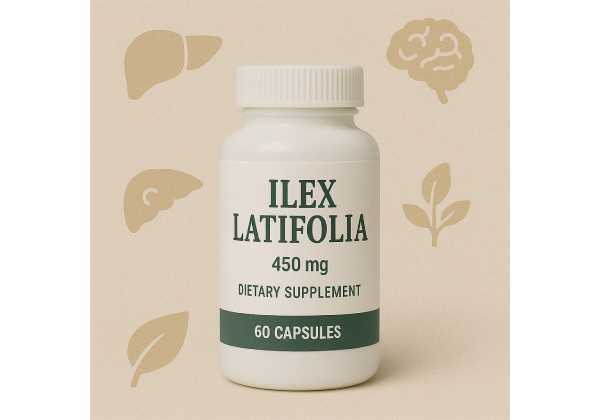
Ilex latifolia—often sold as “large-leaf kuding tea”—is a bitter, caffeine-light holly used as a daily wellness beverage across parts of East Asia. Its leaves...