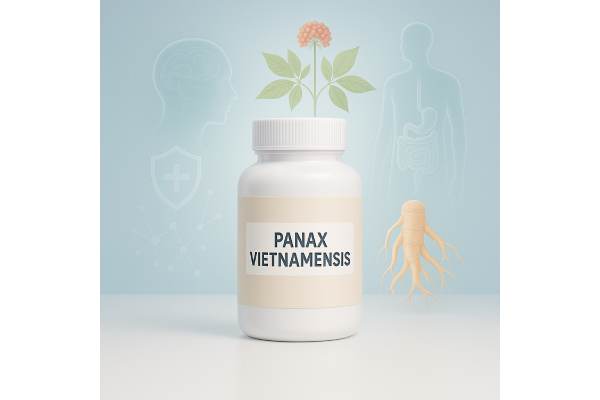
Panax vietnamensis, often called Vietnamese ginseng or Ngoc Linh ginseng, is one of the rarest and most prized ginseng species in the world. Native to the high mountains of central Vietnam, it has been used locally as a tonic for resilience, recovery, and longevity. Modern analyses show that it is unusually rich in ginsenosides and ocotillol-type saponins, compounds linked to anti-stress, antioxidant, and neuroprotective effects.
Interest in Panax vietnamensis has grown rapidly as researchers explore its potential for supporting mood, immunity, metabolic health, and organ protection, especially under stress or drug toxicity. At the same time, it remains a relatively new species in scientific terms, with far fewer human studies than Asian or American ginseng. This guide explains what Panax vietnamensis is, how it appears to work, the evidence behind its benefits, typical dosage ranges used in supplements, and important safety and interaction considerations so you can discuss it knowledgeably with your healthcare professional.
Key Insights
- Panax vietnamensis is a rare Vietnamese ginseng rich in unique ocotillol-type saponins that may support stress resilience, immunity, and brain function.
- Experimental studies suggest potential antioxidant, anti-inflammatory, and kidney-protective actions, but human clinical data are still limited.
- Common supplement doses are roughly 200–400 mg per day of standardized extract or about 1–2 g per day of dried root, taken in divided doses.
- Side effects are usually mild (digestive upset, restlessness), but those with heart disease, diabetes, bleeding disorders, or who take multiple medications should use it cautiously.
- Pregnant or breastfeeding women and people with serious chronic illness should avoid Panax vietnamensis unless a qualified clinician specifically recommends it.
Table of Contents
- What is Panax vietnamensis?
- Key benefits and how it works
- Traditional and modern uses
- Dosage guidelines and preparations
- Safety, side effects, and interactions
- Research evidence and knowledge gaps
What is Panax vietnamensis?
Panax vietnamensis is a ginseng species discovered in the late 20th century in the mountainous Ngoc Linh region of central Vietnam. Locally, it is known as “Ngoc Linh ginseng” and has been regarded as a precious tonic used in small amounts to combat fatigue, infections, and the effects of harsh living conditions at high altitude. Botanically, it belongs to the same genus as Panax ginseng (Asian ginseng) and Panax quinquefolius (American ginseng), but its chemical profile is distinct.
The roots and rhizomes of Panax vietnamensis contain a wide spectrum of saponins, including both classic ginsenosides and characteristic ocotillol-type saponins such as majonoside R2. These ocotillol compounds are found in much higher proportions than in other ginseng species and are believed to contribute to its stress-modulating and potential organ-protective actions. The plant also contains polysaccharides, flavonoids, and other minor constituents that may add synergistic antioxidant and immune-modulating effects.
In nature, Panax vietnamensis grows very slowly and is now considered endangered in the wild due to overharvesting and habitat pressure. This rarity partly explains its high market value and the risk of adulteration with other, cheaper roots. Cultivation efforts in Vietnam have expanded, including large-scale farming and tissue-culture techniques, but quality still varies widely between products.
Today, Vietnamese ginseng is marketed as a premium adaptogenic supplement. While traditional use and laboratory research point to multiple potential benefits—such as reducing fatigue, supporting mood and cognitive performance, and protecting cells against oxidative damage—well-designed clinical trials in humans are still relatively scarce. For that reason, it is best viewed as a promising but not yet fully established health supplement.
Key benefits and how it works
Most of what is known about the benefits of Panax vietnamensis comes from cell and animal research, as well as traditional experience. These lines of evidence suggest several potential health-supportive actions, especially in the areas of stress, nervous system function, and organ protection.
Stress resilience and mood support
Experimental studies show that Vietnamese ginseng extracts can help animals tolerate physical and psychological stress better, for example by improving performance in forced-swim or cold-stress tests and reducing anxiety-like behaviors. These effects resemble those seen with other adaptogens and are thought to involve modulation of the hypothalamic–pituitary–adrenal (HPA) axis and neurotransmitter systems related to mood and arousal.
Cognitive function and neuroprotection
In rodent models, Panax vietnamensis extracts have improved learning and memory tasks, particularly when cognition was impaired by agents such as scopolamine. The mechanisms likely include antioxidant protection in the brain, reduced inflammation, better energy metabolism in neurons, and possible modulation of cholinergic and glutamatergic signaling. These actions may translate into support for attention, mental clarity, and resilience against cognitive fatigue in humans, though this has not been firmly confirmed in clinical trials.
Organ and cellular protection
Vietnamese ginseng and its isolated compounds have shown protective effects in models of kidney toxicity, oxidative stress, and cellular damage. Heat-processed extracts, in particular, seem to enhance the formation of certain ginsenosides that help shield kidney cells from injury induced by chemotherapy drugs like cisplatin. Antioxidant and anti-inflammatory properties likely explain part of this protection.
Immune and metabolic support
Like other ginseng species, Panax vietnamensis appears to modulate aspects of the immune response, including supporting certain white blood cell activities and balancing inflammatory signaling. Early data also suggest potential benefits for blood sugar control and lipid metabolism, but this work is still preliminary.
Overall, Panax vietnamensis seems to act as a broad adaptogen: helping the body respond more effectively to stress, protecting cells from damage, and potentially supporting mood and cognitive performance. However, because most evidence comes from non-human studies, these benefits should be considered promising rather than proven.
Traditional and modern uses
In traditional practice, particularly among ethnic communities in central Vietnam, Panax vietnamensis has been used as a general restorative tonic. Healers typically administered small pieces of the dried root to:
- Combat exhaustion after illness, heavy labor, or childbirth
- Support appetite and recovery in undernourished individuals
- Strengthen resistance to respiratory infections and harsh weather
- Ease nervousness, poor sleep quality, and “weak spirit” or low morale
Preparation methods were simple: slices of root chewed directly, steeped in hot water as a tea, soaked in rice wine, or slowly simmered in soups. Because of the plant’s scarcity and cost, doses were usually modest and reserved for special situations or vulnerable individuals.
Modern uses build on this traditional foundation but expand into more specific health goals:
- Energy and endurance: People interested in natural performance support sometimes use Vietnamese ginseng for sustained, non-jittery energy instead of strong stimulants.
- Mental focus and stress management: Professionals or students may take it to help with concentration, mental fatigue, and stress resilience during demanding periods.
- Immune and recovery support: Some users take it during seasonal challenges or recovery from strenuous training, surgery, or chronic stress, aiming to shorten recovery time and support overall vitality.
- Healthy aging: Given its antioxidant and cellular-protective properties, Panax vietnamensis is sometimes promoted as a longevity supplement, often combined with other herbs, vitamins, or omega-3 fats.
In the supplement market, Vietnamese ginseng is typically found as:
- Standardized root or root-rhizome extracts in capsules or tablets
- Powdered root in bulk or in sachets for tea
- Liquid extracts or tinctures
- Traditional-style ginseng wine or tonic drinks
Because the plant is rare and valuable, quality control is critical. Authentic products should clearly state the species name (Panax vietnamensis), plant parts used (root and/or rhizome), extraction method, and level of key marker compounds (often expressed as total ginsenosides or majonoside R2 content). Lower-priced “Vietnamese ginseng” products may contain other Panax species or unrelated roots.
Dosage guidelines and preparations
There is currently no official recommended daily intake for Panax vietnamensis. Dosage guidelines are mostly based on traditional use, extrapolation from other ginseng species, and the doses used in experimental and early human studies. Because formulations differ widely, it is important to follow product-specific instructions and consult a healthcare professional, especially if you have medical conditions or take medications.
Typical supplemental dose ranges
For adults, commonly recommended ranges include:
- Standardized extract (capsules or tablets):
- Around 200–400 mg per day of a concentrated root extract, often standardized to a defined percentage of total ginsenosides.
- Some products suggest splitting doses into 2–3 smaller servings throughout the day (for example, 100–200 mg two times daily).
- Dried root or powder:
- Roughly 1–2 g per day of dried root or powder, sometimes up to 3 g in short-term traditional regimens, typically taken as tea, decoction, or added to food.
Because Panax vietnamensis is particularly rich in saponins, a little goes a long way. Many users find that starting at the lower end of these ranges and gradually increasing, if needed, provides benefits while minimizing side effects.
Timing and cycles
- Morning and early afternoon use is usually preferred to avoid possible interference with sleep in sensitive individuals.
- Some practitioners suggest using ginseng in cycles (for example, 6–8 weeks of use followed by 1–2 weeks off) rather than continuously, although formal data supporting specific cycling patterns are limited.
Forms and how to use them
- Capsules/tablets: Easy to dose and convenient for travel; best taken with food to reduce any stomach discomfort.
- Powdered root: Can be mixed into warm water, smoothies, or soft foods; taste is bitter and earthy.
- Tea or decoction: Simmering sliced root for 20–30 minutes can extract saponins and other water-soluble constituents; this form aligns closely with traditional use.
- Tinctures: Alcohol-based extracts may be dosed in drops or milliliters; potency varies, so follow the manufacturer’s instructions.
Special populations
Lower doses, if any, are generally advised for older adults, people with sensitive digestion, and those taking multiple medications. Children, pregnant women, and breastfeeding women should not use Panax vietnamensis unless expressly directed by a clinician familiar with both herbal medicine and their medical history.
Because there is limited human research, dosing should be personalized and cautious rather than aggressive, always grounded in medical advice.
Safety, side effects, and interactions
Panax vietnamensis appears to have a favorable safety profile in preclinical research and traditional use, but systematic human safety data are still limited. As with other ginseng species, most side effects reported are mild and reversible, especially when doses remain within modest ranges.
Commonly reported side effects
At typical supplement doses, possible side effects include:
- Mild digestive upset (nausea, stomach discomfort, diarrhea, or constipation)
- Headache or a feeling of mental overstimulation in sensitive individuals
- Transient increase in heart rate or blood pressure, especially at higher doses
- Difficulty sleeping if taken too late in the day
Reducing the dose, taking the supplement with food, or shifting the timing earlier in the day often alleviates these issues.
Who should use extra caution or avoid it?
You should speak with a doctor and generally avoid unsupervised use of Panax vietnamensis if you:
- Are pregnant or breastfeeding (safety has not been adequately studied)
- Have uncontrolled high blood pressure, heart rhythm problems, or serious cardiovascular disease
- Take blood-thinning medications or have a bleeding disorder
- Use medicines for diabetes, as ginseng may influence blood sugar regulation
- Have autoimmune diseases or are taking immunosuppressant drugs
- Have hormone-sensitive cancers or conditions, until more data are available
In these situations, ginseng’s effects on immune function, metabolism, or hormonal signaling could either exaggerate or counteract your prescribed treatments.
Potential interactions
Panax vietnamensis shares many constituents with other ginsengs, so similar interaction patterns are suspected:
- Anticoagulants and antiplatelet drugs: Theoretical risk of altering clotting tendency; careful monitoring is advised.
- Antidiabetic medications and insulin: Possible additive blood sugar-lowering effect; blood glucose should be closely monitored if used together.
- Central nervous system stimulants: Combining ginseng with strong stimulants (such as high caffeine intake or certain ADHD medications) may increase the risk of nervousness, palpitations, or insomnia.
Because herbal supplements are not standardized to pharmaceutical-grade manufacturing across all brands, unpredictable interactions are more likely when combining multiple complex products. It is important to inform your healthcare team about all supplements you take.
Quality and contamination concerns
Due to its high value and limited natural supply, Vietnamese ginseng products are vulnerable to:
- Substitution with other Panax species
- Adulteration with non-ginseng roots
- Contamination with pesticides, heavy metals, or undeclared pharmaceuticals
Choosing products from reputable manufacturers that provide species verification, batch testing, and certificates of analysis is essential.
Research evidence and knowledge gaps
Over the last two decades, research on Panax vietnamensis has expanded from basic botany and chemistry to a broad exploration of its biological activities. Several key themes emerge from this work, along with clear limitations.
Phytochemistry and unique saponin profile
Comprehensive reviews show that more than 300 bioactive compounds have been identified in Panax vietnamensis, with an unusually high content of ocotillol-type saponins alongside protopanaxadiol and protopanaxatriol ginsenosides. Quantitative analyses in cultivated plants from different regions confirm significant levels of majonoside R2 and related molecules. These compounds are believed to underpin many of the plant’s adaptogenic and organ-protective effects.
Pharmacological activities in preclinical models
In vitro and animal studies indicate that Vietnamese ginseng:
- Reduces markers of oxidative stress and inflammation in various tissues
- Improves endurance and stress tolerance in rodent models
- Exerts anxiolytic and antidepressant-like effects without clear sedative-hypnotic actions
- Enhances performance in memory and learning tasks impaired by pharmacologic agents
- Protects kidney cells from chemotherapy-induced toxicity, especially when the root is heat processed to enrich certain ginsenosides
These findings collectively support its classification as a potent adaptogen with multi-target actions.
Human data: promising but limited
Despite strong preclinical evidence, human trials specifically on Panax vietnamensis remain sparse. Most human ginseng research has focused on Panax ginseng or Panax quinquefolius, and results cannot automatically be assumed to apply to Vietnamese ginseng because its composition is distinct. Some small observational and pilot studies have explored effects on fatigue, well-being, and metabolic markers, but designs are often limited by small sample sizes, short duration, or lack of control groups.
Unanswered questions and future directions
Key gaps include:
- Standardized dosing: Optimal dose ranges, treatment durations, and cycling patterns for different goals (stress support, cognitive function, organ protection) have not been firmly established.
- Clinical endpoints: High-quality randomized controlled trials are needed to test outcomes such as mood, cognitive performance, exercise capacity, blood sugar control, and recovery from illness or chemotherapy.
- Long-term safety: While shorter-term use appears safe, data on multi-year or lifetime use are lacking, especially in people with complex medical conditions or polypharmacy.
- Interactions with conventional therapies: More research is needed on how Panax vietnamensis interacts with cancer treatments, cardiovascular drugs, and immunotherapies, given its potential effects on oxidative stress and immune signaling.
For now, Panax vietnamensis should be regarded as an exciting, high-value herbal adaptogen with strong traditional backing and robust preclinical support, but with a need for more rigorous human research. Using it thoughtfully—under professional guidance and with realistic expectations—helps balance potential benefits against the current evidence gaps.
References
- Vietnamese Ginseng (Panax vietnamensis Ha and Grushv.): Phylogenetic, Phytochemical, and Pharmacological Profiles 2019 (Systematic Review)
- Ethnopharmacology, genetic diversity, phytochemistry and pharmacological effects of Panax vietnamensis Ha et Grushv.: A review 2025 (Systematic Review)
- Evaluation of the Saponin Content in Panax vietnamensis Acclimatized to Lam Dong Province by HPLC–UV/CAD 2021 (Experimental Study)
- The psychopharmacological activities of Vietnamese ginseng in mice: characterization of its psychomotor, sedative-hypnotic, antistress, anxiolytic, and cognitive effects 2017 (In Vivo Study)
- Increase in Protective Effect of Panax vietnamensis by Heat Processing on Cisplatin-Induced Kidney Cell Toxicity 2019 (In Vitro Study)
Disclaimer
The information in this article is for educational purposes only and is not intended to replace professional medical advice, diagnosis, or treatment. Panax vietnamensis supplements are not approved to diagnose, treat, cure, or prevent any disease. Always speak with a qualified healthcare professional before starting, stopping, or combining any herbal product with prescription or over-the-counter medications, especially if you are pregnant, breastfeeding, under 18, or living with chronic health conditions. Never ignore or delay seeking professional medical advice because of something you have read here.
If you found this guide helpful, you are warmly invited to share it on Facebook, X (formerly Twitter), or any social platform you prefer, and to follow our work on social media. Your thoughtful support by sharing our articles helps our team continue creating careful, trustworthy health content.