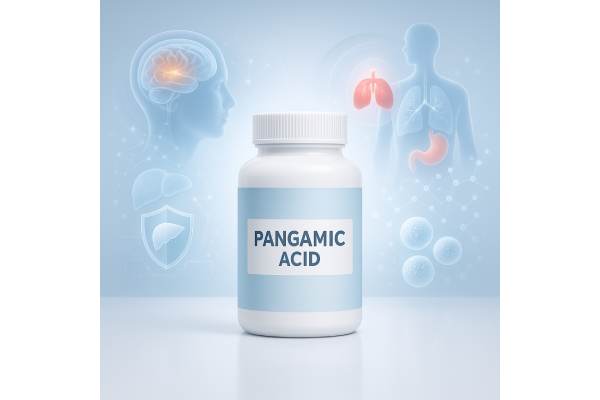
Pangamic acid, often sold as “vitamin B15,” sits in a strange corner of the supplement world. It is marketed for better oxygen use, detoxification, liver support, and athletic performance, yet it is not a recognized vitamin and does not have a single agreed-upon chemical identity. In fact, different products may contain completely different mixtures of compounds under the same name. Modern nutrition and pharmacology references describe pangamic acid as a pseudovitamin with no proven health benefit, while regulators in several countries flag it as unsafe or unapproved for human use.
This guide unpacks what pangamic acid actually is, the claims made for it, what clinical and laboratory evidence show, and why safety is such a concern. You will also see how “dosage” recommendations are created when there is no official dose, who should avoid pangamic acid entirely, and what safer, evidence-based alternatives exist if you are looking for more energy, better endurance, or liver and heart support.
Key Insights on Pangamic Acid
- Pangamic acid, marketed as “vitamin B15,” is not recognized as a true vitamin and has no proven essential role or established disease-treatment benefit.
- Products sold as pangamic acid can contain chemicals such as dichloroacetate or diisopropylamine derivatives, which have shown mutagenic activity in laboratory testing.
- No safe or effective dosage has been established; commercial products commonly provide around 50–150 mg per day or more, but these ranges are not based on high-quality clinical data.
- People who are pregnant or breastfeeding, children, and those with kidney, liver, or heart disease, or taking digoxin, calcium channel blockers, or thiazide diuretics should avoid pangamic acid.
- Most experts recommend focusing on proven nutrients and lifestyle approaches rather than unregulated, variably formulated products labeled as pangamic acid.
Table of Contents
- What is pangamic acid?
- Does pangamic acid have proven benefits?
- How is pangamic acid marketed and used today?
- Pangamic acid dosage: what do labels claim?
- Pangamic acid side effects and safety risks
- Who should avoid pangamic acid?
- Safer alternatives and how to evaluate claims
What is pangamic acid?
Pangamic acid is best understood as a label, not a single, well-defined substance. The name was originally given to a hypothetical compound called D-gluconodimethylaminoacetic acid, claimed to be isolated from apricot kernels and other seeds by Ernst T. Krebs Sr. and Jr. They promoted it as “vitamin B15,” suggesting it was a universal (“pan-”) seed (“-gamic”) factor present in many foods. Later investigation, however, showed that their extraction methods were not reproducible and that samples labeled “pangamic acid” often contained completely different materials, including lactose or mixtures of calcium salts and amino acids.
Modern analyses and regulatory reviews emphasize that there is no standard chemical identity for pangamic acid. Commercial formulations have included combinations of sodium or calcium gluconate, glycine, dimethylglycine (DMG), diisopropylamine dichloroacetate, and other compounds. In other words, two bottles that both say “pangamic acid” may contain very different active ingredients and impurities. Because of this, pangamic acid is frequently described as a pseudovitamin or “fake vitamin,” rather than a legitimate member of the B-vitamin family.
Despite the “vitamin” branding, no deficiency syndrome has ever been described in humans, and there is no evidence the body requires pangamic acid for any essential function. Major nutrition texts and cancer-prevention reviews now list it alongside other disproven remedies such as laetrile (“vitamin B17”).
Because there is no accepted structure, pharmacology, or physiological role, official nutrient reference bodies have not assigned pangamic acid a recommended intake, upper safe level, or any recognized clinical use. Regulatory agencies also note that there is no way to be sure what you are getting in a product labeled as pangamic acid, which complicates both safety assessment and any attempt to define a real “dose.”
Taken together, pangamic acid is not a vitamin, not an essential nutrient, and not a single defined compound. It is a marketing term applied to a shifting group of mixtures that lack proven medical value and are difficult to evaluate consistently.
Does pangamic acid have proven benefits?
Promoters of pangamic acid have claimed a wide range of benefits: improved oxygen utilization, better endurance and recovery, liver and heart protection, detoxification, improved circulation, cholesterol lowering, protection from air pollution, and even support for cancer treatment or neurological conditions. These claims often appear on websites and product labels with impressive language but little transparent data behind them.
When you look at the scientific literature, the picture is very different. Most of the early work came from the former Soviet Union and other small studies in the 1960s to 1980s. Many reports did not specify exactly which “pangamic acid” formulation was used, lacked control groups, or relied on anecdotal observations rather than rigorous clinical trial design. Independent reviewers in major journals concluded that the evidence was not sufficient to support any of the broad therapeutic claims.
A key modern supplement monograph now lists pangamic acid as possibly ineffective for improving exercise endurance and as having insufficient evidence for all other proposed uses, including asthma, eczema, alcoholism, fatigue, and high cholesterol. In other words, the available studies do not show reliable, clinically meaningful benefit compared with placebo or standard care.
Longer-term nutrition and cancer-prevention reviews go further. They group pangamic acid with other “fake vitamins” that have been heavily marketed but lack credible evidence. These reviews stress that there is no justification for high-dose intake of such substances to prevent or treat cancer or other chronic diseases, and warn against megavitamin strategies that are not grounded in well-designed trials.
In short, there are no robust, peer-reviewed, controlled clinical trials demonstrating clear benefit of pangamic acid for endurance, detoxification, heart or liver protection, mental health, or cancer. The inconsistency of the products, poor quality of older studies, and absence of modern randomized trials all point in the same direction: any claimed benefit remains unproven, and relying on pangamic acid instead of established therapies carries real opportunity cost and potential risk.
How is pangamic acid marketed and used today?
Even though major regulators classify pangamic acid products as unsafe or unapproved, they are still widely available online and in some local shops. Packaging usually presents pangamic acid as “Vitamin B15” or “Natural B15,” often pairing it with imagery of apricot kernels, brown rice, or pumpkin seeds to imply a natural, seed-based origin. Some companies also sell it alongside amygdalin (laetrile) and other controversial products, particularly for alternative cancer support or so-called metabolic therapies.
Claims on websites and labels typically emphasize:
- Enhanced cellular oxygenation and better “cell breathing”
- Support for endurance, athletic performance, and recovery
- Detoxification of the liver and protection from urban pollutants
- Support for heart and liver health, sometimes referencing fatty liver or cholesterol
- General anti-aging, immune support, or “longer cell life”
These claims often mirror one another across brands, suggesting they are recycled from older promotional narratives rather than newly generated scientific evidence.
Formulations vary widely. Some products list “pangamic acid” or “calcium pangamate” 50 mg per tablet, while others offer 500 mg capsules with label advice to take up to six capsules per day. Still others quietly indicate that what they call pangamic acid is actually dimethylglycine (DMG) with calcium or other carriers. Because there is no legally enforced chemical definition, the same term can cover everything from benign filler mixtures to compounds that are potentially mutagenic.
Regulatory status differs by country. In the United States, regulatory guidance explicitly categorizes pangamic acid products as unsafe for food and drug use and recommends seizure of products and restriction of importation and interstate shipment. In parts of Europe, pangamic acid is considered a non-authorized substance in food supplements, while some online sellers based in other jurisdictions continue to ship globally. Military and aviation medical authorities, including naval aeromedical programs, treat pangamic acid as a prohibited or high-concern supplement, contributing to a “not authorized” classification for flight personnel.
In practical terms, if you see pangamic acid on a label today, you are looking at a product with:
- No standardized identity
- Non-validated marketing claims
- Explicit regulatory concern or prohibition in several systems
- Unknown composition and safety profile
That combination should prompt a very cautious, critical approach rather than casual experimentation.
Pangamic acid dosage: what do labels claim?
Because pangamic acid is not a recognized nutrient or approved medicine, there is no official recommended daily allowance, no established therapeutic dose, and no scientifically defined safe upper intake level. Any dosage ranges you see online or on bottles are based on tradition, marketing, or extrapolation from small, older studies rather than on modern, rigorous dose-finding research.
Some general health sources describe a “typical” dose of vitamin B15 as 50–150 mg per day. This figure appears to come from older supplement practices rather than detailed pharmacokinetic or safety data. At the same time, commercial products today often deliver much more. For example, one widely marketed capsule supplies 50 mg per dose, while another offers 500 mg and suggests up to six capsules daily, which could total 3,000 mg per day if followed literally.
These label recommendations raise several problems:
- Unknown identity: If the product does not clearly state its chemical composition, the number of milligrams tells you little about what you are actually taking.
- Lack of dose–response data: There are no modern studies systematically exploring how different doses affect outcomes or side effects in humans.
- Safety margin uncertainty: Without long-term human data, especially at high doses, it is impossible to define a genuinely safe range.
- Variable excipients and contaminants: Different manufacturing standards, fillers, and potential contaminants mean that risk can vary from batch to batch.
Authoritative monographs emphasise that there is not enough scientific information to determine an appropriate range of doses for pangamic acid, and that natural products are not automatically safe simply because they are sold as supplements.
A practical takeaway is that there is no evidence-based “optimal” or “therapeutic” dose of pangamic acid for any condition. From a risk–benefit perspective, and given the absence of proven benefit plus the presence of credible safety concerns, many experts view the safest dosage for routine use as zero, especially outside of a controlled clinical research setting. If someone is already taking pangamic acid, the most important next steps are to stop self-adjusting the dose, review all supplements and medications with a qualified clinician, and discuss whether continued use is appropriate at all.
Pangamic acid side effects and safety risks
The central safety concern with pangamic acid is not just that it may be ineffective, but that some formulations contain chemicals with demonstrated mutagenic activity, meaning they can cause genetic damage in laboratory tests. Research on dichloroacetate, an ingredient in several pangamic acid preparations, has shown low-grade mutagenicity in widely used assays, leading authors to conclude that possible carcinogenicity must be considered when using dichloroacetate or any pangamic acid preparation containing it.
Modern supplement databases and clinical references now classify pangamic acid as unsafe, highlighting that chemicals in some formulations may cause cancer and that the lack of standardized identity makes it impossible to assume a given product is benign. They also note serious concerns for use in pregnancy and breastfeeding, where some components may cause birth defects.
Reported or theoretically plausible side effects and risks include:
- Cancer risk: Due to mutagenicity of certain components, such as dichloroacetate and related compounds, used in some pangamic acid formulations.
- Kidney problems and stones: Calcium-containing preparations, especially when combined with thiazide diuretics or high calcium intake, may promote high calcium levels and kidney issues.
- Cardiovascular effects and drug interactions: Pangamic acid mixtures containing calcium can interact with digoxin and calcium channel blockers, potentially altering heart rhythm or blood pressure control.
- Unknown contaminants or adulterants: As with many loosely regulated supplements, poor manufacturing standards can lead to contamination with heavy metals or undeclared drugs.
Short-term side effects reported in users include nausea, digestive discomfort, and headaches, though these are less well documented than the theoretical and laboratory-based risks. The larger problem is that, given the variability in formulation, absence of robust human safety data, and documented mutagenicity of commonly used components, there is no confident way to say a particular pangamic acid product is safe for long-term use. Regulatory guidance therefore treats pangamic acid products as unsafe for food or drug use and subject to enforcement action.
From a risk-management standpoint, especially in settings like aviation medicine where performance and safety are critical, pangamic acid is grouped with other prohibited supplements that can pose avoidable danger without any clear benefit.
Who should avoid pangamic acid?
Given the combination of unproven benefit and meaningful safety concerns, a strong argument can be made that most people are better off avoiding pangamic acid entirely. However, for some groups the risk is particularly concerning, and authoritative sources explicitly advise against use.
People who should strictly avoid pangamic acid include:
- Pregnant or breastfeeding individuals: Some chemicals found in pangamic acid formulations can cause birth defects and may be carcinogenic. The variability and poor labeling of products make it impossible to know what the fetus or infant is being exposed to.
- Individuals with kidney disease or history of kidney stones: Calcium-containing pangamic acid products can interact with thiazide diuretics and raise calcium levels, increasing the risk of kidney damage or stones.
- Patients with known heart disease or arrhythmias, especially those on digoxin or calcium channel blockers: Pangamic acid preparations that contain calcium or other cardioactive components may alter heart conduction or blood pressure, and documented interactions exist with these medications.
- Children and adolescents: There is no evidence of benefit and no long-term safety data in growing bodies, making use difficult to justify.
Other groups where caution should be extreme, practically equivalent to avoidance, include:
- People with current or past cancer: Some individuals encounter pangamic acid in the context of alternative cancer treatments. Since modern cancer and nutrition reviews specifically classify pangamic acid as a “fake vitamin” without proven anticancer benefit, and given the mutagenicity concerns, using it may add risk without measurable advantage.
- Individuals in safety-critical jobs (pilots, aircrew, certain military roles): Aeromedical policies typically treat pangamic acid and similar unregulated supplements as prohibited or high-risk because of potential subtle effects on cardiovascular function, cognition, or drug interactions.
- People taking multiple chronic medications: Because the exact ingredients of a pangamic acid product can be unclear, the risk of unrecognized interactions is significant, especially with heart, blood pressure, or kidney medications.
If someone in any of these groups is already taking pangamic acid, it is important not to stop or start other medications on their own. The appropriate step is to list all supplements and drugs they are using, share that list with their physician or pharmacist, and jointly decide on a plan, often discontinuation of pangamic acid, with appropriate monitoring and follow-up.
Safer alternatives and how to evaluate claims
People rarely seek out pangamic acid itself; they are usually looking for something else: more energy, better training endurance, liver support, heart protection, detoxification, or cancer prevention. For all of those goals, there are better-studied, safer strategies than a pseudovitamin with unclear composition.
For endurance and fatigue, practical, evidence-supported options include:
- Structured training programs with periodization and adequate recovery
- Ensuring sufficient iron, vitamin B12, folate, and overall calorie and protein intake if there is suspicion of anemia or under-fueling
- Well-characterized ergogenic aids, such as caffeine used within safe limits, under professional guidance for athletes or high-demand workers
For liver and heart health, the foundations are:
- Limiting alcohol and avoiding recreational drugs that stress the liver
- Managing weight, blood pressure, blood sugar, and cholesterol with diet, physical activity, and medications when prescribed
- Using standard B-complex vitamins or other nutrients only when deficiency or increased need is documented, not in megadoses as a cure-all
For general “detox” or pollution protection, the body’s own systems—liver, kidneys, lungs, and skin—already perform constant detoxification. What helps them function is not unproven detox pills, but:
- Adequate hydration
- A diet rich in vegetables, fruits, whole grains, and sufficient protein
- Not smoking and minimizing exposure to known toxins where possible
- Adequate sleep and stress management
Because the supplement marketplace is crowded and sometimes confusing, it helps to use a simple checklist when evaluating bold claims:
- Check identity. Is the active ingredient clearly defined with an accepted chemical or pharmacological name, or is it vague (for example “Vitamin B15,” “pangamic complex,” or “proprietary detox blend”)?
- Look for authoritative assessments. Search for monographs or position statements from recognized medical or regulatory organizations. If they describe a substance as unsafe, unapproved, or lacking evidence, that carries more weight than marketing copy.
- Examine the evidence. Are there modern randomized controlled trials in humans, or only animal studies, cell experiments, or anecdotes?
- Beware of red-flag claims. Promises to cure cancer, detoxify “all toxins,” dramatically boost oxygen, or act as a universal anti-aging solution are typical of products that do not have solid clinical data.
- Consider opportunity cost. Money and time spent on unproven supplements could instead support dietary improvements, training, or evidence-based health care that genuinely shifts long-term risk.
For many people, the safest and most productive step is to discuss energy, endurance, or liver and heart concerns with a clinician or sports medicine professional, then build a plan around realistic interventions that match their health status, without relying on substances like pangamic acid that combine uncertain benefit with avoidable risk.
References
- The immunomodulatory effects of vitamins in cancer 2024 (Systematic Review)
- Pangamic Acid: Health Benefits, Side Effects, Uses, Dose & Precautions 2025 (Monograph)
- 19.0 Nutritional and Ergogenic Supplements 2025 (Guideline)
- CPG Sec. 457.100 Pangamic Acid and Pangamic Acid Products Unsafe for Food and Drug Use 1995 (Guidance)
- Mutagenicity of dichloroacetate, an ingredient of some formulations of pangamic acid (trade-named “vitamin B15”) 1980 (Laboratory Study)
Medical Disclaimer
The information in this article is for general educational purposes only and is not intended to replace individual medical advice, diagnosis, or treatment. Pangamic acid products vary widely in composition, and their safety and effectiveness have not been established by high-quality clinical trials. Never start, stop, or change any medication or supplement, including pangamic acid or products marketed as “vitamin B15,” without speaking with a qualified health professional who understands your personal medical history, current medications, and health goals. If you suspect an adverse reaction to any supplement, seek medical attention promptly.
If you found this guide helpful, you are welcome to share it with others on Facebook, X (formerly Twitter), or any platform you prefer, and to follow our work on social media. Your thoughtful sharing and support help our team continue to develop clear, carefully researched health content for readers worldwide.