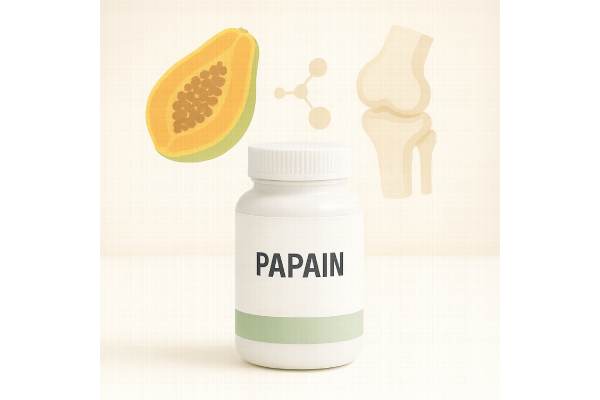
Papain is a natural protein-digesting enzyme found in the latex and fruit of the papaya tree. For decades it has been used to tenderize meat, support digestion, and as a medical tool to remove dead tissue from wounds. Today, papain also appears in digestive enzyme blends, topical creams, and even some dental and cosmetic products.
Because papain acts directly on proteins, it can help break down food, soften scarred or damaged tissue, and influence inflammation pathways in the body. Modern research is exploring whether papain might support metabolic health, skin conditions, and gut function, while older clinical experience highlights its potential in wound care and as part of multi-enzyme therapies.
At the same time, papain is not risk free. High doses, long-term use, or unsupervised topical application can cause irritation, allergy, or tissue damage. This guide walks you through what papain does, how it is used, typical supplemental amounts, and when it should be avoided.
Key Insights for Papain
- Papain is a cysteine protease enzyme from papaya that helps break down tough dietary proteins and damaged tissue.
- Oral papain is mainly used in digestive enzyme blends and is being studied for effects on inflammation and metabolic health.
- Common supplemental intakes range from about 25–100 mg of papain per serving, often taken up to 2–3 times per day with meals, according to product labels.
- People with papaya allergy, bleeding disorders, planned surgery, pregnancy, or active peptic ulcers should avoid papain unless their clinician specifically recommends it.
Table of Contents
- What is papain and how does it work?
- Evidence-based benefits of papain
- How to use papain in practice
- Papain dosage: how much is safe?
- Papain side effects, risks, and who should avoid it
- What research says and current limitations
What is papain and how does it work?
Papain is a cysteine protease enzyme extracted primarily from the latex of unripe papaya (Carica papaya). In simple terms, it is a protein-cutting tool. Like the proteases made in your pancreas, papain breaks peptide bonds, turning large proteins into smaller peptides and amino acids that are easier to digest or clear away.
Chemically, papain has an active site built around a cysteine amino acid. This active center attacks protein chains and “snips” them at specific points. Papain is active over a fairly wide pH range (slightly acidic to neutral), which makes it useful in the stomach and small intestine, as well as in topical products where local pH may vary.
Commercial papain is usually produced by collecting papaya latex, purifying it, and drying it into a powder. That powder can then be standardized either by weight (mg per capsule) or by activity units (such as PU, TU, or USP units). In food processing, papain is used to tenderize meat, clarify beverages, and modify protein texture in processed foods.
In the body, papain appears to influence more than digestion. Laboratory and animal studies suggest it can modulate inflammatory signaling, change how fat cells store lipids, and affect immune responses. However, these mechanistic data do not automatically translate into proven clinical benefits in humans.
Clinically, papain has been used in three main ways:
- As part of oral enzyme blends for digestive complaints.
- As an enzymatic debriding agent in wound care, typically combined with urea under medical supervision.
- As a cosmetic or dermatologic ingredient for gentle exfoliation, brightening, or scar-focused products.
Each use relies on the same core property: papain’s ability to selectively break down proteins under controlled conditions.
Evidence-based benefits of papain
When people talk about papain’s “benefits,” they often mix traditional use, lab data, and early clinical research. It is helpful to separate what is well explored from what remains preliminary.
1. Digestive support and dyspepsia
Papain is a common component of digestive enzyme supplements marketed for indigestion, bloating, or a feeling of fullness after meals. Several clinical trials have tested multi-enzyme blends that include papain (often with amylase, lipase, bromelain, and other proteases) in people with functional dyspepsia. In one modern randomized, double-blind, placebo-controlled study, a fungal multi-enzyme blend improved quality of life, pain scores, and sleep in adults with functional dyspepsia over two months compared with placebo, with good tolerability.
Because these formulas combine multiple enzymes, it is difficult to attribute benefits specifically to papain. Still, the research supports the idea that appropriately dosed digestive enzyme blends can be helpful in selected patients under medical guidance.
2. Wound debridement and tissue clearance
Historically, papain-urea ointments were used to remove necrotic (dead) tissue from burns, pressure sores, and ulcers. A clinical study in patients with large burn wounds found that papain–urea debridement was effective in removing dead tissue and generally safe when used properly, though careful monitoring was required.
Regulatory policies have since tightened in some countries due to concerns about unapproved topical papain formulations and rare severe reactions. Today, enzymatic debridement using papain is typically restricted to specific products and specialist settings, if used at all.
3. Anti-inflammatory and tissue-healing properties
Papain’s proteolytic action can reduce the load of damaged proteins and matrix fragments in injured tissue. Animal studies suggest that papain may lessen inflammatory markers and protect the gut lining in models of intestinal injury and inflammation, sometimes tested alongside bromelain.
In small human trials, oral proteolytic enzyme combinations that include papain have been investigated for post-surgical swelling and pain, as well as soft-tissue injuries. Results vary by study design and formula, but some show reduced edema and faster symptom relief compared with controls. These findings are promising but do not yet support routine use in place of standard therapy.
4. Metabolic and skin-related effects (early-stage)
In a high-fat diet mouse model, papain supplementation reduced weight gain, improved lipid profiles, and lowered inflammatory markers, suggesting a potential anti-obesity effect through AMPK-related pathways.
More recently, papain has been tested in experimental models of atopic skin inflammation. Topical or systemic papain reduced inflammatory cytokines and improved skin lesions in these models, pointing toward potential dermatologic applications that remain to be tested carefully in humans.
Overall, papain’s strongest evidence in practice remains in digestive support (as part of a blend) and in specialized wound care. Other benefits, particularly metabolic or systemic anti-inflammatory effects, are intriguing but not yet well-established in clinical use.
How to use papain in practice
Papain comes in several forms, each suited to different goals. Understanding these options helps you match the product to your needs and use it more safely.
1. Oral supplements for digestion
Most people encounter papain as part of an over-the-counter digestive enzyme blend. Common formats include:
- Capsules or tablets containing papain plus other enzymes (amylase, lipase, bromelain, lactase, etc.).
- Chewable tablets meant to be taken with protein-rich meals.
- Standalone papain capsules, less common but available from some manufacturers.
Typical label directions suggest taking one serving with meals that contain protein. The idea is to support your own pancreatic enzymes, not to replace them. For persistent symptoms such as upper abdominal discomfort, early fullness, or bloating, it is important to rule out serious conditions with a clinician before relying on enzyme supplements.
2. Systemic use on an empty stomach
Some people take proteolytic enzymes like papain between meals in an attempt to influence systemic inflammation, joint pain, or recovery from exercise. The evidence here is mixed and often based on multi-enzyme formulas rather than isolated papain. Anyone considering this approach should do so only under professional guidance, especially if they are on anticoagulant therapy, have autoimmune disease, or are taking multiple medications.
3. Topical preparations
Papain has been used in:
- Medical debriding agents (usually papain–urea formulations prescribed or applied by wound-care specialists).
- Cosmetic exfoliating masks or peels, where low concentrations help dissolve dead skin cells.
- Some dental and whitening products, often combined with other enzymes.
Topical use requires special care. Medical-strength papain for wound care must be managed by trained professionals because overuse can damage healthy tissue. Cosmetic products should be patch tested, especially for people with sensitive skin, atopic dermatitis, or known fruit allergies.
4. Food and culinary uses
In cooking, papain-containing meat tenderizers are sprinkled onto steaks or included in marinades to soften tough cuts. From a nutritional standpoint, papain in these quantities is small and usually not considered a therapeutic dose. However, individuals with papaya allergy should still be cautious, even with culinary exposure.
Practical tips
- Start with the lowest effective dose recommended on the product label.
- Use oral papain with meals for digestion-focused goals, unless your clinician advises a different schedule.
- Avoid combining papain with multiple other supplements that affect clotting or inflammation without professional review.
- Stop use and seek medical advice if you develop rash, itching, breathing difficulty, persistent abdominal pain, or black or bloody stools.
Papain dosage: how much is safe?
There is no official recommended daily allowance (RDA) for papain. Most guidance comes from product labels, clinical trials with multi-enzyme blends, and safety evaluations.
1. Typical supplemental amounts
Commercial papain supplements vary widely, but broad patterns include:
- Single-ingredient papain capsules: often in the range of about 25–100 mg papain per capsule, taken once or several times daily with meals, according to the manufacturer.
- Multi-enzyme digestive blends: may contain papain along with other enzymes, with the total complex at around 100–200 mg per serving, taken once or twice per day with meals in clinical trials on functional dyspepsia.
Some labels focus on activity units rather than milligrams. In those cases, you might see papain expressed in PU (Papain Units) or other laboratory-defined units. Because activity units are not standardized across brands, comparing products strictly by these values is difficult.
2. Short-term clinical use
In modern controlled studies of multi-enzyme blends for dyspepsia, participants have taken enzyme supplements for 8–12 weeks without significant safety signals. These blends typically deliver around 200 mg of total enzyme complex per day, including papain, divided into two or three doses.
This suggests that short-term use within label directions is likely safe for most otherwise healthy adults, provided there are no contraindications such as allergy, pregnancy, or serious comorbidities.
3. Topical and medical doses
Topical papain for wound debridement is usually dosed in terms of product strength and application frequency rather than mg per kilogram. In clinical burn care studies, papain–urea preparations were applied under close supervision, often daily or every other day, until sufficient debridement was achieved.
Because of the risk of tissue injury and allergy, these formulations should not be improvised at home. They also may not be available or recommended in all countries due to regulatory changes.
4. General safety ranges and boundaries
Within the context of dietary supplements:
- Staying within the product’s recommended upper limit (often 2–3 servings per day) is prudent.
- Combining multiple papain-containing products (for example, a digestive blend plus a “systemic enzyme” product) can quickly raise your total enzyme exposure without clear added benefit.
- Very large doses of papain have been associated with throat and stomach irritation in reports from older medical use and consumer information resources.
Because of the lack of standardized dosing and long-term safety data, papain should be used at the lowest dose that achieves a clear, measurable benefit, and ideally for defined periods rather than indefinitely.
Papain side effects, risks, and who should avoid it
Papain is often marketed as “natural,” but that does not mean risk free. Its ability to break down proteins is exactly what can cause harm when used improperly or in susceptible individuals.
Common and mild effects
At typical supplemental doses, many people tolerate papain without obvious problems. When side effects do occur, they often involve:
- Mild stomach discomfort, nausea, or cramping.
- Soft stools or diarrhea when doses are high or combined with other digestive aids.
- Transient skin irritation or stinging when topical products are left on too long or used on sensitive skin.
These symptoms usually improve after lowering the dose or stopping the product.
Allergic and immune reactions
Papaya is a well-known allergen for some people, and papain shares proteins and structural features with other plant allergens. Reactions may include:
- Hives, itching, or swelling of the lips and face.
- Wheezing, shortness of breath, or chest tightness.
- In severe cases, anaphylaxis requiring emergency care.
People with known allergy to papaya, latex, or certain pollens may have a higher risk of reacting to papain, especially in concentrated supplement or topical form.
Mucosal and tissue damage
Because papain digests protein, excessive or improperly used papain can damage healthy tissues:
- Very high oral doses have been associated with throat and gastric irritation and, in extreme cases, more serious injury in older reports.
- Overly aggressive or unsupervised topical use, particularly on open wounds or mucous membranes, can lead to ulceration or delayed healing.
For this reason, medical-strength debriding formulations have come under stricter regulation in some regions.
Interactions and special situations
Papain may not be suitable for people who:
- Take anticoagulant or antiplatelet medications, because high-dose proteases may theoretically alter bleeding risk.
- Have active peptic ulcers or inflammatory bowel disease, where additional enzymatic activity might irritate already damaged tissue.
- Are scheduled for surgery, as many clinicians prefer to stop non-essential supplements that could influence inflammation or clotting at least 1–2 weeks beforehand.
- Are pregnant or breastfeeding, since safety data in these groups are limited and many guidelines recommend avoiding non-essential supplements.
Who should avoid papain outright?
Unless a specialist explicitly recommends it, papain is generally best avoided by:
- Anyone with a confirmed allergy to papaya, papain, or latex.
- People with a history of severe reactions to proteolytic enzyme supplements.
- Individuals with complex medical conditions (such as active cancer, major bleeding disorders, or severe liver or kidney disease) unless their care team is fully informed and agrees on its use.
When in doubt, a clinician familiar with your diagnosis and medication list is the safest person to help decide whether papain has a place in your regimen.
What research says and current limitations
The modern scientific picture of papain is nuanced. It shows real biochemical power, promising signals in models of disease, and some supportive clinical data—but also clear gaps and boundaries.
1. Strengths of the evidence
Several lines of research support papain’s biological activity:
- Metabolic and obesity models: In high-fat diet mouse studies, papain reduced weight gain, improved lipid profiles, and lowered inflammatory cytokines, apparently through AMPK activation and changes in adipogenesis.
- Skin and inflammation models: Experimental work in atopic dermatitis models shows that papain can reduce inflammatory markers and improve lesion scores, supporting its potential in dermatology if safety issues are carefully addressed.
- Digestive enzyme trials: Multi-enzyme blends that include papain improved scores for pain, dyspepsia symptoms, and sleep quality in adults with functional dyspepsia over two months, suggesting a clinically meaningful effect in some patients.
- Enzymatic debridement: Clinical studies in burn and chronic wound care indicate that papain–urea preparations can effectively remove necrotic tissue and may shorten the time to a clean wound bed when used properly.
2. Areas of uncertainty
Despite these strengths, important limitations remain:
- Many human studies use complex enzyme mixtures, not pure papain, making it hard to isolate papain’s unique contribution.
- Long-term safety data for daily papain supplementation beyond a few months are scarce, particularly in older adults or those with multiple chronic conditions.
- Regulatory actions on topical papain products in some countries reflect concerns about uncontrolled exposure and rare but serious adverse events, underscoring the need for standardized, high-quality formulations.
- Evidence for papain as a cancer therapy, or as a way to prevent major chronic diseases, is weak or inconclusive. A systematic review of proteolytic enzyme therapy in complementary oncology found no clear therapeutic benefit despite widespread use.
3. How to interpret the current data
For most readers, the practical bottom line looks like this:
- Papain is plausibly helpful as part of a balanced digestive enzyme blend for selected people with functional indigestion, under medical supervision.
- Papain-based wound debridement remains a specialist tool rather than a self-care option.
- Emerging research on metabolic and dermatologic effects is interesting but does not yet justify high-dose or long-term self-experimentation.
- Safety considerations—especially allergy, tissue irritation, and interactions with serious illnesses—mean that papain should be treated as a potent bioactive substance, not a benign “fruit extract.”
Used thoughtfully, papain can be part of a targeted therapeutic strategy. Used casually or at very high doses, it can cause real problems. That balance is why partnering with a qualified healthcare professional is crucial whenever you move beyond basic, short-term digestive support.
References
- Papain Ameliorates Lipid Accumulation and Inflammation in High-Fat Diet-Induced Obesity Mice and 3T3-L1 Adipocytes via AMPK Activation 2021 (In vivo and in vitro study).
- Papain Suppresses Atopic Skin Inflammation through Anti-Inflammatory Activities Using In Vitro and In Vivo Models 2024 (In vivo and in vitro study).
- Efficacy of digestive enzyme supplementation in functional dyspepsia: A monocentric, randomized, double-blind, placebo-controlled, clinical trial 2023 (RCT).
- Enzymatic debridement of large burn wounds with papain-urea: Is it safe? 2013 (Clinical study).
- Proteolytic Enzyme Therapy in Complementary Oncology: A Systematic Review 2021 (Systematic Review).
Disclaimer
The information in this article is for general educational purposes only and is not intended to replace individual medical advice, diagnosis, or treatment. Papain and other dietary supplements can interact with medications and underlying health conditions, and their safety and effectiveness vary from person to person. Always consult a qualified healthcare professional—such as a physician, pharmacist, or registered dietitian—before starting, changing, or stopping any supplement, particularly if you are pregnant or breastfeeding, preparing for surgery, or living with chronic illness. Never ignore or delay seeking professional medical advice because of something you have read here.
If you found this guide helpful, you are warmly invited to share it with others on Facebook, X (formerly Twitter), or any platform you prefer, and to follow our work on social media. Your thoughtful support by sharing our articles helps our team continue to create careful, evidence-informed content for readers like you.