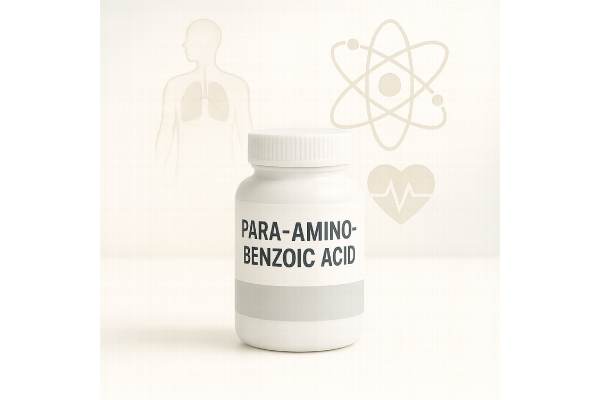
Para-aminobenzoic acid (PABA) is a small, aromatic compound that sits at the crossroads of nutrition, dermatology, and pharmacology. Sometimes called “vitamin B10,” it is not an essential vitamin for humans, but it does occur naturally in foods and plays an important role in bacterial folate synthesis. Historically, PABA was widely used in sunscreens thanks to its strong absorption of ultraviolet B (UVB) light. It later found its way into prescription products such as potassium para-aminobenzoate (Potaba) for Peyronie’s disease and various skin conditions, as well as dietary supplements marketed for hair color, skin appearance, and connective tissue support. At the same time, high-dose oral PABA has been linked to serious side effects, including liver and kidney injury, and it can interfere with some antibiotics. This guide walks you through what PABA is, where it is used, its potential benefits and limits, typical dosage ranges, and safety considerations so you can have a well-informed discussion with a health professional.
Quick Insights for Para-aminobenzoic Acid
- PABA helps absorb UVB light, underpins some prescription treatments, and is marketed for skin and connective tissue support, though evidence is mixed.
- Typical supplemental intakes are often in the range of 100–400 mg per day, while medical uses (such as Peyronie’s disease) have used gram-level doses.
- High-dose PABA (above about 8–12 g per day) has been associated with serious adverse effects, including liver and kidney toxicity.
- People with kidney or liver disease, those on sulfonamide antibiotics or dapsone, pregnant or breastfeeding women, and children should avoid unsupervised PABA supplementation.
Table of Contents
- What is para-aminobenzoic acid?
- What are the main benefits of PABA?
- How to take PABA safely day to day
- How much para-aminobenzoic acid per day?
- Side effects, risks, and who should avoid PABA
- What does the research actually say about PABA?
What is para-aminobenzoic acid?
Para-aminobenzoic acid (PABA) is an organic compound made of a benzene ring with an amino group and a carboxylic acid group in the “para” (opposite) positions. In chemistry, it is known as 4-aminobenzoic acid. In everyday terms, it is a small molecule that can absorb ultraviolet (UV) light and that bacteria use as a building block to synthesize folic acid.
PABA occurs naturally in various foods, including liver, brewer’s yeast, whole grains, mushrooms, spinach, and some meat and dairy products. It is also generated in the gut by certain bacteria. Humans can obtain PABA from the diet, but we do not require it as a vitamin in the way we require folate, vitamin B12, or vitamin D. The popular label “vitamin B10” is therefore misleading; PABA is better thought of as a conditionally useful compound rather than a true vitamin.
Pharmaceutical and cosmetic industries use PABA in several ways:
- As a UV filter in older-generation sunscreens, lip balms, and other topical products.
- As the active component in potassium para-aminobenzoate (Potaba), a prescription medicine used for Peyronie’s disease and some fibrosing skin disorders in certain countries.
- As an auxiliary compound in diagnostic tests, such as older methods to assess pancreatic function or the completeness of 24-hour urine collections.
- As a supplement ingredient, often in products marketed for hair pigmentation, skin health, and connective tissue support.
After oral intake, PABA is absorbed in the small intestine, conjugated (often with glycine) in the liver, and excreted in the urine. These pharmacokinetic properties make it useful as a marker in certain lab tests, because a well-functioning gut and liver will excrete predictable amounts over 24 hours. At typical supplemental doses, much of the ingested PABA is cleared quickly, which partly explains its relatively low toxicity at modest doses.
However, the same features also mean that very high doses can overload metabolic pathways and lead to organ stress, especially in the liver and kidneys. Understanding this balance between utility and risk is key to deciding whether and how to use PABA.
What are the main benefits of PABA?
PABA’s reputation comes from several distinct domains: photoprotection, connective tissue and fibrosing disorders, hair and skin appearance, and immune or enzymatic modulation. It is important to separate the areas with relatively stronger evidence from those supported mainly by older or low-quality data.
Photoprotection and sunscreen use
PABA is an efficient absorber of UVB radiation, which made it one of the earliest organic sunscreen filters. When applied to the skin in concentrations typically ranging from 1–15%, PABA can significantly reduce UVB-induced sunburn. For a time, it was a mainstay of sunscreen formulations.
However, PABA has gradually fallen out of favor in modern sun-care products because:
- It can cause allergic or photoallergic contact dermatitis in sensitive individuals.
- It may stain clothing and be cosmetically less elegant than newer filters.
- Formulators now have a wide range of alternative filters with improved safety and stability profiles.
Today, PABA-free labeling is common, and PABA-containing sunscreens occupy a niche role rather than the mainstream market.
Fibrosing conditions and Peyronie’s disease
In medicine, PABA is best known as the active component of potassium para-aminobenzoate (Potaba), a prescription drug used in Peyronie’s disease and some sclerosing conditions (such as morphea and scleroderma). PABA appears to influence collagen metabolism and fibrosis, possibly by affecting serotonin or other signaling pathways involved in excessive scar-like tissue formation.
Studies in Peyronie’s disease suggest that high-dose Potaba may slow plaque progression or reduce pain in some men, though results are mixed, and many patients discontinue therapy because of gastrointestinal side effects and the burden of large daily doses. Combination therapy with other agents may be more effective than PABA alone in some settings, but this remains an area of ongoing debate.
Hair pigmentation and skin appearance
PABA has long been marketed as a supplement to:
- Darken or slow the progression of gray hair.
- Support skin elasticity and a “younger” appearance.
- Assist in certain pigmentary conditions such as vitiligo or melasma.
Early reports from several decades ago described partial darkening of prematurely gray hair with very high oral doses (often 12–24 g per day) or combinations of PABA and calcium pantothenate. More recent systematic reviews of medication-induced hair repigmentation classify the evidence for PABA as low quality and not sufficient to recommend its routine use solely for cosmetic hair darkening. Modern dermatology texts generally advise against taking large doses for this purpose, given the potential for serious side effects and the availability of safer cosmetic options.
Other proposed effects
PABA and its derivatives have shown a variety of biological activities in preclinical studies, including antioxidant, anti-inflammatory, and antimicrobial effects. Some PABA-based molecules are being explored as scaffolds for new drugs in areas like cancer, infection, and neurodegeneration. However, these findings relate to synthetic analogues and specific drug candidates, not to over-the-counter PABA supplements.
Overall, PABA’s clearest modern roles are as:
- A historical but less commonly used sunscreen filter.
- A component of certain prescription therapies for fibrosing conditions.
- A niche supplement for hair or skin, where benefits are uncertain and safety must be carefully considered.
How to take PABA safely day to day
If you are considering PABA, it is crucial to distinguish between topical, low-dose oral, and high-dose medical use. Each route carries different expectations and risks.
Topical use (sunscreens and cosmetics)
For most people, the safest and most straightforward way to encounter PABA is through the skin, in products where it is present as a UV filter. Even here, many individuals prefer PABA-free sunscreens because of allergy concerns. If you use a PABA-containing sunscreen:
- Patch test a small area first if you have sensitive skin or a history of contact dermatitis.
- Use as directed and combine with other sun-safe behaviors such as shade and protective clothing.
- Discontinue and speak with a healthcare professional if you notice rash, itching, or unusual burning.
Because effective modern sunscreens are widely available without PABA, there is rarely a compelling reason to seek out PABA-based topical products unless advised by a specialist.
Oral supplements
Over-the-counter PABA supplements commonly come in doses around 100–500 mg per capsule. They are often marketed for:
- Premature graying or hair loss.
- Skin conditions, including vitiligo and scleroderma.
- General “anti-aging” or connective tissue support.
If you and your clinician decide to trial an oral PABA supplement:
- Clarify your goal. Is it hair appearance, skin support, or adjunctive support in a fibrosing condition? This determines whether PABA is likely to help at all.
- Start low. Many reference sources consider doses up to about 400 mg per day as a reasonable ceiling for general supplementation, assuming normal kidney and liver function and no interacting medications. Starting at 100–200 mg per day gives room to adjust.
- Take with food. Doing so can reduce gastrointestinal upset, which is one of the most frequently reported minor side effects.
- Monitor for changes. Track any digestive symptoms, rashes, fatigue, dark urine, or right-upper-abdominal discomfort. These can be early signs of liver or kidney stress and require immediate medical attention.
- Avoid combining with certain drugs. PABA can interfere with sulfonamide antibiotics and dapsone, and may influence bleeding risk when used intravenously or with other anticoagulant therapies. Always review your medications with a clinician before starting PABA.
Prescription PABA (Potaba and similar products)
For conditions such as Peyronie’s disease or scleroderma, PABA is sometimes prescribed in gram-level doses (often several grams per day). This is not self-care supplementation. It requires:
- A formal prescription and clear instructions.
- Lab monitoring, especially of liver and kidney function, as well as blood counts.
- Regular follow-up to assess whether benefits outweigh side effects.
Because the doses used medically can be many times higher than those found in dietary supplements, they sit in an entirely different risk category and must be supervised accordingly.
In everyday life, most people do not need to supplement with PABA at all. A balanced diet and appropriate sunscreen use provide adequate exposure for the roles PABA plays in human health.
How much para-aminobenzoic acid per day?
There is no official recommended dietary allowance (RDA) or adequate intake (AI) for PABA because it is not recognized as an essential vitamin for humans. Dosage guidance therefore comes from tradition, supplemental practice, and specific medical uses, rather than from nutrient requirement tables.
Supplemental ranges in consumer products
Most supplement references and monographs converge on a cautious upper limit for general adults:
- Common supplemental range: roughly 100–400 mg per day by mouth, often divided into one or two doses with food.
- Occasional higher short-term use: some products suggest up to 1–2 g per day for short periods, but this is closer to pharmacologic use and should not be attempted without professional supervision.
Within the 100–400 mg range, PABA is generally described as “possibly safe” for adults with normal kidney and liver function, provided it is taken appropriately and not combined with interacting medications. Even in this range, minor side effects such as nausea, loss of appetite, or skin rash may appear in sensitive people.
Medical doses for specific conditions
In certain fibrosing conditions, particularly Peyronie’s disease, potassium para-aminobenzoate (Potaba) has been used at much higher doses, for example:
- 12 g per day of potassium PABA, often divided into multiple doses throughout the day.
These high-dose regimens:
- Are used under prescription only.
- Have been linked to significant gastrointestinal side effects and high dropout rates in studies.
- Carry a known risk of serious toxicity, including liver failure, kidney injury, and blood abnormalities, especially in susceptible individuals.
Other historical reports describe PABA doses in the 8–24 g per day range for hair repigmentation or systemic diseases, but such regimens are now widely regarded as unsafe and are not recommended.
Safety thresholds and toxicity cases
Case reports and safety reviews provide some practical boundaries:
- Doses up to around 400 mg per day are generally considered low-risk for most healthy adults.
- Doses in the multi-gram range (for example 8–12 g per day and above) have been associated with severe adverse effects, including liver failure, kidney problems, and, in rare instances, vitiligo or blood disorders.
- Very high doses relative to body weight have been fatal in some pediatric cases.
Because people vary in how they metabolize and excrete PABA, there is no sharp cut-off at which toxicity suddenly appears. Instead, risk increases with dose, duration, and the presence of underlying liver or kidney disease or interacting medications.
Practical dosage advice
For most adults considering PABA as a dietary supplement:
- Stay at or below 400 mg per day, unless specifically advised otherwise by a knowledgeable clinician.
- Avoid “megadose” products that promote gram-level intake for hair darkening or anti-aging effects.
- Do not combine multiple PABA-containing products (for example, a separate PABA capsule plus another supplement blend that also includes PABA) without calculating the total daily intake.
- If you are on prescription PABA for a medical condition, follow your specialist’s dose exactly and never add extra over-the-counter PABA on top.
Children, pregnant or breastfeeding women, and people with kidney or liver disease should not use oral PABA without explicit, individualized medical guidance.
Side effects, risks, and who should avoid PABA
PABA’s safety profile depends heavily on dose, route of exposure, and individual susceptibility. While modest topical or low-dose oral use is often tolerated, significant risks emerge at higher doses and in vulnerable populations.
Common and mild side effects
At low to moderate oral doses (around 100–400 mg per day), reported side effects tend to be mild and manageable:
- Nausea, stomach upset, or abdominal cramps
- Diarrhea or loose stools
- Loss of appetite
- Headache or lightheadedness
- Mild skin rash or itching
These symptoms often improve when PABA is taken with food, the dose is reduced, or the supplement is discontinued. Persistent or worsening symptoms should always be discussed with a healthcare professional.
Topical PABA can cause:
- Local skin irritation
- Stinging or burning on application
- Yellow staining of clothing
Because of these issues and the availability of alternative UV filters, many people and manufacturers avoid PABA-based sunscreens.
Serious adverse effects
At high oral doses, PABA can cause severe and potentially life-threatening toxicities, including:
- Liver injury: hepatitis, jaundice, and in rare cases acute liver failure.
- Kidney damage: reduced kidney function, abnormal urine findings, and, in extreme cases, kidney failure.
- Blood abnormalities: changes in blood counts or hemolysis in susceptible individuals.
- Severe allergic reactions: widespread rash, swelling, breathing difficulty, or anaphylaxis.
Symptoms such as dark urine, yellowing of the skin or eyes, intense fatigue, confusion, severe abdominal pain, or breathing problems require urgent medical evaluation.
Drug interactions
PABA can interact with several classes of medications:
- Sulfonamide antibiotics: PABA can compete with these drugs at the bacterial level and may reduce their effectiveness. Because sulfonamides target folate synthesis pathways that involve PABA, taking PABA at the same time can undermine antibiotic therapy.
- Dapsone: another sulfonamide-related medication whose efficacy may be reduced by PABA.
- Anticoagulants and antiplatelet agents: when given intravenously, PABA appears to influence blood clotting and may raise bleeding risk when combined with other blood-thinning agents.
- Corticosteroids (such as cortisone): PABA may alter the metabolism of certain steroids, potentially increasing their effects and side effects in some contexts.
Because of these interactions, you should always review your prescription and over-the-counter medications, including eye drops and topical treatments, with a clinician before starting PABA.
Who should avoid PABA?
PABA is not appropriate for everyone. Groups that should avoid or use extreme caution include:
- People with known allergy to PABA, local anesthetics of the ester type, or related compounds. PABA is also a metabolic breakdown product of some ester-type anesthetics, and individuals sensitized to these may cross-react.
- Individuals with existing liver or kidney disease. These organs are central to PABA metabolism and excretion, so toxicity risk may be higher even at modest doses.
- Children and adolescents. Cases of serious toxicity and even death have been reported at high doses in children; routine supplementation is not recommended.
- Pregnant or breastfeeding women. While PABA in topical products may be acceptable, safety data for high-dose oral use are limited, so supplements should generally be avoided unless a specialist advises otherwise.
- People taking sulfonamide antibiotics, dapsone, or complex anticoagulant regimens. PABA may reduce drug effectiveness or contribute to bleeding risk in these situations.
For most individuals, there is no compelling reason to take PABA as a stand-alone supplement. If it is being considered for a specific medical condition, a specialist familiar with the evidence and safety profile should supervise its use.
What does the research actually say about PABA?
Much of the enthusiasm around PABA dates back several decades, when early clinical reports and mechanistic studies hinted at broad potential. Modern evidence paints a more nuanced picture.
PABA as a pharmaceutical building block
Recent medicinal chemistry reviews describe PABA as a valuable scaffold for designing new drugs. Researchers have created numerous PABA-based compounds with promising properties such as anticancer, antibacterial, antiviral, antioxidant, and anti-inflammatory activity. These studies highlight how PABA’s structure can be modified to yield pharmacologically active molecules.
However, this does not mean that unmodified PABA supplements provide the same benefits. In many cases, the therapeutic effects stem from specific modifications that change how the molecules interact with enzymes, receptors, or DNA.
Hair repigmentation and gray hair
Systematic reviews of medication-induced repigmentation of gray hair list PABA among a set of vitamins and drugs that have occasionally been associated with darkening of gray hair. In most reports, PABA was used at very high doses or as part of multi-ingredient vitamin complexes, and study quality was low.
Contemporary dermatology research emphasizes that while some medications can trigger partial repigmentation, gray hair is largely a complex, age-related process. There is no robust modern evidence to support routine PABA supplementation as a reliable or safe strategy to reverse gray hair, especially considering the doses used in older studies and the associated risk of systemic toxicity.
Fibrosing conditions and Peyronie’s disease
Potassium para-aminobenzoate has been studied in Peyronie’s disease and some fibrosing skin or connective tissue disorders. Clinical findings include:
- Some improvement in pain and plaque characteristics in subsets of patients.
- High dropout rates due to gastrointestinal side effects and the burden of taking large doses multiple times per day.
- Uncertain impact on long-term deformity and need for surgery, with some studies suggesting limited benefit compared with combination therapies or other options.
More recent reviews of Peyronie’s disease treatments generally position Potaba as an older, second-line or adjunctive option rather than a first-choice therapy, and emphasize that expectations should be modest.
Safety and toxicology
Regulatory and toxicology documents, along with modern supplement monographs, converge on several safety points:
- PABA is rapidly absorbed and excreted, which underlies its usefulness as a diagnostic marker.
- At low oral doses, it is often well tolerated, although allergic reactions and digestive upset can occur.
- Serious hepatotoxicity, nephrotoxicity, and hematologic complications have occurred at high doses, sometimes in otherwise healthy individuals.
- In poison control databases and medical encyclopedia entries, PABA is recognized as a substance that can cause significant harm when ingested in large amounts.
These findings support a cautious approach: PABA is not inherently “dangerous” in all forms or doses, but there is a relatively narrow margin between doses that are likely unnecessary and doses that could cause genuine harm when taken chronically.
Bottom line from the evidence
Putting the data together:
- Topical PABA is an effective UVB filter but has been largely superseded by alternative sunscreen agents due to allergy and cosmetic concerns.
- Oral PABA supplements may have niche roles in specific conditions and are occasionally used off-label for cosmetic purposes, but the strength of evidence for many claimed benefits (especially hair darkening and anti-aging) is weak.
- High-dose PABA therapy for fibrosing conditions remains controversial, with mixed efficacy and a meaningful risk of adverse effects.
For most people, there is no strong evidence that taking PABA as a general health supplement provides benefits that outweigh the risks. When PABA is used, it should be for clearly defined reasons, at the lowest effective dose, and under professional supervision.
References
- Para-aminobenzoic acid 2023 (Medical Encyclopedia)
- Novel Para-Aminobenzoic Acid Analogs and Their Potential Therapeutic Applications 2023 (Review)
- Medication-Induced Repigmentation of Gray Hair: A Systematic Review 2020 (Systematic Review)
- The Efficacy of Medical Treatment of Peyronie’s Disease: Potassium Para-Aminobenzoate Monotherapy vs. Combination Therapy with Tamoxifen, L-Carnitine, and Phosphodiesterase Type 5 Inhibitor 2016 (Clinical Study)
- Human Hair Graying Revisited: Principles, Misconceptions, and Key Research Frontiers 2024 (Review)
Disclaimer
The information in this article is intended for general educational purposes only and is not a substitute for personalized medical advice, diagnosis, or treatment. Para-aminobenzoic acid can cause significant side effects and drug interactions, especially at higher doses or in people with underlying health conditions. Never start, stop, or change a PABA-containing supplement or medication without discussing it with a qualified healthcare professional who is familiar with your medical history and current medications. In case of suspected overdose, severe reaction, or new alarming symptoms, seek emergency care immediately.
If you found this guide helpful, you are kindly invited to share it on Facebook, X (formerly Twitter), or any platform you prefer, and to follow our work on social media. Your thoughtful support through sharing helps our team continue to create balanced, evidence-informed content on supplements and health.