Parsley root is one of those quiet ingredients that rarely gets the spotlight, yet it has supported traditional European cooking and herbal practice for centuries. This pale, carrot-like root comes from a special variety of parsley grown for its tuber rather than its leaves. It offers a surprisingly aromatic, slightly sweet, earthy flavor that can deepen soups, stews, and roasts or bring crunch to raw salads.
Nutritionally, parsley root is more than a simple starch. It provides meaningful amounts of vitamin C, folate, fiber, and potassium in a relatively low-calorie package. It also contains plant compounds such as myristicin, apiol, and flavonoids that are being studied for antioxidant and other potential health effects.
At the same time, parsley root belongs to a botanical family that includes potent medicinal plants, and highly concentrated forms (especially oils and supplements) come with real safety considerations. This guide walks you through how to use parsley root confidently: what it offers, who should use more caution, and how to select, store, and cook it to get the most benefit.
Nutrition Snapshot for Parsley Root
- Provides vitamin C, folate, fiber, and potassium while remaining relatively low in calories per 100 g.
- Offers antioxidants and other bioactives that may support cardiovascular, kidney, and immune health, mainly shown in preliminary and parsley-wide research.
- Typical culinary portion is about 70–100 g cooked parsley root per serving, enjoyed several times per week within a varied vegetable pattern.
- High-dose medicinal preparations, especially parsley seed or essential oil, are not appropriate in pregnancy or for people with serious kidney or liver disease.
- Individuals who are pregnant, have advanced kidney disease, or have known Apiaceae (celery, carrot, parsley) allergy should seek medical advice before using large amounts or supplements.
Table of Contents
- Parsley Root Origins and Uses
- Parsley Root Nutrition in Detail
- Health Effects Linked to Parsley Root
- Parsley Root Risks Allergies Interactions
- Choosing Storing Parsley Root Sustainably
- Cooking Parsley Root and Nutrients
- Parsley Root Portions Comparisons FAQs
Parsley Root Origins and Uses
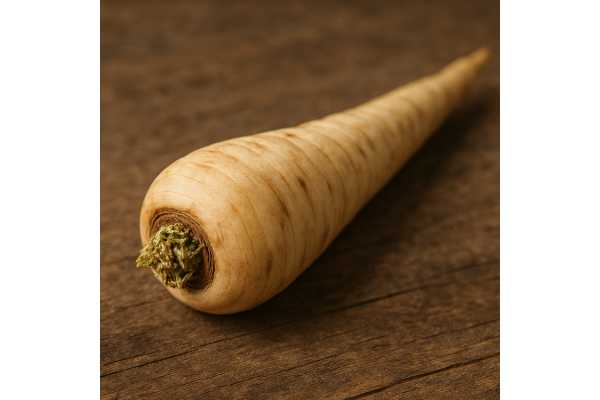
Parsley root comes from a form of parsley botanically known as Petroselinum crispum var. tuberosum (often called Hamburg or root parsley). Unlike the familiar curly or flat-leaf parsley grown for its foliage, this cultivar develops a thick, pale beige root that looks a little like a cross between a parsnip and a carrot. The leaves are still edible and taste similar to leaf parsley, but the root is the main attraction.
Culinarily, parsley root is especially common in Central, Eastern, and parts of Northern Europe. It is a classic component of soup and stock “soup vegetables” bundles in Germany, Poland, and neighboring countries, where it appears alongside carrot, celery root, and leek. Its flavor is somewhat sweet and nutty, with herbal, slightly peppery hints that echo the aroma of parsley leaves. Raw, it is crisp and crunchy; cooked, it becomes tender and mellow, with more sweetness emerging.
You will typically find parsley root:
- In hearty soups, broths, and stews, where it quietly enriches the base.
- Roasted with other root vegetables for a side dish with more depth than carrots alone.
- Mashed or puréed into creamy blends, sometimes combined with potato or parsnip.
- Thinly shaved or julienned into raw salads and slaws for crunch and aroma.
- As part of traditional “root vegetable mixes” in frozen or ready-to-cook products.
From a nutrition perspective, parsley root offers the kind of balance many people look for: it provides fiber and micronutrients rather than just starch and calories. It is not as carbohydrate-heavy as potato or parsnip, but it delivers more vitamin C and folate than many common roots.
It also shares some bioactive compounds with parsley leaves, though usually at different concentrations. These include flavonoids like apigenin and luteolin, as well as aromatic components such as myristicin and apiol. Most of the research on these compounds has been done on parsley as a whole (leaf, seed, and root), or on extracts, rather than on parsley root in normal culinary portions. Still, the root can reasonably be seen as one way to integrate some of these substances into an everyday diet.
If you are used to parsley only as a garnish, parsley root is an opportunity to experience the plant as a full-flavored, nutrient-rich vegetable in its own right.
Parsley Root Nutrition in Detail
Most nutrition data for parsley root are reported per 100 g of raw root, which is a practical benchmark and close to a generous cooked serving. Values vary slightly among databases and growing conditions, but the following ranges are representative.
Macros and Electrolytes (per 100 g raw)
| Nutrient | Amount (per 100 g) | % Daily Value (approx.) |
|---|---|---|
| Energy | 50–55 kcal | 3% |
| Water | ~84 g | — |
| Total carbohydrate | 10–12 g | 4% |
| Dietary fiber | ~4 g | 14% |
| Total sugars | 3–5 g | — |
| Protein | 2–3 g | 4–6% |
| Total fat | 0.6–0.8 g | 1% |
| Sodium | ~15–20 mg | <1% |
| Potassium | ~400–560 mg | 8–12% |
The overall picture is that parsley root is a modest source of carbohydrate with meaningful fiber and potassium, similar in calories to carrot but often slightly lower in sugar.
Carbohydrates and Fiber
| Carbohydrate Component | Amount (per 100 g) | Notes |
|---|---|---|
| Total carbohydrate | 10–12 g | Mostly simple and complex carbs |
| Dietary fiber | ~4 g | Mix of soluble and insoluble fiber |
| Estimated net carbohydrates | ~6–8 g | Total carbohydrate minus fiber |
The fiber content supports digestive health and may help moderate post-meal blood glucose. Net carbohydrate content makes parsley root compatible with many moderate-carb patterns; very low carbohydrate diets will still need to account for it.
Vitamins (per 100 g raw)
| Vitamin | Amount (per 100 g) | % Daily Value (approx.) |
|---|---|---|
| Vitamin C (ascorbic acid) | ~40–55 mg | 45–60% |
| Folate (vitamin B9, DFE) | ~180 µg | 45% |
| Vitamin B6 (pyridoxine) | ~0.2 mg | 12% |
| Thiamin (vitamin B1) | ~0.1 mg | 8% |
| Riboflavin (vitamin B2) | ~0.1 mg | 8% |
| Vitamin A (as retinol activity equivalents) | small amount | modest contribution |
These values place parsley root among the better root sources of vitamin C and folate. Vitamin C supports immune defenses and collagen synthesis; folate is critical for red blood cell formation and DNA synthesis. The B vitamins contribute to energy metabolism and nervous-system function.
Minerals (per 100 g raw)
| Mineral | Amount (per 100 g) | % Daily Value (approx.) |
|---|---|---|
| Potassium | ~400 mg | 8–10% |
| Magnesium | ~26 mg | 6% |
| Calcium | ~39 mg | 3% |
| Phosphorus | ~56 mg | 4% |
| Iron | ~0.9 mg | 5% |
| Sodium | ~15–20 mg | <1% |
Potassium is noteworthy, particularly for people whose diets are low in fruits and vegetables. Together with magnesium and modest calcium and iron, parsley root can make small but useful contributions to daily mineral intake.
Fats and Fatty Acids
Parsley root is naturally very low in fat. Trace amounts of fatty acids are present, but they are nutritionally minor compared with the vitamins, minerals, and fiber. Most of the health-relevant lipophilic compounds are volatile or semi-volatile constituents of the essential oil fraction rather than bulk dietary fats.
Bioactives and Phytonutrients
Beyond standard nutrients, parsley root contains:
- Volatile oils such as myristicin and apiol.
- Furanocoumarins, a family of compounds also found in other Apiaceae plants.
- Flavonoids, especially apigenin and luteolin derivatives.
- Various phenolic acids and related antioxidant compounds.
These substances are often concentrated in parsley leaves and seeds, but the root also contains them to varying degrees. Research has explored their antioxidant, anti-inflammatory, and potential cardiometabolic effects, mainly using extracts or isolated compounds rather than cooked vegetables.
Glycemic Perspective
With roughly 6–8 g of net carbohydrate and about 4 g of fiber per 100 g, parsley root has a modest glycemic load when eaten in normal portions. When cooked as part of mixed dishes that include protein, fat, and other vegetables, it is unlikely to cause sharp blood glucose spikes for most people. However, individuals with diabetes should still consider overall carbohydrate balance and portion size.
Health Effects Linked to Parsley Root
The health profile of parsley root sits at the intersection of its basic nutrients and its more complex plant compounds. It is important to separate reasonably supported effects of a vegetable-rich diet that includes parsley root from more speculative claims based on high-dose extracts.
Antioxidant and Anti-Inflammatory Support
The combination of vitamin C, flavonoids, and phenolic compounds means parsley root can contribute to the overall antioxidant capacity of the diet. Vitamin C helps regenerate other antioxidants and protects cells from oxidative damage. Flavonoids such as apigenin and luteolin, along with phenolic acids and the volatile components myristicin and apiol, have been shown in experimental models to neutralize free radicals and modulate inflammatory pathways.
In practice, this does not make parsley root a stand-alone “antioxidant therapy,” but it supports the broader aim of basing meals around vegetables with diverse phytochemical profiles. Regular inclusion of parsley root alongside other colorful vegetables can be part of a dietary strategy to reduce chronic oxidative and inflammatory stress.
Potential Cardiometabolic Benefits
Parsley as a species has attracted interest as a potential cardioprotective plant. Experimental and early clinical work with parsley extracts and preparations (leaf and root) has suggested possible influences on:
- Blood pressure regulation via mild diuretic and vascular effects.
- Blood lipid profiles, including modest reductions in total or LDL cholesterol in some models.
- Platelet function and thrombus formation, potentially through antioxidant and anti-inflammatory pathways.
These findings come primarily from animal studies, in vitro work, and small human investigations, often using concentrated products rather than cooked root. Still, they support a plausible rationale for including parsley root in heart-conscious eating patterns.
For everyday use, the most realistic cardiometabolic contributions of parsley root are:
- Its fiber and potassium content, which align with general heart-health guidelines.
- Its role as a nutrient-dense substitute for more refined starches in some meals.
- Its phytochemical profile as one element in a varied, plant-forward dietary pattern.
Blood Sugar and Metabolic Health
The fiber in parsley root slows digestion and carbohydrate absorption, which can help smooth post-meal glucose responses when it replaces more refined starchy sides. Experimental studies of parsley extracts in animal models of diabetes have shown improvements in blood glucose, insulin sensitivity, and oxidative stress markers, though direct evidence from human trials is limited.
For people with insulin resistance or type 2 diabetes, parsley root should be considered a relatively nutrient-dense carbohydrate option. It is still a source of carbohydrate, but when used in place of more processed starches, it can support more stable blood sugar control within an appropriate meal plan.
Kidney and Urinary Tract Context
Parsley (leaves, seeds, and roots) has a long history as a mild diuretic in traditional medicine. Modern research has explored parsley extracts for protective effects in models of kidney injury, where antioxidant and anti-inflammatory actions appear to help limit damage.
At the same time, diuretic and highly concentrated parsley preparations can place additional load on compromised kidneys or interact with medications. For most people with normal kidney function, moderate culinary use of parsley root is reasonable. Those with significant kidney disease should avoid self-prescribing parsley root teas or supplements and instead discuss any herbal use with their nephrologist.
Bones, Immunity, and General Vitality
Because parsley root provides substantial vitamin C and folate in relatively few calories, it can modestly support immune function, collagen formation, and red blood cell health. In combination with other vegetables, fruit, and adequate protein, it contributes to a nutrient foundation that helps maintain energy, tissue repair, and overall resilience.
The evidence does not support exaggerated claims, such as parsley root curing specific diseases. Instead, it fits well within a pattern of daily cooking that emphasizes roots, greens, legumes, and whole grains as building blocks of long-term health.
Parsley Root Risks Allergies Interactions
Although parsley root is generally safe when eaten as food, it belongs to a plant family that includes some very potent species, and its own components can cause problems at high doses or in sensitive individuals. It is essential to distinguish everyday culinary use from medicinal or supplemental use.
Culinary Amounts vs Medicinal Doses
- Culinary use: Incorporating parsley root in soups, stews, roasts, or salads a few times per week, at roughly 50–100 g per serving, is considered low risk for most healthy adults and older children.
- Medicinal use: Parsley teas, tinctures, capsules, and especially concentrated parsley seed or leaf essential oils can deliver much higher levels of volatile compounds such as apiol and myristicin. These can have uterotonic (uterus-stimulating), photosensitizing, and potentially nephrotoxic or hepatotoxic effects at high doses.
For safety, parsley root should be treated as a food, not as a self-prescribed medicine, unless a qualified health professional advises otherwise.
Pregnancy and Breastfeeding
Parsley has a history of use as an abortifacient in folk medicine, particularly in the form of seeds and essential oils. Modern toxicology and reproductive health reviews note:
- Normal culinary amounts of parsley leaves or root used as part of meals are generally considered safe for pregnant individuals.
- High-dose parsley preparations, especially seed and leaf oils, can stimulate uterine contractions and have been associated with miscarriage and fetal harm in animal studies and historical reports.
- Because of these risks, parsley-based supplements, teas, and concentrated products are usually discouraged during pregnancy and sometimes during breastfeeding.
Practical guidance:
- Enjoy parsley root in typical food quantities if you are pregnant and have no specific contraindications.
- Avoid parsley root, leaf, or seed supplements, strong teas, and essential oils during pregnancy and talk with your obstetric provider about any herbal products you are considering.
Kidney and Liver Conditions
There is a nuanced picture around parsley and kidney health:
- Experimental models show that parsley extracts can sometimes protect kidney tissue from toxin-induced damage, likely through antioxidant and anti-inflammatory mechanisms.
- However, parsley’s mild diuretic action and the metabolism of certain volatile compounds mean that high-dose products can stress kidneys or interact with diuretic medications.
- Herbal monographs generally advise against medicinal doses of parsley in individuals with severe kidney disease, nephritis, or major liver impairment.
If you live with chronic kidney disease, nephritis, or significant liver disease:
- Culinary use of small amounts of parsley root in mixed dishes may still be acceptable, but this should be confirmed with your nephrologist or hepatologist.
- Avoid self-directed use of parsley teas, juices, or supplements marketed for “kidney cleansing” or fluid loss.
Allergies and Cross-Reactivity
Parsley root comes from the Apiaceae family, which also includes celery, carrot, fennel, and certain highly toxic plants such as hemlock and fool’s parsley (which should never be eaten). Allergy and intolerance considerations include:
- Some individuals with celery or birch pollen allergies experience oral allergy syndrome when eating raw Apiaceae vegetables. Symptoms may include itching or tingling of the mouth, lips, or throat.
- More severe reactions are uncommon but can occur. Signs include hives, swelling, difficulty breathing, or gastrointestinal distress.
If you have known allergies to celery, carrot, or other Apiaceae plants:
- Introduce parsley root cautiously and preferably in cooked form first.
- Discontinue and seek medical advice if any allergic symptoms appear.
Drug and Herb Interactions
Potential interactions to be mindful of:
- Diuretics: Parsley products, especially teas or supplements, may modestly increase urine output, which could theoretically amplify the effects of prescribed diuretics.
- Photosensitizing medications: Furanocoumarins in parsley may contribute to photosensitivity in combination with other photosensitizing drugs, although culinary quantities are unlikely to be a major driver.
- Immunosuppressants and specific drugs: Some references note possible interactions with medications like sirolimus or others metabolized via certain liver enzyme pathways, but data are limited.
For most people using parsley root as a food, these interactions are unlikely to be clinically significant. However, if you take critical medications, especially diuretics, anticoagulants, or immunosuppressants, it is prudent to mention all herbs and supplements—parsley included—to your prescribing clinician.
Foraging and Identification Risks
Root parsley closely resembles parsnip and, at a glance, some wild Apiaceae roots. Misidentification in the wild can have serious consequences, including confusion with toxic species such as hemlock or fool’s parsley. Unless you are trained in plant identification, it is safest to obtain parsley root from reputable food suppliers rather than foraging.
Choosing Storing Parsley Root Sustainably
Good quality parsley root is not only more pleasant to eat but also tends to retain more nutrients and keep longer. Because it is a cool-season crop that stores well, it can be a practical, low-waste ingredient in a sustainable kitchen.
How to Select High-Quality Parsley Root
When you shop, look for:
- Firm, heavy roots with a creamy-beige skin and no major cracks.
- Smooth or gently ridged surfaces without soft spots, mold, or dark patches.
- Fresh, green leaves (if still attached) without yellowing or sliminess.
- Medium-sized roots, which often balance tenderness and flavor better than very large, woody ones.
Avoid roots that are rubbery, shriveled, deeply cracked, or heavily blemished; they are more likely to be fibrous or to have lost moisture and nutrients.
Storage for Freshness and Food Safety
Parsley root behaves similarly to carrots and parsnips in storage:
- Refrigeration: Store unwashed roots in the vegetable drawer of the refrigerator, ideally in a perforated plastic bag or reusable produce bag that maintains high humidity while allowing some air circulation.
- Temperature and humidity: For best quality, aim for close-to-zero temperatures (around 0–4 °C) and high relative humidity. Under good conditions, roots may keep for several weeks.
- Leaf removal: If leaves are attached, trim them off a couple of centimeters above the crown before storing. The leaves will continue to draw moisture from the root if left on.
- Ethylene sensitivity: Parsley root can develop off-flavors if stored with high-ethylene fruits (apples, pears, bananas). Keep roots away from ripening fruit and ethylene-producing storage rooms.
- Before use: Rinse under cold water and scrub gently. Peel if desired, especially if the skin is tough or you want a very smooth texture.
As with other root vegetables, cutting into pieces shortens shelf life, so prepare it close to cooking time when possible.
Sustainability Considerations
Parsley root can align well with environmentally conscious eating:
- Seasonal, local production: It is typically grown in temperate climates and harvested in autumn and winter, often keeping well in cold storage. Buying locally grown root vegetables during cooler months reduces reliance on long-distance transport of fragile produce.
- Low waste: Both root and leaves are edible. Using the leaves as an herb and the root as a vegetable maximizes yield from a single plant.
- Comparative resource use: Like other root vegetables, parsley root generally requires less energy for greenhouse production than out-of-season salad greens and can make good use of open-field conditions.
- Organic and pesticide concerns: Parsley root is not usually at the very top of pesticide-residue lists, but peeling and thorough washing will reduce surface residues further. Choosing certified organic when feasible and when local supply allows can be one more way to reduce exposure and support sustainable farming practices.
Food Safety in Handling
Parsley root grows in soil, so:
- Wash thoroughly to remove soil and grit, which may harbor microorganisms.
- Use separate cutting boards and knives for raw meat and vegetables to avoid cross-contamination.
- Cook to appropriate temperatures if you are serving it to vulnerable individuals (very young children, older adults with frailty, or immunocompromised people) rather than relying heavily on raw preparations.
Handled thoughtfully, parsley root can be part of a kitchen that respects both individual health and environmental sustainability.
Cooking Parsley Root and Nutrients
How you prepare parsley root affects its texture, flavor, and nutrient profile. Some vitamins, especially vitamin C, are sensitive to heat and water, while minerals and fiber are more robust. With a few simple strategies, you can enjoy parsley root in many ways while preserving much of its nutritional value.
Basic Preparation
- Clean: Rinse under cool running water and gently scrub to remove soil.
- Trim: Cut off any remaining leaves and fine roots at the tip.
- Peel (optional): For young, tender roots, a light scrape may suffice. Older roots often benefit from peeling to remove tough skin.
- Cut: Slice, cube, julienne, or leave in larger chunks, depending on the dish.
Finer cuts cook faster but expose more surface area to heat and water, which can accelerate nutrient loss, especially of vitamin C.
Cooking Methods and Nutrient Retention
- Roasting: Toss pieces lightly with oil and seasonings, then roast at moderate heat until tender and lightly browned. Roasting concentrates flavor and avoids water loss of nutrients, although some vitamin C will be lost to heat. This method is excellent for side dishes and mixed root trays.
- Steaming: Steaming preserves more water-soluble nutrients than boiling because the roots do not sit directly in cooking water. It is a good choice when you want a tender texture without added browning.
- Simmering in soups and stews: One advantage of cooking parsley root in broth is that any leached water-soluble nutrients remain in the liquid, which you typically consume. Gentle simmering rather than vigorous boiling further protects delicate vitamins.
- Sautéing and braising: Light sautéing followed by a short braise in a small amount of liquid can build flavor while avoiding prolonged high heat.
- Raw preparations: Thinly shaving or grating raw parsley root into salads or slaws preserves vitamin C and folate but may be less suitable for those with sensitive digestion.
To optimize nutrient retention:
- Avoid very long cooking times when not needed.
- Use cooking liquids (soups, stews, sauces) rather than discarding them.
- Combine parsley root with sources of healthy fats (olive oil, nuts, seeds) to support absorption of fat-soluble phytonutrients from accompanying ingredients.
Simple Ways to Use Parsley Root
Here are some practical applications:
- Root vegetable soup base: Combine diced parsley root, carrot, celery root, and onion as a base for clear soups, lentil stews, or chicken broth. The parsley root adds aroma and depth.
- Roasted mix: Roast cubed parsley root with carrots, potatoes, and garlic. Finish with chopped fresh parsley leaves and a squeeze of lemon for brightness.
- Creamy purée: Simmer parsley root chunks with a small amount of potato or cauliflower until tender, then purée with warm stock and a little olive oil or yogurt for a lighter side dish than traditional mashed potatoes.
- Fresh salad: Grate raw parsley root and toss with shredded apple, lemon juice, a mild oil, and chopped nuts. This offers crunch and fresh herbal notes.
Flavor Pairings
Parsley root pairs well with:
- Other roots: carrot, parsnip, celery root, potato.
- Aromatics: onion, leek, garlic, shallot.
- Herbs: parsley leaves, thyme, bay, dill.
- Rich elements: butter, cream, olive oil, nuts, roasted meats or legumes.
By varying cut size, cooking method, and pairings, you can move parsley root from an occasional curiosity to a regular, versatile ingredient in your kitchen.
Parsley Root Portions Comparisons FAQs
Understanding how much parsley root to eat, how it compares to other vegetables, and how to handle common concerns can make it easier to integrate into daily meals.
Practical Portions and Frequency
There is no single “required” amount of parsley root, but these guidelines are reasonable for most adults:
- Portion size: About 70–100 g cooked parsley root (roughly one small-to-medium root) as part of a meal.
- Frequency: Several times per week as one of your vegetable choices fits well within general recommendations to fill at least half the plate with vegetables at main meals.
- Within the day: It is best considered one of several vegetables you eat, not the only one, so you benefit from the diverse nutrient profiles of different plants.
People with high energy needs can enjoy larger portions, while those on energy-restricted or very low-carbohydrate diets may choose smaller amounts.
How Parsley Root Compares to Other Vegetables
Parsley root vs carrot
- Similar calories per 100 g.
- Parsley root generally has slightly less sugar and more fiber.
- Parsley root tends to offer more vitamin C and folate; carrot offers more beta-carotene (vitamin A precursor).
Parsley root vs parsnip
- Parsnips are usually higher in carbohydrates and calories.
- Parsley root is often somewhat lighter in starch but provides more vitamin C.
- Flavor-wise, parsnip is sweeter and more intensely nutty; parsley root has a more herbal, parsley-like nuance.
Parsley root vs potatoes
- Potatoes generally have more carbohydrates and energy per 100 g.
- Parsley root has more vitamin C and fiber in a smaller energy package.
- For those moderating carbohydrate intake, substituting some potato with parsley root can make meals lighter without sacrificing comfort.
Parsley root vs parsley leaves
- Leaves are far richer in vitamin K and some flavonoids and are used in much smaller quantities.
- Root provides bulk, fiber, and a more substantial amount of vitamin C and folate per serving.
- Ideally, you use both: leaves as an herb, root as a vegetable.
Frequently Asked Questions
Can you eat parsley root raw?
Yes. Raw parsley root is crisp and aromatic and can be grated or shaved into salads and slaws. Start with small amounts to see how your digestion responds, especially if you are prone to gas or bloating.
Is parsley root low FODMAP?
Detailed FODMAP data for parsley root specifically are limited, but as a root vegetable with moderate carbohydrate and fiber content, it may contain fermentable carbohydrates. Individuals with irritable bowel syndrome following a low FODMAP diet should introduce it cautiously and consider guidance from a dietitian.
Is parsley root suitable for people with diabetes?
Parsley root contains carbohydrates, but its fiber and nutrient density make it more favorable than many refined starches. In appropriate portions and as part of balanced meals with protein, fat, and other vegetables, it can fit into many diabetes-friendly meal plans. Monitoring blood glucose responses and individualizing portions is still important.
Is parsley root “keto-friendly”?
Strict ketogenic diets allocate very little space for carbohydrate-containing vegetables. With approximately 6–8 g net carbs per 100 g, small servings of parsley root may be workable for some low-carbohydrate patterns, but it is not a “free” food in that context.
Is it safe to eat parsley root during pregnancy?
For most pregnant individuals, culinary portions of parsley root used in ordinary cooking are considered acceptable. What should be avoided is the use of parsley root or seed in medicinal doses (strong teas, supplements, essential oils) because of the risk of uterine stimulation. Any herbal product use during pregnancy should be discussed with a healthcare provider.
Can children eat parsley root?
Yes, in age-appropriate textures (well-cooked and mashed or finely chopped for young children) and portion sizes. As with other vegetables, introduce it gradually and watch for any signs of allergy or intolerance.
By seeing parsley root as one part of a varied, plant-rich eating pattern—and being mindful of specific medical situations where extra caution is needed—you can enjoy its flavor and potential benefits with confidence.
References
- 7 Surprising Health Benefits of Parsley Root 2019 (Overview)
- The Bioactivities and Chemical Profile of Turnip-Rooted Parsley Germplasm 2022 (Research Article)
- What Is New about Parsley, a Potential Source of Cardioprotective Therapeutic Substances? 2024 (Systematic Review)
- Nutraceutical potential of parsley (Petroselinum crispum Mill.): Comprehensive overview 2025 (Review)
- Parsley Uses, Benefits and Dosage 2025 (Herbal Monograph)
Disclaimer
The information in this article is intended for general educational purposes and does not replace individualized medical advice, diagnosis, or treatment. Nutritional needs and health risks vary from person to person, especially in the presence of conditions such as pregnancy, kidney or liver disease, cardiovascular disease, allergies, or diabetes. Always consult a qualified healthcare professional or registered dietitian before making significant changes to your diet, using herbal supplements, or relying on any food, including parsley root, as a treatment for medical conditions.
If you found this article helpful, you are warmly invited to share it with others on Facebook, X (formerly Twitter), or any platform you prefer. Thoughtful sharing helps more readers access reliable information and supports the continued creation of clear, evidence-informed nutrition content.