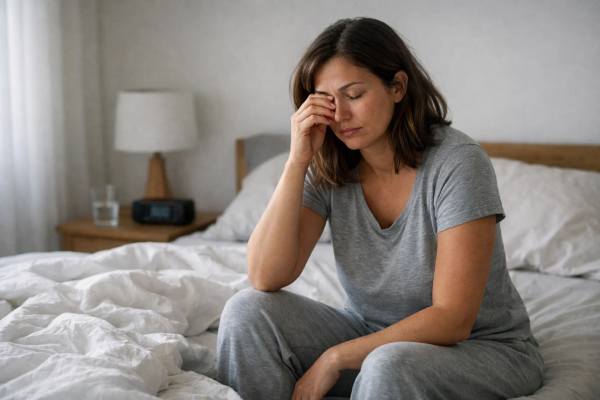
Many people think of polycystic ovary syndrome as a condition defined by irregular periods, acne, hair growth, weight changes, or fertility problems. Sleep apnea rarely makes that first list. Yet for some women with PCOS, poor sleep is not just a side effect of stress or a busy life. It can be part of the condition’s broader metabolic pattern. Loud snoring, waking unrefreshed, morning headaches, daytime fatigue, brain fog, and rising blood pressure may all point to obstructive sleep apnea hiding in plain sight.
This overlap matters because both PCOS and sleep apnea can worsen insulin resistance, cardiovascular risk, mood, and quality of life. They can also mimic each other, which is one reason the connection is often missed. Fatigue gets blamed on hormones, weight, depression, or poor habits, while sleep symptoms are never fully explored. Understanding the link helps people ask better questions, get the right testing, and build a treatment plan that addresses more than one problem at a time.
Key Insights
- Women with PCOS appear to have a higher rate of obstructive sleep apnea than women without PCOS, and weight alone does not fully explain the difference.
- Sleep apnea can worsen fatigue, insulin resistance, blood pressure, and daytime function, making PCOS feel harder to manage.
- The condition is often missed because women may report fatigue, insomnia, headaches, or mood changes rather than the classic stereotype of severe daytime sleepiness.
- A practical next step is to ask about snoring, witnessed breathing pauses, and unrefreshing sleep, then seek formal sleep testing if symptoms fit.
Table of Contents
- Why PCOS and sleep apnea overlap
- Why the connection gets missed
- Signs worth taking seriously
- How sleep apnea is diagnosed
- What treatment can change
- When to bring it up
Why PCOS and sleep apnea overlap
PCOS and obstructive sleep apnea overlap for reasons that are partly mechanical and partly metabolic. Obstructive sleep apnea happens when the upper airway narrows or collapses repeatedly during sleep, leading to drops in oxygen, fragmented sleep, and repeated stress responses overnight. PCOS does not directly cause the airway to close, but it often creates the kind of environment in which sleep apnea becomes more likely.
One major factor is body fat distribution. Many women with PCOS carry more weight centrally, especially around the abdomen, even when overall body size does not seem extreme. Central adiposity is strongly linked with insulin resistance and is also associated with higher sleep apnea risk. Fat stored around the neck and upper airway can make collapse during sleep more likely, while abdominal weight can impair breathing mechanics.
Insulin resistance is another likely part of the story. PCOS and sleep apnea both tend to cluster with higher fasting insulin, glucose dysregulation, and cardiometabolic risk. That does not mean one always causes the other in a straight line. It means they often reinforce the same unhealthy physiology. Poor sleep can worsen insulin resistance, and insulin resistance can travel with the same weight and inflammatory patterns that raise sleep apnea risk. This is one reason the link between PCOS and insulin resistance matters far beyond blood sugar alone.
Hormones may also play a role. The relationship is still being studied, but androgen excess may influence body fat patterning and airway stability. Progesterone normally has some respiratory-stimulating effects, and chronic anovulation in PCOS may alter that hormonal balance. None of these mechanisms fully explains the overlap on its own, but together they help make sense of why sleep apnea can be more common in women with PCOS than in women without it.
Importantly, weight does not explain everything. Obesity clearly raises risk, and adult women with PCOS who also have obesity are often the highest-risk group. But current evidence suggests the relationship is not solely a body-mass issue. That is why it is a mistake to assume only women with severe obesity need to think about apnea.
Prevalence estimates vary widely because studies use different populations and methods, but pooled data consistently suggest that obstructive sleep apnea is more common in women with PCOS than in comparison groups. Rates are often highest in adult, clinic-based, and obese populations. Adolescents may have lower observed rates than adults, but they should not be ignored, especially if snoring, daytime sleepiness, or enlarged tonsils are part of the picture.
The practical takeaway is simple: if PCOS is part of the story, sleep deserves more attention than it usually gets. Snoring and fatigue are not always random symptoms sitting next to the diagnosis. Sometimes they are part of the same network.
Why the connection gets missed
Sleep apnea in PCOS gets missed for several reasons, and most of them are understandable. The first is that PCOS already comes with a crowded symptom list. Clinic visits often focus on periods, fertility, acne, hair growth, weight, glucose, or medication choices. Sleep may come up only briefly, if at all. If a patient mentions fatigue, the conversation can stop at “PCOS makes people tired,” even though that answer is often incomplete.
The second reason is that obstructive sleep apnea in women may not look like the classic stereotype many people still picture. The familiar model is an older man who is very sleepy, snores loudly, and falls asleep in meetings. Women can absolutely present that way, but many do not. They may describe insomnia, light sleep, headaches on waking, depressed mood, irritability, poor concentration, or a vague sense of being exhausted but wired. Those symptoms are easy to mislabel as anxiety, burnout, depression, thyroid problems, or stress.
That makes PCOS a perfect setup for diagnostic delay. Fatigue may be blamed on hormone imbalance. Brain fog may be blamed on poor sleep habits. Weight gain may be blamed on insulin resistance alone. Headaches may be treated in isolation. If no one asks whether the person snores, gasps, stops breathing, wakes unrefreshed, or struggles to stay awake during the day, the sleep apnea piece stays hidden.
It also gets missed because people normalize their symptoms. Someone may say, “I have always snored,” or “I am just tired because my hormones are off.” Bed partners sometimes notice pauses in breathing, but many women sleep alone, or their bed partners do not recognize what they are hearing. Some do not snore loudly enough to trigger alarm, or they feel embarrassed to mention it. Others are so used to poor sleep that they no longer realize how unrefreshed they feel.
Another barrier is weight bias. Because obesity is a major sleep apnea risk factor, people in smaller or mid-sized bodies may be told apnea is unlikely, even when the symptom pattern fits. On the other hand, women in larger bodies may have every symptom attributed to weight without anyone arranging formal testing. Both patterns can delay diagnosis.
There is also overlap with other endocrine complaints. A person may already be looking into persistent fatigue with hormone causes, and the possibility of sleep-disordered breathing may not be raised until much later. That is especially true when blood tests are only mildly abnormal and sleep symptoms sound nonspecific.
Finally, clinicians may underestimate how much sleep apnea affects cardiometabolic health in PCOS. This matters because untreated apnea can worsen blood pressure, insulin resistance, and daytime function, making PCOS seem more treatment-resistant than it actually is. When sleep is left out of the assessment, the whole picture can look more confusing than it really is.
The result is often years of fragmented sleep, worsening metabolic health, and a person who feels unwell without a clear reason why. That is why asking better sleep questions is not a side issue in PCOS care. It is part of seeing the full condition.
Signs worth taking seriously
Not every snorer has sleep apnea, and not every tired person with PCOS has a sleep disorder. But some symptom patterns deserve much more attention than they usually get. The most important clue is not any single symptom on its own. It is the cluster.
A classic cluster includes loud snoring, waking unrefreshed, daytime sleepiness, or persistent fatigue. In the 2023 PCOS guideline, these are exactly the kinds of symptoms clinicians are encouraged to ask about. If they are present, validated screening tools or referral for further assessment are appropriate.
Some of the most useful warning signs include:
- Loud or habitual snoring
- Witnessed pauses in breathing
- Waking up choking, gasping, or panicked
- Dry mouth or sore throat on waking
- Morning headaches
- Unrefreshing sleep, even after enough time in bed
- Excessive daytime sleepiness
- Poor concentration, memory lapses, or brain fog
- Irritability, low mood, or feeling emotionally flat
- Nocturia, especially when it seems out of proportion
In women, sleep apnea can also look less dramatic and more diffuse. Fatigue may dominate instead of overt sleepiness. Some people report restless sleep, frequent awakenings, or insomnia more than snoring. Others feel that they “sleep all night” but still wake up feeling as if they barely slept at all. Because those symptoms overlap with other endocrine and mood concerns, they are easy to dismiss. The broader discussion of hormones and sleep disruption can help clarify why insomnia and endocrine symptoms do not always rule out apnea.
PCOS-specific patterns can increase suspicion. These include central weight gain, rising blood pressure, prediabetes, worsening insulin resistance, and fatigue that seems out of proportion to daily life. A person whose cycle symptoms are stable but whose energy, blood pressure, and morning function are worsening deserves a closer sleep review.
There are also a few signs that make the condition harder to ignore. Drowsy driving is a major one. So is falling asleep unintentionally during quiet activities, such as reading, watching television, or sitting at a desk. If a bed partner reports recurrent breathing pauses, that should be taken seriously even if the person with PCOS does not feel “that sleepy.”
It is also worth noting that the severity of symptoms does not always match the severity of the sleep study. Some women have meaningful apnea with symptom profiles that sound relatively subtle. Others have a lower measured apnea-hypopnea index but still report heavy fatigue, insomnia, headaches, or reduced quality of life. That is part of why the condition can be overlooked in women.
A useful rule of thumb is this: if snoring and unrefreshing sleep travel together, especially with daytime fatigue, morning headache, mood changes, insulin resistance, or high blood pressure, sleep apnea should be on the list. The person does not need to fit a stereotype for the question to be worth asking.
How sleep apnea is diagnosed
The diagnosis of obstructive sleep apnea starts with a careful history, but it does not end there. Questionnaires can help identify risk, yet they do not make the diagnosis on their own. A formal sleep study is required.
That distinction matters because many people with PCOS have already spent years filling out symptom checklists and being told they are “high risk” for one thing or another. With sleep apnea, high risk is not the same as confirmed disease. The next step is objective testing.
A clinician will usually ask about snoring, witnessed apneas, waking unrefreshed, excessive sleepiness, morning headaches, nocturia, and mood or cognitive symptoms. They may also ask about weight trend, neck size, blood pressure, medication use, alcohol, nasal congestion, and whether anyone has observed gasping or choking during sleep. The review often overlaps with familiar PCOS symptom patterns, which is one reason the sleep questions need to be asked intentionally.
Common screening tools include questionnaires such as STOP-Bang or the Berlin questionnaire. These can be useful as triage tools, but they are imperfect in women and may miss people who present atypically. A low score does not always settle the issue when the symptom pattern still sounds suspicious.
The formal diagnostic options are:
- Home sleep apnea testing
This is often used in adults with a strong suspicion of uncomplicated obstructive sleep apnea. It is more convenient and less expensive than an in-lab study, but it does not capture as much information. - In-lab polysomnography
This is the most comprehensive option. It measures breathing, oxygen levels, sleep stages, movements, and more. It is often preferred when the picture is complex, when other sleep disorders may be present, or when a home study is negative despite ongoing strong suspicion.
The test result is often summarized with the apnea-hypopnea index, or AHI, which estimates how many breathing events happen per hour of sleep. That number helps classify severity, but it is not the whole clinical story. Oxygen drops, symptom burden, cardiovascular risk, sleep fragmentation, and coexisting conditions all matter too.
A negative or borderline study does not always end the conversation. If symptoms are strong and the initial test was limited, further evaluation may still be reasonable. That is particularly relevant in women whose symptoms are less “classic,” because their disease may be underrecognized if the entire assessment leans too heavily on stereotype rather than pattern.
It is also important to remember that diagnosing sleep apnea does not replace evaluating the rest of PCOS. Both conditions can and should be addressed together. A sleep study answers one question well: what is happening to breathing during sleep? It does not explain every symptom by itself, but it can reveal a major missing piece.
What treatment can change
Treating sleep apnea in someone with PCOS is not only about stopping snoring. The goal is to improve sleep quality, reduce breathing interruptions, and lower the downstream strain on metabolism, blood pressure, and daytime function. That can make a meaningful difference in how manageable PCOS feels overall.
For moderate to severe obstructive sleep apnea, continuous positive airway pressure, or CPAP, remains the standard treatment. CPAP keeps the airway open with gentle air pressure during sleep. It is not glamorous, and adherence can take work, but it is effective when used consistently. In a small study of young obese women with PCOS, CPAP improved insulin sensitivity and lowered sympathetic activation and diastolic blood pressure over a short treatment period. That does not mean CPAP is a cure for PCOS. It does suggest that treating apnea can improve some of the metabolic stress sitting on top of PCOS.
Other treatment options may include:
- Oral appliances for selected patients, especially some with mild to moderate disease
- Positional therapy when apnea is worse on the back
- Management of nasal obstruction
- Weight reduction when appropriate
- Avoiding alcohol or sedatives close to bedtime
- In selected cases, surgical or specialist airway approaches
The right choice depends on severity, anatomy, symptoms, and patient preference. What matters most is not choosing the most fashionable treatment. It is choosing one that the person will actually use.
In PCOS, treatment works best when the sleep plan and the metabolic plan move in the same direction. Untreated sleep apnea can make insulin resistance, appetite regulation, morning hunger, and blood pressure harder to control. That is one reason some women feel as if they are “doing everything right” for PCOS but still feel exhausted and metabolically stuck. Sleep-disordered breathing may be part of what is blocking progress.
That does not mean every management problem in PCOS is caused by apnea. It means apnea can quietly amplify the whole picture. A person who also has abdominal adiposity, rising glucose, high triglycerides, or hypertension may see part of that broader pattern reflected in metabolic syndrome risk, and sleep treatment may become one piece of a larger cardiometabolic strategy.
Expectations should still stay realistic. CPAP may improve alertness and blood pressure faster than it improves body weight. It may help reduce morning headaches and unrefreshing sleep before it changes anything measurable in lab work. Some benefits are obvious within weeks, while others depend on consistent use over months.
The biggest mistake is to treat apnea as a side issue. In someone with PCOS, better sleep can make daytime energy, mood, glucose control, blood pressure, and treatment adherence easier. That may not sound dramatic, but in real life it can be the difference between a plan that keeps failing and one that finally starts to work.
When to bring it up
Many people wait too long to mention sleep symptoms because they assume nothing can be done or because they feel their complaints are not specific enough. In PCOS, that delay is common. Snoring may feel embarrassing. Fatigue may feel too vague. Headaches, insomnia, or brain fog may seem like they belong to some other conversation. But sleep apnea screening often starts with exactly those concerns.
It is worth bringing up if you have PCOS and any of the following apply:
- You snore regularly
- Someone has noticed breathing pauses, choking, or gasping
- You sleep enough hours but still wake up exhausted
- You struggle with strong daytime sleepiness or drowsy driving
- You have morning headaches or dry mouth
- Your blood pressure is rising
- Your insulin resistance or glucose markers are worsening
- Fatigue is not explained by the rest of your workup
The question can be raised in primary care, endocrinology, gynecology, or a sleep clinic. It does not have to wait for a specialist. A simple way to start is to say: “I have PCOS, I snore, and I wake up unrefreshed. Could sleep apnea be part of this?” That is often enough to shift the visit toward the right screening questions.
Certain situations deserve faster attention. These include witnessed breathing pauses, waking up choking, uncontrolled hypertension, falling asleep while driving, or profound daytime sleepiness that interferes with work or safety. In these cases, the evaluation should be prioritized rather than left for a routine future visit.
It is also reasonable to push the question sooner if PCOS has been difficult to manage despite good effort. If you are working on nutrition, movement, insulin resistance, or medication and still feel unusually tired, unrefreshed, and cognitively foggy, untreated sleep apnea is worth considering. That is especially true if clinicians have focused heavily on ovarian symptoms while the sleep pattern has never been addressed.
Teenagers and younger women should not be excluded from the conversation, either. Adult women with PCOS appear to have higher observed rates of sleep apnea than adolescents, but younger people with loud snoring, enlarged tonsils, obesity, or marked daytime sleepiness still deserve evaluation.
Lastly, know when the broader endocrine picture needs specialist review. If PCOS symptoms are significant, labs are worsening, or fatigue remains unexplained even after sleep is addressed, a guide to when to seek endocrine specialty care can help clarify the next step.
The point is not to assume every tired person with PCOS has apnea. It is to stop overlooking a condition that is common enough, harmful enough, and treatable enough to deserve far more attention than it usually gets.
References
- Recommendations From the 2023 International Evidence-based Guideline for the Assessment and Management of Polycystic Ovary Syndrome 2023 (Guideline)
- Obstructive sleep apnea syndrome in polycystic ovary syndrome: a systematic review and meta-analysis 2025 (Systematic Review)
- Evaluation of Obstructive Sleep Apnea in Female Patients in Primary Care: Time for Improvement? 2021 (Review)
- Clinical Practice Guideline for Diagnostic Testing for Adult Obstructive Sleep Apnea: An American Academy of Sleep Medicine Clinical Practice Guideline 2017 (Guideline)
- Treatment of obstructive sleep apnea improves cardiometabolic function in young obese women with polycystic ovary syndrome 2011 (Clinical Trial)
Disclaimer
This article is for educational purposes only and is not a substitute for personal medical advice, diagnosis, or treatment. PCOS, fatigue, and poor sleep can overlap with obstructive sleep apnea, depression, thyroid disease, anemia, medication effects, and other medical conditions. If you have loud snoring, witnessed breathing pauses, severe daytime sleepiness, drowsy driving, uncontrolled blood pressure, or persistent fatigue that does not improve, seek medical evaluation promptly.
If this article was helpful, please share it on Facebook, X, or another platform that helps more people recognize overlooked hormone and sleep connections.