Constipation is often blamed on fiber, water, or “slow digestion.” But for many people, the bigger problem is not what happens in the colon—it is what happens at the finish line. Pelvic floor dysfunction can interfere with the coordinated muscle relaxation and pressure needed to pass stool, creating a pattern called outlet obstruction or a defecatory disorder. The result can be stubborn constipation even when stools are soft, along with straining, a sense of incomplete emptying, and the feeling that the body “will not let go.”
The good news is that this type of constipation is highly treatable once it is recognized. Targeted pelvic floor physical therapy and biofeedback can retrain defecation mechanics, often reducing symptoms more effectively than simply adding more laxatives. This guide helps you spot the signs, understand how clinicians diagnose it, and choose practical, evidence-informed treatment steps.
Key Takeaways
- Pelvic floor dysfunction constipation often presents as straining and incomplete emptying, even when stool is not hard.
- Biofeedback-guided pelvic floor therapy can retrain coordination and is a first-line treatment for many defecatory disorders.
- Pushing harder usually backfires; improving breathing, posture, and stool softness supports safer evacuation.
- Structural issues (rectocele, prolapse) and slow transit constipation can coexist and change the treatment plan.
- Seek medical evaluation promptly if constipation comes with bleeding, unexplained weight loss, severe pain, or sudden onset.
Table of Contents
- How pelvic floor dysfunction causes constipation
- Signs of outlet obstruction constipation
- Who is at risk and why
- Diagnosis tests clinicians actually use
- Pelvic floor therapy and biofeedback
- At-home strategies and long-term prevention
How pelvic floor dysfunction causes constipation
A bowel movement is a coordinated sequence, not a single “push.” The rectum fills, the pelvic floor relaxes, the anal sphincter opens, and the abdomen generates steady pressure to move stool out. Pelvic floor dysfunction means that one or more of those steps is mistimed or incomplete. Many people think of the pelvic floor only as “strength,” but constipation is often linked to the opposite problem: muscles that do not relax when they need to.
Dyssynergic defecation and outlet obstruction
Clinicians may use terms like defecatory disorder, dyssynergic defecation, or pelvic floor dyssynergia. They refer to a common pattern: during attempted defecation, the anal sphincter or pelvic floor tightens instead of relaxing, or the abdominal push is too weak or poorly coordinated. This creates resistance at the anal outlet, so stool cannot pass efficiently.
A useful mental image is a tube of toothpaste: if you squeeze the tube but keep the cap partly closed, pressure builds, effort increases, and little comes out. The body responds by straining harder, which can further tighten the pelvic floor, worsen hemorrhoids, and reinforce the “closed cap” pattern.
Why laxatives alone may not solve it
Stool softeners and osmotic laxatives can help by making stool easier to pass, but they do not correct muscle coordination. If the primary issue is outlet resistance, softer stool may still get “stuck.” In fact, escalating laxatives can create a frustrating loop: more urgency and gas, but still incomplete evacuation.
That said, stool consistency still matters. Pelvic floor therapy works best when stool is not extremely hard or painfully dry. Many treatment plans combine muscle retraining with a consistent stool-softening strategy so the body can practice effective mechanics.
Common overlaps that complicate the picture
Pelvic floor dysfunction can coexist with:
- Slow transit constipation (stool moves through the colon slowly)
- Irritable bowel syndrome with constipation
- Pelvic organ prolapse, rectocele, or prior pelvic surgery
- Chronic pain conditions that increase pelvic muscle guarding
When more than one factor is present, treatment is still possible, but the order of operations matters: you typically address evacuation mechanics first, then fine-tune transit and diet.
Signs of outlet obstruction constipation
The most important clue is not how often you have a bowel movement. Many people with pelvic floor dysfunction go daily yet still feel constipated because they never empty fully. Others go every few days, but the bigger issue is the effort and the mechanics, not the calendar.
Core symptoms that strongly suggest pelvic floor involvement
These patterns are common:
- Straining that feels disproportionate to stool hardness
- A sensation of blockage at the anus or “stool stops right there”
- Incomplete emptying, even after spending a long time on the toilet
- Needing to change position repeatedly to get stool out
- The sense that you cannot start the stream, then suddenly you can
People often describe it as, “I feel like I have to go, but my body will not cooperate.”
Digital maneuvers and splinting
Some individuals use fingers to help evacuate. Clinicians may call this digital assistance or splinting. Examples include:
- Pressing on the perineum (the area between vagina or scrotum and anus)
- Pressing inside the vagina to support the back vaginal wall
- Using a finger to help stimulate or guide stool
This is more common than most people realize, and it is a meaningful diagnostic clue. It can also signal a structural issue such as a rectocele, which may coexist with pelvic floor muscle coordination problems.
“Normal” stool that still feels hard to pass
If stool is soft or formed yet still difficult to expel, think mechanics. Pelvic floor dysfunction can create a bottleneck even when hydration and fiber are adequate. Conversely, some people respond to extra fiber with worse bloating and bulk, because a larger stool is harder to evacuate through a tight outlet.
Associated symptoms that add context
Not everyone will have these, but they can travel together:
- Urinary urgency, difficulty starting urine, or stress urinary leakage
- Pelvic pressure, heaviness, or a bulge sensation (possible prolapse)
- Pain with intercourse or pelvic pain that worsens with stress
- Hemorrhoids, fissures, or rectal pain from repeated straining
When constipation is unlikely to be “just pelvic floor”
Seek medical evaluation promptly if you have:
- Blood in stool, black stools, or unexplained anemia
- Unintentional weight loss, fever, or persistent vomiting
- New constipation that appears suddenly, especially after age 50
- Severe, escalating abdominal pain or inability to pass gas
Pelvic floor dysfunction is common, but it should never be used to explain away red flags.
Who is at risk and why
Pelvic floor dysfunction can affect any gender and any age, although risk patterns differ. The pelvic floor is a group of muscles and connective tissues that must be both strong and flexible. Constipation tends to show up when those tissues are overworked, injured, guarded, or trained into the wrong timing.
Common risk factors and life events
Some of the most consistent risk drivers include:
- Pregnancy and vaginal delivery, especially with significant tearing, forceps or vacuum delivery, or prolonged pushing
- Pelvic surgery (including some gynecologic and prostate procedures)
- Chronic straining from constipation, heavy lifting, or persistent coughing
- Pelvic pain conditions that lead to muscle guarding and tension
- A history of trauma or anxiety that increases muscle bracing (this is about nervous system patterns, not “it is all in your head”)
- Neurologic disorders that affect sensation and coordination
For many people, it is not a single event but an accumulation: years of “pushing through” constipation trains the pelvic floor to tighten against pressure.
Hypertonic and hypotonic patterns
Pelvic floor dysfunction is not one thing. Two broad patterns can show up in constipation care:
- Hypertonic (overactive) pelvic floor: muscles are tight at rest or tighten with stress; relaxation is difficult. This often presents with pain, urgency, and a sense of blockage.
- Weakness or poor support with compensatory tension: tissues may be lax or injured, and the body compensates by gripping. This can coexist with prolapse or leakage while still causing obstructed defecation.
A person can have both: weakness in one area and overactivity in another. That is why a single set of generic Kegel exercises is not always helpful—and can sometimes worsen constipation if overactivity is the real issue.
Children and adolescents
In younger people, pelvic floor coordination issues often develop after painful stools. If a child learns to “hold it” to avoid pain, the pelvic floor tightens reflexively, stool dries out, and constipation worsens. Over time, the nervous system can adopt a guarded pattern that persists even after stool softness improves. Pediatric management is specialized and should be guided by a clinician.
Men and pelvic floor constipation
Men may develop pelvic floor dysfunction from chronic straining, pelvic pain syndromes, spinal issues, or post-surgical changes. Because the topic is discussed less openly, symptoms are often present for years before targeted help is offered.
The most practical takeaway is this: if your constipation feels mechanical—blocked, incomplete, effortful—your risk profile matters less than your symptom pattern. Recognition is the first step toward the right treatment.
Diagnosis tests clinicians actually use
A helpful diagnosis usually starts before any specialized testing. Many defecatory disorders can be suspected from a careful history and a skilled physical examination. Testing then confirms the pattern, identifies coexisting problems, and guides treatment selection.
History clues that shape the workup
Clinicians often ask about:
- Straining and time on the toilet
- The sensation of blockage and incomplete emptying
- Stool form and whether stools are hard, normal, or loose
- Digital assistance or positional changes needed to evacuate
- Urinary symptoms, pelvic pain, childbirth or surgical history
- Laxative response (soft stool but still cannot empty is an important clue)
A simple but often overlooked detail is whether symptoms are better on vacation or worse during stress. That can signal a strong nervous system component that pelvic therapy can address directly.
Digital rectal examination
A digital rectal exam can reveal key findings: resting tone, squeeze strength, the ability to relax during simulated defecation, and whether the pelvic floor descends normally. In experienced hands, this exam can strongly suggest dyssynergia and help prioritize next tests.
Balloon expulsion test
This is a straightforward assessment of evacuation ability. A small balloon is placed in the rectum, inflated, and the patient is asked to expel it while seated. Difficulty expelling the balloon within a reasonable time supports an evacuation disorder. It is inexpensive and often used early in the evaluation.
Anorectal manometry
Anorectal manometry measures pressures and coordination in the rectum and anal canal during rest, squeeze, and simulated defecation. It can show paradoxical contraction (tightening when you should relax), inadequate relaxation, weak propulsion, and sensory issues such as reduced urge or reduced rectal sensation. These findings help tailor therapy—for example, whether treatment should emphasize relaxation, propulsion, or sensory retraining.
Defecography and imaging
Defecography (barium or MRI) evaluates the mechanics and anatomy of evacuation. It can identify structural contributors such as rectocele, intussusception, prolapse, or abnormal pelvic floor descent. This is especially useful when symptoms suggest a structural “pocketing” problem or when surgery is being considered.
Transit testing when the story is bigger than the outlet
If constipation is severe, long-standing, and not fully explained by pelvic floor findings, clinicians may assess colon transit. This helps distinguish slow transit constipation from primarily outlet obstruction—and it matters because management differs. Many people have both, but outlet dysfunction is often treated first because improving evacuation can improve transit secondarily.
Pelvic floor therapy and biofeedback
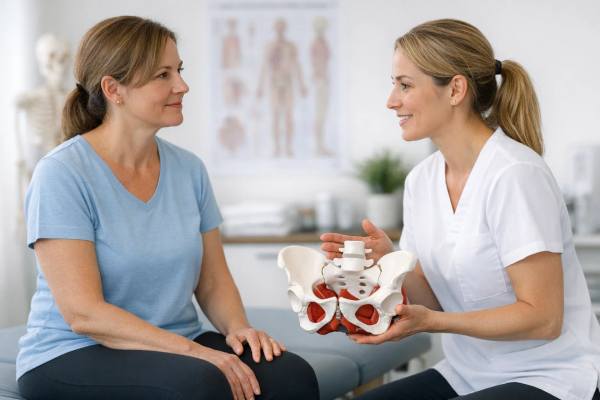
For constipation driven by pelvic floor dysfunction, the cornerstone treatment is pelvic floor physical therapy with biofeedback. This is not a passive massage or a generic strengthening program. It is a skill-based retraining process that teaches the nervous system and muscles to coordinate defecation correctly.
What biofeedback actually is
Biofeedback uses sensors (often a small internal sensor or surface electrodes) to provide real-time information about muscle activity. You can see, hear, or otherwise receive feedback about whether you are relaxing the anal sphincter and pelvic floor while generating gentle abdominal pressure. That immediate feedback is powerful because many people are doing the opposite of what they intend, without realizing it.
A typical training goal is:
- Relax the pelvic floor and anal sphincter during bearing down
- Generate steady, controlled abdominal pressure
- Coordinate breathing and pelvic floor descent
- Improve rectal sensation and timing if those are impaired
What pelvic floor therapy sessions may include
Depending on your findings, therapy may involve:
- Education about toileting mechanics and posture
- Diaphragmatic breathing and ribcage mobility to reduce bracing
- “Down-training” to reduce resting pelvic floor tension
- Coordinated bearing down practice (not forceful pushing)
- Manual techniques for muscle tension or trigger points when appropriate
- Home exercises that focus on relaxation and coordination, not endless repetitions
Importantly, some patients with constipation have overactive pelvic floors; for them, high-volume strengthening (including frequent Kegels) can worsen symptoms. A tailored plan prevents that mismatch.
How long treatment takes and what progress looks like
Many programs involve a short series of sessions, often over several weeks. Progress is usually measured by function, not perfection:
- Less time spent on the toilet
- Reduced straining and fewer failed attempts
- A clearer sense of complete emptying
- Less reliance on digital assistance
- Improved stool consistency with fewer medication escalations
It is common to notice partial improvement first—“I can go more often, but I still do not feel fully empty”—and then steadier emptying as coordination improves.
When additional treatments are considered
If therapy is not enough, clinicians may adjust stool-softening medications, address pain drivers, treat coexisting slow transit constipation, or evaluate structural issues. In selected cases, botulinum toxin injections or surgical approaches are discussed, but these are typically considered after confirming the diagnosis and attempting skilled conservative therapy.
At-home strategies and long-term prevention
Clinical treatment works best when your daily routine supports the new mechanics you are learning. The goal is to make bowel movements more predictable, less effortful, and less “high stakes.” These strategies are also useful while you wait for specialist care.
Adopt a mechanics-first bathroom setup
Small changes can reduce outlet resistance:
- Use a footstool to bring knees above hips and support a more favorable anorectal angle
- Lean forward with forearms on thighs and relax the belly
- Avoid holding your breath; exhale steadily as you bear down
- Keep attempts time-limited; if nothing happens after about 10 minutes, get up and try later
Long, repeated straining sessions train the pelvic floor to guard. Short, calm attempts help retrain a safer pattern.
Use “soft and formed” as your stool target
Pelvic floor dysfunction is easier to treat when stool is not rock-hard, but overly loose stool can increase urgency and incomplete emptying. Many people do best with a consistent stool-softening foundation:
- Adequate fluid intake spread across the day
- A steady soluble fiber source if tolerated (for example, a small daily dose rather than large swings)
- Osmotic laxatives when recommended by a clinician, adjusted to avoid diarrhea
- Regular meal timing to leverage the natural gastrocolic reflex, especially after breakfast
If increasing fiber worsens bloating or makes stools bulkier without improving evacuation, pause and reassess. Bulk is not always your friend in outlet obstruction constipation.
Build a simple daily rhythm
Constipation improves when the nervous system expects regularity:
- A consistent wake time
- Breakfast or a warm drink to trigger colonic activity
- A planned toilet window when you are not rushed
- A short walk after one meal per day to support motility
Even 10 to 15 minutes of walking after lunch can reduce pelvic bracing and support transit.
Reduce pelvic floor bracing outside the bathroom
Many people with pelvic floor constipation unconsciously “hold” their abdomen and glutes all day. Try brief check-ins:
- Drop shoulders, unclench jaw
- Let the belly soften on inhale
- Relax glutes and inner thighs while standing
This matters because bowel movements often fail when the pelvic floor is tense long before you sit down.
Know when to escalate care
Seek medical evaluation if:
- You need frequent manual assistance to evacuate
- Symptoms persist despite a structured approach to stool softness and mechanics
- You suspect prolapse or have significant pelvic pressure
- You have any warning signs like bleeding, unexplained weight loss, severe pain, or sudden change in bowel habits
Pelvic floor dysfunction is treatable, but the best outcomes come from matching the plan to the correct diagnosis—and addressing any coexisting problems early.
References
- AGA Clinical Practice Update on Evaluation and Management of Refractory Constipation: Expert Review 2026 (Guideline)
- American Gastroenterological Association-American College of Gastroenterology Clinical Practice Guideline: Pharmacological Management of Chronic Idiopathic Constipation 2023 (Guideline)
- Comparison of Anorectal Manometry, Rectal Balloon Expulsion Test, and Defecography for Diagnosing Defecatory Disorders 2022 (Clinical Study)
- Biofeedback efficacy for outlet dysfunction constipation: Clinical outcomes and predictors of response by a limited approach 2024 (Clinical Study)
- Dyssynergic Defecation: A Comprehensive Review on Diagnosis and Management 2023 (Review)
Disclaimer
This article is for educational purposes and is not a substitute for personalized medical advice, diagnosis, or treatment. Constipation can have multiple causes, and pelvic floor dysfunction may coexist with other gastrointestinal, neurologic, or structural conditions that require medical evaluation. Seek prompt care if you have blood in stool, black stools, unexplained weight loss, anemia, fever, severe or worsening abdominal pain, persistent vomiting, inability to pass gas, or a sudden change in bowel habits. If you are pregnant, postpartum, recovering from pelvic surgery, or taking prescription medications, consult a qualified clinician before starting new therapies or laxatives.
If you found this article helpful, please consider sharing it on Facebook, X (formerly Twitter), or any platform you prefer.