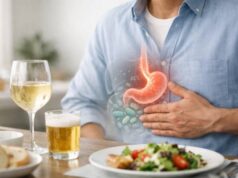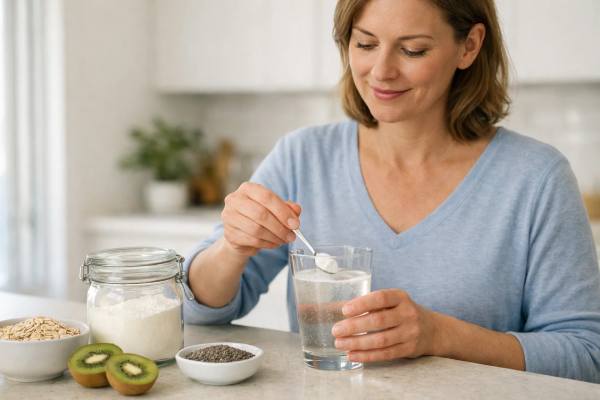
If you have irritable bowel syndrome (IBS) or chronic constipation, “more fiber” can sound like advice you have already tried—sometimes with uncomfortable results. PHGG fiber (partially hydrolyzed guar gum) is different from many common fiber supplements because it is water-soluble, low-viscosity, and usually easier to tolerate while still supporting regularity. Instead of forming a thick gel, PHGG blends smoothly into liquids and can act as a prebiotic, feeding beneficial gut microbes and helping produce short-chain fatty acids that support the colon’s lining and motility.
What makes PHGG especially appealing is its “middle path” effect: it can soften hard stools by drawing in water, yet it may also improve stool form when stools are loose. For many people, that translates into less straining, less unpredictability, and a calmer baseline—when it is used thoughtfully and in the right context.
Core Points
- PHGG is a gentle, soluble prebiotic fiber that can support stool regularity and may reduce bloating for some people with IBS.
- Benefits are usually gradual; a fair trial is typically measured in weeks, not days.
- If constipation is driven by pelvic floor dysfunction or a blockage, more fiber can worsen symptoms until the root issue is treated.
- Start low and increase slowly to reduce gas and cramping, especially if you are sensitive to fermentable fibers.
- Use a simple tracking plan (stool form, frequency, bloating, and comfort) for 4–8 weeks to judge whether PHGG is truly helping.
Table of Contents
- What makes PHGG different
- How PHGG works in the gut
- PHGG for IBS symptoms
- PHGG for constipation relief
- Dosing and how to take it
- Side effects and who should avoid it
- Building a PHGG-friendly plan
What makes PHGG different
PHGG starts with guar gum, a fiber from guar beans that is naturally very thick and gel-forming. In its original form, guar gum can be difficult to tolerate and inconvenient to use because it thickens liquids quickly. “Partially hydrolyzed” means the long fiber chains have been broken into shorter ones. That change matters in daily life: PHGG is much lower in viscosity, so it dissolves more easily, has a smoother mouthfeel, and is less likely to cause the heavy “cement-like” sensation some people associate with fiber supplements.
From a gut perspective, PHGG sits in a helpful sweet spot:
- Soluble, not gritty: It mixes into water, tea, smoothies, yogurt, and soups without the graininess common to some fibers.
- Usually more predictable than highly fermentable fibers: Fibers like inulin can ferment rapidly and trigger gas and bloating in sensitive guts. PHGG tends to ferment more gradually, which can mean fewer dramatic symptoms—especially when the dose is increased slowly.
- Less “bulking shock”: Some insoluble fibers (like wheat bran) add rough bulk that can irritate an already reactive bowel. PHGG is gentler and is often better aligned with IBS comfort goals.
It also helps to know what PHGG is not. It is not a stimulant laxative, and it is not a fast “rescue” product for severe constipation. Think of it as a baseline builder: it supports stool consistency, feeds beneficial microbes, and can make bowel movements easier over time. That pacing is a feature, not a flaw—especially for IBS, where aggressive approaches often backfire.
If you have been told “fiber makes me worse,” PHGG can be a reasonable option to re-try fiber in a more controlled way. The key is dose, timing, and whether constipation is truly a “fiber problem” versus a pelvic floor, medication, thyroid, or motility issue.
How PHGG works in the gut
PHGG supports digestion through a combination of physical effects in the stool and biological effects via fermentation.
1) Water balance and stool texture
Soluble fibers help regulate water in the colon. When stools are hard and dry, PHGG can increase water content and improve softness, which often reduces straining. When stools are loose, soluble fibers can sometimes improve form by creating a more cohesive stool structure. This “normalizing” tendency is one reason PHGG is often discussed for both constipation patterns and mixed-pattern IBS.
A practical way to measure this is with the Bristol Stool Scale (types 1–7). Many people aim for types 3–4: formed, easy to pass, and not urgent.
2) Prebiotic fermentation and short-chain fatty acids
Your colon microbes ferment certain fibers and produce short-chain fatty acids (SCFAs) such as acetate, propionate, and butyrate. These compounds support the intestinal lining, influence immune signaling, and may affect motility. In real-world terms, better SCFA production can correlate with:
- improved stool form
- steadier bowel habits
- a calmer gut barrier environment
Not everyone experiences these benefits the same way. Microbiomes differ, and a person’s baseline diet strongly affects how any prebiotic behaves.
3) Microbiome shifts that matter for symptoms
With regular use, PHGG has been associated in studies with shifts toward more favorable microbial patterns. Clinically, this may show up as less “irritability” in the gut—less unpredictable urgency, fewer swings between extremes, or less gas over time. That said, early treatment can temporarily increase gas because fermentation is increasing. A slow ramp-up reduces this problem for many people.
4) Motility and the gut-brain axis
IBS and constipation are rarely just “plumbing.” Stress, poor sleep, and pain sensitivity shape motility through the gut-brain axis. While PHGG is not a mental health treatment, improving bowel comfort can reduce the daily stress load that keeps symptoms cycling. This is why simple, consistent interventions often outperform complicated protocols.
The bottom line: PHGG acts more like a microbiome-friendly habit than a “one-time fix.” If you approach it with steady dosing and realistic expectations, it can become a useful anchor in a broader gut plan.
PHGG for IBS symptoms
People search for PHGG because IBS symptoms often come in clusters: bloating, gas, abdominal discomfort, and stool unpredictability. PHGG is not a cure for IBS, but it can be a meaningful tool—especially when the main goals are better stool consistency and less bloating.
Which IBS patterns might benefit most
PHGG is often discussed for IBS with constipation (IBS-C) and IBS with mixed bowel habits (IBS-M). It may also help some people who lean toward loose stools by improving stool form, though the experience is more individualized.
In studies, PHGG has shown benefits particularly for bloating and gas. That distinction is important because many IBS therapies improve one symptom while leaving others unchanged. If your main problem is abdominal pain, PHGG may be supportive but rarely works as a stand-alone solution.
Why “gentle” matters in IBS
IBS is defined in part by heightened sensitivity: normal amounts of gas or stretching can feel painful. A fiber that ferments too aggressively can worsen symptoms even if it is “healthy.” PHGG’s slower fermentation profile is one reason it is often described as easier to tolerate than some prebiotic fibers.
Still, “gentle” does not mean “always easy.” The first 7–14 days are the most common window for temporary gas. This is why PHGG works best when introduced:
- at a low starting dose
- with slow increases
- alongside consistent meals and hydration
PHGG and low-FODMAP style eating
Many people with IBS experiment with a low-FODMAP approach. One common pitfall is that fiber intake drops sharply, which can worsen constipation and alter the microbiome. PHGG can sometimes help fill that gap because it is a soluble fiber supplement that is often better tolerated than large changes in food volume. The goal is not to “pile on” restrictions and supplements, but to keep digestion steady while you learn your triggers.
What a realistic IBS outcome looks like
A practical win with PHGG might look like:
- bloating intensity decreases from “daily and distracting” to “occasional and manageable”
- stool form becomes more consistent (fewer extremes)
- bowel movements become easier without urgent swings
If you do not see meaningful improvement by about 6–8 weeks at a tolerated dose, that is useful information. It may mean you need a different fiber type, a different IBS strategy, or evaluation for overlapping issues such as pelvic floor dysfunction, bile acid diarrhea, or dietary intolerances.
PHGG for constipation relief
Constipation is not one condition—it is a symptom with multiple causes. PHGG can be a helpful first-line support when constipation is driven by low fiber intake, inconsistent meals, dehydration, or sluggish transit, but it is not ideal for every constipation pattern.
When PHGG is a good fit
PHGG tends to work best when you have:
- hard stools (often Bristol types 1–2)
- straining and incomplete evacuation that improves with softer stool
- low daily fiber intake from food
- constipation that worsens during travel, stress, or schedule changes
In controlled settings, PHGG has been shown to reduce reliance on laxatives in some older adults and to improve bowel habits in other groups. That does not guarantee the same response for everyone, but it supports PHGG as a reasonable, low-risk approach to try—especially before escalating to more intensive therapies.
When fiber can backfire
Fiber can worsen constipation when the main issue is outlet dysfunction—meaning the stool reaches the rectum, but the pelvic floor muscles do not relax and coordinate properly. In that case, adding fiber may increase stool volume without improving passage, which can increase bloating and discomfort.
Clues that constipation may involve pelvic floor dysfunction include:
- feeling “blocked” even with a strong urge
- needing to strain hard despite soft stool
- needing to change positions, press on the perineum, or use digital assistance
- a sense of incomplete emptying almost every time
If these sound familiar, the most effective treatment is often pelvic floor physical therapy with biofeedback, not simply more fiber.
Red flags that need medical evaluation
If any of the following occur, constipation should be evaluated promptly rather than managed only with supplements:
- blood in the stool or black stools
- unexplained weight loss, fever, or persistent night symptoms
- new constipation after age 50, or a major change in bowel habits
- anemia, severe pain, or vomiting
- family history of colorectal cancer or inflammatory bowel disease with new symptoms
What “success” looks like for constipation
A realistic target is not daily bowel movements for everyone. Many people do well with comfortable, complete stools several times per week. With PHGG, the goal is softer stool, less straining, and less reliance on “rescue” laxatives—while keeping bloating under control.
Dosing and how to take it
How you start PHGG often determines whether you stick with it. The most common mistake is beginning with a full dose immediately, then quitting because of gas or cramps. A slower approach improves tolerance for many people, especially those with IBS.
A practical dosing ramp
Many PHGG products provide around 3–6 grams per serving, but labels vary. A conservative ramp looks like this:
- Days 1–3: start with about 2–3 grams once daily
- Days 4–7: increase to 3–5 grams once daily if comfortable
- Weeks 2–4: consider 5–6 grams daily, or split into two smaller doses
- Weeks 4–8: hold a steady dose and evaluate results before increasing further
Some people do best with split dosing (morning and evening) to reduce sudden fermentation and gas.
Mixing and timing tips
- Mix thoroughly in still water or a non-carbonated drink. Carbonation can add gas pressure that makes bloating feel worse.
- Pair with routine: take it at the same time daily to reduce “on and off” bowel swings.
- Give it space from medications: as a general rule, take PHGG at least 2 hours apart from medications or supplements if absorption timing matters.
- Increase fluids only to comfort: you do not need to force extreme water intake, but dehydration makes any fiber less effective.
Powder, sachet, or capsules
- Powders and sachets are often the most practical because they allow flexible dosing.
- Capsules can work, but the total fiber per capsule is often small, which may require multiple capsules to reach an effective dose.
How long to try before deciding
A fair trial is typically 4–8 weeks at a dose you tolerate. Keep the rest of your routine relatively stable during the trial; changing your entire diet at the same time makes it hard to know what is helping.
A simple tracking method (30 seconds per day) can be enough:
- stool form (Bristol type)
- bowel movement frequency
- straining level (none, mild, moderate, severe)
- bloating level (0–10)
If you see clear improvement without worsening symptoms, PHGG is doing its job. If you feel more backed up, more bloated, or no better after a careful trial, it is reasonable to stop and consider another approach.
Side effects and who should avoid it
PHGG is generally well tolerated, but “natural” does not mean “risk-free.” Most side effects are mild and dose-related, and many can be prevented with a slower ramp.
Common side effects
- Gas and bloating: most common in the first 1–2 weeks or after a rapid dose increase
- Mild cramping: often improves by reducing the dose and building up more gradually
- Changes in stool pattern: looser stools can occur if your dose is too high for your current tolerance
If symptoms appear, the simplest fix is often to cut the dose in half for a week, then increase more slowly.
Less common concerns
- Feeling overly full: PHGG can increase satiety. For people with low appetite or unintended weight loss, this can be unhelpful.
- Blood sugar effects: soluble fibers can modestly affect post-meal glucose. If you use glucose-lowering medications, monitor for patterns and discuss adjustments with your clinician if needed.
- Medication timing: fiber can interfere with absorption of some medications if taken together, which is why spacing doses is a reasonable precaution.
Who should avoid PHGG or use it only with medical guidance
PHGG is not appropriate as a DIY approach if you have:
- suspected bowel obstruction, severe narrowing (strictures), or a history of blockage
- significant swallowing difficulties or a condition that increases choking risk
- severe, unexplained abdominal pain, vomiting, or rapid worsening constipation
- ongoing rectal bleeding or other red-flag symptoms
If you are pregnant, breastfeeding, or managing multiple chronic conditions, PHGG is often treated like a food-based fiber supplement—but it is still wise to discuss it with a clinician who knows your history, especially if you are also using laxatives or prescription GI medications.
What to do if constipation worsens
If you feel more “stuck” after starting PHGG, do not keep escalating the dose. Consider these steps instead:
- return to the last comfortable dose (or pause)
- increase hydration modestly and consistently
- assess whether pelvic floor dysfunction signs are present
- seek evaluation if red flags exist or symptoms are persistent
A fiber supplement should make bowel movements easier—not harder.
Building a PHGG-friendly plan
PHGG works best as part of a simple, repeatable routine. The goal is not perfection; it is reducing daily friction so your gut has fewer reasons to overreact.
Step 1: Choose the right target
Before you start, define what you want PHGG to improve. Pick one or two primary targets:
- softer stools and less straining
- fewer swings between constipation and loose stool
- less bloating and gas discomfort
- less dependence on rescue laxatives
When the target is clear, it is easier to judge success.
Step 2: Keep the basics stable
PHGG cannot compensate for a routine that undermines motility. The basics that matter most:
- regular meals: skipping meals can reduce the natural gastrocolic reflex that helps bowel movements
- movement: even a daily walk can support motility
- toileting rhythm: a consistent morning window and unhurried time often help more than people expect
- toileting posture: a footstool can reduce straining for some people
Step 3: Pair PHGG with “fiber realism”
If your diet is very low in fiber, PHGG can be an entry point, but food still matters. Add fiber foods slowly and choose options that match your gut:
- for IBS-prone bloating: prioritize soluble fibers (oats, chia, peeled fruits, cooked vegetables) before large servings of raw salads or bran
- for constipation: add consistent water-rich foods (soups, stews, fruit) rather than dry fiber alone
Avoid turning your diet into a checklist of “perfect gut foods.” Consistency beats intensity.
Step 4: Know when to layer other treatments
PHGG can be combined with other strategies when needed:
- For IBS: stress reduction, gut-directed behavioral therapy, medication targeted to stool pattern, or a structured dietary approach
- For constipation: osmotic laxatives, magnesium-based options, or prescription agents when appropriate—and pelvic floor therapy if outlet dysfunction is suspected
If you need laxatives, PHGG can still support stool form and reduce swings. The plan does not have to be “either fiber or medication.”
Step 5: Reassess at 6–8 weeks
At the end of a consistent trial, decide based on your data:
- If symptoms improved meaningfully and side effects are minimal, keep PHGG as a long-term support.
- If there is no change, stop it and move on—your gut is giving you useful feedback.
- If symptoms worsened, shift the focus to evaluation (pelvic floor, medication side effects, thyroid, iron supplements, or other causes).
A good gut plan is not the one that sounds impressive. It is the one you can repeat on a normal week and still feel better.
References
- ACG Clinical Guideline: Management of Irritable Bowel Syndrome 2021 (Guideline)
- American Gastroenterological Association-American College of Gastroenterology Clinical Practice Guideline: Pharmacological Management of Chronic Idiopathic Constipation 2023 (Guideline)
- Effectiveness of Partially Hydrolyzed Guar Gum in Reducing Constipation in Long Term Care Facility Residents: A Randomized Single-Blinded Placebo-Controlled Trial 2022 (RCT)
- Partially hydrolyzed guar gum is associated : with improvement in gut health, sleep, and motivation among healthy subjects 2023 (RCT)
- Randomized clinical study: Partially hydrolyzed guar gum (PHGG) versus placebo in the treatment of patients with irritable bowel syndrome 2016 (RCT)
Disclaimer
This article is for educational purposes only and does not replace personalized medical advice, diagnosis, or treatment. Digestive symptoms such as IBS and chronic constipation can have multiple causes, and what is safe or effective for one person may be inappropriate for another. If you have severe symptoms, red-flag signs (such as bleeding, unexplained weight loss, persistent vomiting, anemia, or a sudden change in bowel habits), or symptoms that do not improve with reasonable self-care, seek prompt evaluation from a qualified healthcare professional. Always discuss supplements with your clinician if you are pregnant, breastfeeding, managing chronic illness, or taking medications that could be affected by fiber.
If you found this guide useful, consider sharing it on Facebook, X (formerly Twitter), or any platform you prefer so others can benefit from clear, practical gut health information.