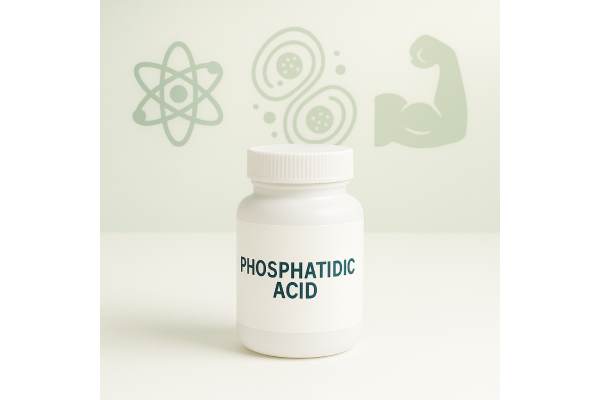
Phosphatidic acid (PA) is a signaling phospholipid your body already makes every day. It sits in cell membranes and also acts as a trigger for growth-related pathways, especially the mTOR pathway that controls muscle protein synthesis. Over the last decade, sports nutrition research has focused on soy-derived phosphatidic acid as a possible muscle-building supplement, usually taken around resistance training.
Most studies have looked at young, resistance-trained men and suggest that PA can modestly enhance strength and lean mass gains when combined with a well-designed training program and adequate protein. At the same time, several trials show neutral results, and long-term safety data are limited. That means phosphatidic acid is best viewed as a potentially useful add-on for specific lifters, not a magic shortcut or a replacement for training, sleep, and nutrition. This guide walks through what PA is, how it works, realistic benefits, research-based dosage ranges, and safety points to consider before using it.
Key Facts for Phosphatidic Acid
- Phosphatidic acid is a natural membrane lipid and signaling molecule that can activate the mTOR pathway linked to muscle protein synthesis.
- Human trials in resistance-trained men suggest small additional gains in strength and lean body mass when 250–750 mg/day is combined with structured resistance training.
- Typical sports supplement intakes range from 250 mg to 750 mg per day, often timed 30–60 minutes before training or split across the day.
- Short-term studies (up to 8–12 weeks) report good tolerance, with occasional mild gastrointestinal discomfort; long-term safety is still uncertain.
- People who are pregnant, breastfeeding, managing cancer, or living with serious chronic disease should avoid self-prescribing phosphatidic acid and seek medical guidance first.
Table of Contents
- What is phosphatidic acid and where does it come from?
- How does phosphatidic acid work for muscle growth and performance?
- How to take phosphatidic acid for best results
- Other possible benefits of phosphatidic acid beyond muscle
- Phosphatidic acid side effects, safety, and who should avoid it
- What research really says about phosphatidic acid
What is phosphatidic acid and where does it come from?
Phosphatidic acid is one of the simplest glycerophospholipids. Structurally, it is a glycerol backbone with two fatty acids and a phosphate group attached. Despite making up only a small fraction of total membrane phospholipids, it plays a central role as a precursor to many other lipids and as a signaling molecule inside cells.
Your body continuously synthesizes PA as part of normal phospholipid and triglyceride metabolism. Enzymes such as phospholipase D, diacylglycerol kinase, and lysophosphatidic acid acyltransferases can all generate phosphatidic acid as they remodel membrane lipids or respond to mechanical and hormonal signals.
Dietary phosphatidic acid is found in common foods, especially those with higher phospholipid content. Key sources include:
- Soy lecithin and other soy-derived ingredients
- Egg yolks
- Meat and some dairy fats
- Whole grains and certain plant oils in smaller amounts
However, typical diets supply modest, variable amounts of PA, and there is no established “recommended intake” for it as a nutrient.
In supplements, phosphatidic acid is usually supplied as a standardized soy-derived extract, often under branded names. These products typically deliver a specific amount of PA per serving (for example, 250–750 mg) in capsule or powder form. Many formulas combine PA with other ingredients that also influence muscle protein synthesis, such as leucine, HMB, and vitamin D.
It is important to distinguish between endogenous phosphatidic acid that your body naturally produces and concentrates in membranes, and the relatively small oral doses used in supplements. The supplement doses are designed not to replace your body’s own production but to provide an extra, timed signal that may reinforce the anabolic response to resistance training.
Because PA is a signaling lipid rather than an essential vitamin or mineral, its supplemental use is best thought of as a targeted ergogenic aid for specific goals rather than a general nutrient for everyone.
How does phosphatidic acid work for muscle growth and performance?
Phosphatidic acid attracted sports nutrition interest because of its relationship with the mechanistic target of rapamycin complex 1 (mTORC1), a central regulator of muscle protein synthesis and cell growth. In simple terms, mTORC1 senses whether the cell has enough energy, amino acids, and growth signals to build new proteins and structures.
Experimental studies in cells and animals show that:
- Raising PA levels in muscle can stimulate mTORC1 signaling.
- Mechanical loading, such as resistance training, increases PA in muscle, likely through activation of phospholipase D.
- Exogenous PA can interact with upstream receptors and kinases (including elements of the ERK pathway) that converge on mTORC1.
From a lifter’s perspective, this suggests that supplemental PA may act as an extra “push” on the same signaling network that is already turned on by heavy training and adequate protein intake.
Human trials with oral, soy-derived PA have explored this idea. In several eight-week studies with resistance-trained men performing supervised or structured training programs, daily PA supplementation has been associated with:
- Slightly greater gains in lower-body strength (often measured by squat or leg press one-repetition maximum).
- Modest increases in lean body mass compared to placebo groups doing the same training.
- Sometimes, small improvements in muscle thickness measured by ultrasound.
The magnitude of these effects has generally been modest rather than dramatic. Some trials find clearer benefits, while others report similar improvements between PA and placebo, especially when training programs and diets are already well designed.
Mechanistically, the proposed sequence looks like this:
- Resistance training creates mechanical tension and metabolic stress in muscle.
- This activates phospholipase D and related enzymes, generating more intramuscular phosphatidic acid.
- Elevated PA participates in signaling cascades that activate mTORC1 and related pathways.
- mTORC1 increases muscle protein synthesis, particularly when amino acids (especially leucine) are available.
- Repeating this pattern over weeks leads to greater hypertrophy and strength gains.
Oral PA supplementation is thought to support steps 2 and 3 by providing extra substrate or signaling stimulus around training. However, PA is only one of many regulators of mTORC1, and factors such as total protein intake, energy availability, sleep, and training quality remain more powerful drivers of long-term progress.
How to take phosphatidic acid for best results
There is no official recommended daily allowance for phosphatidic acid, but several resistance-training trials and sports nutrition practices provide useful reference points.
Typical research-based intake ranges
Human studies have commonly used:
- 750 mg/day of soy-derived PA in capsule form during 8-week training programs.
- 250–375 mg/day in other trials that still reported positive or neutral effects on strength and lean mass.
- Single acute doses of 750 mg in older adults to study short-term effects on muscle protein synthesis.
Based on these data, most commercial sports supplements fall in the 250–750 mg/day range, either as a single daily dose or split into multiple capsules.
Timing around training
Research designs differ, but common patterns include:
- Taking the full dose 30–60 minutes before resistance training sessions.
- On rest days, taking the dose at a consistent time (for example, in the morning).
- Combining PA with a standardized post-workout protein drink so protein intake is equivalent between groups.
Many supplement companies recommend taking phosphatidic acid near your workout, sometimes on a relatively empty stomach, to line up peak blood levels with the training stimulus. While this logic is reasonable, direct head-to-head comparisons of different timings are limited, so timing should be considered an optimization detail rather than the main driver of results.
Standalone versus combination products
You will see phosphatidic acid in two main supplement formats:
- Single-ingredient PA products delivering a defined amount of soy-derived PA per serving.
- Multi-ingredient formulas that combine PA with leucine, HMB, and other mTOR-related ingredients.
Multi-ingredient products can confound interpretation of results because it becomes hard to separate the effect of PA from the other components. If your goal is to test PA itself, a single-ingredient product alongside a separate protein powder is easier to interpret.
Practical guidelines for healthy, resistance-trained adults
Within an evidence-informed framework, a cautious approach might look like:
- Keeping total PA intake within 250–750 mg/day.
- Using it in blocks of 8–12 weeks aligned with focused training phases.
- Pairing supplementation with adequate daily protein (roughly 1.6–2.2 g/kg body weight per day for serious lifters) and progressive overload training.
- Monitoring for any digestive upset, headaches, or unusual symptoms and discontinuing if they appear.
Because personal responses and training contexts vary, PA should be seen as an optional “next layer” for experienced trainees rather than a starting point for people new to exercise or nutrition.
Other possible benefits of phosphatidic acid beyond muscle
Most supplement discussions focus on muscle mass and strength, but phosphatidic acid has broader biological roles that are of scientific interest. Not all of these translate into proven supplement benefits, but they illustrate why PA is such an active research topic.
General cell signaling and growth control
Phosphatidic acid participates in multiple signaling pathways beyond mTORC1. It can interact with proteins involved in:
- Cell survival and apoptosis (programmed cell death).
- Cytoskeletal organization and cell motility.
- Vesicle trafficking and membrane fusion events.
These functions make PA relevant to areas such as wound healing, immune responses, and tissue remodeling, though these roles are complex and context-dependent.
Metabolic regulation
By influencing mTORC1 and related pathways, PA is indirectly tied to:
- Glucose uptake and insulin signaling.
- Lipid metabolism and storage.
- Adaptations to overfeeding or caloric restriction.
Animal and cell studies suggest that changes in phosphatidic acid metabolism might affect how tissues respond to nutrients and stress. However, there is currently little direct evidence that PA supplements improve metabolic health markers in humans beyond their modest impact on muscle mass.
Aging and muscle quality
There is interest in whether PA could support muscle health in older adults, who often experience anabolic resistance. One study investigated acute PA ingestion in older men in combination with resistance exercise and protein to see whether it further boosted muscle protein synthesis. The results did not show a clear additional benefit beyond exercise and protein alone, highlighting that PA is not a universal solution to age-related muscle loss.
Brain and other tissues
Because PA is fundamental to membrane structure and vesicle traffic, it has theoretical relevance for brain function and other organ systems. At present, however, phosphatidylserine, phosphatidylcholine, and omega-3 phospholipids have much more direct evidence in cognitive and cardiovascular contexts than phosphatidic acid itself.
Realistic expectations
Taken together, the current state of evidence suggests:
- The most plausible, near-term use of PA supplementation is to modestly support hypertrophy and strength gains in resistance-trained individuals.
- Broader health or anti-aging benefits remain speculative and are not well supported by controlled human data.
- For general wellness, focusing on established basics (exercise, protein, sleep, micronutrient sufficiency) offers larger and more certain benefits than targeting PA specifically.
If future research clarifies additional roles for supplemental PA, recommendations may evolve, but for now its role is best described as a niche sports nutrition agent, not a general health supplement.
Phosphatidic acid side effects, safety, and who should avoid it
In controlled studies with healthy, resistance-trained adults, phosphatidic acid has generally been well tolerated at doses between 250 mg and 750 mg per day for up to 8–12 weeks. Researchers have typically reported no serious adverse events and similar overall side-effect rates between PA and placebo groups.
That said, the total number of participants studied is still relatively small, and most are young men. Long-term safety beyond a few months, as well as safety in older adults, women, and people with chronic disease, remains underexplored.
Reported or plausible side effects include:
- Gastrointestinal discomfort such as mild nausea, bloating, or loose stools, particularly when taken on an empty stomach or at higher doses.
- Headache or fatigue in a small minority of users, which may reflect individual sensitivities or interactions with other supplements.
- Changes in appetite or body weight, usually in the context of improved training performance and muscle gain rather than direct metabolic effects.
These effects, when they occur, tend to be mild and reversible upon dose reduction or discontinuation.
More cautious considerations involve phosphatidic acid’s role as a growth-related signaling lipid:
- PA’s influence on mTORC1 and other growth pathways has led some experts to advise caution in individuals with active cancers or high cancer risk, since mTOR signaling is often involved in tumor biology. There is no direct evidence that PA supplements promote cancer, but the theoretical concern supports a conservative approach.
- People with complex metabolic or cardiovascular diseases may already be taking medications that interact with nutrient signaling pathways. Adding a relatively new signaling-focused supplement without medical input is not advised.
Groups that should generally avoid unsupervised phosphatidic acid supplementation include:
- Pregnant or breastfeeding individuals, due to a lack of safety data.
- Children and adolescents, whose growth and endocrine systems are still developing.
- People with active cancer or a history of hormone-sensitive tumors, unless under the care of an oncologist who explicitly approves.
- Individuals with serious liver, kidney, or uncontrolled cardiovascular disease, unless cleared by their specialist.
For healthy adults, a reasonable approach is to:
- View PA as optional, not essential.
- Use conservative doses (for example, at the lower end of the studied range).
- Limit use to defined training blocks with breaks in between.
- Stop use and consult a healthcare professional if any unexpected symptoms appear.
As with any supplement, reading product labels carefully, monitoring how you feel, and keeping your physician informed are important parts of staying on the safe side.
What research really says about phosphatidic acid
Several lines of evidence inform what we know—and do not know—about phosphatidic acid as a supplement.
Mechanistic and preclinical research
Cell and animal studies show that:
- Phosphatidic acid is a central node in lipid metabolism and is required for the stability and activity of mTOR complexes.
- Increases in PA can activate mTORC1 either through direct interactions with the complex or through upstream pathways such as ERK signaling and lysophosphatidic acid receptors.
- Mechanical loading of muscle increases PA production, linking resistance exercise to growth signaling.
These studies provide the biological rationale for using PA around training to reinforce the anabolic response.
Human sports nutrition trials
At least three controlled trials in resistance-trained men have examined soy-derived PA supplementation during 8-week resistance-training programs:
- A pilot study using 750 mg/day of PA reported likely beneficial effects on squat strength and lean body mass compared with placebo, though sample size was small.
- Another trial using 250 mg and 375 mg/day found significant improvements in strength and muscle size over time in all groups, with magnitude-based statistics suggesting a likely or very likely beneficial effect of PA but no clear differences in traditional group comparisons.
- A study of a multi-ingredient supplement containing 750 mg of PA plus leucine, HMB, and vitamin D reported greater gains in lean mass and performance than placebo, though the design cannot isolate PA’s specific contribution.
Taken together, these trials suggest phosphatidic acid can slightly enhance training adaptations under controlled conditions, but the effect size is modest and not guaranteed in every context.
Other populations and outcomes
Research outside of young, trained men is limited:
- Acute studies in older adults have examined whether a single dose of PA further boosts exercise-induced muscle protein synthesis. Results so far do not show a clear advantage beyond exercise and protein intake.
- There is very little direct research on women, sedentary individuals, or people with chronic health conditions.
Evidence quality and gaps
Strengths of the current evidence include:
- Use of randomized, placebo-controlled designs in several trials.
- Measurement of objective endpoints such as dual-energy X-ray absorptiometry (DXA) lean mass and one-repetition maximum strength.
- Mechanistic support from preclinical work on mTOR signaling.
Limitations include:
- Small sample sizes and short durations (typically about eight weeks).
- Narrow participant demographics (mostly young, resistance-trained men).
- Variable training programs, co-supplementation, and dietary controls across studies.
- Limited information on long-term safety, dose–response relationships, and inter-individual variability.
For now, the most balanced conclusion is that phosphatidic acid is a promising but still developing sports supplement. It may offer a small additional advantage for some experienced lifters when combined with high-quality resistance training and nutrition, but it is not a substitute for these fundamentals and should be used with realistic expectations.
References
- Efficacy of phosphatidic acid ingestion on lean body mass, muscle thickness and strength gains in resistance-trained men 2012 (RCT)
- Eight Weeks of Phosphatidic Acid Supplementation in Conjunction with Resistance Training Does Not Differentially Affect Body Composition and Muscle Strength in Resistance-Trained Men 2016 (RCT)
- The effects of phosphatidic acid supplementation on strength, body composition, muscular endurance, power, agility, and vertical jump in resistance trained men 2016 (RCT, multi-ingredient)
- Phosphatidic acid and lipid-sensing by mTOR 2013 (Review)
- Phosphatidic acid mediates activation of mTORC1 through the ERK signaling pathway 2010 (Mechanistic Study)
Disclaimer
This article is intended for educational purposes only and does not constitute medical advice, diagnosis, or treatment. Phosphatidic acid is a bioactive signaling lipid, and its supplemental use may not be appropriate for everyone. Do not start, stop, or change any supplement, medication, or training program based solely on this information. Always consult a qualified healthcare professional—such as a physician, sports medicine doctor, or registered dietitian—who can assess your individual health status, medications, and goals before using phosphatidic acid or any other performance supplement. If you experience unexpected symptoms while using any supplement, discontinue use and seek medical advice promptly.
If you found this guide useful, you are welcome to share it on Facebook, X (formerly Twitter), or any other platform you prefer, and to follow our future work on social media. Your considerate sharing helps support the ongoing creation of clear, evidence-informed content for athletes and health-conscious readers.