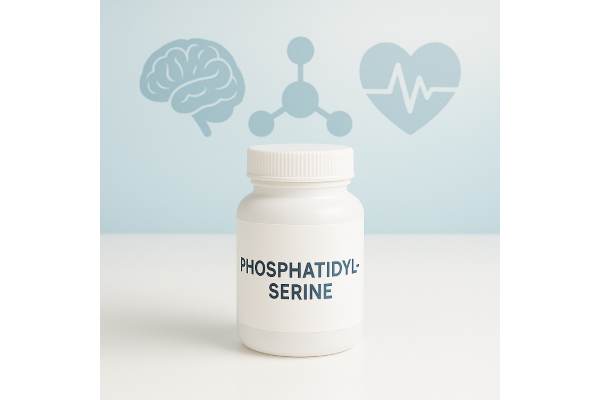
Phosphatidylserine is a naturally occurring phospholipid found in every cell membrane, with especially high concentrations in the brain. It helps maintain membrane fluidity, supports signal transmission between neurons, and participates in stress response pathways. As a supplement, phosphatidylserine is often positioned as a nootropic for memory, focus, and age-related cognitive changes, and is also used by athletes for perceived recovery and stress control.
Most products today use phosphatidylserine derived from soy or sunflower lecithin, replacing older bovine brain sources for safety reasons. Human and animal studies suggest potential benefits for attention, working memory, mood, and exercise-induced stress, but results are not uniform and effects may be modest. This guide walks through how phosphatidylserine works, potential benefits and limitations, common dosage ranges, side effects, and who should avoid it, so you can have an informed discussion with a qualified health professional before deciding whether it fits your goals.
Key Insights for Phosphatidylserine
- Phosphatidylserine is a brain-focused phospholipid that supports cell membrane structure, signaling, and neurotransmission.
- Supplementation may modestly support memory, attention, mental performance under stress, and exercise recovery in some people.
- Typical supplemental intakes in studies range from 100 mg to 400 mg per day, often taken in divided doses with meals.
- Side effects are usually mild but can include digestive discomfort, insomnia, or restlessness at higher doses.
- People who are pregnant or breastfeeding, on anticoagulant or antiplatelet therapy, or with serious medical or psychiatric conditions should only use phosphatidylserine under medical supervision or avoid it entirely.
Table of Contents
- What is phosphatidylserine and how does it work?
- What are the main benefits of phosphatidylserine?
- How to use phosphatidylserine for memory and focus
- Phosphatidylserine dosage ranges and timing
- Side effects, safety, and who should avoid it
- What does the scientific evidence show so far?
What is phosphatidylserine and how does it work?
Phosphatidylserine (often shortened to PS) is a glycerophospholipid: a fat-based molecule that helps form the structural framework of cell membranes. In humans, it makes up roughly 5 to 15 percent of brain phospholipids and is especially enriched in the cortex, white matter, and synaptic membranes. In simple terms, phosphatidylserine helps keep brain cell membranes flexible, organized, and responsive to signals.
Within the membrane, phosphatidylserine carries a negative charge. That charge attracts and anchors many signaling proteins that need to assemble at the membrane to work properly. These include enzymes involved in cell survival, plasticity, and inflammation pathways. When phosphatidylserine is available in the right amount and location, it supports normal activation of signaling cascades that underlie memory formation, stress responses, and neuronal resilience.
Phosphatidylserine also plays a key role in neurotransmission. It is present in synaptic vesicles that store neurotransmitters like dopamine and serotonin. Laboratory work suggests that phosphatidylserine can influence vesicle docking at the synapse and support efficient release of neurotransmitters in response to nerve impulses. This is one reason it is often marketed for mental energy and focus.
Another important function is its role as a “signal” during cell turnover. When cells are damaged or undergoing programmed cell death, phosphatidylserine flips from the inner side of the membrane to the outer surface. There, it acts as an “eat me” flag that helps immune cells recognize and remove dying cells in a controlled way. Disturbances in this process are linked to neuroinflammation and neurodegenerative conditions.
Supplemental phosphatidylserine, usually from soy or sunflower lecithin, is absorbed in the intestine. Some is broken down to its component parts, while some appears to incorporate into lipoproteins and cell membranes, including in the brain. This incorporation is thought to be the main mechanism behind its potential cognitive and stress-modulating effects.
What are the main benefits of phosphatidylserine?
Interest in phosphatidylserine centers on brain health, cognitive performance, mood, and stress response. Human and animal research suggests several potential benefits, though effect sizes vary and not everyone responds.
Commonly discussed areas include:
- Support for memory and learning
- Attention and mental processing speed
- Age-related cognitive decline and mild memory complaints
- Perceived stress and cortisol response
- Exercise capacity, particularly in high-intensity efforts
In older adults with subjective memory complaints or mild cognitive impairment, phosphatidylserine has been studied at daily doses around 300 mg. Some trials report improvements in memory recall, learning tasks, or daily functioning scores compared with placebo. Benefits tend to be subtle rather than dramatic and may be more noticeable in people with low baseline performance.
In younger adults, the picture is more mixed. Certain studies using stress challenges or demanding mental tasks suggest that phosphatidylserine can help maintain accuracy and reduce perceived stress or fatigue. It may also blunt stress-related cortisol rises in some scenarios. However, not all trials replicate these effects, and many have small sample sizes.
Phosphatidylserine has also been explored in children with attention or behavioral difficulties, often as part of multi-ingredient formulas. Some results suggest improvements in attention, impulsivity, or listening skills, but research is still limited and should not be taken as a substitute for established medical or behavioral treatments.
Athletes sometimes use phosphatidylserine to support performance and recovery. A few studies indicate that moderate doses may help maintain power output, reduce perceived muscle soreness, or lower markers of exercise-induced stress. Again, these findings are not universal and tend to come from short-term protocols.
Overall, phosphatidylserine may offer modest support for memory, mental performance under stress, and perceived well-being, especially in older adults or individuals under high cognitive load. It should be viewed as a supportive tool rather than a stand-alone treatment for any medical condition.
How to use phosphatidylserine for memory and focus
When people use phosphatidylserine as a nootropic, they are usually aiming for clearer thinking, better recall, or improved focus during demanding work or study. The way you structure intake can influence how you respond.
First, decide on your main goal:
- Persistent everyday focus and productivity
- Support during intensive learning or exam periods
- Help with stress-related mental fatigue
- Support for age-related memory concerns
For daily cognitive support in adults, common supplemental intakes are 100 to 300 mg per day. Many products provide 100 mg per capsule, allowing flexible dosing. For older adults with memory complaints, research protocols often use 300 mg per day, divided into two or three doses. For acute stress or performance situations, some studies use 200 to 400 mg taken before the anticipated stressor, usually with food.
Timing matters for some people. Because phosphatidylserine can feel stimulating or calming depending on the individual, it is wise to start with a morning dose taken with breakfast. If you tolerate it well but still feel benefit fading later in the day, you can add a midday dose. Taking it too close to bedtime may cause insomnia or vivid dreams in sensitive individuals.
Practical tips for use include:
- Start low: Begin at 100 mg per day with food for one to two weeks.
- Monitor response: Note changes in focus, mood, sleep, and digestion.
- Adjust gradually: If needed, increase to 200 or 300 mg per day, split across meals.
- Cycle periodically: Many users take phosphatidylserine for 8 to 12 weeks, then reassess or take a break, particularly if using higher doses.
Stacking with other supplements should be done carefully. Phosphatidylserine is often combined with omega-3 fatty acids, B vitamins, or other choline-containing phospholipids such as phosphatidylcholine. While these combinations may make sense mechanistically, they also make it harder to know which ingredient is doing what, and they can increase the chance of side effects or interactions.
Most importantly, if you are dealing with significant memory loss, persistent brain fog, mood disorders, or neurological symptoms, phosphatidylserine should not replace medical evaluation. It may play a supportive role, but a proper assessment is crucial to rule out treatable underlying causes.
Phosphatidylserine dosage ranges and timing
Phosphatidylserine is not an essential nutrient with a defined recommended daily allowance, so there is no universal “required” intake. The dosages discussed for supplementation are based mainly on clinical trials and traditional practice, not on long-term population data.
Typical adult dosage patterns in research fall into the following ranges:
- Low dose: 100 mg per day
- Standard dose: 200 to 300 mg per day
- Higher dose: 400 to 600 mg per day, usually short term and under supervision
For general cognitive support in healthy adults, 100 to 300 mg per day is a common range. Many human trials involving older adults with memory complaints use 300 mg per day, often divided into three 100 mg doses with meals. Some stress and exercise studies go as high as 400 to 600 mg per day for limited periods, but higher doses may increase the risk of side effects such as insomnia or digestive upset.
Because phosphatidylserine is fat-soluble, it is best taken with meals that contain some fat to enhance absorption. Splitting the total daily amount into two or three doses can help maintain more stable levels and reduce the likelihood of gastrointestinal discomfort. For example:
- Morning: 100 mg with breakfast
- Midday: 100 mg with lunch
- Optional: 100 mg with early dinner if targeting 300 mg per day
Duration of use in trials typically ranges from 6 to 24 weeks. Some individuals report feeling more focused within one to two weeks, while benefits for memory or mood may take longer to appear. If you see no change after 8 to 12 weeks at a reasonable dose, it may not be the right supplement for you.
Special populations require extra caution. There is limited safety research for children, pregnant or breastfeeding women, and people with serious medical conditions. When phosphatidylserine is used in children (for example, in research on attention concerns), it is done under professional supervision with carefully calculated doses adjusted for body weight. Self-experimentation in these groups is not advisable.
Always keep in mind that more is not always better. Staying within evidence-based ranges and checking in with a healthcare professional who understands your health history is the safest way to approach phosphatidylserine dosing.
Side effects, safety, and who should avoid it
Overall, phosphatidylserine has a relatively favorable safety profile in short- to medium-term studies, especially when derived from soy or sunflower lecithin. Earlier products developed from bovine brain tissue raised concerns about contamination risk, which is why modern supplements almost always use plant sources.
In clinical research, total daily doses of 200 to 400 mg for several months are generally well tolerated. Reported side effects are usually mild and may include:
- Digestive discomfort, such as nausea, gas, or loose stools
- Headache or a sense of mental overstimulation
- Insomnia or vivid dreams, especially when taken later in the day
- Transient restlessness or increased anxiety in a small minority of users
These effects often improve when the dose is lowered or moved earlier in the day, or when phosphatidylserine is taken with food rather than on an empty stomach.
There are some important cautions:
- Blood clotting and heart medication: Because phosphatidylserine can influence platelet activity and interacts with cell signaling pathways, people taking anticoagulant or antiplatelet drugs, or those with clotting disorders, should only use it under medical supervision.
- Psychiatric and neurological disorders: Individuals with major depression, bipolar disorder, epilepsy, or neurodegenerative diseases should seek specialist guidance before using phosphatidylserine, as it may interact with medications or underlying disease processes.
- Autoimmune and inflammatory conditions: Phosphatidylserine interacts with immune signaling and cell clearance. While this may eventually prove beneficial in some contexts, people with complex autoimmune diseases should discuss risks and benefits with their clinicians first.
- Pregnancy and breastfeeding: Safety data are insufficient. Until more is known, it is prudent for pregnant or breastfeeding individuals to avoid phosphatidylserine supplements unless a healthcare professional clearly recommends them.
People with soy allergies should choose sunflower-derived phosphatidylserine and verify the source with the manufacturer. Those on multiple medications or with chronic health issues should provide a complete medication and supplement list to their clinician so potential interactions can be reviewed.
Finally, phosphatidylserine should not be used as a substitute for evidence-based treatments for dementia, mood disorders, attention disorders, or cardiovascular disease. At best, it may play a complementary role within a broader plan that includes medical care, lifestyle changes, and other appropriate therapies.
What does the scientific evidence show so far?
The body of research on phosphatidylserine bridges basic biochemistry, animal models, and human clinical trials. Overall, the evidence supports a biologically plausible role in brain health and stress modulation, but it also shows that effects are context-dependent and not guaranteed for every individual.
From a mechanistic standpoint, phosphatidylserine clearly participates in key processes: maintaining membrane structure, anchoring signaling proteins, supporting synaptic vesicle function, and regulating exposure of “eat me” signals on cell surfaces. Animal studies show that altering phosphatidylserine levels can influence memory performance, neuronal survival after toxic insults, and markers of inflammation.
In human research, the strongest patterns appear in these areas:
- Older adults with subjective memory complaints or mild cognitive impairment: Several trials using plant-derived phosphatidylserine at 300 mg per day report improvements in memory tests, learning tasks, or daily functioning compared with placebo. However, not all studies are positive, and differences in design, duration, and testing make direct comparison difficult.
- Stress and mood in healthy adults: Some small studies show that phosphatidylserine can reduce perceived stress, support mood, and modulate cortisol responses during intense mental or physical challenges. Effects tend to be modest and more apparent in individuals under higher stress loads.
- Exercise performance and recovery: Limited trials suggest that phosphatidylserine might help maintain power output or reduce markers of muscle damage during repeated high-intensity exercise. The evidence is promising but preliminary.
- Safety and tolerability: Long-term administration of soy-derived phosphatidylserine at doses around 300 mg per day has generally been well tolerated in elderly participants, with no major safety signals reported in the published data.
At the same time, regulatory bodies have often concluded that evidence is not strong enough to support broad marketing claims for memory or cognitive enhancement in the general healthy population. Many trials involve small sample sizes, short durations, or specific subgroups, which limits how far we can generalize the findings.
In practical terms, this means that phosphatidylserine is best viewed as a potentially useful adjunct with a reasonable safety profile rather than a guaranteed solution. People with clear goals, realistic expectations, and guidance from a knowledgeable clinician are more likely to use it effectively and safely. Ongoing research continues to explore its roles in neuroinflammation, neurodegenerative diseases, and cardiovascular health, which may further refine who can benefit most from this intriguing phospholipid.
References
- Phosphatidylserine, inflammation, and central nervous system diseases 2022 (Systematic Review)
- Phosphatidylserine Supplementation as a Novel Strategy for Reducing Myocardial Infarct Size and Preventing Adverse Left Ventricular Remodeling 2021 (RCT)
- Neuroprotective Effect of Bean Phosphatidylserine on Trimethyltin-Induced Memory Impairment in Rats 2020 (Animal Study)
- Soybean-derived phosphatidylserine improves memory function of the elderly Japanese subjects with memory complaints 2010 (RCT)
- Safety of soy-derived phosphatidylserine in elderly people 2002 (Safety Study)
Disclaimer
The information in this article is intended for general educational purposes only and does not constitute medical advice, diagnosis, or treatment. Phosphatidylserine is a bioactive substance that can interact with medications and underlying health conditions. Always speak with a licensed physician or other qualified healthcare professional before starting, changing, or stopping any supplement, especially if you are pregnant, breastfeeding, taking prescription or over-the-counter medications, or managing any chronic physical or mental health condition. Never disregard professional medical advice or delay seeking it because of something you have read here.
If you found this guide helpful, you are warmly invited to share it with others on Facebook, X (formerly Twitter), or any platform you prefer, and to follow our work on social media. Your thoughtful support by sharing our articles helps our team continue producing clear, evidence-informed health content for readers worldwide.