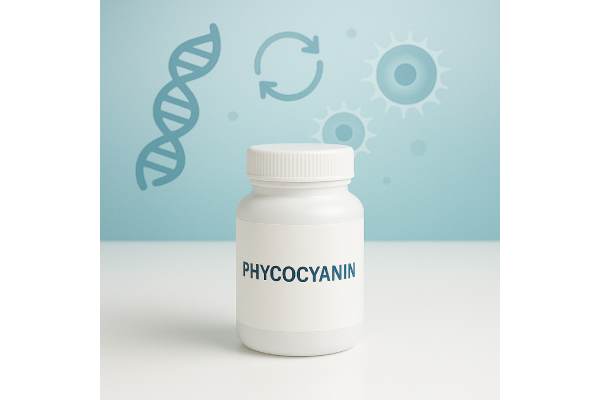
Phycocyanin is the vivid blue pigment that gives spirulina its striking colour. Beyond its role as a natural food colourant, it has attracted attention as a concentrated antioxidant and anti-inflammatory compound. Early research suggests that phycocyanin may help support oxidative balance, cardiovascular health, liver function, and metabolic markers when used alongside a balanced diet and lifestyle.
Most supplements on the market extract phycocyanin from Arthrospira (commonly called spirulina) and standardise it to a specific blue-protein content. Human studies are still limited, but existing data show promising changes in markers such as triglycerides, HDL cholesterol, and urinary isoprostanes, with a good short-term safety profile.
This guide explains what phycocyanin is, how it works, where it may help, and where evidence is still emerging. It also covers practical aspects: typical dosage ranges, how to choose a product, who should avoid it, and how to discuss it safely with a health professional.
Top Highlights for Phycocyanin
- Phycocyanin is a spirulina-derived blue protein with strong antioxidant and anti-inflammatory properties that may support metabolic and cardiovascular health.
- Most evidence so far comes from animal and small human studies, so phycocyanin should be viewed as a supportive nutrient, not a stand-alone treatment.
- Common supplemental ranges are roughly 20–200 mg phycocyanin per day, often provided through standardized spirulina extracts.
- Mild digestive discomfort is the most commonly reported side effect; product purity and heavy-metal testing are important when choosing a supplement.
- People who are pregnant, breastfeeding, have autoimmune conditions, or take immunosuppressive or anticoagulant medication should avoid phycocyanin unless advised otherwise by their clinician.
Table of Contents
- What is phycocyanin and how does it work?
- Phycocyanin benefits for health and performance
- How to take phycocyanin day to day
- Phycocyanin dosage: how much is used?
- Phycocyanin side effects and who should avoid it
- What the science says about phycocyanin
What is phycocyanin and how does it work?
Phycocyanin is a pigment-protein complex found in cyanobacteria (blue-green microalgae), especially Arthrospira species, often marketed as spirulina. It belongs to the phycobiliprotein family and is responsible for capturing light energy for photosynthesis. The “phyco” part relates to algae, while “cyanin” reflects its blue colour.
Most supplements focus on C-phycocyanin, the main form in spirulina. It is water-soluble, protein-rich, and carries chromophores called phycocyanobilins. These chromophores are structurally related to bile pigments in humans and can interact with redox and inflammatory pathways.
Key mechanisms proposed for phycocyanin include:
- Direct antioxidant activity
Phycocyanin can neutralise reactive oxygen species, including hydroxyl and peroxyl radicals, and may inhibit lipid peroxidation in cell membranes. - Supporting endogenous antioxidant systems
Experimental models suggest it can up-regulate enzymes such as superoxide dismutase, catalase, and glutathione peroxidase, improving the body’s own defences against oxidative stress. - Anti-inflammatory signalling
Phycocyanin appears to dampen pro-inflammatory pathways such as NF-κB and may reduce expression of inflammatory enzymes like COX-2 and iNOS, which produce prostaglandins and nitric oxide. - Cytoprotective and membrane-stabilizing effects
By reducing oxidative and inflammatory stress, phycocyanin may help protect liver cells, endothelial cells, and neurons in preclinical models.
It is important to distinguish phycocyanin from whole spirulina powder. Spirulina contains many compounds (proteins, pigments, vitamins, minerals, polysaccharides), whereas phycocyanin is a single enriched fraction. Benefits seen with whole spirulina may not be identical to those of isolated phycocyanin, although phycocyanin is thought to contribute significantly.
Because phycocyanin is protein-based and water-soluble, it is relatively easy to incorporate into drinks and liquid extracts. However, it is sensitive to heat, light, and pH, which is why quality control during production and storage is important.
Phycocyanin benefits for health and performance
Most claims around phycocyanin stem from its antioxidant and anti-inflammatory potential. Human trials so far are modest in size, so benefits should be seen as supportive rather than definitive, especially for chronic disease outcomes. Still, several areas look promising.
1. Oxidative stress and redox balance
In people with metabolic syndrome, a spirulina-derived liquid rich in phycocyanin has been shown to reduce urinary isoprostanes, which are considered sensitive markers of lipid peroxidation and oxidative stress. Improvements in such markers suggest a shift towards a healthier redox balance when phycocyanin is added to lifestyle and standard care.
2. Blood lipids and cardiovascular markers
The same type of extract has demonstrated:
- Reduced plasma triglycerides
- Increased HDL (“good”) cholesterol
These shifts, even when modest, are directionally favourable for cardiovascular risk. They likely reflect phycocyanin’s influence on oxidative stress and inflammation, which both contribute to atherosclerosis and dyslipidaemia. Preclinical models also show less lipid accumulation in arteries and improved lipid handling in the liver.
3. Liver support and fatty liver indices
Animal experiments using more concentrated phycocyanin-rich extracts report reduced liver fat accumulation and better liver enzyme profiles under high-fat or hyper-energetic diets. In humans, changes in fatty liver index have been inconsistent so far, partly due to small sample sizes and relatively low phycocyanin doses. Nevertheless, the combination of antioxidant and anti-inflammatory actions makes liver support a major area of interest.
4. Metabolic health and glucose regulation
Spirulina and phycocyanin have been explored as adjuncts for metabolic syndrome. While some animal studies report improved insulin sensitivity and glucose tolerance, human trials with low-dose phycocyanin have not consistently changed fasting glucose or insulin. It is possible that higher doses, longer interventions, or specific subgroups (for example, those with pronounced insulin resistance) are needed to detect effects.
5. Neuroprotective and general wellness effects
In cell and animal models, phycocyanin has shown protective actions against neurotoxic insults, reduced neuroinflammation, and improved behavioural readouts related to memory and mood. These findings fuel interest in phycocyanin as a brain support nutrient. However, high-quality human data here are still lacking, so any claims must remain cautious.
Overall, the most grounded benefits today relate to oxidative stress markers, blood lipids, and general antioxidant status, especially in individuals with metabolic stress. Other potential benefits are promising but require larger and longer human trials.
How to take phycocyanin day to day
Phycocyanin is available as stand-alone supplements and as part of spirulina or mixed “superfood” formulas. How you take it will depend on the form you choose, your tolerance, and your broader health plan.
Common supplemental forms
- Liquid extracts
Often standardized to a specific phycocyanin content (for example, a certain mg per 10 mL vial). These are typically taken once or twice daily, sometimes before breakfast. Liquids are convenient for people who dislike swallowing capsules and may have slightly better absorption. - Capsules or tablets
Either contain purified phycocyanin or spirulina powders enriched in phycocyanin. Labels should specify the amount of phycocyanin per serving, not just total spirulina weight. - Powders
Blue spirulina (phycocyanin-rich) powders can be mixed into smoothies, juices, or yoghurt. This is popular for colour and general wellness, but actual phycocyanin content varies widely by brand.
Practical tips for everyday use
- Take with a small meal or snack
Although phycocyanin is water-soluble, taking it with food often improves comfort and may support absorption of co-nutrients. - Start low and build up
If you are new to spirulina or phycocyanin, begin at the lower end of the recommended range to check tolerance, especially for digestion. - Check for quality and testing
Choose products that:
- Specify phycocyanin content in mg per dose
- Provide batch testing for heavy metals and microcystins
- Are produced under good manufacturing practices
- Align with your goals
- For metabolic or cardiovascular support, consistency over weeks to months is more important than taking high doses for a few days.
- For general wellness and antioxidant support, many people use phycocyanin as part of a broader nutrient pattern that includes colourful fruits, vegetables, and healthy fats.
- Combine thoughtfully with other supplements
Phycocyanin is often combined with omega-3 fatty acids, vitamin D, or polyphenol-rich extracts for a more comprehensive approach to inflammation and metabolic health. However, stacking many products can complicate safety and interactions, so review your full regimen with a clinician.
Because phycocyanin is usually taken daily over extended periods, it is worth reviewing medications, health conditions, and goals with a healthcare professional before starting, particularly if you live with chronic illness.
Phycocyanin dosage: how much is used?
There is currently no universally accepted therapeutic dose of isolated phycocyanin. Existing ranges are based on:
- Traditional spirulina intake
- Regulatory guidance for spirulina as a food ingredient
- Doses used in early human trials of phycocyanin-rich extracts
Doses in human research
- A clinical trial in adults with metabolic syndrome used a spirulina liquid extract standardized to phycocyanin. Participants took about 20 mg phycocyanin per day (2 vials of 10 mg each) for 12 weeks. This low dose improved several oxidative stress and lipid markers and was well tolerated.
- Regulatory opinions for spirulina as a food supplement suggest that 2 g of spirulina per day can be used to support health claims. Depending on the spirulina strain and processing, this amount typically provides around 200–300 mg phycocyanin.
Typical supplemental ranges in practice
Many products marketed as phycocyanin or “blue spirulina” supplements fall into the following approximate ranges:
- Low range: 10–40 mg isolated phycocyanin per day (often in liquid extracts)
- Moderate range: 50–200 mg phycocyanin per day, either as a purified ingredient or via high-phycocyanin spirulina powders
- Higher ranges: above 200 mg per day are less common in standardized products and should only be used under professional supervision, especially for long periods
For most otherwise healthy adults, staying within about 20–200 mg phycocyanin per day from tested products is a conservative approach that aligns with current evidence and regulatory perspectives on spirulina-derived ingredients.
Individual factors that may change the dose
- Body weight and metabolic status: People with higher body mass or metabolic syndrome are often the focus of trials, but data are not yet strong enough to define weight-based dosing.
- Coexisting conditions: Liver, kidney, autoimmune, or bleeding disorders should prompt a more cautious approach and professional oversight.
- Concurrent supplements and drugs: If you already use several antioxidant or anti-inflammatory products, adding high-dose phycocyanin may offer diminishing returns and increase the risk of interactions.
Because the evidence base is still evolving, phycocyanin should be treated as an adjunct, not a replacement for proven therapies, and any dose above label recommendations should be discussed with a qualified healthcare professional.
Phycocyanin side effects and who should avoid it
Phycocyanin derived from spirulina has been used as a food colourant and supplement ingredient for many years. Spirulina itself holds “generally recognized as safe” status with regulators when produced under controlled conditions. Short-term phycocyanin trials have reported good tolerability, but there are still important safety points to consider.
Commonly reported mild effects
Most people tolerate phycocyanin without difficulty. When side effects occur, they are usually mild and transient, such as:
- Bloating or mild abdominal discomfort
- Soft stools or mild diarrhoea
- Nausea or a temporary change in appetite
These are often dose-related and may improve if you reduce the amount or spread it across the day with food.
Potential risks related to product quality
Because phycocyanin is extracted from microalgae:
- Poorly controlled cultivation can lead to contamination with heavy metals or cyanotoxins (such as microcystins).
- High-quality products are grown in controlled environments and tested for contaminants; this should be clearly stated by the manufacturer.
Choosing reputable brands with third-party testing is one of the most important safety steps.
Who should avoid or be especially cautious
Until more data are available, the following groups should avoid phycocyanin supplements or use them only under medical supervision:
- Pregnant or breastfeeding individuals – human safety data at supplemental doses are very limited.
- Children and adolescents – occasional food use is one thing, but long-term supplementation should not be started without paediatric guidance.
- People with autoimmune diseases (such as lupus, multiple sclerosis, rheumatoid arthritis) – spirulina-derived products may modulate immune activity; theoretical concerns exist that they could aggravate autoimmunity in some individuals.
- Those on immunosuppressive medication – because phycocyanin may influence immune pathways, it could theoretically interfere with treatment goals.
- Individuals on anticoagulant or antiplatelet drugs – limited data exist, but as with many bioactive supplements, caution is advisable to avoid unexpected effects on clotting or liver metabolism.
- People with significant liver or kidney impairment – these organs process nutrients and waste; concentrated supplements should only be used with specialist input.
Allergy considerations
True allergy to spirulina or phycocyanin is rare but possible. People with known allergies to algae or who have reacted to spirulina in the past should avoid phycocyanin. Signs such as rash, itching, swelling, or breathing difficulty warrant immediate medical attention.
In summary, phycocyanin appears safe for many adults at commonly used doses when sourced from high-quality, tested products. Yet, because human data are still relatively limited and some groups are more vulnerable, a cautious, personalised approach is essential.
What the science says about phycocyanin
Phycocyanin research spans basic chemistry, cell biology, animal studies, and a smaller number of human trials. Understanding this landscape helps set realistic expectations.
Preclinical evidence
In vitro and animal studies consistently show that phycocyanin:
- Scavenges free radicals and inhibits lipid peroxidation
- Up-regulates endogenous antioxidant enzymes
- Reduces production of pro-inflammatory mediators
- Protects tissues such as liver, heart, kidneys, and brain from oxidative and inflammatory damage in various disease models
These data provide mechanistic plausibility for its proposed benefits and guide dose-finding for clinical research.
Human clinical data
Human data are still limited but growing:
- Metabolic syndrome trial
Adults with metabolic syndrome who consumed a spirulina liquid extract rich in phycocyanin (about 20 mg phycocyanin per day) for 12 weeks showed improvements in triglycerides, HDL cholesterol, and urinary isoprostanes compared with placebo. Liver safety markers remained stable, and no serious adverse events were reported. - Spirulina-based trials relevant to phycocyanin
Several spirulina studies (using 1–19 g spirulina per day) have reported improvements in blood lipids, blood pressure, and some markers of glucose metabolism. Because phycocyanin is a major active pigment in spirulina, these findings indirectly support its potential role, even though they cannot be attributed solely to phycocyanin. - Other exploratory areas
Experimental work suggests potential neural, hepatoprotective, and anticancer roles for C-phycocyanin, but these fields are dominated by cell and animal models. Well-designed human trials in these areas are still lacking.
Limitations of current evidence
- Small sample sizes – many clinical trials include tens rather than hundreds of participants, limiting statistical power.
- Short duration – interventions often last 8–12 weeks, which is adequate for biomarkers but not for long-term outcomes like cardiovascular events.
- Heterogeneous preparations – extracts differ in phycocyanin content, purity, and presence of other spirulina components, making it hard to compare across studies.
- Publication bias – positive findings are more likely to appear in the literature than negative or neutral studies.
What this means in practice
Given what we know so far, phycocyanin can be viewed as:
- A promising antioxidant and anti-inflammatory adjunct, particularly in settings of metabolic or oxidative stress
- A nutrient where safety looks good in the short term at modest doses, but where long-term high-dose data are sparse
- An option that should complement—not replace—core lifestyle strategies such as diet quality, physical activity, sleep, and evidence-based medical treatment
If you are considering phycocyanin, it is reasonable to see it as a potentially helpful addition to a broader health plan, with benefits most clearly supported for oxidative stress and some lipid markers, and many other claims still in the exploratory stage.
References
- Antioxidant Efficacy of a Spirulina Liquid Extract on Oxidative Stress Status and Metabolic Disturbances in Subjects with Metabolic Syndrome 2022 (RCT)
- Phycocyanin: Anti-inflammatory Effect and Mechanism 2022 (Review)
- Medical Application of Spirulina Platensis Derived C-Phycocyanin 2016 (Review)
Disclaimer
The information in this article is intended for general educational purposes only and does not constitute medical advice, diagnosis, or treatment. Phycocyanin supplements are not a substitute for professional healthcare, prescribed medication, or personalised guidance from a qualified clinician. Always consult your doctor or another licensed health professional before starting, stopping, or changing any supplement, especially if you have an existing medical condition, are pregnant or breastfeeding, or take prescription or over-the-counter medicines.
If you found this guide useful, you are welcome to share it with others on Facebook, X (formerly Twitter), or any platform you prefer, and to follow our work on social media. Your support through thoughtful sharing helps our team continue creating clear, evidence-informed resources for readers around the world.