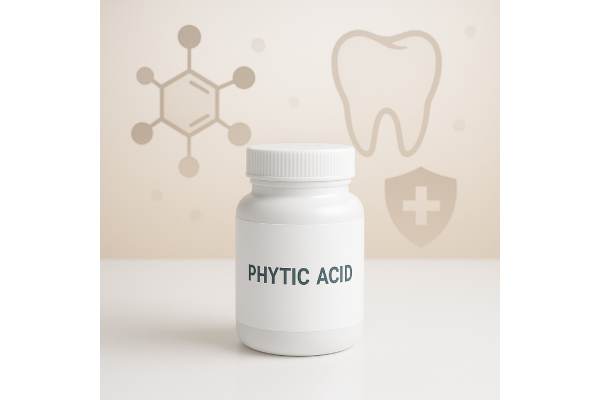
Phytic acid, also known as inositol hexaphosphate (IP6), is a natural compound found in high amounts in whole grains, legumes, nuts, and seeds. For years it was labeled an “antinutrient” because it can bind minerals like iron, zinc, and calcium in the gut and reduce their absorption. More recent research paints a more nuanced picture. In moderate amounts, phytic acid may act as a powerful antioxidant, support healthy cell signaling, and even have potential roles in metabolic and immune health.
As a supplement, phytic acid (usually in the form of IP6, often combined with inositol) is marketed for cellular protection, healthy aging, and adjunctive support in serious conditions. However, human data are still limited, and high doses may worsen mineral deficiencies if you are not careful. This guide walks you through what phytic acid is, its potential benefits and drawbacks, how it is used, typical dosage ranges, safety concerns, and what current research actually shows.
Key Insights for Phytic Acid
- Phytic acid (IP6) from whole foods and supplements may have antioxidant and cell-protective effects, with early evidence in metabolic and cellular health.
- High intakes can reduce absorption of iron, zinc, calcium, and other minerals, especially in diets that are already low in these nutrients.
- Supplemental IP6 doses in products typically range from about 500 to 2,000 mg per day for adults, often divided into two or more doses away from meals.
- Individuals with iron deficiency, zinc deficiency, osteoporosis risk, or marginal mineral intake should be cautious with phytic acid supplements and focus on food-based sources instead.
Table of Contents
- What is phytic acid and how does it work?
- Potential benefits of phytic acid supplements
- Food sources, forms, and how phytic acid behaves in the body
- How to take phytic acid and typical dosage ranges
- Side effects, risks, and who should avoid phytic acid
- What does the research say about phytic acid?
What is phytic acid and how does it work?
Phytic acid is a natural molecule made of inositol (a ring-shaped sugar alcohol) with six phosphate groups attached. In plants, it is the main storage form of phosphorus and minerals in seeds and cereal grains. In nutrition science it is also called phytate, especially when referring to its mineral-bound forms (for example, calcium-phytate or iron-phytate).
When you eat foods rich in phytic acid, the compound can bind positively charged minerals such as iron, zinc, magnesium, and calcium in the digestive tract. This binding forms complexes that are less available for absorption. In populations whose diets are based heavily on unprocessed cereal grains or legumes, high phytate intake can contribute to mineral deficiencies, particularly of iron and zinc.
However, the same chemical properties that let phytic acid bind metals also give it interesting biological effects. By chelating iron and copper, phytic acid helps prevent the formation of highly reactive free radicals that can damage lipids, proteins, and DNA. This metal-chelating and radical-scavenging behavior is the basis of its antioxidant role.
Inside cells, phytic acid and related inositol phosphates participate in signaling pathways involved in cell growth, differentiation, and programmed cell death. In experimental models, IP6 can influence how cells respond to stress, manage DNA repair, and regulate the cell cycle. These actions have led to interest in IP6 as a potential adjunctive compound in oncology and as a general “cellular health” supplement.
In everyday nutrition, though, most people encounter phytic acid as part of whole foods. Whether it acts more as an antinutrient or as a beneficial antioxidant depends largely on your overall diet quality, mineral intake, and how those foods are prepared.
Potential benefits of phytic acid supplements
Phytic acid’s potential benefits are mostly derived from its antioxidant, chelating, and cell-signaling effects. It is important to remember that much of the evidence comes from cell and animal studies, with relatively few high-quality human trials. Still, several potential areas of benefit have emerged.
First, phytic acid appears to support antioxidant defenses. By binding iron and copper, it may reduce the formation of reactive oxygen species that drive oxidative damage in cell membranes and DNA. In experimental systems, IP6 has been shown to protect cells from oxidative stress and may help maintain the integrity of genetic material under stressful conditions. This is one reason it is sometimes positioned as a “cell-protective” supplement.
Second, there is active research on phytic acid and cell growth regulation. In laboratory models, IP6 can slow the proliferation of certain rapidly dividing cells and promote balanced cell cycle control and programmed cell death where appropriate. These findings have sparked interest in using IP6 as an adjunctive support in oncology settings, but evidence in humans is still very limited and it should never replace standard medical treatment.
Third, phytic acid may influence metabolic and cardiovascular risk factors. Some animal and preliminary human data suggest that phytate-rich diets or IP6 may modestly support healthy blood sugar regulation, improve some lipid parameters, or reduce unwanted calcification in blood vessels and soft tissues. Because phytic acid complexes with calcium, it might help inhibit inappropriate calcium deposits, although this has to be balanced against its potential to reduce calcium absorption if mineral intake is low.
A more everyday, practical benefit is that foods naturally rich in phytic acid also provide fiber, plant protein, and a wide range of phytonutrients. When you eat whole grains and legumes as part of a varied diet, any mild mineral-binding effects can often be offset by higher total nutrient intake and improved gut health.
Overall, phytic acid may offer:
- Antioxidant and cell-protective activity
- Support for balanced cell signaling and growth regulation
- Potential contributions to metabolic and vascular health in the context of a healthy diet
However, strong clinical evidence for routine phytic acid supplementation in otherwise healthy people is still lacking. For now, its most grounded benefits likely come from consuming it as part of minimally processed, nutrient-dense plant foods.
Food sources, forms, and how phytic acid behaves in the body
Most people get phytic acid from food rather than supplements. It is especially abundant in the bran and germ of cereal grains and in the outer layers of legumes, nuts, and seeds. Typical high-phytate foods include wheat bran, brown rice, oats, corn, soybeans, chickpeas, lentils, peanuts, almonds, and sunflower seeds.
The amount of phytic acid you consume varies widely based on how much whole plant food you eat and how those foods are processed. Diets rich in unrefined grains and legumes can provide several hundred to over a thousand milligrams of phytic acid per day. In contrast, diets dominated by refined grains (white flour, white rice) and few legumes or nuts provide far less.
Your body does not produce much of the enzyme phytase, which is needed to break down phytic acid and release its stored phosphorus and minerals. Some gut microbes can produce phytase, but the main breakdown of phytic acid typically comes from food processing methods such as soaking, sprouting, fermenting, and sourdough leavening. These methods activate phytases naturally present in the plant or in microbes, reducing phytic acid content and improving mineral bioavailability.
When phytic acid reaches the small intestine, it can bind minerals in the meal and form complexes. Whether this is harmful depends on context:
- If your diet is diverse and rich in minerals, the binding effect is usually modest and may not cause problems.
- If your diet is heavily based on high-phytate staples and low in animal foods or fortified products, mineral deficiencies can gradually develop.
Phytic acid supplements are typically sold as sodium, calcium, magnesium, or potassium IP6 salts, sometimes combined with additional inositol. These forms are more standardized than the variable phytate in foods. When taken away from meals, supplemental IP6 may be less likely to interfere with mineral absorption from that specific meal, but long-term high-dose use can still reduce overall mineral status over time.
In the body, a portion of ingested IP6 can be absorbed and then metabolized into lower inositol phosphates. These metabolites can participate in signaling pathways that influence how cells respond to hormones, growth factors, and stressors. The details of this metabolism in humans are not yet fully mapped, which is one reason dosing guidelines remain conservative.
How to take phytic acid and typical dosage ranges
Because there is no universally accepted therapeutic dose for phytic acid, most recommendations are based on typical amounts used in studies and on supplement manufacturer guidelines. Dosage needs also differ between using phytic acid as a normal part of the diet versus using IP6 as a concentrated supplement.
From food alone, people eating diets high in whole grains and legumes may easily consume 500 to 2,000 mg of phytic acid per day without realizing it. In this context, the priority is usually optimizing preparation methods (soaking, sprouting, fermenting) and ensuring sufficient mineral intake rather than counting phytic acid milligrams.
For supplements, IP6 capsules often provide 250 to 1,000 mg per capsule. Common adult daily intakes recommended on labels fall roughly in the 500 to 2,000 mg range, often split into two or three doses. For example:
- A lower-end regimen might be 250 to 500 mg once or twice daily.
- A moderate regimen might be 500 to 1,000 mg twice daily, separate from mineral-rich meals.
Because phytic acid can bind minerals, many practitioners prefer that IP6 supplements be taken on an empty stomach or between meals, and not at the same time as iron, zinc, magnesium, or calcium supplements. This does not completely remove the risk of reduced mineral status over time, but it can lessen direct competition at a single meal.
When getting started, a cautious approach is sensible:
- Discuss the idea with a healthcare professional, especially if you have any chronic conditions or take medications.
- Start at the lower end of the range (for example, 250 to 500 mg per day).
- Monitor how you feel and, under supervision, consider lab checks of iron, zinc, and other key minerals if you plan to use IP6 longer term.
- Do not use phytic acid supplements in place of proven medical treatments.
Children, pregnant individuals, and people with chronic illnesses should not take phytic acid supplements without medical guidance. For these groups, focusing on nutrient-dense, well-prepared whole foods is almost always a safer strategy than concentrated IP6.
Side effects, risks, and who should avoid phytic acid
The main safety concern with phytic acid is its ability to reduce mineral bioavailability. Over time, high phytic acid intake, especially from supplements or diets dominated by unrefined cereal-based staples, can contribute to deficiencies in iron, zinc, and sometimes calcium. This risk is greater when mineral intake is already borderline or when absorption is impaired for other reasons.
Possible side effects or risks include:
- Worsening of iron deficiency or anemia, particularly in people who already struggle with low iron.
- Reduced zinc levels, which can affect immune function, taste, skin health, and wound healing.
- Potential impact on calcium balance, especially if total calcium intake is low and there are other risk factors for bone loss.
- Mild digestive symptoms such as bloating or loose stools at higher doses in some individuals.
Certain groups should be particularly cautious:
- People with diagnosed iron deficiency, low ferritin, or anemia, especially menstruating individuals and those with heavy menstrual bleeding.
- Individuals with known zinc deficiency or at high risk for it (for example, strict plant-based diets without careful planning).
- People with osteoporosis, osteopenia, or other bone health concerns if calcium and vitamin D intake are not clearly adequate.
- Individuals with chronic kidney disease, where phosphate handling and mineral balance are already disrupted.
In these situations, taking a mineral-binding supplement like IP6 without supervision could do more harm than good.
Potential interactions with medications have not been thoroughly studied. Because phytic acid can bind minerals and possibly some drugs in the gut, there is a theoretical risk of reduced absorption of certain oral medications or supplements. As a precaution, it is sensible to separate IP6 and essential medications by several hours, and to involve a healthcare professional in any decision to use it regularly.
Allergic reactions to phytic acid itself appear rare, but many IP6 products are derived from rice bran or other grains, so people with specific grain sensitivities should check product details carefully.
Ultimately, the safest way to obtain phytic acid for most people is through a varied diet rich in whole grains, legumes, nuts, and seeds that are properly prepared. Concentrated IP6 supplements should be approached thoughtfully, with particular care in anyone at risk for mineral deficiencies or complex medical conditions.
What does the research say about phytic acid?
Phytic acid research spans several fields: nutrition, food science, mineral metabolism, and experimental oncology. Overall, the evidence is promising in some areas but far from definitive for routine supplementation in the general population.
On the nutrition side, human intervention studies have consistently shown that high-phytate diets can reduce the absorption of trace elements like iron and zinc, especially when diets are cereal-based and low in animal products. At the same time, observational research often finds that whole-grain–rich diets, which naturally contain phytic acid, are associated with better long-term health outcomes. This suggests that the benefits of whole foods can outweigh the downsides of phytic acid when mineral intake is adequate and food preparation methods are optimized.
Recent narrative reviews of human studies have emphasized that the impact of phytic acid on mineral status depends heavily on context: total mineral intake, presence of enhancers of absorption (such as vitamin C and animal protein), use of food processing (such as sourdough fermentation), and overall dietary pattern. In well-nourished populations, modest phytic acid intake from whole foods is usually compatible with good mineral status.
In cell and animal models, IP6 shows more striking effects. It can reduce oxidative stress, influence expression of enzymes involved in inflammation and tissue remodeling, and modulate pathways linked to abnormal cell growth. In colon cancer cell lines, IP6 has been shown to affect pathways dependent on arachidonic acid metabolism and to alter enzymes that help cancer cells invade surrounding tissue. These findings support the idea that IP6 has biologically meaningful effects at the cellular level.
However, translating these experimental results to clinical practice is challenging. Human trials of IP6 as an adjunct in oncology are relatively small and varied in design. Some report improvements in quality of life measures or certain lab parameters, but they do not provide enough evidence to recommend IP6 as a standard component of treatment. Larger, controlled studies are needed.
For now, the most evidence-backed positions are:
- Phytic acid is a key factor in mineral bioavailability and needs to be considered in diets that rely heavily on unrefined plant staples.
- When mineral intake is adequate and foods are properly processed, phytic acid-rich diets can still be compatible with good health and may contribute to beneficial effects of whole grains and legumes.
- IP6 supplements show interesting mechanistic and early clinical signals but remain experimental for most health goals.
Anyone considering using phytic acid or IP6 beyond typical dietary levels should do so in consultation with a qualified health professional, especially if they have complex medical conditions or are taking multiple medications.
References
- Dietary Phytic Acid, Dephytinization, and Phytase Supplementation Alter Trace Element Bioavailability-A Narrative Review of Human Interventions 2024 (Narrative Review)
- Phytic Acid and Whole Grains for Health Controversy 2021 (Review)
- A Review on Anti-Nutritional Factors: Unravelling the Natural Defence Mechanism of Homeostasis in Plants 2019 (Review)
- Modulating Effect of Inositol Hexaphosphate on Arachidonic Acid-Dependent Pathways in Colon Cancer Cells 2020 (Experimental Study)
Disclaimer
The information in this article is for general educational purposes only and is not intended to provide medical advice, diagnose any condition, or replace the guidance of a qualified healthcare professional. Phytic acid and IP6 supplements should not be used as a substitute for prescribed medications or standard medical care, especially in serious conditions such as cancer, anemia, or chronic kidney disease. Always consult your doctor or another qualified health provider before starting, stopping, or changing any supplement or treatment, particularly if you are pregnant, breastfeeding, living with a chronic illness, or taking prescription medicines.
If you found this guide helpful, you are welcome to share it with others on Facebook, X (formerly Twitter), or any platform you prefer, and to follow our work on social media. Your supportive sharing helps our team continue creating careful, evidence-informed content for readers who value trustworthy health information.