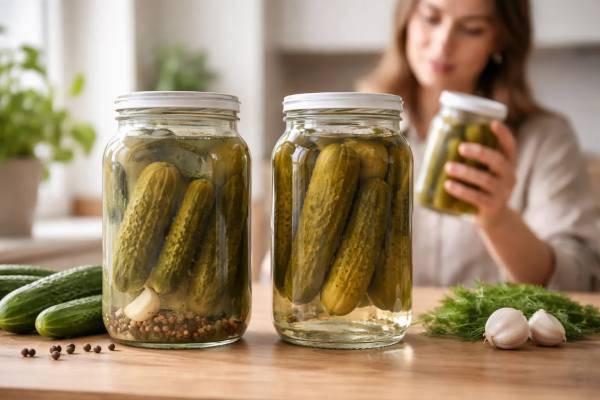
Pickles look simple—cucumbers, brine, crunch—but their gut-health story depends on how they were made. Some pickles are “acidified” with vinegar and heat-processed for shelf stability; others are traditionally fermented, where microbes convert natural sugars into organic acids. That difference affects taste, texture, and whether any living microorganisms remain in the jar.
If you are shopping for pickles with digestive health in mind, the goal is not to chase a trendy label. It is to understand what fermentation can realistically offer (and what it cannot), how to spot products that may still contain live cultures, and how to use them without triggering reflux, bloating, or sodium overload. This guide gives a practical framework, plus simple ways to fit pickles into a gut-friendly pattern.
Core Points
- Fermented pickles can contain live microbes, while most vinegar pickles are not probiotic because they are acidified and often heat-treated.
- “Probiotic” is a higher bar than “fermented” and usually requires specific strains and evidence-based amounts.
- Pickles can support food diversity and appetite cues, but they are not a stand-alone fix for IBS, constipation, or inflammation.
- High sodium and acidity can worsen blood pressure goals or reflux, especially with frequent servings.
- Start with 1–2 small spears (or 2–4 slices) alongside a meal, and adjust based on symptoms and label sodium.
Table of Contents
- Fermented and vinegar pickles explained
- When pickles are actually probiotic
- Possible gut benefits and realistic limits
- Reflux, histamine, and sodium cautions
- How to choose and serve pickles
- Pickles compared with other fermented foods
Fermented and vinegar pickles explained
“Pickle” describes a result (tangy, preserved vegetables), not a single process. Most store shelves include at least two categories that behave very differently in the body.
1) Fermented pickles (often called “lacto-fermented”)
These start with vegetables, salt, water, and time. Salt creates conditions where certain microbes—commonly lactic-acid bacteria—outcompete spoilage organisms. As fermentation progresses, those microbes consume small amounts of natural carbohydrate in the vegetable and produce organic acids. The brine becomes increasingly acidic, which helps preservation.
What that means in practice:
- Flavor: complex sourness, sometimes a slight “funk,” less sharp than straight vinegar.
- Texture: can stay crisp if salt concentration and temperature are right, but can soften if over-fermented or warm-stored.
- Microbial content: may contain live microorganisms if the product is not pasteurized and is stored to preserve viability.
2) Vinegar pickles (often labeled “pickled” or “acidified”)
These are preserved by adding vinegar (acetic acid) directly. Many are heated during canning to make them shelf-stable. The acid level is reliable, the process is fast, and the product is consistent.
What that means in practice:
- Flavor: sharper, more “vinegar-forward.”
- Texture: often very crisp, especially in commercially canned varieties.
- Microbial content: typically not a meaningful source of live microbes if heat-treated.
A key clarification: Fermentation does not automatically mean “probiotic,” and vinegar pickles are not “bad” for the gut. Vinegar pickles can still be enjoyable, lower in fermentation-related histamine for some people, and helpful for adding flavor that increases intake of otherwise plain foods. But if your goal is microbial exposure, you need to distinguish fermented with live cultures from acidified for shelf stability.
Finally, remember that “pickle-adjacent” foods (kimchi, sauerkraut, mixed pickled vegetables) may be fermented or vinegar-based too. The label and storage location matter more than the name on the front.
When pickles are actually probiotic
“Probiotic” is not just a marketing adjective. In nutrition science, it implies live microorganisms that confer a health benefit when consumed in adequate amounts. That definition creates three hurdles that most pickles do not clear.
The three-part probiotic test
1) Live microorganisms are present at the time you eat them
Even a fermented pickle may not contain live cultures if it was pasteurized, heat-treated, or stored in a way that reduces viability. Time, heat, and oxygen exposure can reduce living counts.
2) The microbes are identified and appropriate
Some fermented foods contain diverse microbes, but probiotics typically require identified strains (often listed with a genus, species, and sometimes strain code). Pickles rarely provide strain-level labeling.
3) There is evidence for a health benefit at a practical dose
For probiotics, benefits are strain- and dose-specific. Even if live microbes are present, the product may not have clinical data supporting a particular outcome.
What to look for on the jar
A pickle can be more likely (not guaranteed) to contain live cultures when you see combinations like:
- “Fermented” plus “unpasteurized” or “raw”
- “Contains live cultures” (best when paired with refrigeration instructions)
- Ingredients that look like: cucumbers + water + salt + spices (with no vinegar), or vinegar listed later as a flavoring rather than the primary acid source
Where the jar is located matters
- Refrigerated section: more likely to include unpasteurized fermented pickles.
- Shelf-stable aisle: more likely to be heat-processed vinegar pickles (or fermented pickles that were stabilized).
A realistic interpretation
If you find a refrigerated fermented pickle that states it contains live cultures, you can treat it as a fermented food with potential microbial exposure. But unless it provides identified strains and specific evidence, it is safer to describe it as “fermented” rather than “probiotic.”
That distinction helps set expectations. Many people do well with fermented foods as part of a varied diet, but expecting a jar of pickles to function like a studied probiotic capsule often leads to disappointment—or to overconsumption that triggers reflux or sodium issues.
Possible gut benefits and realistic limits
Pickles can fit into gut-friendly eating, but the benefits tend to be indirect and pattern-based rather than dramatic or immediate.
Potential upsides of fermented pickles
Microbial exposure and food “signals”
Fermented vegetables may deliver live microbes (depending on processing) and microbial byproducts from fermentation. Even when microbes do not permanently “colonize” the gut, repeated exposure can still interact with digestion and immune signaling in transient ways.
Organic acids and digestion
Fermentation produces organic acids that contribute to tangy flavor. Acidity can stimulate saliva and digestive secretions for some people, which may help with appetite cues and meal satisfaction. For others—especially with reflux—this can backfire (more on that later).
Dietary diversity
One of the most consistent gut-health advantages is also the simplest: fermented foods can encourage people to eat a broader range of plants and flavors. Even small additions—like a few pickle slices on a grain bowl—can make a high-fiber meal more appealing and easier to repeat.
What pickles are unlikely to do on their own
They are not a high-fiber intervention
Cucumbers and many pickled vegetables contribute minimal fiber per serving. If constipation, cholesterol, or blood sugar control is your target, pickles are a flavor tool, not the main lever.
They are not a reliable “probiotic dose”
Microbial counts vary widely by product and storage time. Without strain and dose information, it is hard to connect a serving to a predictable outcome.
They do not “detox” the gut
If a pickle product claims sweeping detox effects, treat that as marketing. The gut already has robust detox and barrier systems supported by overall dietary quality, sleep, movement, and appropriate medical care.
A balanced way to think about benefits
A useful mental model is: Pickles can support a gut-friendly routine when they help you build consistent meals—especially meals anchored in fiber-rich foods (beans, oats, lentils, vegetables, berries, nuts). In that context, pickles can:
- Improve palatability without adding ultra-processed sauces
- Add crunch and acidity that makes salads and bowls more satisfying
- Encourage regular eating patterns that stabilize symptoms for some people
So the “gut benefit” is often the system effect: better adherence to nourishing meals, more plant variety, and mindful portions.
Reflux, histamine, and sodium cautions
Pickles are not risk-free for sensitive digestive systems. The main concerns are acidity, histamine-related reactions, and sodium.
Reflux and upper-GI irritation
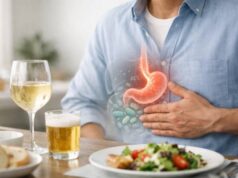
Both vinegar pickles and fermented pickles are acidic. If you are prone to heartburn, LPR (throat reflux), gastritis, or a “burning” stomach sensation, pickles can trigger symptoms—especially:
- On an empty stomach
- Late in the evening
- In large portions (multiple spears, lots of brine)
- Alongside other triggers (fatty meals, chocolate, alcohol, mint, large meals)
A practical workaround is to keep pickles as a small side with a full meal, not as a stand-alone snack.
Histamine and fermented-food sensitivity
Fermented foods can be higher in histamine or histamine-like compounds. Some people experience flushing, headaches, congestion, itchiness, or digestive upset after fermented foods. Not everyone who reacts has “histamine intolerance,” but the pattern is worth noticing.
If you suspect histamine sensitivity:
- Trial smaller servings and track symptoms for 1–2 weeks
- Prefer vinegar pickles (often lower in fermentation-related histamine) or freshly pickled quick pickles you make and store briefly
- Avoid stacking multiple fermented foods in one meal (for example: kimchi + kombucha + yogurt all together)
Sodium: the biggest practical limitation
Most pickles are salty. Sodium content varies widely, but it is common for a serving to contribute a noticeable fraction of a day’s intake—especially if you also eat bread, cheese, deli meats, sauces, or restaurant meals.
Higher sodium can be a concern for:
- High blood pressure
- Heart failure
- Kidney disease
- Certain fluid-balance conditions
- People advised to follow a sodium-restricted diet
If sodium is relevant for you, the label matters more than the fermentation debate. Compare brands, and note that “pickle juice” can be a concentrated sodium dose.
Food safety considerations
Commercially fermented products are generally safe when produced and stored correctly. Home fermentation can be safe too, but it requires attention to cleanliness, salt concentration, and storage temperature. When in doubt—especially for pregnancy, immunosuppression, or complex medical conditions—choose reputable commercial products and store them as directed.
How to choose and serve pickles
The best pickle for gut health is the one that fits your symptoms, goals, and routine. Use this step-by-step approach to choose wisely and avoid common pitfalls.
Step 1: Decide your primary goal
- You want live cultures: prioritize refrigerated, fermented, unpasteurized products.
- You want flavor without fermentation sensitivity: choose vinegar pickles or quick pickles.
- You need low sodium: look for reduced-sodium options and keep portions small.
Step 2: Use the label like a checklist
Look at:
- Ingredients: fermented versions often rely on water + salt; vinegar-forward versions list vinegar early.
- Storage instructions: “keep refrigerated” is a helpful sign for live-culture potential.
- Sodium per serving: compare brands; serving sizes are often small and easy to underestimate.
- Added sugar: sweet pickles can add more sugar than expected.
Step 3: Start with a symptom-friendly portion
For most people testing tolerance:
- Begin with 2–4 slices or 1 small spear, with food
- Limit brine sipping at first
- Repeat no more than once daily for a week, then adjust
If you are aiming for fermented-food variety, consistency matters more than volume. A small daily serving often beats an occasional large serving that triggers symptoms.
Step 4: Pair pickles with “gut-supporting anchors”
Pickles work best when they support meals built around fiber and protein. Easy pairings:
- Add pickle slices to a lentil salad with olive oil and herbs
- Use chopped pickles in tuna or chickpea salad instead of extra mayo
- Top a brown rice bowl with cucumbers, carrots, and a small portion of fermented pickles
- Add a spear alongside eggs and sautéed greens for a salty-acid contrast
Step 5: Adjust for IBS and bloating patterns
If you have IBS or frequent bloating, watch for hidden triggers:
- Garlic and onion are common in pickled mixes and can be problematic for some.
- Spicy pickles can irritate sensitive guts.
- Large servings can add a salt-and-acid load that feels like “bloating,” even without fermentation effects.
The goal is a controlled experiment: keep the serving small, keep the meal consistent, and change one variable at a time.
Pickles compared with other fermented foods
Pickles are only one way to explore fermented foods, and they are not always the easiest option for sensitive digestion. Comparing them with alternatives helps you choose the best “fermented fit.”
Fermented pickles vs sauerkraut and kimchi
Fermented cabbage products often contain live lactic-acid bacteria when unpasteurized and refrigerated. They may deliver more fermentation-derived compounds per serving, but they also commonly include garlic, chili, and other triggers.
If you are sensitive:
- Start with plain sauerkraut in small amounts before spicy kimchi
- Choose products with short ingredient lists
- Keep portions modest (1–2 tablespoons) and build slowly
Fermented pickles vs yogurt and kefir
Fermented dairy is often a more consistent source of live cultures because production is standardized. For some people with IBS, lactose-free yogurt or kefir can be easier than acidic pickles. For others, dairy triggers symptoms.
A practical approach is to pick one fermented category you tolerate well and use it consistently rather than rotating many and guessing which caused the problem.
Fermented pickles vs probiotic supplements
Supplements can be useful when a clinician recommends a specific strain for a specific goal. But supplements are not automatically “better” than food—and food is not automatically “more natural” in a helpful way. The tradeoff is:
- Supplements: more strain-specific and dose-specific, less culinary enjoyment
- Fermented foods: broader dietary pattern benefits, but less precision and more variability
If you want precision, use a supplement intentionally. If you want habit change and food diversity, fermented foods are a strong tool.
A realistic “pickle plan” for gut health
If you enjoy pickles and want them in a microbiome-friendly routine:
- Treat pickles as a supporting character, not the main intervention.
- Choose a version that matches your tolerance (fermented or vinegar).
- Keep servings small and pair them with fiber-rich meals.
- Watch sodium across the whole day, not just the jar.
- If symptoms worsen, scale back and test alternatives rather than forcing it.
Used this way, pickles can add pleasure and consistency to meals—two underrated drivers of long-term gut health.
References
- The International Scientific Association for Probiotics and Prebiotics (ISAPP) consensus statement on fermented foods 2021 (Consensus Statement)
- Fermented foods: a perspective on their role in delivering biotics 2023 (Perspective)
- Advancing Insights into Probiotics during Vegetable Fermentation 2023 (Review)
- A scoping review of the health effects of fermented foods in specific human populations and their potential role in precision nutrition: current knowledge and gaps 2025 (Scoping Review)
- Sodium reduction 2025 (Fact Sheet)
Disclaimer
This article is for educational purposes and does not replace individualized medical advice. Digestive symptoms such as persistent bloating, ongoing diarrhea, severe constipation, unexplained weight loss, blood in the stool, black stools, fever, anemia, or progressive trouble swallowing warrant prompt evaluation by a qualified clinician. If you have reflux, kidney disease, heart failure, high blood pressure, are pregnant, are immunocompromised, or take medications that affect fluid or electrolyte balance, discuss high-sodium and fermented foods with your healthcare professional before making significant dietary changes.
If you found this helpful, consider sharing it on Facebook, X (formerly Twitter), or any platform you prefer.