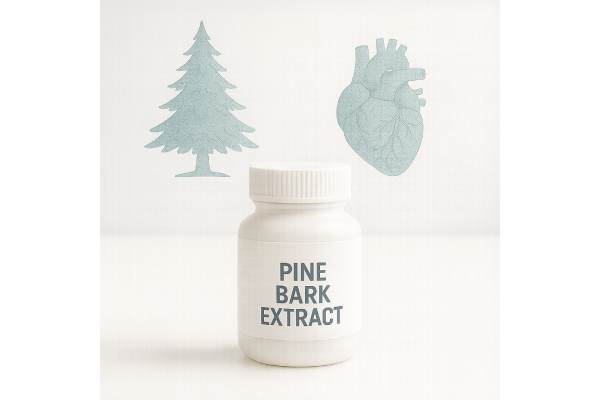
Pine bark extract has moved from niche herbal shelves into mainstream interest as people look for natural ways to support blood vessels, blood pressure, skin, and brain health. Most modern supplements use standardized extracts from French maritime pine (often sold under proprietary names like Pycnogenol), which are rich in antioxidant polyphenols known as procyanidins. These compounds seem to support circulation, reduce oxidative stress, and modulate inflammation, which may explain why pine bark extract shows promise for cardiometabolic health, chronic venous insufficiency, and aspects of cognitive performance. At the same time, not every clinical trial has been positive, and many benefits appear modest rather than dramatic. This guide walks you through what pine bark extract is, how it may work, the main evidence-based uses, practical dosage ranges, safety considerations, and who should avoid it, so you can discuss it with a healthcare professional and decide whether it fits into your overall health plan.
Essential Insights for Pine Bark Extract
- Pine bark extract provides concentrated antioxidant polyphenols that may modestly support blood pressure, circulation, and cardiometabolic health.
- Emerging evidence suggests potential benefits for chronic venous insufficiency, skin elasticity, and cognitive performance in some groups.
- Common supplemental doses range from 50 to 150 mg per day, sometimes up to around 200 mg per day under medical supervision.
- Mild digestive upset, headache, or dizziness can occur, especially on an empty stomach, and the extract is usually better tolerated with food.
- People who are pregnant (especially first trimester), breastfeeding, under 6 years old, or on multiple cardiovascular or blood-thinning medicines should only use pine bark extract under professional guidance or avoid it.
Table of Contents
- What is pine bark extract and how does it work?
- Key benefits of pine bark extract for health
- How to take pine bark extract dosage and forms
- Factors that change how pine bark extract works
- Side effects of pine bark extract and who should avoid it
- What does the research say about pine bark extract?
What is pine bark extract and how does it work?
Pine bark extract is a concentrated preparation made from the bark of certain pine species, most notably French maritime pine (Pinus pinaster). The best-known standardized product is Pycnogenol, but similar extracts may appear under other brand names. These products are typically standardized for oligomeric procyanidins (OPCs), a class of polyphenol compounds also found in foods like grapes and cocoa.
Chemically, pine bark extract is rich in:
- Procyanidins and other flavonoids such as catechin and taxifolin
- Phenolic acids and related antioxidant molecules
After ingestion, these compounds are broken down by gut microbes into smaller metabolites that are absorbed into the bloodstream. Once absorbed, they appear to act on several biological pathways:
- Antioxidant activity: Pine bark extract can directly neutralize some free radicals and upregulate endogenous antioxidant enzymes. This may help reduce oxidative stress in blood vessels, the brain, and other tissues.
- Vascular effects: The extract seems to improve endothelial function, partly by promoting nitric oxide production and reducing oxidative damage to the vessel wall. This can support better vasodilation and more flexible blood vessels.
- Anti-inflammatory modulation: Pine bark polyphenols can dampen pro-inflammatory signaling pathways and enzymes, which may translate into lower levels of inflammatory mediators in some conditions.
- Extracellular matrix support: Some studies suggest pine bark extract influences enzymes that break down collagen and elastin, potentially helping to preserve the structure of skin and blood vessel walls.
Importantly, pine bark extract is not a single-drug molecule but a complex mixture. Its effects likely come from the combined, modest actions of many components rather than one strong pharmacological hit. That is also why results can vary between people and between different preparations and doses.
Key benefits of pine bark extract for health
Research on pine bark extract spans several health domains. While not all findings are consistent, certain patterns appear across randomized clinical trials and systematic reviews.
1. Cardiometabolic support
Multiple clinical trials and pooled analyses suggest that standardized pine bark extract can modestly improve some cardiometabolic markers:
- Small average reductions in systolic and diastolic blood pressure, often in the range of a few millimetres of mercury
- Modest improvements in fasting blood glucose and hemoglobin A1c in people with metabolic syndrome or type 2 diabetes when added to standard care
- Slight reductions in low-density lipoprotein (LDL) cholesterol and body weight in some studies
These changes are generally not large enough to replace medication but may act as an adjunct for people already working on diet, exercise, and conventional therapy.
2. Chronic venous insufficiency and circulation
Pine bark extract has been studied for symptoms of chronic venous insufficiency, such as leg swelling, heaviness, and discomfort. Trials with standardized extracts report:
- Reduced leg edema and ankle circumference
- Less sensation of heaviness and cramping
- Improved microcirculatory measures and capillary leakage in some protocols
It has also been evaluated for related issues such as hemorrhoids, post-thrombotic syndrome, and varicose-vein symptoms, often with encouraging but not definitive results.
3. Cognitive performance and mental function
Several human studies in older adults, students, and people with attention-related difficulties suggest that pine bark extract may:
- Improve certain aspects of attention, working memory, or mental performance
- Reduce perceived cognitive fatigue and stress in demanding tasks
- Help with hyperactivity and inattention scores in some children with ADHD when used under specialist supervision
These effects are usually modest and condition-specific, but they align with the extract’s antioxidant and vascular actions in brain tissue.
4. Skin, joint, and other potential uses
Additional evidence points to possible benefits for:
- Skin elasticity, hydration, and UV-induced redness
- Joint comfort and walking distance in mild osteoarthritis
- Dental and gum health, and some respiratory or allergy symptoms, in small trials
For these areas, the research base is smaller and sometimes methodologically limited, so pine bark extract should be considered experimental and supportive rather than a primary treatment.
Overall, the strongest and most consistent data relate to cardiometabolic markers, chronic venous insufficiency, and selected aspects of cognition. Effects tend to be moderate, and not every study shows benefit.
How to take pine bark extract dosage and forms
Pine bark extract is most commonly sold as capsules or tablets containing a standardized amount of extract per dose. Because different brands use different strengths and standardizations, it is important to follow the product label and, ideally, advice from a healthcare professional familiar with herbal supplements.
Typical supplemental doses
Across clinical studies and manufacturer guidance for standardized French maritime pine bark extract, common daily ranges include:
- General antioxidant or vascular support: about 20 to 50 mg per day
- Cardiovascular or venous support: usually 50 to 150 mg per day
- Specific conditions (for example, hypertension, chronic venous insufficiency, or metabolic syndrome) have used 100 to 200 mg per day, sometimes higher for short periods in controlled research settings
Many protocols use an approximate weight-based guide of about 1 mg per kilogram of body weight per day. In practice, that often falls between 50 and 150 mg daily for most adults.
How and when to take it
- Pine bark extract is usually taken once or twice daily.
- Taking it with food can reduce the chance of digestive discomfort and may improve tolerance.
- For divided doses, many people take half in the morning and half with an evening meal.
Supplements may be labeled under proprietary names (such as Pycnogenol or other branded extracts) or as generic “pine bark extract.” Standardized, quality-controlled products with clear labeling tend to offer more predictable dosing and composition.
Duration of use
Clinical trials typically last from a few weeks up to about six months. Longer-term use appears to be well tolerated in available data, but regular breaks and periodic review with a practitioner are sensible, especially if you also take prescription medications.
Practical dosage starting points
- Healthy adults considering pine bark extract for general vascular or skin support might start with 50 mg per day with food.
- For cardiometabolic or venous concerns, healthcare professionals sometimes recommend 100 to 150 mg per day, tailored to overall risk profile and concurrent therapies.
- Higher doses (up to around 200 mg per day) should be supervised, particularly in people with complex medical histories.
Always treat pine bark extract as a biologically active supplement: more is not necessarily better, and individual responses can vary.
Factors that change how pine bark extract works
Not everyone responds to pine bark extract in the same way. Several factors can influence its effectiveness and safety profile.
1. Extract quality and standardization
Different products may vary widely in:
- Source species and part of the plant
- Extraction method and solvent
- Standardization level for procyanidins and related polyphenols
Clinical trials usually use standardized French maritime pine bark extracts manufactured under controlled conditions. Generic products without clear standardization may have different concentrations of active compounds, which can change both effectiveness and side-effect risks.
2. Dose and treatment duration
The magnitude of benefit often depends on dose and how long the supplement is taken:
- Some outcomes, such as venous symptoms or blood pressure, may require at least several weeks of continuous use before changes become evident.
- Subgroup analyses in blood pressure research suggest that longer interventions (for example, more than 12 weeks) may show more consistent effects than short-term use.
- Using doses below those tested in trials might still provide antioxidant support but could be too low to influence clinical endpoints.
3. Baseline health status
People with existing cardiometabolic risk factors (hypertension, impaired glucose tolerance, metabolic syndrome, or chronic venous insufficiency) often show greater changes in markers than healthy volunteers. If your baseline blood pressure, lipids, or glucose are already excellent, measurable improvements may be small or absent.
4. Gut microbiome and lifestyle
Because pine bark polyphenols are transformed by gut microbes before absorption, individual differences in microbiome composition can alter:
- How much of each metabolite is produced
- How quickly they are absorbed and cleared
Lifestyle factors that affect vascular and metabolic health—diet quality, sleep, stress, exercise, smoking—also influence outcomes. Pine bark extract is more likely to act as a supportive component of a broader lifestyle strategy than as a standalone solution.
5. Concomitant medications and supplements
Pine bark extract is frequently used alongside:
- Antihypertensive drugs
- Antidiabetic medication
- Lipid-lowering drugs
- Antiplatelet or anticoagulant therapy
Published data have not revealed major interactions in the studied settings, but theoretical additive effects on blood pressure, blood sugar, or clotting exist. This makes professional supervision important, especially if you are on complex regimens.
Understanding these variables can help set realistic expectations. Pine bark extract is best viewed as one possible component of a long-term plan, not a quick fix.
Side effects of pine bark extract and who should avoid it
Standardized pine bark extract has an extensive clinical safety record, with tens of human trials and many thousands of participants. Overall, it is generally well tolerated, but mild side effects do occur and some people should avoid it or use it only with specialist oversight.
Commonly reported side effects
These are usually mild, self-limited, and often improve when the supplement is taken with food:
- Gastrointestinal discomfort (nausea, stomach upset, loose stools, or constipation)
- Headache or dizziness
- Mild skin reactions such as rash or itching in susceptible individuals
In large safety summaries, the overall rate of adverse events has been low, and serious complications have been very rare. However, low risk does not mean no risk for any individual.
Who should use extra caution or avoid it
- Pregnancy and breastfeeding: In the absence of robust safety data, especially for the first trimester, most monographs recommend avoiding pine bark extract during early pregnancy and using it later in pregnancy or during lactation only under medical supervision.
- Children under 6 years: Safety and dosing are not well established; specialist supervision is advisable even in older children.
- People with bleeding disorders or on anticoagulant or antiplatelet drugs: Clinical data are somewhat reassuring, but theoretical concerns about effects on platelets and blood vessels remain. Always discuss with the prescribing clinician.
- Those on multiple cardiometabolic medications: Because the extract may modestly lower blood pressure and improve glucose control, it can add to the effect of drugs for hypertension or diabetes. Monitoring and possible dosage adjustments may be needed.
- People with known allergy to pine, tree pollens, or excipients in the capsule: Allergic reactions, while uncommon, are possible.
General safe-use tips
- Start at the lower end of the dosage range (for example, 50 mg per day) and increase gradually if needed and tolerated.
- Take with meals to reduce gastrointestinal irritation.
- Stop the supplement and seek medical advice if you experience persistent digestive problems, unexplained bruising, bleeding, severe headache, or rash.
- Keep your healthcare team informed about all supplements you use, especially ahead of surgery or if new medications are prescribed.
Used appropriately and with professional guidance, pine bark extract is considered low risk for most adults, but it is still a pharmacologically active preparation that deserves respect.
What does the research say about pine bark extract?
The evidence base for pine bark extract is relatively large for a plant-derived supplement, but it remains heterogeneous. Trials differ in extract type, dose, combination with other nutrients, and study population, which partly explains why results sometimes conflict.
Cardiometabolic outcomes
Modern systematic reviews and meta-analyses pooling randomized controlled trials report that pine bark extract supplementation can:
- Modestly reduce systolic and diastolic blood pressure
- Lower fasting blood glucose and hemoglobin A1c in people with metabolic syndrome or type 2 diabetes when used alongside standard care
- Reduce low-density lipoprotein cholesterol and body weight to a small but statistically significant degree
At the same time, not every individual study shows benefit, and some earlier analyses found little or no effect in certain subgroups or in better-designed trials. The most balanced interpretation is that pine bark extract can provide small additional improvements when layered onto good medical and lifestyle management, not that it is a substitute for these foundations.
Vascular and venous health
A large narrative review of randomized, double-blind, placebo-controlled trials highlights benefits across several vascular conditions:
- Improved endothelial function and markers of arterial health
- Reduced leg swelling and improved symptoms in chronic venous insufficiency
- Better symptom control in hemorrhoids and post-thrombotic syndrome in some studies
Mechanistic work supports these findings by showing antioxidant, anti-inflammatory, and nitric oxide–mediated vascular effects at the cellular level.
Cognition and neurological outcomes
Preclinical and clinical research indicates that pine bark extract:
- Reduces oxidative stress and inflammation in brain tissue in animal and cellular models
- Improves selected cognitive domains in older adults, such as attention and working memory, in some controlled trials
- May support attention and reduce hyperactivity in children with ADHD when used as part of a comprehensive treatment plan
These findings are promising but not definitive, and studies are relatively small. More robust, independent replication is still needed.
Other emerging areas
Data also suggest potential benefits for:
- Skin aging, elasticity, and UV-induced damage
- Joint comfort in osteoarthritis
- Dental and gingival health
- Asthma, allergies, and some aspects of women’s health
For these indications, the total number of trials is limited and sometimes methodologically weak. Pine bark extract should be approached as an adjunct or experimental option in these areas, rather than as a stand-alone therapy.
In summary, pine bark extract is one of the better-studied botanical supplements. The most consistent benefits relate to cardiometabolic markers, venous health, and selected cognitive outcomes, with generally good safety. However, effect sizes are modest, and high-quality, independent trials are still needed to refine who benefits most, at what dose, and for how long.
References
- Assessing the Efficacy and Mechanisms of Pycnogenol® on Cognitive Aging From In Vitro Animal and Human Studies 2019 (Systematic Review)
- Pycnogenol® French maritime pine bark extract in randomized, double-blind, placebo-controlled human clinical studies 2024 (Systematic Review)
- Effect of pycnogenol supplementation on blood pressure: A systematic review and meta-analysis of clinical trials 2020 (Systematic Review)
- Does supplementation with pine bark extract improve cardiometabolic risk factors? A systematic review and meta-analysis 2025 (Systematic Review)
- Scientific and Clinical Monograph for PYCNOGENOL® – JANUARY 2019 2019 UPDATE 2019 (Monograph and Clinical Overview)
Disclaimer
The information in this article is intended for general educational purposes only and is not a substitute for personalized medical advice, diagnosis, or treatment. Pine bark extract is a biologically active supplement that may interact with health conditions and medications. Always consult a qualified healthcare professional before starting, stopping, or changing any supplement or medication, especially if you are pregnant, planning a pregnancy, breastfeeding, under 18 years of age, or living with chronic illness. Never disregard professional medical advice or delay seeking it because of something you have read here.
If you found this guide useful, you are warmly invited to share it with others on Facebook, X (formerly Twitter), or any social platform you prefer, and to follow our work on social media. Your thoughtful support by sharing our articles helps our team continue to research, write, and update reliable health content for the community.