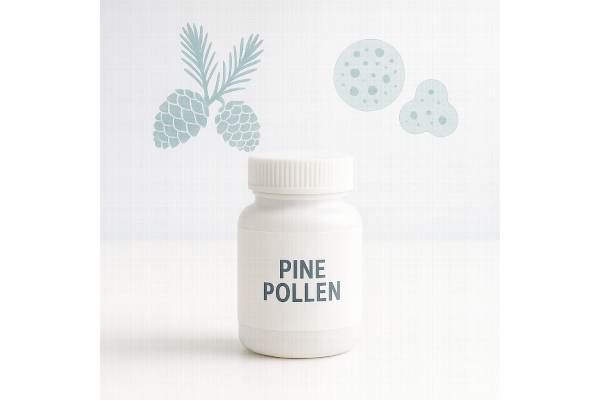
Pine pollen has moved from traditional herbal medicine into modern wellness circles, often promoted for energy, hormone balance, skin health, and healthy aging. Collected from the male cones of various pine species, this fine yellow powder is unusually dense in amino acids, minerals, vitamins, and plant compounds such as flavonoids and polysaccharides.
In herbal traditions, pine pollen has been used both internally and externally, from supporting vitality in older adults to soothing irritated skin. Modern laboratory and animal research suggests antioxidant, anti-inflammatory, and immune-modulating actions, but human trials are still limited and usually small. That means pine pollen is best viewed as a promising but not yet fully proven supplement.
This guide walks you through what pine pollen is, how it might work, the most discussed benefits, typical supplemental dosages, and potential side effects. You will also find practical tips on how to use it thoughtfully and when it may be better to avoid it altogether.
Pine pollen key insights
- Pine pollen provides amino acids, minerals, vitamins, flavonoids, and polysaccharides that may support antioxidant and immune defenses.
- Experimental research suggests potential benefits for skin health, metabolic balance, and healthy aging, but high-quality human evidence is still limited.
- Common supplemental doses range roughly from 200–1,000 mg per day of powder or capsules, adjusted to the product and individual.
- People with pine or pollen allergies, hormone-sensitive conditions, pregnancy, or serious chronic disease should avoid pine pollen unless a clinician advises otherwise.
Table of Contents
- What is pine pollen?
- Pine pollen benefits and how it works
- How to use pine pollen day to day
- How much pine pollen per day?
- Pine pollen side effects and who should avoid it
- What does the research say about pine pollen?
What is pine pollen?
Pine pollen is the microscopic yellow powder released from male pine cones each spring. In nature, its role is simple: carry genetic material to fertilize female cones. From a nutritional point of view, though, that same reproductive purpose means the pollen grain has to be densely packed with building blocks for growth.
Pine pollen is usually harvested from species such as Masson pine (Pinus massoniana), Scots pine (Pinus sylvestris), or Chinese red pine (Pinus tabuliformis). After collection, the raw pollen is dried and cleaned. Many products also go through “cell-wall cracking,” a mechanical process that breaks the tough outer shell so the contents are more accessible during digestion.
Analyses of pine pollen show a broad mixture of:
- Proteins and free amino acids
- Carbohydrates, including various polysaccharides
- Fatty acids and plant sterols
- Vitamins (including B group vitamins and vitamin E)
- Minerals such as magnesium, zinc, selenium, and manganese
- Flavonoids and other polyphenols with antioxidant activity
Because of this composition, pine pollen is often marketed as a natural “multinutrient” with added phytonutrients. In addition, it contains small amounts of plant hormones and steroid-like molecules. These have led to claims around testosterone and libido, although their actual impact in humans is still debated.
Pine pollen is sold in several forms: bulk powder, capsules, tablets, tinctures, and topical creams or ointments. Products may contain pure pollen or standardized extracts enriched for specific polysaccharides or flavonoids. Quality varies, so understanding the label and sourcing is important before use.
Pine pollen benefits and how it works
Most of what we know about pine pollen’s potential benefits comes from laboratory and animal experiments, supported by a growing but still modest set of human reports. Overall, pine pollen appears to influence three broad areas: oxidative stress and inflammation, immune regulation, and metabolic and tissue health.
Antioxidant and anti-inflammatory actions
Pine pollen is rich in flavonoids and other polyphenols that can neutralize reactive oxygen species in experimental systems. In cell and animal models, pollen extracts have been shown to:
- Reduce markers of lipid peroxidation
- Support activity of antioxidant enzymes such as superoxide dismutase and catalase
- Lower levels of inflammatory cytokines like interleukin-6 and tumor necrosis factor alpha
These effects suggest a general capacity to protect cells from oxidative and inflammatory injury, which may translate into support for tissues under stress, such as skin, liver, or intestinal lining.
Immune modulation and gut support
Polysaccharide fractions from pine pollen seem to interact with immune cells. Experimental work shows changes in macrophage activity and modulation of inflammatory signaling. In some animal models of gut inflammation, pollen polysaccharides have been associated with improved intestinal barrier function and more favorable gut flora patterns.
If similar effects occur in humans, they might contribute to better resilience of the digestive tract and a more balanced immune response, especially in chronic low-grade inflammation. At present, however, the evidence is preclinical.
Healthy aging, energy, and skin
Traditional use often frames pine pollen as a tonic for vitality and healthy aging. Laboratory studies have reported protection of cells against replicative aging, along with better mitochondrial function and reduced accumulation of advanced glycation end products in animal models.
Clinically, pine pollen shows up most often in topical preparations for skin conditions like diaper dermatitis, bedsores, eczema, and radiation-related skin irritation. Reports generally describe improved healing and less irritation when pine pollen is applied as a powder or component of an ointment, usually alongside standard care.
Hormone and testosterone claims
Pine pollen contains low levels of steroid-like molecules, including compounds structurally related to testosterone. This has led to supplements advertised for male hormone support. However, these molecules must first survive digestion and first-pass metabolism, and there are currently no robust controlled studies showing meaningful boosts in human testosterone from standard oral doses. Any perceived hormonal effects are speculative and should be treated cautiously.
How to use pine pollen day to day
If you and your healthcare professional decide that pine pollen fits your goals, it helps to think through the practical details of how to use it. The main decisions involve the product form, how you take it, and how you integrate it with your lifestyle and other supplements.
Choose the right form
Common options include:
- Powder – versatile; can be mixed into smoothies, yogurt, or water. Often more economical.
- Capsules or tablets – convenient for precise dosing and for those who dislike the powder’s taste.
- Tinctures – liquid extracts, sometimes combined with other herbs and marketed more strongly for hormone support.
- Topical products – creams, ointments, or plain powder used for skin irritation, especially in traditional and integrative settings.
When comparing products, look for:
- Clear labeling of pine species and pollen content
- Indication of “cracked cell wall” or similar processing
- Third-party testing for heavy metals, microbial contamination, and adulterants when possible
- Minimal unnecessary additives
Timing and combinations
Many people prefer taking pine pollen earlier in the day, as some report a mild energizing effect. It can be taken with or without food, but using it with a meal may reduce the chance of digestive upset.
Pine pollen is often combined with:
- General multinutrient or antioxidant formulas
- Herbal tonics aimed at stress management and vitality
- Topical skin care in cases of irritation or slow healing (under professional guidance)
Try to avoid stacking it with multiple experimental hormone-related supplements at once, both to reduce interaction risks and to make it easier to see how pine pollen alone affects you.
Start low and observe
A sensible pattern is to:
- Begin at the lower end of the dosage range recommended on the product label.
- Use the same dose consistently for at least one to two weeks while monitoring how you feel.
- Keep a brief log of energy, digestion, sleep, mood, skin changes, and any unwanted symptoms.
- Only consider small, stepwise increases if you tolerate the initial dose well and your clinician agrees.
Some people also experiment with “cycling,” such as using pine pollen for several weeks followed by a break. This approach is borrowed from other botanical tonics, but specific protocols have not been formally tested.
Throughout, stay alert for signs of intolerance such as itching, rash, congestion, or digestive discomfort, and seek medical advice if any worrying symptoms appear.
How much pine pollen per day?
There is no official recommended daily intake for pine pollen. Dosage guidelines come mainly from traditional use, supplement manufacturers, and limited experimental data. Because preparations differ widely, the first rule is always to follow product-specific instructions and your clinician’s advice.
Typical oral dosage ranges
For adults using commercial supplements, common daily ranges are:
- Pine pollen powder: about 0.2–1 g per day, often divided into one or two servings
- Capsules or tablets: often provide 250–500 mg per capsule; many labels suggest 1–2 capsules once or twice daily
- Tinctures: may be dosed as 20–40 drops in water, one to three times daily, depending on concentration
These figures are approximate and intended to give you a sense of scale, not to replace individualized medical guidance. People with lower body weight or heightened sensitivity usually do better with the lower end of the range, at least initially.
Adjusting dose based on goals and response
- For general nutritional support or mild vitality, staying in the low to moderate range is typically sufficient.
- For shorter-term experiments, such as during periods of increased physical or mental workload, some individuals temporarily use moderate doses within label recommendations, then return to a lower maintenance amount.
- For topical use on skin, products are usually applied in thin layers once or several times per day, depending on the formulation and professional guidance.
Higher doses have been explored in animal research, but those amounts cannot be directly translated to safe human intakes. Until more structured human data are available, it is prudent to avoid “megadosing.”
Special considerations
- Older adults, people with multiple medications, or those with chronic conditions should be especially cautious and may need lower starting doses or additional monitoring.
- Because pine pollen may contain small quantities of hormone-like compounds, people with hormone-sensitive conditions require medical supervision if considering any amount.
- If you develop new symptoms after increasing your dose, reduce or discontinue the supplement and discuss the reaction with a health professional.
Ultimately, the “right” dose is the lowest amount that is well tolerated and aligns with your goals, within the bounds of available safety information.
Pine pollen side effects and who should avoid it
Pine pollen is often perceived as gentle because it is a natural plant product, but that does not mean it is risk-free. Like any bioactive substance, it can cause side effects and may be unsuitable for certain groups.
Commonly reported side effects
Most documented adverse events are mild and reversible. They may include:
- Digestive discomfort such as nausea, bloating, or loose stools
- Headache or a sense of restlessness when higher doses are taken
- Skin redness or itching when used topically on sensitive areas
These effects often improve when the dose is reduced or the product is discontinued. However, persistent or severe symptoms always warrant medical attention.
Allergic reactions
Pollen is a well-known allergen. Although the risk profile of ingested pine pollen is not identical to inhaled seasonal pollen, reactions are possible. Warning signs include:
- Itching or swelling of the lips, mouth, or throat
- Hives or generalized rash
- Sudden nasal congestion, sneezing, or wheezing
- Difficulty breathing or dizziness
Anyone with a history of strong pollen allergies, especially to pine or related trees, should be very cautious. In such cases, avoiding pine pollen is usually safer unless an allergy specialist and physician agree otherwise.
Who should generally avoid pine pollen
It is wise to avoid pine pollen or use it only with close medical supervision if you:
- Are pregnant, trying to conceive, or breastfeeding
- Have a known hormone-sensitive condition, such as certain breast, uterine, ovarian, or prostate disorders
- Live with autoimmune disease or are taking immunosuppressive medication, because of potential immune modulation
- Take multiple prescription drugs, especially those affecting the liver, hormones, blood thinning, or immune system
- Have a history of severe food or pollen allergies or past anaphylaxis
Children should not use pine pollen supplements unless specifically advised by a pediatric specialist for a defined reason.
Quality and contamination issues
Another safety concern is product quality. Poorly controlled harvesting and processing can lead to contamination with heavy metals, microbes, or adulterants. Choosing reputable brands that provide batch testing and clear sourcing information helps reduce these risks.
In summary, many people tolerate pine pollen well at modest doses, but it is not appropriate for everyone. When in doubt, discuss your individual situation with a qualified healthcare professional before starting.
What does the research say about pine pollen?
Research on pine pollen has expanded in recent years, but most of the work still falls into laboratory, animal, and small clinical categories. Understanding this landscape helps set realistic expectations.
Overview of the evidence base
Surveys of the scientific literature have identified several hundred publications related to pine pollen. The majority investigate pharmacological effects in cells or animals. A smaller portion consists of clinical reports and trials, many of which come from traditional medicine settings and may vary in methodological quality.
Common research themes include:
- Immune regulation and inflammation
- Antioxidant and antiaging effects
- Liver protection and metabolic health
- Prostate health and urinary symptoms
- Skin healing and protective effects on irritated or damaged skin
- Blood lipids, blood glucose, and fatigue
Overall, results are encouraging but not definitive. Many studies report beneficial outcomes, yet they often use different preparations, doses, and combinations with other herbs, which makes it hard to compare or generalize.
Topical versus internal use
Evidence is relatively stronger for topical applications. Multiple clinical reports describe pine pollen powders or ointments helping conditions such as diaper dermatitis, bedsores, eczema, and radiation-related skin irritation, often with good tolerability. Even here, more standardized trials would be useful, but the consistent pattern is notable.
For internal use, data on outcomes such as cholesterol, blood sugar, prostate symptoms, or general vitality are more limited and sometimes confounded by multi-herb formulas. Until higher-quality randomized trials are available, claims in these areas should be considered preliminary.
Mechanistic depth but clinical gaps
On the mechanistic side, pine pollen has been studied extensively:
- Polysaccharides have been examined for their effects on gut inflammation and microbial balance in animal models.
- Extracts have shown antioxidant, antiaging, and tissue-protective activities in cell and mouse experiments.
- Researchers have characterized structure–activity relationships for specific compounds, trying to link molecular features with biological effects.
This mechanistic depth is useful and supports further exploration, but it does not automatically prove that similar benefits occur in humans at typical supplement doses.
Practical takeaway from the science
From a practical standpoint, the current research supports viewing pine pollen as:
- A nutritionally rich natural product with promising antioxidant and immune-modulating properties
- Potentially helpful as a topical adjunct for certain skin problems
- An interesting, but still experimental, internal supplement for metabolic and vitality-related goals
It does not yet justify seeing pine pollen as a primary treatment for serious disease, a guaranteed testosterone booster, or a substitute for evidence-based medical care. Used thoughtfully, it may be a useful part of a broader lifestyle and health strategy, provided safety considerations are respected.
References
- Extraction, structure-activity relationships, bioactivities and future perspectives of pine pollen 2024 (Review)
- Pine pollen: A review of its chemical composition, health effects, processing and food applications 2023 (Systematic Review)
- Effects of pine pollen polysaccharides and sulfated polysaccharides on ulcerative colitis and gut flora in mice 2023 (RCT-like Animal Study)
- Antioxidant and antiinflammatory activity of pine pollen extract in vitro 2009 (Experimental Study)
- Antiaging effect of pine pollen in human diploid fibroblasts and in a mouse model induced by D-galactose 2012 (Experimental Study)
Disclaimer
The information in this article is for educational purposes only and is not intended to replace professional medical advice, diagnosis, or treatment. Pine pollen is a biologically active substance and may not be appropriate for everyone. Always speak with a qualified healthcare professional before starting, stopping, or changing any supplement, especially if you are pregnant or breastfeeding, have existing health conditions, take prescription or over-the-counter medications, or have a history of allergies. Never ignore or delay seeking professional medical advice because of something you have read here.
If you found this guide helpful, you are warmly invited to share it with others on Facebook, X (formerly Twitter), or any platform you prefer, and to follow our work on social media. Your support through thoughtful sharing helps our team continue creating clear, balanced resources on nutrition and integrative health.