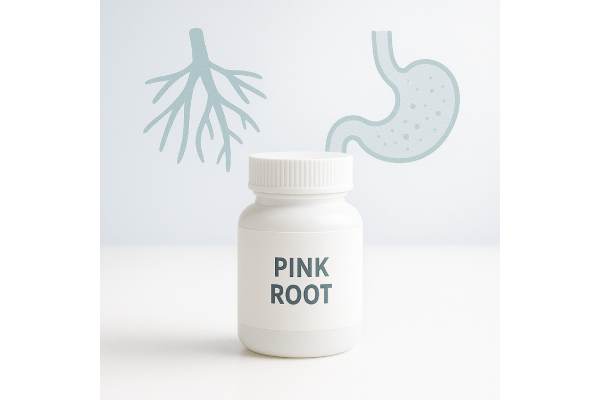
Pink root is an old yet fascinating herbal remedy that sits at the crossroads between traditional medicine and modern safety concerns. The name usually refers to Spigelia marilandica, a striking woodland plant also known as Indian pink or Carolina pink. Historically, healers prized its root as a powerful anthelmintic—an herb used to expel intestinal worms—especially in children and in rural communities with limited access to conventional care.
Today, pink root appears in some niche herbal products and historical formulas, but it is far from a mainstream supplement. The root contains potent alkaloids that can affect the nervous system and the heart, which means the margin between a “helpful” and a harmful dose is narrow. In this guide, you will learn what pink root is, how it was used, what we currently know from research, why dosing is so delicate, and—most importantly—when it is safer to choose other options or skip this herb altogether.
Key Insights about Pink root
- Pink root (Spigelia marilandica) is a traditional North American herb historically used to expel intestinal worms, especially roundworms.
- The plant’s root contains strong alkaloids that can affect the heart and nervous system, so its safety margin is narrow and overdose is a real risk.
- Historical adult doses of powdered root ranged from about 4–8 g per day, usually followed by a strong laxative, but such regimens are no longer recommended for self-treatment.
- People who are pregnant, breastfeeding, children, older adults, and anyone with heart, liver, kidney, or neurological disease should avoid pink root.
- In most cases of suspected worm infection, modern prescription anthelmintic medicines are safer and more predictable than pink root–based remedies.
Table of Contents
- What is pink root and where does it come from?
- Pink root benefits and traditional uses
- How to take pink root safely
- Pink root dosage guidelines and preparations
- Pink root side effects and who should avoid it
- What science says about pink root today
What is pink root and where does it come from?
When herbal texts refer to “pink root,” they are usually describing the root and rhizome of Spigelia marilandica, a perennial wildflower native to the southeastern United States. The plant forms clumps of opposite leaves and produces tall stems topped with showy red tubular flowers that open to reveal bright yellow centers. In gardens, it is grown mainly as an ornamental, especially in woodland and shade plantings.
Traditional medicine focuses on the underground portion—the knotted rhizome and slender roots. These tissues are rich in several bioactive constituents, most notably the alkaloid spigeline (also spelled spigelin or spigiline), which has effects similar to nicotine and related compounds. The root also contains volatile oils, resin, and bitter compounds that together create a distinctive medicinal profile.
It is important not to confuse this herb with “pink root disease” of onions, a fungal disease that discolors roots. In the context of supplements, pink root almost always refers to the Spigelia plant, not an infection or general “pink-colored” root.
Historically, several Spigelia species were used as vermifuges in the Americas, with S. marilandica favored in temperate North America and S. anthelmia used more in tropical regions. Both species share similar alkaloids and a reputation for potency and potential toxicity.
Because of this dual nature—valuable medicinal action alongside serious safety concerns—modern herbalists tend to treat pink root as a plant that demands specialist knowledge and careful dosing rather than a casual self-care supplement.
Pink root benefits and traditional uses
Pink root’s main historical claim to fame is as an anthelmintic: a herb used to expel intestinal worms. Early Indigenous use and later European-American herbalism describe the root as particularly effective against roundworms in the digestive tract. Decoctions, teas, and tinctures were given in short courses, often followed by a strong laxative such as senna to help expel the paralyzed worms.
Old materia medica texts also credit pink root with a broader range of actions. It was sometimes described as a narcotic in higher doses, capable of producing drowsiness and dream-like states, while in smaller amounts it was considered a mild stimulant to circulation. Some eclectic physicians in the 19th and early 20th centuries experimented with pink root for certain heart complaints, headaches, and neuralgic pains, though these uses never became mainstream and were overshadowed by concerns about toxicity.
In rural communities, pink root was attractive partly because it could be harvested locally, dried, and stored. Vermifuge “worm teas” and syrups combining pink root with senna, licorice, or aromatic seeds were common in historical formula books and household remedies. Parents sometimes used these mixtures for children with abdominal pain, distension, or suspected worm infestations.
From a modern perspective, these benefits must be weighed against the risks. Many of the claimed effects—relief of abdominal discomfort, expulsion of worms, and sedation at higher doses—are likely real, but they are closely tied to the same alkaloids that can cause serious poisoning if the dose is even modestly exceeded. Safer, better-studied anthelmintic medications now exist, so pink root’s role has largely shifted from a front-line treatment to a subject of historical and botanical interest, or to experimental research rather than routine clinical use.
How to take pink root safely
Because pink root has a narrow safety margin, the single most important rule is that it should not be self-prescribed for serious conditions such as suspected worm infections or heart problems. If you are considering any product containing pink root, it is essential to involve a qualified healthcare professional who understands both herbal pharmacology and your medical history.
Historically, pink root was prepared in several ways:
- Dried root powder, taken in capsules or mixed with honey or syrup
- Decoctions (strong teas) made by boiling the root
- Tinctures and fluidextracts prepared in alcohol
- Combination formulas, particularly with senna, to encourage bowel movements
Modern consumers are more likely to encounter pink root in traditional herbal formulae, colon cleanses, or homeopathic preparations. Homeopathic products labeled with Spigelia use extreme dilutions that contain minimal to no measurable amount of the original plant material; their risk profile is therefore very different from that of crude pink root extracts.
If a practitioner decides that a pink-root–containing product is appropriate, they will look at factors such as age, weight, liver and kidney function, current medications, and cardiovascular health. They may also recommend baseline and follow-up monitoring for symptoms such as dizziness, irregular heartbeat, or visual disturbances.
For most people, especially in regions where safe prescription anthelmintics are available, the safest route is to avoid crude pink root entirely. If you suspect you have intestinal worms, the best step is to see a healthcare professional for proper diagnosis and treatment with medications that have known dosing and safety profiles. Pink root may be discussed as a historical example or as part of ongoing research, but not as a do-it-yourself remedy.
Pink root dosage guidelines and preparations
Unlike many modern supplements, pink root does not have a standardized, evidence-based dosage for today’s clinical practice. What we know about dosing comes almost entirely from older materia medica and dispensatory texts, which were written in an era with different safety expectations and limited toxicity monitoring.
Those sources commonly list the adult anthelmintic dose of powdered pink root as one to two drachms (about 3.9–7.7 g) per day, usually divided into one or two doses and followed within hours by a strong laxative. Fluidextracts of pink root, or of pink root combined with senna, were generally given in amounts of 30–60 drops. These regimens were short—typically a few days—because practitioners were well aware that continuing beyond that increased the risk of toxic side effects.
From a modern safety standpoint, these historical doses are considered high-risk. We now recognize that individual susceptibility varies widely, and that spigeline and related alkaloids can produce neurological and cardiac symptoms even at doses not far above those once considered “standard.” For this reason, most contemporary herbalists either avoid crude pink root or work only with low-dose formulas under close supervision.
If you encounter pink root in a commercially prepared herbal product:
- Do not exceed the manufacturer’s recommended dose.
- Do not combine it with other stimulant, sedative, or cardiotoxic herbs or drugs.
- Do not use it for more than a very short period unless under professional supervision.
- Do not give it to children, even if older texts mention pediatric use.
Homeopathic preparations labeled with Spigelia follow entirely different dosing rules, based on potency (such as 6X or 30C) rather than milligrams. These products generally contain negligible amounts of the original herb and pose different questions about effectiveness, but they do not provide a model for dosing crude pink root.
Given the availability of safer and more predictable anthelmintic drugs, pink root’s historical dose ranges are best viewed as archival information rather than practical guidance for self-treatment today.
Pink root side effects and who should avoid it
Pink root is not a gentle tonic herb. Even in older texts, physicians repeatedly warned that the difference between a dose that expelled worms and a dose that caused poisoning could be small. Reported side effects range from mild digestive upset to severe neurological and cardiovascular reactions.
Common early side effects may include nausea, vomiting, abdominal cramping, and diarrhea. As the dose increases—or in sensitive individuals—symptoms can progress to dizziness, ringing in the ears, headache, visual disturbances (such as seeing sparks or flashes), confusion, and marked drowsiness. In serious cases, pink root has been associated with convulsions, irregular heartbeat, and collapse.
Certain groups are at especially high risk and should avoid pink root completely:
- Children and adolescents
- Pregnant or breastfeeding individuals
- Older adults
- People with known heart disease, arrhythmias, or a history of syncope
- Those with liver or kidney impairment
- Anyone with seizure disorders or other significant neurological conditions
Drug interactions are another concern. Because pink root can affect the nervous system and the heart, combining it with sedatives, antiarrhythmic drugs, antidepressants, or other cardiotoxic medicines may increase the risk of dangerous side effects. Alcohol and recreational drugs can further cloud the picture and make early toxicity harder to recognize.
Allergic reactions to the plant are less well documented but are possible, especially in individuals who already react strongly to pollens or other herbs. Signs such as rash, itching, facial swelling, or difficulty breathing require immediate medical attention.
In practice, these risks strongly limit pink root’s role in modern self-care. If you notice any unusual symptoms after taking a product that contains pink root—particularly visual changes, palpitations, or confusion—stop the product and seek urgent medical advice. Bring the product label with you so clinicians can see exactly what you took and in what amount.
What science says about pink root today
Scientific research on pink root is relatively sparse compared with many other medicinal plants. Most of the available data involve laboratory or animal studies, often using related species such as Spigelia anthelmia, rather than large, controlled human trials.
In experimental models, extracts from Spigelia species have shown clear anthelmintic activity. For example, rat studies have reported reductions in worm burden after treatment with Spigelia extracts, supporting the idea that the plant’s traditional use against intestinal parasites has a pharmacological basis. These studies explore different solvents, doses, and parasite species to map out how the plant might work and which constituents are most active.
At the same time, modern reviews on medicinal plants as potential anthelmintic agents emphasize both promise and caution. With increasing resistance to common antiparasitic drugs in some regions, researchers are looking again at herbal candidates, including many species used in folk medicine. Reviews of plant-based therapies for strongyloidiasis and other helminth infections highlight a wide range of botanicals with in-vitro or animal evidence, but they also note that human clinical trials are scarce and standards for safety, quality, and dosing are not yet established.
For pink root specifically, modern work tends to frame it as one of several historically important vermifuge plants, rather than as a leading candidate for new therapies. Concerns about cardiotoxic and neurotoxic effects make it less attractive than herbs with broader safety margins. Where it is still mentioned in research, it is often as part of ethnobotanical surveys, historical analyses of colonial medicine, or as a reference point when discussing the evolution of worm treatments from herbal to synthetic drugs.
Taken together, the evidence suggests that pink root does possess genuine anthelmintic properties, but also that its toxicity and the lack of modern human studies make it a poor choice for routine clinical or self-directed use. For most people, it is best regarded as an interesting historical herb and a cautionary example of why “natural” does not automatically mean “safe.”
References
- Anthelmintic efficacy of extracts of Spigelia anthelmia Linn on experimental Nippostrongylus braziliensis in rats 2006 (RCT, Animal Study)
- Spigelia marilandica 2021 (Toxicity and Botanical Profile)
- Indian pink (Spigelia marilandica) 2020 (Ethnobotanical Summary)
- Emerging Approaches to Anthelmintic Therapy Using Medicinal Plants and Phytochemicals: A Review of Natural Products Against Strongyloidiasis 2025 (Systematic Review)
- Herbal anthelmintic plants: A Comprehensive review of Traditional knowledge and Scientific evidence 2024 (Systematic Review)
Disclaimer
The information in this article is for general educational purposes only and is not intended to provide medical advice, diagnose health conditions, or replace consultation with a qualified healthcare professional. Pink root is a potent and potentially toxic herb, and any consideration of its use should occur only under the guidance of a licensed clinician familiar with your individual medical history, medications, and laboratory findings. Never delay, avoid, or change medical treatment based on information you have read online. If you suspect a worm infection, experience concerning symptoms, or have questions about the safety of any supplement, seek prompt advice from your healthcare provider or local medical services.
If you found this guide helpful, you are welcome to share it with others on Facebook, X (formerly Twitter), or any platform you prefer, and to follow our work on social media. Your considerate support by sharing our content helps our team continue creating careful, evidence-informed health articles for readers like you.