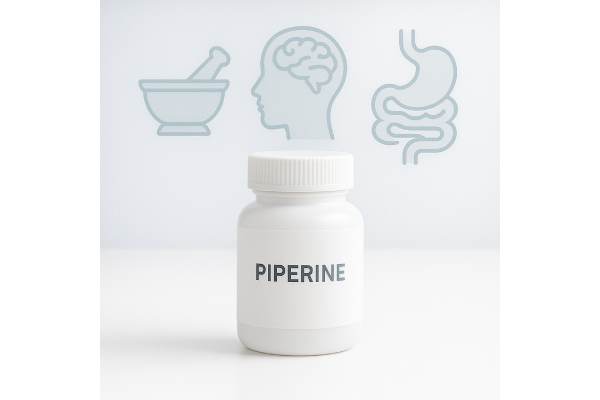
Piperine is the sharp-tasting alkaloid that gives black pepper its heat—and it has quietly become one of the most widely used “bioavailability enhancers” in modern supplements. By influencing how your gut and liver handle substances, piperine can increase the absorption of certain nutrients and herbs, especially fat-soluble or poorly absorbed compounds such as curcumin and resveratrol. At the same time, this same mechanism can meaningfully change how your body processes medications, which is why dosage and safety matter.
In this guide, you will learn what piperine is, how it works, which benefits are supported by human and preclinical research, and where the evidence is still emerging. You will also see how to use piperine-containing supplements more safely, how much is typically used in studies and products, which side effects and interactions to watch for, and who should avoid concentrated piperine altogether.
Piperine Key Insights
- Piperine is a black pepper alkaloid that can enhance absorption of some nutrients and drugs by affecting intestinal transporters and liver enzymes.
- Human and preclinical studies suggest potential antioxidant, anti-inflammatory, and metabolic benefits, often when piperine is combined with other active compounds.
- Typical supplemental piperine doses range from about 5–20 mg per day, usually taken with food and combined with ingredients such as curcumin.
- Because piperine can alter drug metabolism, people taking prescription medications should consult a clinician before using concentrated piperine supplements.
- Pregnant or breastfeeding individuals, children, and people with liver disease or complex medication regimens should avoid high-dose or isolated piperine unless medically supervised.
Table of Contents
- What is piperine and how does it work?
- Piperine benefits backed by research
- How to take piperine safely
- Piperine dosage guidelines for adults
- Piperine side effects and interactions
- Who should avoid or limit piperine?
- How to choose a quality piperine supplement
What is piperine and how does it work?
Piperine is the main pungent alkaloid found in black pepper (Piper nigrum) and long pepper (Piper longum). Chemically, it is an amide alkaloid that makes up a few percent of dried pepper by weight. In food, piperine appears at relatively low doses spread throughout the day. In supplements, by contrast, piperine is isolated and concentrated, then delivered in a single capsule or tablet as a bolus.
What makes piperine unusual is not only its taste but its broad pharmacological activity. Laboratory and clinical work suggests that piperine can modulate:
- Intestinal membrane fluidity and permeability, affecting how easily substances cross the gut wall.
- Efflux transporters such as P-glycoprotein, which normally pump drugs and xenobiotics back into the gut lumen.
- Key drug-metabolizing enzymes, particularly CYP3A4 and some other cytochrome P450 isoenzymes, as well as UDP-glucuronyltransferases involved in conjugation reactions.
Because of these actions, co-administering piperine with another compound can increase that compound’s area under the curve (AUC) in blood, sometimes by several fold. Classic examples include curcumin, where bioavailability increases have been reported in the range of tens of times higher in some studies, and certain pharmaceuticals with extensive first-pass metabolism.
Beyond absorption effects, piperine appears to interact with multiple signaling pathways related to inflammation, oxidative stress, and cell survival. Reviews of clinical and preclinical data describe antioxidant, anti-inflammatory, analgesic, and potential metabolic and neuroprotective properties, though many findings are still preliminary. These pleiotropic actions are likely mediated through modulation of transcription factors such as NF-κB and enzymes such as COX-2, and through effects on reactive oxygen species handling.
In practice, most people encounter piperine in two ways: as ordinary dietary black pepper, and as standardized piperine (often listed as “black pepper extract” or a branded form) in combination supplements, especially turmeric/curcumin capsules aimed at joint, inflammatory, or general wellness support.
Piperine benefits backed by research
When discussing piperine’s benefits, it is important to distinguish between two roles: piperine as a bioavailability enhancer for other compounds, and piperine as an active compound with its own potential health effects.
As a bioavailability enhancer, piperine is well supported by mechanistic and clinical data. Human studies have shown that adding piperine to certain drugs and phytochemicals can:
- Increase peak blood levels and total exposure of co-administered substances by reducing their intestinal efflux and slowing their metabolic breakdown.
- Allow a given effect to be achieved at a lower dose of the main active ingredient in some formulations.
Curcumin is the most widely cited example: co-administration with piperine dramatically raises curcumin blood levels compared with curcumin alone. Similar enhancement has been reported for several other compounds with poor oral bioavailability, including some antibiotics, anticonvulsants, and plant polyphenols.
As its own active molecule, piperine has been studied for a range of effects:
- Inflammation and oxidative stress – Preclinical models and human data suggest piperine can influence inflammatory markers and antioxidant defenses. Combinations such as curcumin plus piperine have shown improvements in certain oxidative stress markers and clinical parameters in conditions driven by chronic inflammation.
- Metabolic health – Experimental work indicates possible benefits for lipid profiles, insulin sensitivity, and body weight regulation, though human data remain limited and often involve multi-ingredient formulations.
- Neurological and mood-related effects – Animal studies point to neuroprotective and cognitive-supportive roles, potentially via modulation of neurotransmitter systems and antioxidant pathways in neural tissue. Human evidence here is still early and not definitive.
- Analgesic and joint comfort support – Some human trials that use piperine alongside other botanical ingredients report reductions in pain scores and inflammatory markers, but piperine is usually one of several actives, making it difficult to isolate its specific contribution.
Overall, the most robust and practical “benefit” of piperine today is its function as a bioavailability enhancer for selected compounds with known systemic effects. Its direct disease-modifying potential is still being explored, and current evidence does not support using piperine alone as a primary treatment for any major chronic condition.
How to take piperine safely
Using piperine safely starts with understanding the difference between normal culinary intake and concentrated supplement use. For most people, black pepper used in cooking provides modest amounts of piperine spread across the day and is considered safe when consumed at typical food levels. The risk profile changes when piperine is consumed as a concentrated extract.
Here are practical guidelines for safer use:
- Prefer food-based intake when possible. If your main goal is general health support and you are not on complex medication regimens, using black pepper generously with meals can provide low-level piperine exposure without the sharp peaks seen with bolus supplements.
- Use supplement forms that clearly state piperine content. Labels may list “black pepper extract,” “Piper nigrum extract,” or a branded ingredient name, along with standardized piperine content in milligrams. Avoid products that do not specify the actual piperine dose.
- Take piperine-containing supplements with food. Co-ingestion with a meal can help smooth absorption, may reduce gastrointestinal discomfort, and is consistent with how piperine is typically ingested in the diet.
- Avoid stacking multiple piperine-containing products. It is easy to unintentionally combine several supplements that each include 5–10 mg of piperine for “enhanced absorption.” If you use more than one complex formula, total the daily piperine dose from all sources.
- Be cautious if you take prescription or over-the-counter medications. Because piperine can inhibit certain drug-metabolizing enzymes and transporters, it may increase blood levels of medications that share these pathways. This is especially relevant for drugs with a narrow therapeutic window or strong dose–response relationships. A prescriber or pharmacist should review possible interactions before you add piperine.
- Limit trial duration unless clinically supervised. Some safety assessments and human studies use piperine for weeks to a few months. Longer-term high-dose use has not been thoroughly evaluated, especially regarding reproductive endpoints and organ toxicity.
A thoughtful approach is to treat high-concentration piperine as you would a potent drug-interaction modifier rather than a benign spice. If you decide to use a supplement, start at the lower end of the suggested range, monitor how you feel, and promptly discuss unusual symptoms—such as new headaches, digestive changes, or altered medication effects—with a clinician.
Piperine dosage guidelines for adults
There is currently no universally accepted recommended daily intake for isolated piperine. Most dosage guidance therefore comes from clinical trials, safety evaluations, and regulatory risk assessments, which focus on short-term use and specific populations.
Key points that can help frame practical ranges:
- Dietary exposure from pepper. In many cuisines, daily pepper intake leads to low milligram-range piperine exposure, but this is distributed across meals and not delivered as a single bolus.
- Regulatory risk assessment benchmarks. A detailed risk assessment for food supplements concluded that a daily bolus of 1.5 mg piperine in adults, adolescents, and older children is unlikely to cause adverse health effects under typical conditions. This value is conservative and aimed at population-level safety rather than efficacy.
- Human study doses. Clinical studies that use piperine as a bioavailability enhancer frequently employ doses between about 5–20 mg per day, often combined with another active such as curcumin. Many popular turmeric–piperine products follow similar ranges, for example 5–10 mg piperine with 500–1000 mg curcumin.
Based on currently available evidence and a precautionary approach, a commonly used framework for generally healthy adults might be:
- Very low/food-like supplemental range (around 1–5 mg/day): Often sufficient to modestly influence absorption in some formulations while staying closer to conservative safety benchmarks.
- Moderate range (5–10 mg/day): Widely used in curcumin or polyphenol supplements aiming for meaningful bioavailability enhancement; typically taken once daily with a meal.
- Upper supplemental range (10–20 mg/day): Used in some clinical trials and commercial products but should be reserved for situations where a clear rationale exists, and ideally under professional supervision, especially if other medications are involved.
Because piperine’s main role is to enhance other compounds, there is rarely a reason to exceed 20 mg per day for general wellness. Higher doses have not been systematically evaluated for long-term safety, and animal data at elevated exposures raise concerns about reproductive and organ toxicity.
For adults with lower body weight, multiple co-morbidities, or polypharmacy, it is prudent to stay near the low end of these ranges or to avoid isolated piperine entirely. Any use beyond short-term experimental or adjunctive purposes should be discussed with a healthcare professional familiar with your clinical history.
Piperine side effects and interactions
Most people tolerate dietary black pepper well, but isolated piperine at supplemental doses behaves differently from a safety perspective. Short-term human studies with isolated piperine have reported relatively few overt adverse events, yet they clearly document changes in the pharmacokinetics of co-administered drugs and phytochemicals, which is a potential risk.
Possible side effects reported or theoretically expected include:
- Gastrointestinal discomfort such as heartburn, abdominal burning, or loose stools, particularly at higher bolus doses or in individuals with sensitive digestion.
- Headache, flushing, or a sense of warmth, likely related to vasodilation and sensory neuron activation.
- Transient changes in liver enzyme values in some experimental settings, though clinically significant hepatic injury from typical supplemental doses has not been firmly established.
- Worsening of reflux symptoms in people prone to gastroesophageal reflux disease when large quantities are ingested.
The more serious concern is drug and phytochemical interactions. By inhibiting CYP3A4 and other enzymes, and by influencing transporters such as P-glycoprotein, piperine can increase blood levels of certain medications. Documented or plausible interaction categories include:
- Anticonvulsants and psychotropic medications – Altered metabolism may change seizure control or side-effect profiles.
- Anticoagulants and antiplatelet drugs – Any compound that raises blood levels or adds to antithrombotic effects can potentially increase bleeding risk.
- Immunosuppressants (for example after transplantation) – Small changes in drug exposure may have clinically significant consequences.
- Cardiovascular medications such as some calcium channel blockers or beta-blockers that rely on CYP3A4-mediated metabolism.
- Drugs with narrow therapeutic windows in general, where modest pharmacokinetic changes can push levels into toxic or subtherapeutic ranges.
Piperine can also interact with other supplements, especially those that share metabolism pathways or have stimulatory, sedative, or strong antioxidant effects. Combinations may be intentional, but they still warrant caution and professional oversight.
Importantly, some animal studies using high-dose piperine report reproductive toxicity, including impaired spermatogenesis and embryotoxic effects. While these levels exceed typical human supplemental doses, they inform a cautious approach for people who are pregnant, planning pregnancy, or concerned about fertility.
If you notice unusual side effects after starting a piperine-containing supplement—especially changes in how your medications affect you—it is advisable to stop the product and consult a healthcare professional promptly.
Who should avoid or limit piperine?
Because piperine can significantly modify how other substances behave in the body, not everyone is a good candidate for concentrated piperine supplements. In some cases, the safest option is to rely on normal dietary pepper only.
Groups for whom caution—or complete avoidance—is advisable include:
- People taking multiple prescription medications. Polypharmacy increases the chance that at least one drug is metabolized by pathways affected by piperine. This includes many cardiovascular, neurological, psychiatric, and endocrine medications.
- Individuals on drugs with narrow therapeutic windows. Examples include some antiarrhythmics, anticoagulants, antiepileptics, and immunosuppressants. Even modest shifts in blood levels may change risk/benefit balances.
- Pregnant or breastfeeding individuals. High-dose piperine has raised reproductive toxicity concerns in animal studies, and there is insufficient high-quality human safety data in pregnancy or lactation. Avoiding isolated piperine in these life stages is a conservative and reasonable choice.
- People with active liver disease or significant hepatic impairment. Since piperine impacts liver enzyme systems, it could theoretically stress already compromised detoxification capacity or alter drug handling in unpredictable ways.
- Children and adolescents, unless under specialist supervision. Conservative risk assessments have proposed low-dose limits that appear unlikely to cause harm, but widespread high-dose use in young people has not been well studied.
- Individuals with severe gastroesophageal reflux or active peptic ulcer disease. Concentrated piperine may aggravate upper gastrointestinal symptoms due to its pungency and local effects.
Even for generally healthy adults, there are circumstances in which it is prudent to limit or avoid piperine for a period. For example, if you are starting, stopping, or adjusting important medications, or preparing for surgery where drug dosing is carefully managed, it makes sense to pause piperine-containing supplements until your clinical situation is stable.
When in doubt, a practical rule is: if a medication or condition is serious enough that dose adjustments require close supervision, then any supplement that can alter drug metabolism—including piperine—should be reviewed and approved by the responsible clinician before use.
How to choose a quality piperine supplement
If, after considering the benefits and risks, you and your healthcare professional decide that a piperine-containing supplement is appropriate, product selection becomes important. Because piperine primarily acts as a bioavailability enhancer, formulation quality and transparency matter as much as the headline dose on the label.
Consider the following factors when choosing a product:
- Clear labeling of piperine content. The supplement facts panel should specify the exact milligram amount of piperine per serving, not just “black pepper extract” or “proprietary blend.”
- Rational dose within evidence-informed ranges. For most adults, this means a daily piperine content no higher than about 20 mg, and often closer to 5–10 mg, unless a clinician recommends otherwise.
- Thoughtful pairing with other actives. Piperine is most useful when combined with compounds known to have absorption challenges, such as curcumin, certain polyphenols, or specific pharmaceuticals under clinical supervision. Products that add piperine to every possible formula without clear rationale may be more marketing-driven than science-driven.
- Third-party testing or quality certifications. Look for brands that use independent laboratories to verify identity, potency, and purity, and that test for contaminants like heavy metals, solvents, and microbiological impurities.
- Reasonable excipient profile. If you are taking a product daily, it is preferable to minimize unnecessary fillers, artificial colors, or problem allergens, especially if you have a history of sensitivities.
- Trustworthy manufacturer communication. Companies that provide full ingredient disclosure, batch testing information, and realistic, non-exaggerated claims usually reflect a more science-based approach.
In addition, it can be helpful to consider whether piperine is truly necessary in every supplement you take. For example, if you already use a curcumin formula with piperine, you may not need additional piperine in a multivitamin or other herbal blend.
Before starting, confirm the total daily piperine dose across all products, review it with a healthcare professional familiar with your medications and health status, and reassess periodically. Supplements should support, not complicate, your broader health strategy.
References
- Molecular and pharmacological aspects of piperine as a potential molecule for disease prevention and management: evidence from clinical trials 2022 (Review)
- A Systematic Review of Piperine as a Bioavailability Enhancer 2023 (Systematic Review)
- Safety Aspects of the Use of Isolated Piperine Ingested as a Bolus 2021 (Review)
- Risk assessment of “other substances” – Piperine 2016 (Risk Assessment Guideline)
- Effect of Curcumin Plus Piperine on Redox Imbalance, Fecal Calprotectin and Cytokine Levels in Inflammatory Bowel Disease Patients: A Randomized, Double-Blind, Placebo-Controlled Clinical Trial 2024 (RCT)
Disclaimer
The information in this article is intended for general educational purposes only and does not constitute medical advice, diagnosis, or treatment. Piperine and piperine-containing supplements can meaningfully affect the absorption and metabolism of medications and other compounds, and individual responses may vary. Always consult a qualified healthcare professional before starting, stopping, or changing any supplement, especially if you are pregnant or breastfeeding, have an existing medical condition, or take prescription or over-the-counter medications. Never disregard professional medical advice or delay seeking it because of something you have read here.
If you found this guide useful, you are warmly invited to share it with others on Facebook, X (formerly Twitter), or any platform you prefer, and to follow our work on social media. Your thoughtful support by sharing our articles helps our team continue creating careful, evidence-informed content for readers like you.