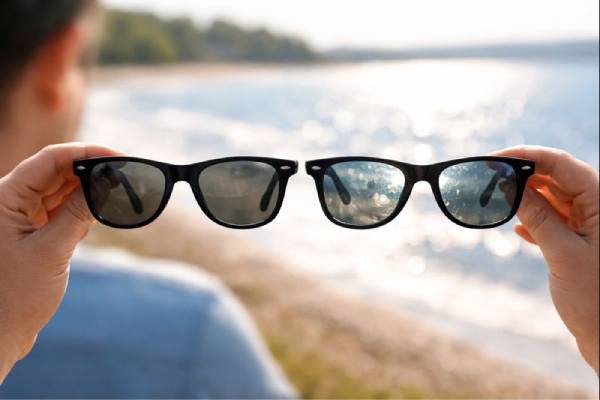
Sunglasses can feel like a style choice, but for eye health they are a form of protective equipment. The important question is not only whether lenses look dark, but whether they block ultraviolet (UV) radiation and reduce the kinds of glare that cause squinting, fatigue, and risky visibility on the road or water. Polarized lenses are often marketed as “better,” yet polarization and UV protection are not the same feature. A non-polarized lens can offer excellent UV protection, and a polarized lens can still be a poor choice if it lacks reliable UV filtering or fits poorly. What polarization truly changes is how light reflections are handled—especially glare bouncing off horizontal surfaces—often making outdoor vision more comfortable and sharper. This article explains how polarization works, what actually protects your eyes, which activities benefit most from polarization, and how to choose sunglasses that deliver real safety rather than false reassurance.
Essential Insights
- UV protection comes from a UV-blocking filter, not from polarization; “UV400” or 100 percent UVA and UVB blocking is the key safety feature.
- Polarization mainly reduces reflected glare from water, roads, and snow, often improving comfort and contrast.
- Polarized lenses can make some screens and instrument panels harder to read, which matters for driving and flying.
- Choose sunglasses by fit and UV rating first, then add polarization if glare is a frequent problem in your daily environment.
Table of Contents
- What actually protects your eyes
- How polarized lenses work
- When polarized is the better choice
- When non-polarized may be safer
- Lens color, material, and coatings that matter
- How to shop and test sunglasses
What actually protects your eyes
If you want a direct answer to “Which protects better?” the most accurate response is: UV protection protects better than polarization, and you can have UV protection with either polarized or non-polarized lenses. Polarization is about glare control; UV protection is about shielding tissue from radiation that contributes to long-term eye damage.
UV protection is the non-negotiable
Ultraviolet light includes UVA and UVB wavelengths. Over years, UV exposure is associated with higher risk of cataract formation and several ocular surface conditions, and it can also contribute to eyelid skin damage. A good sunglass lens blocks UV before it reaches the eye, ideally labeled as:
- 100 percent UVA and UVB protection, or
- UV400 protection
The “darkness” of the lens is not proof of UV protection. A dark lens without UV filtering can be worse than no sunglasses because your pupils dilate behind the dark tint, allowing more UV into the eye. This is why UV labeling and reputable manufacturing matter.
Fit and coverage are part of protection
UV can enter from above, below, and the sides, especially when light reflects off sand, water, pavement, or snow. A lens can have excellent UV filtering and still underperform if it leaves large gaps. Practical protection improves with:
- larger lenses or wraparound styles
- frames that sit close enough to reduce side light
- a brimmed hat as an extra layer outdoors
If you spend time in high-glare environments, wraparound coverage can matter as much as lens technology.
Visible light and comfort versus UV and safety
Polarization, tint, and mirror coatings mostly affect comfort, glare, and contrast in visible light. UV protection affects biologic safety. Both are valuable, but they are not interchangeable. You can think of it this way:
- UV filtering is the seatbelt.
- Polarization is the anti-glare windshield treatment.
A seatbelt matters in every car ride. Anti-glare becomes critical in certain conditions, such as bright road reflections, water sports, or snow.
What “better protection” means in real life
If you are choosing between two pairs and one clearly states high-quality UV protection with good fit, that pair offers better baseline protection even if it is not polarized. If both pairs have the same UV protection and similar coverage, then polarization often provides better day-to-day functional protection by reducing glare-related visual stress and momentary visibility loss.
How polarized lenses work
To understand what you gain with polarization, it helps to know what glare actually is. When sunlight hits a flat surface—water, a wet road, a car hood, snow, or even a glossy table—much of the reflected light becomes horizontally oriented. That horizontal light is intensely bright and can wash out detail. Your eyes respond by squinting, which increases fatigue and can reduce visual clarity.
Polarization filters glare directionally
A polarized lens contains a special filter that blocks much of that horizontally oriented reflected light while allowing more vertically oriented light to pass through. The result is:
- less harsh glare
- improved contrast in bright settings
- reduced squinting and forehead tension
- often a clearer view into water or across reflective surfaces
This is why anglers and boaters often say polarization lets them “see through” surface reflections. It does not make water transparent, but it reduces reflected glare so underlying contrast becomes more visible.
What polarization does not do
Polarization does not automatically:
- block UV (it can, but only if the lens also has UV filtering)
- darken the lens (polarized lenses can be light or dark)
- improve sharpness if your prescription or lens quality is poor
- fix dry eye or light sensitivity driven by inflammation
People sometimes buy polarized sunglasses expecting them to help any type of discomfort. If your main issue is dry eye or migraine-related light sensitivity, polarization may still feel more comfortable outdoors, but the primary management often involves tear stability, surface treatment, and controlled exposure.
Polarization can change how certain materials look
Polarized lenses can interact with other polarized surfaces. This is why you may notice:
- rainbow-like patterns on tempered glass
- uneven dark patches on car windows with certain coatings
- changes in how some plastics appear
These are optical interactions, not lens defects. They can be annoying or even problematic depending on your activity, which is why “polarized is always better” is too simplistic.
Polarized quality varies
Two polarized lenses can perform very differently. Quality depends on:
- the precision and uniformity of the polarization film
- lens optical clarity and distortion control
- coatings that reduce surface reflections and scratching
- how evenly tint is applied across the lens
If you have ever tried polarized sunglasses that made the world feel “wavy,” that often reflects lens quality issues, not polarization itself. A high-quality lens should feel crisp and stable.
When polarized is the better choice
Polarized lenses are often the better choice when your main problem is glare from reflected sunlight. In these settings, polarization can improve comfort and safety by reducing momentary “whiteout” conditions and visual fatigue.
Driving in bright conditions
Sun glare off the road, the hood of your car, or surrounding vehicles can be intense, especially in the morning and late afternoon. Polarization can:
- reduce harsh reflections and improve contrast
- make lane markings and road texture easier to see
- reduce squinting, which can reduce fatigue on long drives
For many drivers, the comfort improvement is immediate. However, you should still verify that dashboard and navigation screens remain readable, because that can vary by vehicle and screen type.
Water and boating activities
Polarized lenses can be especially valuable near water:
- reduced surface glare improves the ability to see wave patterns and obstacles
- improved visibility helps with reading shoreline contours and buoys
- comfort benefits are substantial during long hours in bright sun
In practical terms, polarization does not replace safe boating practices, but it reduces visual strain and can improve situational awareness.
Snow sports and high-glare environments
Snow reflects a large amount of sunlight. Polarization can help reduce glare, but it is not the only factor. In snow environments, also prioritize:
- wraparound coverage
- appropriate tint density for very bright light
- good fit to block side light
- compatibility with goggles if needed
Some skiers and mountaineers prefer polarization for general glare reduction, while others prefer non-polarized lenses because of how polarization can affect the visibility of ice patches or the way terrain contrast appears. Personal testing matters here.
People sensitive to glare and squinting
If you find yourself squinting frequently outdoors, or you develop headaches from bright reflections, polarization can reduce a common trigger: repeated glare spikes. It can also be helpful for people with ocular surface irritation, because squinting and wind exposure often worsen dryness symptoms. Polarized lenses alone do not treat dry eye, but they can make the outdoor environment less provocative.
When it is worth paying more
Polarization is most worth the extra cost when:
- you spend significant time driving, boating, or outdoors in bright reflection environments
- glare affects your ability to see comfortably and confidently
- you will actually wear the sunglasses consistently because they feel better
If a feature improves comfort enough that you wear sunglasses more reliably, that indirectly improves UV protection too, because consistent use is the real-world win.
When non-polarized may be safer
Polarization is often beneficial, but there are scenarios where non-polarized lenses can be the safer or more practical choice. The key issue is not eye health damage; it is visual information. Polarization can reduce certain reflections that, in some contexts, provide useful cues.
Reading screens and instrument panels
Many LCD and OLED screens emit polarized light. Depending on screen orientation and the angle of your sunglasses, polarized lenses can make screens look dim, patchy, or completely black. This can affect:
- phone navigation screens
- car dashboard displays and head-up displays
- gas station and point-of-sale screens
- cockpit instruments for pilots
If you rely on screens for safety-critical information, a non-polarized lens may be more reliable. Some people solve this by tilting their head or rotating the screen, but that is not ideal while driving or operating equipment.
Aviation and certain professional settings
Pilots are often advised to be cautious with polarization because it can interfere with:
- reading instrument displays
- seeing subtle reflections on other aircraft
- perceiving certain atmospheric cues or windshield stress patterns
Similarly, in industrial environments, polarized lenses can change the appearance of tempered glass or plastic guards, which may be distracting.
Seeing ice, slick patches, and subtle surface reflections
In some situations, glare and reflection are not purely “bad.” Reflections can help you identify:
- black ice or slick wet patches on pavement
- thin ice layers on water
- oil sheen on a surface
Polarization reduces those reflections, which can sometimes make hazards less obvious. This is not a universal problem, but it is worth considering if you work in environments where reflection cues are part of your safety awareness.
Variable light environments
If you move frequently between shade and bright light, any dark sunglass lens can make transitions harder. Polarization itself does not cause this, but polarized lenses are often paired with darker tints. In those cases, you might prefer:
- a slightly lighter tint
- a good UV filter without overly dark shading
- a lens choice tailored to the environment rather than the strongest “sun lens” possible
The bottom line for safety-critical tasks
If you have ever worn polarized sunglasses and found that key displays disappear or that your visual cues feel “off,” that is your answer: choose high-quality non-polarized lenses with excellent UV protection for those tasks, and reserve polarization for leisure glare environments.
Lens color, material, and coatings that matter
Polarized versus non-polarized is only one decision. Lens tint, material, and coatings can have just as much impact on comfort, clarity, and durability.
Tint color and what it changes
Tint affects visible light transmission and contrast perception:
- Gray: preserves natural color balance and is a common all-purpose choice for bright sun.
- Brown or amber: can increase contrast, which some people prefer for driving and variable light; it may feel “sharper” for certain tasks.
- Green: often balances color and contrast and can feel comfortable in bright environments.
No tint color replaces UV protection. Tint is about comfort and contrast, not safety.
Lens darkness and category thinking
Very dark lenses can be comfortable in intense sun, but too-dark lenses can be unsafe in low light, shade, or dusk. A practical approach is to match lens darkness to use:
- bright midday outdoor use can tolerate darker lenses
- mixed environments, driving, and variable light often do better with moderate darkness
If you choose one pair for everything, moderate darkness with strong UV protection is often the most versatile.
Lens materials and optical clarity
Material affects impact resistance, weight, and potential distortion:
- Some materials are lighter and more impact resistant, making them suitable for sports.
- Others offer high optical clarity but may be less impact resistant.
The most important quality marker is whether the lens looks stable and undistorted when you move your head. Distortion causes eye strain and can be subtle until you wear the glasses for an hour.
Coatings that can help
- Anti-reflective coating on the back surface: reduces reflections bouncing into your eyes from behind, which can be annoying in bright conditions.
- Scratch-resistant coating: improves longevity, especially for plastic lenses.
- Mirror coatings: reduce visible light transmission and can feel more comfortable in strong sun; they do not automatically increase UV protection.
A common frustration is buying a premium polarized lens that still feels glaring from behind. Back-surface reflections are a real issue, especially with wraparound frames and bright environments.
Prescription sunglasses and polarization
If you wear prescription lenses, you can usually choose polarized or non-polarized. The same principles apply: confirm UV protection, confirm optical clarity, and confirm screen visibility for your daily activities. For people who drive long distances, a prescription polarized lens can be a meaningful comfort upgrade—unless your vehicle screens become unreadable.
How to shop and test sunglasses
The best sunglasses choice is the one that you will actually wear consistently, that protects against UV reliably, and that supports your daily visual tasks. A simple testing routine helps you avoid expensive mistakes.
Step 1: Verify UV protection first
Look for:
- UV400, or
- 100 percent UVA and UVB protection
If the labeling is vague or missing, do not assume protection. For children and people with high outdoor exposure, consistent UV protection is especially important.
Step 2: Check coverage and fit
Try the glasses on and look for gaps:
- Do the lenses cover the eyes well from the sides?
- Do they sit close enough to reduce top and side light?
- Are they comfortable enough to wear for long periods?
If you have a smaller face, oversized frames can slip and create gaps. If you have a larger face, narrow frames can leave the sides exposed. Fit is not cosmetic; it determines how much stray light reaches your eyes.
Step 3: Test polarization only if you need it
If you are considering polarized lenses, test practical scenarios:
- look at a phone screen and tilt your head
- check your car dashboard display in bright light if possible
- look at a reflective surface like water, a glossy table, or a car hood
You should feel a clear glare reduction benefit without losing critical readability.
Step 4: Look for optical distortion
A quick check:
- hold the sunglasses at arm’s length
- look at a straight line (doorframe, window edge)
- move the glasses side to side
If the line “bends” or waves, that suggests distortion. Distortion can contribute to headaches and eye strain, especially during driving.
Step 5: Choose based on your real-life profile
Match lens type to use:
- Everyday urban use: UV protection, good fit, moderate tint; polarization if road glare is a problem.
- Water, boating, fishing: UV protection plus polarization and wraparound coverage.
- Heavy screen reliance or aviation: high-quality non-polarized lenses with strong UV protection.
- Snow and high-reflection terrain: strong UV protection, excellent coverage, and a tint suited for intense brightness; polarization based on personal preference and safety cues.
A simple final answer
Polarized sunglasses do not inherently protect your eyes more than non-polarized sunglasses. The better protector is the pair with reliable UV filtering and good coverage. Polarization is a valuable upgrade for glare-heavy environments, but it should be chosen based on your activities and your need to see screens and safety cues.
References
- Dry Eye Syndrome Preferred Practice Pattern® 2024 (Guideline)
- Ultraviolet radiation and the eye: an overview of the mechanisms of ocular damage and protection 2021 (Review)
- Photoprotection in ophthalmology: a review of ultraviolet and visible light effects and protective strategies 2023 (Review)
- Ultraviolet (UV) radiation 2023 (Fact Sheet)
Disclaimer
This article is for general educational purposes and does not replace individualized medical or optical advice. Sunglasses should provide reliable UV protection and appropriate visual clarity for your activities, and certain eye conditions may require specialized lenses or medical guidance. Seek professional advice if you have significant light sensitivity, a history of eye surgery, eye disease, or if sunglasses cause headaches, distortion, or difficulty seeing essential displays while driving or working.
If you found this article helpful, please consider sharing it on Facebook, X (formerly Twitter), or any platform you prefer.