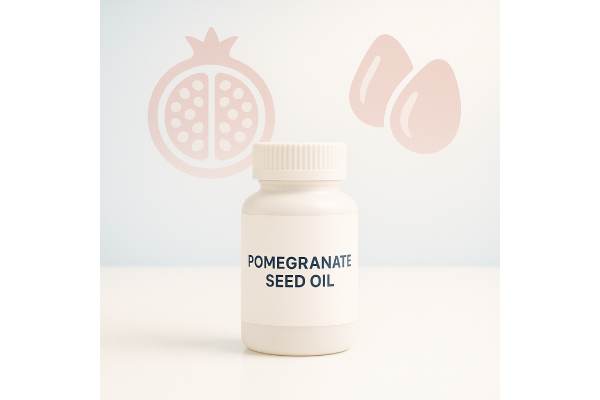
Pomegranate seed oil has moved from niche ingredient to a regular feature in nutrition and skin care conversations. Pressed from the tiny seeds inside pomegranate fruit, this oil is unusually rich in punicic acid, a rare omega-5 fatty acid that has drawn interest for its antioxidant and anti-inflammatory properties. People use pomegranate seed oil as a supplement for metabolic and heart health, and as a topical oil for skin barrier support, hydration, and recovery from dryness or irritation.
At the same time, it is not a magic cure. Human research is still limited, and most data come from lab or animal studies. There is no official daily requirement, products vary widely in quality, and the oil may not be safe for everyone, especially people with certain medical conditions or allergies. This guide walks you through what pomegranate seed oil is, how it may work, practical ways to use it, typical dosage ranges, and the main safety points you should understand before adding it to your routine.
Key Insights for Pomegranate Seed Oil
- Pomegranate seed oil is rich in punicic acid, a conjugated omega-5 fatty acid that may support metabolic and skin health.
- Early research suggests potential benefits for lipid metabolism, inflammation balance, and skin barrier function, but human data are still limited.
- Common oral supplemental intakes range from about 500 to 1,000 mg per day, usually with food, while topical use often starts with a few drops diluted in a carrier oil.
- People with pomegranate allergies, bleeding disorders, complex medication regimens, or who are pregnant, breastfeeding, or preparing for surgery should avoid or use pomegranate seed oil only under medical guidance.
Table of Contents
- What is pomegranate seed oil and how does it work?
- Evidence based benefits of pomegranate seed oil
- How to use pomegranate seed oil for health and skin
- Pomegranate seed oil dosage and how much to take
- Side effects, safety, and who should avoid pomegranate seed oil
- How to choose a quality pomegranate seed oil supplement
What is pomegranate seed oil and how does it work?
Pomegranate seed oil is a fixed oil pressed from the hard seeds of the pomegranate fruit (Punica granatum). Unlike the sweet, polyphenol-rich juice, the seed oil is dominated by fatty acids. Its most distinctive feature is a very high content of punicic acid, a conjugated form of alpha-linolenic acid that belongs to the omega-5 family. In many cold-pressed oils, punicic acid can make up well over half of the total fatty acids.
Alongside punicic acid, pomegranate seed oil contains smaller amounts of oleic acid and linoleic acid, plus natural antioxidants such as tocopherols (vitamin E forms), phytosterols, and minor polyphenolic compounds. This combination gives the oil strong oxidative stability and may contribute to its biological activity.
From a mechanistic point of view, punicic acid appears to influence several pathways:
- Lipid metabolism: It may affect how fat cells store and release fat, and how the liver handles lipid accumulation.
- Inflammation signaling: Conjugated fatty acids can modulate inflammatory messengers, which has implications for joint, metabolic, and skin health.
- Oxidative stress balance: The antioxidant components help limit lipid peroxidation, which protects cell membranes and lipoproteins from oxidative damage.
Topically, pomegranate seed oil behaves like a rich emollient. Its lipid profile allows it to integrate into the skin’s outer layer, reduce water loss, and support barrier repair. Many cosmeceutical formulas include the oil in low to moderate concentrations to enhance hydration, smoothness, and resilience, especially in mature or dry skin.
It is important to keep in mind that much of the mechanistic data comes from cell and animal models. These models provide useful clues but do not guarantee the same magnitude of effect in humans. Real-world benefits also depend on dose, product quality, and a person’s overall diet and lifestyle.
Evidence based benefits of pomegranate seed oil
Interest in pomegranate seed oil comes largely from research suggesting it may support metabolic, cardiovascular, and skin health. While the evidence is still emerging, several core benefit areas stand out.
Metabolic and weight related effects
In experimental models, pomegranate seed oil has shown an ability to influence fat cell function and liver fat handling. Punicic acid appears to reduce lipid accumulation in fat and liver cells and can change the secretion of signaling molecules from fat tissue that are tied to insulin sensitivity and inflammation. These findings have led to the idea that pomegranate seed oil could be a helpful adjunct in managing weight and metabolic risk factors when combined with diet and exercise.
Small human studies with pomegranate-derived products, sometimes including seed oil, have reported modest improvements in markers such as triglycerides, cholesterol fractions, or measures of oxidative stress. However, trials are still relatively few, often short, and do not always isolate the seed oil from other pomegranate components.
Heart and vascular support
The fatty acid and phytosterol content of pomegranate seed oil provides a rationale for heart health support. Conjugated linolenic acids like punicic acid can influence blood lipid profiles and may help limit oxidation of low-density lipoprotein (LDL), a step in atherosclerotic plaque formation. The presence of phytosterols offers an additional, though usually small, contribution to cholesterol management.
Any impact on vascular health is likely to be modest compared with established lifestyle and medication strategies. Still, for individuals already focusing on diet, activity, and medical care, pomegranate seed oil may serve as a complementary tool.
Skin barrier, aging, and wound related benefits
Topical products with pomegranate seed oil are often marketed for dry, mature, or stressed skin. The oil’s emollient and occlusive properties help reduce transepidermal water loss, leaving skin softer and more pliable. Antioxidant and inflammation-modulating actions may also help reduce the visible effects of environmental stressors over time.
Animal models suggest that pomegranate seed oil can support the skin’s natural repair processes, for example by influencing collagen formation and antioxidant status during wound healing. Cosmetic formulas sometimes combine the oil with other actives to address firmness, elasticity, or uneven texture, but rigorous controlled trials in humans remain limited.
Overall, pomegranate seed oil can be seen as a potentially useful addition to a broader strategy for metabolic and skin health. It should not replace evidence-based treatments for chronic conditions or sun protection and basic skin care measures.
How to use pomegranate seed oil for health and skin
People usually use pomegranate seed oil in two ways: orally as a dietary supplement and topically as a cosmetic or skin care oil. The best choice depends on your goals, preferences, and any health conditions you may have.
Oral supplemental use
Oral pomegranate seed oil is typically supplied in softgel capsules or occasionally in small bottles of liquid oil. Most softgels contain around 500 mg of oil. Some practical guidelines:
- Take capsules with food to improve tolerance and absorption.
- If you are new to the oil, start with one capsule per day for a week to check your response before considering a higher amount.
- Combine use with an overall pattern of balanced nutrition, activity, and sleep, rather than expecting the oil alone to create major changes.
For people seeking general wellness or mild metabolic support, many manufacturers position pomegranate seed oil similarly to fish oil or evening primrose oil: an optional addition rather than an essential nutrient. Always review the full ingredient list, as some blends include other oils or herbal extracts.
Topical and cosmetic use
Topical use focuses on skin barrier support and cosmetic benefits:
- As a facial oil: Add one or two drops of pomegranate seed oil to a neutral carrier oil (such as jojoba or squalane) in your palm, blend, and apply to slightly damp skin after water-based products.
- In body care: Mix a few drops into body lotion or a body oil blend to boost richness for dry areas.
- For targeted areas: Some people massage diluted pomegranate seed oil onto scars, areas of rough texture, or mature skin on the neck and décolleté.
Because the oil is rich and can feel heavy in high amounts, low concentrations are usually enough. It is wise to patch test a diluted mixture on a small area of skin for a couple of days before applying more widely, especially if you have sensitive skin or a history of reactions to plant oils.
Combining oral and topical approaches
Some individuals use both oral and topical pomegranate seed oil, aiming for inside-out support of skin and metabolic wellness. There is no established protocol for this combined approach. If you already take several supplements, or if you use prescription medications, it is safer to prioritize topical use first and discuss any oral supplementation with a clinician.
Pomegranate seed oil dosage and how much to take
There is currently no official recommended daily intake for pomegranate seed oil or punicic acid. Dosage guidelines are based on the amounts used in research settings, traditional use of pomegranate products, and what is commonly provided in commercial supplements.
Typical oral dosage ranges
Most pomegranate seed oil supplements fall into these broad ranges for generally healthy adults:
- Common daily range: Around 500 to 1,000 mg of pomegranate seed oil, usually taken in one or two divided doses with meals.
- Higher experimental intakes: Some research protocols and practitioner-guided programs use up to about 2,000 mg per day, again divided and taken with food, though this is more aggressive and not appropriate for everyone.
If your primary goal is general wellness or subtle metabolic support, staying at the lower end of this range is usually reasonable. For people hoping to target specific markers, such as blood lipids, the higher end of the range is sometimes used under professional supervision.
How to titrate your dose
A gradual approach reduces the risk of digestive discomfort:
- Begin with one 500 mg capsule daily with your main meal.
- Monitor your digestion, energy, and any skin changes for one to two weeks.
- If you tolerate the oil well and a higher intake is appropriate for your goals, add a second capsule with another meal, for a total of about 1,000 mg per day.
- Avoid unchecked increases beyond the product’s suggested use unless you have personalized guidance.
It is also important to consider the rest of your fat intake. Pomegranate seed oil should complement a healthy spread of fats from sources like olive oil, nuts, seeds, and oily fish, not serve as your only functional fat.
Topical amounts
For skin care, dosing is more about drops and frequency than milligrams:
- Face: 1–3 drops of pomegranate seed oil diluted in a teaspoon of carrier oil once or twice daily.
- Body: 3–6 drops blended into a single application of lotion or body oil.
- Targeted spots: A thin film over the area, always patch tested first.
Using much more than this can feel greasy and may increase the risk of clogged pores in some skin types.
Duration of use
Most people who supplement pomegranate seed oil take it continuously for several weeks or months before evaluating its impact. For long-term, daily use, regular check-ins with a health professional are wise, especially if you have chronic conditions or take medication.
Side effects, safety, and who should avoid pomegranate seed oil
Pomegranate seed oil is widely used in foods, cosmetics, and supplements, and it appears to have a favorable safety profile in typical amounts. However, “natural” does not mean risk-free, and there are important caveats to consider.
Possible side effects
Most reported side effects are mild and improve when the dose is reduced or stopped:
- Digestive upset such as nausea, loose stools, or stomach discomfort, especially at higher oral doses or when taken on an empty stomach.
- Headache or a sense of “heaviness” if too many capsules are taken at once.
- Skin irritation, redness, or itching with topical use, particularly in people with sensitive or reactive skin.
Because the oil is highly concentrated, using more is not always better. Starting low and increasing slowly helps you spot any adverse effects early.
Allergies and sensitivities
Anyone with a known allergy to pomegranate should avoid pomegranate seed oil unless a specialist has confirmed it is safe. Even if you have tolerated pomegranate juice, you can still react to the seed or seed oil, since the protein and fat profiles differ. People with multiple fruit or nut allergies should be especially cautious and prioritize patch testing before topical use.
Medication and condition considerations
Pomegranate products can influence oxidative stress, inflammation, and possibly certain enzymes involved in drug metabolism. While specific interactions with pomegranate seed oil are not yet well defined, caution is prudent for people who:
- Take blood thinners, antiplatelet drugs, or medications that strongly affect clotting.
- Use drugs for high blood pressure, high cholesterol, or type 2 diabetes, where even small changes in response can matter.
- Have chronic liver or kidney disease that affects how the body handles fats and plant compounds.
If you fall into any of these groups, discuss pomegranate seed oil with your prescribing clinician before using it orally. Topical use is less likely to interact but should still be mentioned during consultations.
Groups who should avoid or seek close supervision
It is generally recommended to avoid oral pomegranate seed oil or use it only with specialist guidance if you are:
- Pregnant or breastfeeding, due to a lack of rigorous safety data.
- Preparing for surgery or dental procedures that involve bleeding risk, within about two weeks of the procedure.
- Managing complex medical conditions with multiple medications.
Children should not be given pomegranate seed oil supplements without pediatric advice. For many people, focusing on whole pomegranate foods and standard skin care is a simpler, safer approach.
How to choose a quality pomegranate seed oil supplement
The benefits and safety of pomegranate seed oil depend heavily on product quality. Because supplements are not regulated as strictly as prescription drugs in many regions, it pays to be selective.
Key quality markers
When evaluating a product, look for:
- Source and processing information: Ideally cold-pressed from pomegranate seeds, with minimal refining and no harsh solvents. Phrases like “cold-pressed,” “unrefined,” and “hexane-free” are positive signs when matched by credible brands.
- Standardization details: Some high-quality products state the percentage of punicic acid or total conjugated linolenic acids. While this is not mandatory, it shows attention to composition.
- Third-party testing: Independent testing for identity, purity, and contaminants (such as heavy metals or residual solvents) adds confidence. Look for clear statements about laboratory testing, not just generic quality claims.
Capsule, liquid, or cosmetic oil?
Your choice depends on your main use:
- Softgel supplements: Convenient for oral use, with premeasured doses and less risk of oxidation compared with opened bottles of oil.
- Liquid oil: More flexible for both oral and topical use, but more prone to rancidity if not stored well. It should be kept in dark glass, tightly sealed, and away from heat and light.
- Cosmetic formulations: Designed for skin application, often blended with other oils, humectants, or active ingredients. These are not meant for oral use.
Never ingest a product labeled solely for external or cosmetic use, since it may contain fragrances, preservatives, or other components that are not safe to consume.
Label reading and red flags
Take a moment to read the full label:
- Confirm the species name (often “Punica granatum seed oil”).
- Check serving size, total milligrams per serving, and number of servings per bottle.
- Note any added ingredients such as mixed tocopherols, other plant oils, or herbal extracts that might influence tolerability or interactions.
Be cautious of products that:
- Make bold disease-treatment claims, especially for serious conditions like cancer, heart disease, or diabetes.
- Lack any information about testing, sourcing, or manufacturing standards.
- Have unusually low prices compared with other brands of similar composition, which may signal diluted or adulterated oil.
In many cases, it is helpful to bring your chosen product to your next medical appointment. A professional who knows your medical history can help you decide whether the formulation and dose fit your overall plan.
References
- Pomegranate Oil’s Potential as an Anti-Obesity Ingredient 2022 (Systematic Experimental Review)
- Punicic acid: A potential compound of pomegranate seed oil in Type 2 diabetes mellitus management 2019 (Review)
- An in vitro study reveals the nutraceutical potential of punicic acid relevant to diabetes via enhanced GLUT4 expression and adiponectin secretion 2014 (Experimental Study)
Disclaimer
The information in this article is for general educational purposes only and is not intended to provide medical advice, diagnosis, or treatment. Pomegranate seed oil is not a substitute for professional health care, prescribed medications, or individualized guidance from a qualified clinician. Always speak with your doctor, pharmacist, or another licensed health professional before starting, stopping, or changing any supplement, especially if you are pregnant, breastfeeding, managing a medical condition, or taking prescription or over-the-counter medications.
If you found this guide helpful, you are welcome to share it with others on Facebook, X (formerly Twitter), or any social platform you prefer. Your support in sharing our articles helps our team continue to create clear, evidence-informed content for readers who care about their health.