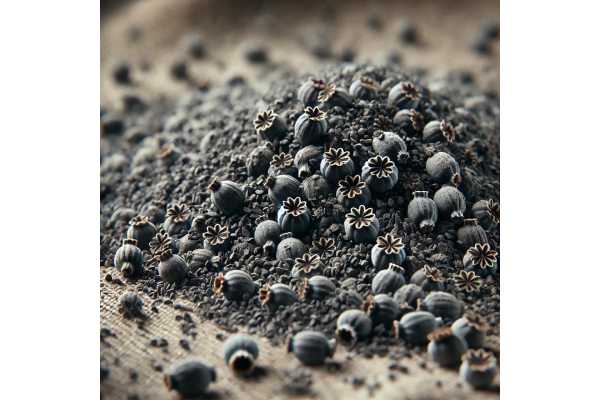
Poppy seeds are tiny, slate-blue or ivory seeds from the opium poppy plant, valued for their nutty aroma, delicate crunch, and rich nutrition. A spoonful can transform bread, pastry, salads, and sauces, adding texture while supplying minerals like calcium and magnesium, plant protein, and fiber. Their oil—pressed from the seed—contains mostly polyunsaturated fat, with a predominance of linoleic acid. Cooks prize poppy seeds in Eastern and Central European baking, South Asian curries and chutneys, and Middle Eastern breads. Yet these small seeds also deserve practical respect: depending on harvest and cleaning practices, they can carry trace opiate alkaloids from the plant’s latex, which has implications for drug testing and homemade “poppy seed tea.” This guide brings together what matters—nutrition, evidence-based benefits, risks and interactions, how to select and store quality seeds, and the best ways to prepare and enjoy them while protecting nutrients and safety.
Essential Insights
- Provides calcium (≈1,400 mg/100 g), magnesium, and fiber; useful for bone and digestive health.
- Mostly polyunsaturated fat (≈28.6 g/100 g), dominated by linoleic acid, which can support heart-healthy swaps.
- Safety caveat: seeds can carry opiate residues from plant latex; avoid poppy seed tea and check labels for cleaning steps.
- Typical serving: 1 tablespoon (9 g), 3–5 times per week as part of meals, not as a beverage extract.
- Limit or avoid if you have confirmed poppy seed allergy, are at risk of opiate drug testing soon, or have a history of opioid use disorder.
Table of Contents
- Poppy seeds in context
- Poppy seed nutrition profile
- Poppy seed health benefits
- Safety, allergies and interactions
- Choosing quality and storage
- Cooking, prep and nutrient retention
- Portions, comparisons and answers
Poppy seeds in context
Poppy seeds come from Papaver somniferum, the culinary poppy cultivated around the Mediterranean for millennia and now grown globally. While the plant’s latex contains opiate alkaloids (such as morphine, codeine, and thebaine), the seeds themselves develop in a separate tissue compartment and do not synthesize these compounds. Residues may appear on seed surfaces if latex contacts the seeds during harvest or processing. Well-cleaned, food-grade seeds are used widely in breads (bagels, rolls), pastries (strudels, koláče), cakes (makowiec), noodles and dumplings, salad dressings, curries (khas-khas), and spice blends. Their nutty flavor pairs well with citrus, honey, yogurt, soft cheeses, tahini, and roasted vegetables.
Nutritionally, poppy seeds are notable for:
- Mineral density: exceptionally high calcium, plus magnesium, phosphorus, zinc, copper, and manganese.
- Healthy fats: predominantly polyunsaturated fat (linoleic acid) with modest monounsaturated fat (oleic acid).
- Plant protein: about 18 g per 100 g, with arginine and glutamic acid especially abundant among amino acids (typical of seeds).
- Fiber: approximately 19–20 g per 100 g, largely insoluble, supporting regularity and meal satisfaction.
Because they’re compact and flavorful, typical intakes are small—often a teaspoon to a tablespoon folded into a recipe or sprinkled on top. That modest serving still delivers meaningful minerals and fats, with limited sugars and no cholesterol. Culinary poppy seeds are usually sold whole; ground forms are common in baking but should be used promptly before oils oxidize. Cold-pressed poppy seed oil appears in specialty groceries and is used for dressings and finishing; it has a low smoke point and is not intended for high-heat frying.
Two real-world considerations frame smart use. First, cleaning quality and supply chain practices influence alkaloid residues on seeds; reputable suppliers implement washing and thermal steps to reduce residues. Second, context of use matters: sprinkling small amounts over food is not the same as extracting residues into liquid for consumption (e.g., poppy seed tea), which can concentrate alkaloids and is unsafe. Keeping these distinctions clear lets you enjoy the culinary upside with confidence.
Poppy seed nutrition profile
Unless noted, values below are for raw poppy seeds per 100 g. % Daily Value (%DV) uses U.S. adult DVs.
Macros and electrolytes (per 100 g)
| Nutrient | Amount | %DV |
|---|---|---|
| Energy | 525 kcal | — |
| Water | 6.0 g | — |
| Protein | 18.0 g | 36% |
| Total fat | 41.6 g | 53% |
| Carbohydrate | 28.1 g | 10% |
| Total sugars | 3.0 g | 6% |
| Dietary fiber | 19.5 g | 70% |
| Sodium | 26 mg | 1% |
| Potassium | 719 mg | 15% |
Fats and fatty acids (per 100 g)
| Lipid | Amount | %DV/AI* |
|---|---|---|
| Saturated fat | 4.5 g | 23% |
| Monounsaturated fat (MUFA) | 6.0 g | — |
| Polyunsaturated fat (PUFA) | 28.6 g | — |
| Omega-3 (ALA) | 0.27 g | 17%* |
| Omega-6 (LA) | 28.3 g | 166%* |
| Cholesterol | 0 mg | 0% |
*For omega-3 and omega-6, Adequate Intake (AI) values are used rather than %DV.
Vitamins (per 100 g)
| Vitamin | Amount | %DV |
|---|---|---|
| Thiamin (B1) | 0.85 mg | 71% |
| Riboflavin (B2) | 0.10 mg | 8% |
| Niacin (B3) | 0.90 mg | 6% |
| Pantothenic acid (B5) | 0.32 mg | 6% |
| Vitamin B6 | 0.25 mg | 15% |
| Folate (DFE) | 82 µg | 21% |
| Choline | 8.8 mg | 2% |
| Vitamin E (alpha-tocopherol) | 1.8 mg | 12% |
| Vitamin A | 0 µg | 0% |
| Vitamin D | 0 µg | 0% |
| Vitamin K | 0 µg | 0% |
Minerals (per 100 g)
| Mineral | Amount | %DV |
|---|---|---|
| Calcium | 1,438 mg | 111% |
| Iron | 9.8 mg | 54% |
| Magnesium | 347 mg | 83% |
| Phosphorus | 870 mg | 70% |
| Zinc | 7.9 mg | 72% |
| Copper | 1.6 mg | 181% |
| Manganese | 6.7 mg | 292% |
| Selenium | 13.5 µg | 25% |
Glycemic and acid–base metrics
- Net carbohydrate: ≈8.6 g/100 g (carbs minus fiber); practical glycemic impact is low at typical tablespoon servings.
- PRAL (potential renal acid load): approximately −2 per 100 g, mildly alkalizing within mixed meals.
Allergens and anti-nutrients (contextual)
- Allergen class: seed; rare but clinically meaningful food allergy documented.
- Anti-nutrients: as with many seeds, phytic acid is present and may reduce absorption of some minerals; toasting and soaking/boiling steps in recipes can reduce phytic acid modestly.
- Contaminant note: opiate alkaloids may occur on seed surfaces due to plant latex exposure; levels vary widely by harvest and cleaning.
Footnote: Values reflect typical raw, unfortified poppy seeds. Processing (washing, heat, grinding) changes moisture and may slightly shift nutrient yields per weight; vitamins are not typically fortified in this food.
Poppy seed health benefits
Mineral-rich support for bones and muscles
A tablespoon (9 g) provides roughly 130 mg calcium and 31 mg magnesium—small numbers compared with 100 g, yet meaningful when poppy seeds appear repeatedly during the week in breadings, dressings, and baked goods. Calcium helps maintain bone mineral density, while magnesium supports muscle and nerve function. Because poppy seeds also deliver phosphorus and manganese, they contribute components involved in bone matrix and enzymatic antioxidant systems.
Heart-smart fat swaps
Poppy seeds are predominantly polyunsaturated fat, with linoleic acid (omega-6) as the major fatty acid and modest alpha-linolenic acid (omega-3). When used to replace some saturated fat in meals—think lemon–poppy seed vinaigrette instead of creamy dressings, or a seeded crust over fish instead of heavy batters—these swaps can help maintain favorable LDL-cholesterol levels as part of an overall dietary pattern rich in plant oils, nuts, seeds, legumes, whole grains, fruits, and vegetables.
Fiber for digestive comfort and fullness
About 19–20 g of fiber per 100 g translates to ~1.7–2.0 g per tablespoon—enough to contribute to daily goals when combined with other high-fiber foods. The largely insoluble fraction adds bulk to stools and supports regularity. Folding poppy seeds into muffin batters or sprinkling them onto salads and yogurt is an easy way to add texture while nudging fiber intake upward.
Protein and amino acids for satiety
At 18 g protein per 100 g (~1.6 g per tablespoon), poppy seeds are not a standalone protein source but do complement cereal proteins in baked goods and vegetarian entrées. Their arginine content (characteristic of seeds) supports nitric oxide synthesis, a pathway connected to vascular health. In practical terms, using poppy seeds in grain dishes can slightly improve the overall amino acid balance of a meal.
Micronutrient variety
Poppy seeds carry zinc and copper—cofactors in immune and connective tissue enzymes—and provide folate and thiamin. While these are not “high dose” at a tablespoon serving, incorporating poppy seeds across several recipes in a week can meaningfully contribute to daily totals, especially for people following plant-forward diets.
Culinary benefits that encourage healthy eating
Flavor and crunch are often overlooked “nutrition multipliers.” Poppy seeds add sensory interest that can make salads, steamed vegetables, and whole-grain baked goods more appealing, which in turn supports adherence to nutrient-dense eating patterns over time.
How to apply the benefits
- Use lemon–poppy seed yogurt as a topper for fruit, pancakes, or grain bowls.
- Stir poppy seeds into whole-grain batters (muffins, quick breads) to boost fiber and minerals.
- Combine with sesame and herbs for a seed crust on salmon or tofu.
- Whisk poppy seeds into citrus vinaigrettes for hearty salads; the oil and acid help absorb fat-soluble compounds from vegetables.
As a reminder, these advantages rely on culinary use (sprinkling, mixing, baking). They do not apply to poppy seed tea or other concentrated extracts, which are unsafe and can deliver unpredictable alkaloid amounts.
Safety, allergies and interactions
Opiate alkaloid residues
Because plant latex can contact seeds during harvest, morphine, codeine, and related alkaloids may occur on seed surfaces in variable amounts. Reputable suppliers reduce residues through washing, heat, and other steps, and baked goods made with cleaned seeds generally contain very low levels. That said, homemade poppy seed tea—produced by washing large volumes of unverified seeds and consuming the liquid—can extract alkaloids at concentrations capable of sedation, respiratory depression, overdose, and death. Do not prepare or consume poppy seed tea.
Drug testing considerations
Even small dietary exposures can, in some cases, trigger positive opiate screens in urine or oral fluid, especially within several hours after eating unwashed or heavily seeded foods. Confirmatory testing can distinguish medication vs dietary exposure in many settings but not all. If you face workplace, legal, athletic, or clinical testing, avoid poppy seeds for several days before testing, and disclose any recent intake to the testing authority as required.
Allergy
Poppy seed allergy is rare but documented and can cause anaphylaxis. People with established seed allergies (sesame, mustard) may experience cross-reactivity. Typical symptoms include hives, oral itching, swelling, wheeze, or gastrointestinal distress. Anyone with a history of severe reactions should carry prescribed epinephrine and avoid poppy seeds unless cleared by an allergist.
Medication and condition notes
- Sedatives, opioids, or CNS depressants: Although culinary portions of cleaned seeds do not deliver pharmacologic alkaloid doses, avoid poppy seed tea and be aware of labeling when taking sedating medications.
- Pregnancy and lactation: Culinary use in normal food amounts is generally considered acceptable; avoid poppy seed tea and extracts.
- Kidney stones: Seeds contain oxalate (typical of many seeds); if you have a history of calcium oxalate stones, your clinician may advise limits on high-oxalate foods.
- Mineral interactions: Phytic acid may reduce absorption of some minerals in the same meal; soaking, boiling, and sourdough fermentation steps can modestly reduce phytic acid.
Practical safety checklist
- Buy food-grade poppy seeds from reputable brands that describe cleaning and processing.
- Use seeds as a spice or mix-in, not as a beverage extract.
- Store well (cool, dark, airtight) to prevent rancidity; discard if musty or bitter.
- If subject to drug testing, abstain for several days pre-test.
- If you have a seed allergy or uncertain reactions, consult an allergist before use.
Choosing quality and storage
Color and type
Common culinary varieties include blue/black (Central and Eastern Europe, Middle East) and white/yellow (South Asia). Flavor differences are subtle: blue/black seeds skew slightly toastier; white/yellow read a bit milder and sweeter. Either type works in sweet or savory dishes, so let recipe tradition, visual contrast, and availability guide you.
Label cues that signal better processing
- Phrases like “washed,” “steam-treated,” “heat-treated,” or “cleaned for culinary use” indicate post-harvest steps that can reduce surface residues and microbes.
- Avoid products marketed for “tea,” “wash,” or “unwashed” seeds. Culinary seeds should be intended for eating as part of food.
- Look for harvest year or best-by date, country or region of origin, and a lot code; these support traceability.
- Prefer suppliers that describe food safety programs and third-party certifications appropriate to your market.
Freshness and rancidity
Seeds are rich in unsaturated oils, which are more prone to oxidation. Fresh poppy seeds smell nutty; rancid seeds smell paint-like, stale, or bitter. If you grind seeds and the paste tastes acrid, discard.
Storage
- Whole seeds: store in an airtight container away from heat and light. Pantry storage is fine for a few months; for longer storage (6–12 months), refrigerate or freeze.
- Ground seeds or paste: use within a few days; refrigerate in a sealed container.
- Poppy seed oil: keep tightly sealed, refrigerated after opening; it’s a finishing oil with a short shelf life.
Sustainability and sourcing
Poppy seeds are a secondary product of poppy cultivation; environmental impact varies by region and farming practices. When available, choose suppliers that publish information on integrated pest management, responsible water use, and worker protections. Buying only culinary-grade seeds discourages markets for risky “unwashed” seeds.
Price and value
Expect to pay more for small spice-jar formats and less per kilogram for bulk from reputable grocers. Extremely low prices in online marketplaces can reflect poor cleaning or non-culinary sourcing—be cautious.
Cooking, prep and nutrient retention
Toasting for flavor
Light toasting in a dry skillet (2–3 minutes over medium heat, stirring) or in a 160–175°C oven for 5–7 minutes releases aromatic oils and enhances nuttiness. Avoid dark browning to limit bitter flavors and preserve delicate fats. Toast just before use for maximum aroma.
Grinding and baking
Many traditional pastries call for ground poppy seeds mixed with sugar, milk, or citrus zest. Because oils oxidize after grinding, prepare fillings close to baking time, or refrigerate briefly. If a recipe permits, coarse-grind rather than pulverize to retain texture and reduce surface exposure of oils.
Hydration and blooming
Soaking seeds in warm milk or plant milk for 15–30 minutes “blooms” texture and softens the coat, useful for fillings and sauces. This also helps distribute flavor in batters and dressings.
Moist-heat vs dry-heat effects
- Moist-heat methods (simmering in milk or custards, steaming within batters) better preserve unsaturated fats and limit oxidation but may dilute volatile aromas.
- Dry-heat methods (toasting, baking) intensify flavor but can increase oxidation if seeds are over-toasted. Keep temperatures moderate and times short.
Nutrient retention tips
- Add seeds late in cooking for sautés and pilafs.
- Use acidic dressings (lemon, vinegar) with poppy seeds over vegetables to help absorb fat-soluble compounds from the produce.
- Combine with vitamin C-rich foods (citrus, berries) in baked goods and salads; while poppy seeds contain little iron relative to legumes, the pairing complements overall meal quality.
- For mineral bioavailability, soak or boil seeds in recipes where appropriate, and consider sourdough fermentation in baked goods to modestly reduce phytic acid.
What to avoid
- High-heat frying: poppy seed oil has a low smoke point; use it for dressings and finishing, not searing.
- Homemade extracts or teas: extracting residues into liquid is unsafe and not a culinary practice.
- Stale stock: discard old seeds with off odors to avoid rancid flavors.
Flavor pairings
Citrus (lemon, orange), honey, maple, vanilla, almond, cardamom, ginger, cinnamon, yogurt, soft cheeses (ricotta, quark, goat cheese), apples, pears, poppy-seed–tahini dressings, roasted carrots and beets, seed-crusted fish or tofu.
Portions, comparisons and answers
How much is a serving?
For general culinary use, 1 tablespoon (≈9 g) is a sensible serving. This delivers roughly 47 kcal, ~3.7 g fat (mostly polyunsaturated), ~0.8 g protein, ~0.9 g net carbohydrate, ~1.7–2.0 g fiber, ~65–130 mg calcium (range reflects brand moisture and milling), plus small amounts of magnesium, zinc, and thiamin. Enjoy 3–5 times per week folded into meals.
Poppy seeds vs other seeds (per tablespoon, typical)
- Poppy vs sesame: both are calcium-rich; sesame (especially hulled vs unhulled) varies widely. Poppy often brings a milder, slightly sweeter crunch and lower bitterness than unhulled sesame.
- Poppy vs chia: chia provides more omega-3 ALA and soluble fiber gel for hydration; poppy offers more linoleic acid and classic bakery flavor.
- Poppy vs flax: flax delivers more ALA and lignans; poppy has stronger culinary versatility in baked goods without imparting a flax flavor.
FAQs
Will eating a seeded bagel make me fail a drug test?
It depends on seed cleanliness, quantity, and test thresholds. A single standard serving of well-cleaned seeds in baked goods is unlikely to cause a confirmed positive, but screen positives are possible, especially shortly after eating. If testing is imminent, abstain for several days and disclose dietary intake as instructed by the testing authority.
Are white poppy seeds different from blue?
They’re different cultivars with similar nutrition. White/yellow seeds are popular in South Asian cooking and have a slightly lighter, sweeter profile; blue/black seeds are common in European baking. Choose based on recipe and taste.
Is poppy seed oil healthy?
As a finishing oil, it offers a pleasant flavor and is rich in linoleic acid. Use in dressings or for drizzling. Because it’s highly unsaturated, store it cold and avoid high heat.
Can children eat poppy seeds?
Yes, in normal culinary amounts as part of family meals. Avoid teas or extracts. For young children, introduce small amounts to monitor for allergy.
Do I need to grind them to get minerals?
Grinding isn’t necessary to gain benefits, but it can improve texture in fillings and may slightly increase mineral accessibility in some recipes. Pairing with acidic ingredients and fermented batters also helps.
Do they fit low-carb or gluten-free diets?
Yes. Poppy seeds are naturally gluten-free and low in net carbs at typical servings. They’re a flavor add-on rather than a carbohydrate source.
Any recipe ideas to start?
- Lemon–poppy seed vinaigrette (olive oil, lemon, honey, Dijon, poppy seeds).
- Poppy seed and almond crumb topping for yogurt or stewed fruit.
- Savory seed crust for fish or tofu with herbs and citrus zest.
- Makowiec-style poppy seed filling for holiday baking.
References
- FDA Requests Information on Poppy Seeds 2025 (Guidance/Notice)
- Growing, Harvesting, Processing, and Distribution of Poppy Seeds—Industry Practices Related to Opiate Alkaloids; Request for Information 2025 (Notice)
- Poppy Seed Consumption May Be Associated with Codeine-Only Urine Drug Test Results – PubMed 2023 (Study)
- Determination of Opium Alkaloid Content in Poppy Seeds Using Liquid Chromatography Coupled with a Mass Spectrometer with a Time-of-Flight Analyzer (UPLC-TOF-HRMS) 2024 (Study)
- Update of the Scientific Opinion on opium alkaloids in poppy seeds 2018 (Scientific Opinion)
Disclaimer
This guide is for educational purposes and is not a substitute for personalized medical advice, diagnosis, or treatment. Always seek the advice of your physician or a qualified health professional with questions about your diet, allergies, medications, or testing requirements. If you are subject to workplace or athletic drug testing, follow official instructions and disclose dietary intake as required.
If you found this article useful, please consider sharing it on Facebook, X (formerly Twitter), or your preferred platform. Your support helps us continue creating balanced, high-quality nutrition guides.